How To Adjust Draw Weight On Genesis Bow: The Best Secret
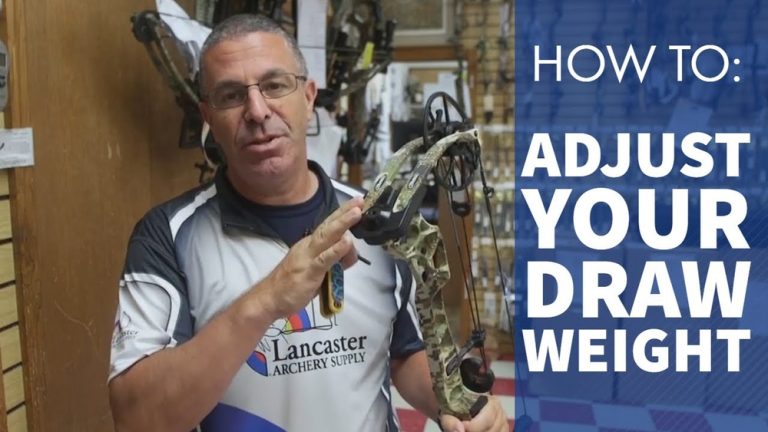
To adjust the draw weight on a Genesis bow, use a 3/16” Allen wrench to turn the limb bolts located where the limbs meet the riser. Turn both bolts clockwise to increase the weight or counter-clockwise to decrease it. Always turn both the top and bottom bolts an equal number of times to keep the bow balanced. For more on this, see our guide on How To Ajust Draw Weight On Halon 32 Bow. For more on this, see our guide on How To Bow Hunt Birds.

GENESIS
Genesis Archery Original Compound Bow, Draw Hand…
- Adaptable Performance: Offers adjustable 15-30" draw length and 10-20lbs draw weight, ensuring a customized fit for archers of all…
- Hand Orientation: Right-hand bow is drawn with the right hand and held in the left hand; Left-hand bow is drawn with the left hand…
- Innovative Design: Features a single cam for no tuning issues, minimal recoil, and more accuracy, making it ideal for both beginne…
As an Amazon Associate I earn from qualifying purchases.
Welcome, fellow archers! If you have a Genesis bow, you’ve got one of the best bows for learning and growing in the sport. It’s versatile, reliable, and perfect for the whole family. But what if the pull feels too heavy for a new shooter? Or maybe you’re getting stronger and need more of a challenge. You might think adjusting it is complicated, but I’m here to share a secret: it’s incredibly easy!
Many beginners feel intimidated by touching their bow’s settings, fearing they might break something. I’m here to tell you that fear is unnecessary. The Genesis bow was designed for simple adjustments. In this guide, I’ll walk you through every step, making it safe, clear, and totally stress-free. Let’s unlock your bow’s full potential together!
The “best secret” about adjusting a Genesis bow isn’t a hidden trick—it’s just how wonderfully simple the process is. Unlike many other compound bows that require a special tool called a bow press, the Genesis was built for easy, at-home adjustments. This means you have full control to make your bow a perfect fit for anyone who wants to shoot, right from your own garage or backyard.
Why Should You Adjust the Draw Weight?
Before we grab our tools, let’s talk about why you’d want to change the draw weight in the first place. The draw weight is the amount of force required to pull the string back to its full draw length. Getting this number right is key to having a fun and safe archery experience.
- Perfect for Beginners and Young Archers: The factory setting might be too high for a child or a new adult shooter. Lowering the weight helps them focus on proper form and aiming without struggling, which builds confidence and prevents bad habits.
- Building Strength Gradually: As you or your young archer shoots more, your back and shoulder muscles will get stronger. You can slowly increase the draw weight to match this new strength, providing a consistent challenge that helps improve muscle memory and stamina.
- Accommodating Multiple Users: A single Genesis bow can be shared among family members of different sizes and strengths. In just a few minutes, you can adjust the bow for a small child and then crank it back up for a teen or adult. It makes it the ultimate family bow.
- Reducing Fatigue: If you plan on a long practice session, a lower draw weight can help you shoot more arrows without getting tired. This means more quality practice time to hone your skills.
Understanding the Genesis Bow’s Simple Mechanics
The magic behind the Genesis bow’s easy adjustment lies in its limb bolts. These are two large bolts that hold the limbs (the flexible parts at the top and bottom) to the riser (the central handle). When you tighten these bolts, they force the limbs into a deeper curve, increasing their tension and thus raising the draw weight. When you loosen them, the limbs relax, and the draw weight decreases.
It’s a straightforward mechanical system that is both effective and incredibly safe to adjust within its recommended limits. The original Genesis bow, for example, is adjustable from 10 to 20 pounds. You never have to guess; the bow is designed to work perfectly within this range.

Tools You’ll Need: Simplicity is Key
You don’t need a fancy toolbox for this job. In fact, you only need one thing. This is part of the “secret” that makes the Genesis bow so user-friendly.
- A 3/16 inch Allen Wrench (Hex Key): That’s it! This is the only tool required. Make sure it’s the correct size to avoid stripping the bolt head. Most standard Allen wrench sets will include this size.
Step-by-Step Guide: Adjusting Your Genesis Bow’s Draw Weight Safely
Ready to get started? Let’s walk through the process together. Follow these steps carefully, and you’ll be done in less than five minutes. Remember, safety and precision are our top priorities.
Step 1: Safety First
Before you make any adjustments, perform a quick safety check.
- Make sure the bow is not loaded with an arrow.
- Inspect the string, cables, limbs, and riser for any signs of damage like frays, cracks, or chips. If you see anything concerning, take it to a pro shop before proceeding.
- Work in a well-lit area where you have plenty of space.
Step 2: Locate the Limb Bolts
Hold your bow in front of you. You will find one limb bolt on the top limb pocket and one on the bottom limb pocket. These are the two points where the flexible limbs connect to the main handle, or riser. They are usually large, visible hex-head bolts sitting right in the middle of the limb pocket.
Step 3: Insert the Allen Wrench
Take your 3/16” Allen wrench and insert it firmly into the top limb bolt. Make sure it’s seated all the way in. A loose fit can cause the wrench to slip and damage the bolt head, making future adjustments difficult.
Step 4: Turn the Bolts to Adjust the Weight
Here’s the simple rule to remember:
- To Increase Draw Weight: Turn the Allen wrench clockwise (to the right). Think: “Righty-Tighty.” This tightens the bolt and increases the tension in the limbs.
- To Decrease Draw Weight: Turn the Allen wrench counter-clockwise (to the left). Think: “Lefty-Loosey.” This loosens the bolt and reduces the tension.
Step 5: The Most Important Rule: Adjust in Equal Turns!
This is the most critical part of the process. To keep your bow balanced and shooting accurately, you must turn the top and bottom limb bolts by the exact same amount. If you turn the top bolt one full revolution, you must also turn the bottom bolt one full revolution.
I recommend adjusting in small increments, like half-turns or full-turns.
- Turn the top bolt counter-clockwise one full turn.
- Move to the bottom bolt and turn it counter-clockwise one full turn.
- Repeat this process until you reach your desired draw weight.
Keeping the adjustments equal ensures that the bow’s “tiller” remains even. Tiller is the distance from the string to the limb where it meets the riser. An even tiller is essential for a stable and accurate shot. The Genesis bow is designed to have a zero tiller, meaning the distances should be identical.
Step 6: Know Your Limits – Do Not Over-Loosen or Over-Tighten
Every bow has a safe operating range. For a standard Genesis bow, the draw weight is adjustable from 10 to 20 pounds.
- To find the maximum weight: Tighten the bolts until they are snug. Do not use excessive force to tighten them further once they stop turning easily. This is your max draw weight setting.
- To find the minimum weight: From the maximum setting, you can safely back out the bolts several full turns. However, never loosen the bolts so much that they feel wobbly or disengaged. A good rule of thumb from the official Genesis Archery website is not to exceed a certain number of rotations from the fully tightened position (check your bow’s manual, but it’s typically around 3-4 full turns for most models).
Draw Weight Adjustment Quick Reference Table
Here is a helpful table to give you an idea of how the draw weight changes with each turn. Note that these are approximations, and the exact weight can vary slightly from bow to bow.
| Number of Turns Out (From Max) | Approximate Draw Weight (lbs) | Recommended For |
|---|---|---|
| 0 (Fully Tightened) | 20 lbs | Teens, Adults, Stronger Youth Shooters |
| 1 Full Turn | ~17-18 lbs | Intermediate Youth, Smaller Adults |
| 2 Full Turns | ~14-15 lbs | Beginner Youth, Building Strength |
| 3 Full Turns | ~11-12 lbs | Younger Children, First-Time Shooters |
| 4 Full Turns (Max Safe Loosening) | 10 lbs | Smallest Shooters, Absolute Beginners |
Common Mistakes to Avoid
While the process is simple, a few common mistakes can cause issues. Here’s what to watch out for:
- Uneven Adjustments: Forgetting to turn both bolts the same amount is the number one mistake. This throws off the tiller and will negatively impact your accuracy. Always count your turns!
- Using the Wrong Size Wrench: A wrench that is too small will strip the bolt head. Ensure your 3/16” Allen wrench fits snugly.
- Loosening the Bolts Too Far: Backing the limb bolts out past the manufacturer’s recommendation is dangerous. It can cause the limbs to detach from the riser under pressure. If you’re unsure, stick to 3-4 full turns from the tightest position as a safe maximum.
- Forgetting to Test the Feel: After making an adjustment, have the archer safely draw the bow (without an arrow) to see how it feels. It’s better to start too light and work your way up than to start too heavy and risk injury or frustration.

How Do You Know the Draw Weight is Right?
Finding the perfect draw weight isn’t about hitting a specific number; it’s about control, comfort, and proper form. An archer has the right draw weight when they can:
- Pull the string back smoothly without excessive shaking or struggling.
- Hold the bow at full draw for at least 5-10 seconds without trembling.
- Maintain proper posture (standing straight, not leaning back) throughout the entire shot process.
- Let the string down slowly and with control if they decide not to shoot (this is called “letting down”).
If you see an archer struggling with any of these points, the draw weight is likely too high. According to safety guidelines from organizations like USA Archery, using equipment that is properly fitted is a cornerstone of preventing injury.
When to Re-Adjust the Draw Weight
Your bow’s settings aren’t meant to be permanent. Here are a few scenarios when you should consider re-adjusting the draw weight:
| Scenario | Recommended Action | Reasoning |
|---|---|---|
| New Shooter is Introduced | Lower the draw weight to the minimum (10 lbs). | Ensures a positive and safe first experience, focusing on fun and form, not force. |
| An Archer is Getting Stronger | Increase the weight by one half-turn on each bolt. | Provides a gradual challenge to continue building muscle and improve arrow speed and distance. |
| Struggling with Form or Accuracy | Lower the weight by one full turn on each bolt. | Reduces strain, allowing the archer to re-focus on the fundamentals of a good shot. |
| Preparing for a Long Practice Day | Lower the weight slightly. | Prevents fatigue, enabling more high-quality shots over a longer period. |
Frequently Asked Questions (FAQ)
1. What is the draw weight range of a standard Genesis bow?
The original Genesis bow has an adjustable draw weight range from 10 pounds to 20 pounds, making it incredibly versatile for a wide range of archers.
2. Do I need a bow press to adjust the draw weight on a Genesis bow?
No! This is one of the best features of the Genesis bow. You do not need a bow press. All adjustments can be safely made with a simple 3/16” Allen wrench.
3. How do I know if the draw weight is right for me or my child?
The correct draw weight allows you to pull the string back smoothly, hold at full draw for several seconds without shaking, and maintain good posture. If you are struggling, shaking, or leaning back, the weight is too high.
4. Can I damage my bow by adjusting the draw weight?
It is very difficult to damage the bow if you stay within the recommended limits. The only risks are overtightening the bolts with extreme force or, more critically, loosening them too far. Never back the bolts out more than the manual recommends (typically 3-4 full turns from maximum).
5. How often should I check the limb bolts?
It’s good practice to give the limb bolts a quick check before each shooting session to ensure they haven’t loosened on their own, although this is rare. Just make sure they feel snug and haven’t shifted from where you last set them.
6. What size Allen wrench do I need for a Genesis bow?
You will need a 3/16 inch Allen wrench (also known as a hex key) for the limb bolts on all standard Genesis models.
7. Does changing the draw weight affect the draw length on a Genesis bow?
No, it does not. The Genesis bow is unique because it has a “zero let-off” design, which means it can fit virtually any draw length without any adjustments. Changing the draw weight only affects the holding force, not the draw length.
Conclusion: You’re in Control!
And there you have it—the “secret” to adjusting the draw weight on your Genesis bow is that there’s no scary secret at all. It was designed from the ground up to be simple, safe, and accessible for everyone. With just one tool and a few careful turns, you can customize your bow to provide the perfect shooting experience for anyone, at any skill level.
Don’t be afraid to make these adjustments. Fine-tuning the draw weight is a fundamental part of growing as an archer. It helps build good habits, prevents injury, and makes every shot more enjoyable. Now that you have the knowledge, you can confidently keep your bow perfectly tuned for yourself, your friends, and your family. Go ahead, give it a try, and see what a difference the right draw weight can make. Happy shooting!
Related pick: Check today's price on Amazon