How To Adjust Draw Weight On Diamond Infinite Edge Bow | Pro
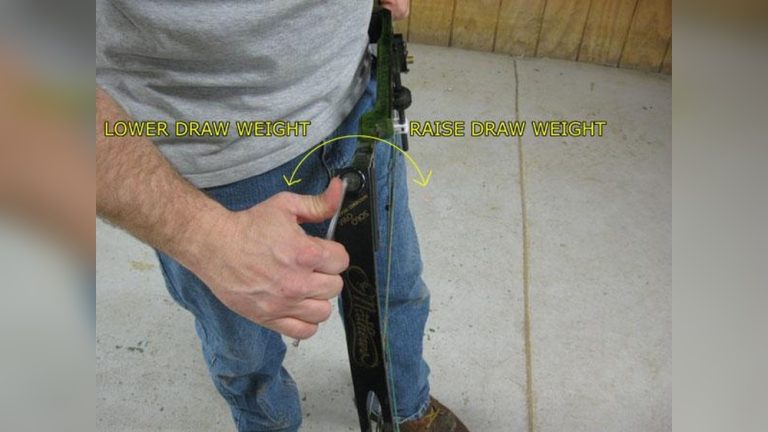
To adjust the draw weight on a Diamond Infinite Edge Pro, use a proper Allen wrench to turn the limb bolts located where the limbs meet the riser. Turn both the top and bottom bolts an equal number of turns counter-clockwise to decrease the weight or clockwise to increase it. Never turn the bolts out past the manufacturer’s recommended limit. For more on this, see our guide on How To Bow Hunt Cow Elk. For more on this, see our guide on How To Bow Fish From Shore. For more on this, see our guide on How To Bow Hunt Blacktail Deer.

Diamond Archery
DIAMOND ARCHERY Youth Radian Compound Bow |…
- PREMIUM YOUTH DESIGN - The Diamond Archery Radian Youth Compound Bow delivers adult-level quality and performance in a size built…
- BUILT-TO-GROW ADJUSTABILITY - Adjust draw length from 16.5" to 29.5" and draw weight from 10-55 lbs with ease using rotating modul…
- FULLY ACCESSORIZED & READY TO SHOOT - Each Radian beginner-friendly hunting gear comes equipped with a 3-Pin Sight, Full Capture B…
As an Amazon Associate I earn from qualifying purchases.
Welcome, fellow archer! I’m Salman Arfeen, and I’m here to help you get the most out of your bow. One of the first things many new archers want to do is adjust their draw weight. It can feel a little intimidating at first. You might worry about breaking something or making a mistake. But I’m here to tell you that it’s perfectly safe and easy when you know the steps.
The Diamond Infinite Edge Pro is a fantastic bow because it’s so adjustable. This means it can grow with you as you get stronger and more skilled. In this guide, I’ll walk you through every step of adjusting your draw weight. We’ll do it safely and correctly, so you can get back to shooting with confidence. Let’s get started!
Why Is Adjusting Your Draw Weight Important?
Think of draw weight as the amount of force you need to pull the bowstring back to its full draw length. It’s measured in pounds (#). Adjusting this setting is one of the most important things you can do to improve your archery experience, especially with a versatile bow like the Diamond Infinite Edge Pro. Here’s why it matters so much.
For Beginners: Building Good Habits
When you’re just starting, it’s tempting to set the draw weight as high as possible. But this is one of the biggest mistakes a new archer can make. A draw weight that is too heavy forces you to struggle, leading to poor form, shaky aiming, and even injury. By starting with a lower draw weight, you can:
- Focus on Proper Form: You can concentrate on your stance, grip, and release without straining. Good form is the foundation of accuracy.
- Prevent Injury: Pulling too much weight can strain your shoulder and back muscles. A comfortable weight helps you build strength safely.
- Enjoy Practice More: If every shot is a struggle, practice becomes a chore. A manageable draw weight makes shooting fun and encourages you to practice longer.
For Growing Archers: Matching Your Strength
The beauty of the Infinite Edge Pro is its incredible draw weight range, typically from 5 to 70 pounds. This makes it the perfect bow for young or developing archers. As you shoot more, your muscles will get stronger. You’ll notice that the draw weight that once felt challenging now feels easy. This is your cue to increase the weight slightly. Gradually increasing the draw weight helps you:
- Continue to Build Strength: Just like lifting weights, slowly increasing the resistance builds muscle.
- Improve Arrow Speed and Power: A higher draw weight sends your arrow flying faster and with more energy, which is important for longer distances and hunting.
- Stay Challenged: A little bit of challenge keeps things interesting and helps you keep improving your skills.

Understanding Your Diamond Infinite Edge Pro
Before we grab any tools, let’s get familiar with the parts of your bow that we’ll be working with. Knowing what you’re looking at makes the whole process feel much simpler and safer. The Diamond Infinite Edge Pro is designed to be user-friendly, so you’ll find these parts are easy to identify.
Key Parts for Adjustment
There are only a couple of key components you need to know for this task:
- Riser: This is the central handle part of the bow. Everything else attaches to it. You’ll hold the riser when you shoot.
- Limbs: These are the flexible fiberglass planks at the top and bottom of the riser. They store the energy when you pull the bowstring back.
- Limb Pockets: These are the sturdy cups that hold the limbs onto the riser.
- Limb Bolts (or Tiller Bolts): This is what we’ll be adjusting! These are the large bolts that secure the limbs in the limb pockets. Tightening them increases the tension on the limbs, raising the draw weight. Loosening them does the opposite.
On your Infinite Edge Pro, you will find one limb bolt at the top where the upper limb connects to the riser, and another at the bottom for the lower limb. They are identical, and you must adjust them both equally.
The Draw Weight Range
One of the best features of the Infinite Edge Pro is its “infinite” adjustability. The bow can be set from a child-friendly 5 pounds all the way up to a powerful 70 pounds. This is all done by turning the limb bolts. You don’t need to change limbs or cams, which makes it incredibly convenient.
Your bow’s manual is your best friend. It provides the exact specifications for your model. If you’ve lost your manual, you can usually find a digital copy on the official Diamond Archery website. Always check the manual for the maximum number of turns you can back out the limb bolts. Exceeding this limit is dangerous and can damage the bow.
| Feature | Description |
|---|---|
| Draw Weight Range | 5 lbs to 70 lbs |
| Adjustment Point | Top and Bottom Limb Bolts |
| Key Principle | Turn both bolts an equal amount for each adjustment. |
Tools You’ll Need and Safety First
You don’t need a workshop full of tools for this job. It’s quite simple. But having the right tool and keeping safety in mind is non-negotiable. Let’s get you prepared.
Required Tools
The only tool you need is a set of Allen wrenches (also called hex keys). Make sure you have a quality set that won’t strip the bolt head.
- Allen Wrench Set: The limb bolts on most Diamond bows, including the Infinite Edge Pro, typically require a 1/4″ or similar-sized Allen wrench. Check your bow to confirm the exact size needed. It’s better to have a full set to ensure you have the perfect fit.
Crucial Safety Precautions
Your safety and the health of your bow are the top priorities. Please read and remember these rules before you start.
- NEVER Dry-Fire Your Bow: A dry-fire happens when you release the bowstring without an arrow nocked. All the energy stored in the limbs has nowhere to go and can cause the bow to violently fly apart, leading to serious injury and a destroyed bow.
- Always Wear Safety Glasses: While unlikely, it’s always possible for a component to fail under pressure. Protect your eyes.
- Don’t Exceed the Bolt Limits: Never loosen the limb bolts more than the manufacturer recommends. The manual will specify the maximum number of turns. Backing them out too far can cause the limbs to pop out of the pockets.
- Keep Your Face and Body Clear: When making adjustments, never position your face or body directly over the limbs or cams. Work from the side.
- Use a Bow Press for Major Work: Adjusting draw weight does not require a bow press. However, any work on the string, cables, or cams absolutely requires a professional bow press.
For more comprehensive safety information, organizations like the Archery Trade Association provide excellent guidelines for all archers. Safety keeps the sport fun for everyone.
Step-by-Step: How to Adjust Draw Weight on Your Diamond Infinite Edge Bow
Alright, you have your tool and you understand the safety rules. Now for the fun part! Follow these steps carefully, and you’ll have your draw weight adjusted in just a few minutes. I’ll break it down into simple, easy-to-follow actions.
Step 1: Determine Your Goal
Before you start turning bolts, decide what you want to achieve. Are you decreasing the weight to work on your form, or increasing it because you’ve gotten stronger? If you’re unsure, it’s always best to start lower than you think you need. A good starting point for many adults is between 25-40 pounds. You can always increase it later.
Step 2: Secure Your Bow
You need the bow to be stable while you work. You can place it on a workbench with a soft cloth underneath to prevent scratches. Some people find it easiest to sit down and hold the bow securely between their knees with the riser facing them. The key is to keep it from moving around while you apply torque to the bolts.
Step 3: Locate the Limb Bolts
As we discussed, there is one limb bolt on the top of the riser and one on the bottom. They are located inside the limb pockets and are usually the largest bolts you can see in that area. Take a moment to positively identify both of them.
Step 4: Make Your Adjustments—Slowly and Evenly
This is the most important step. You must adjust the top and bottom bolts equally to keep the bow’s tiller balanced. The tiller is the distance from the bowstring to the base of the limbs. An uneven tiller can affect your bow’s performance and accuracy.
- Choose Your Direction:
- To DECREASE draw weight, you will turn the bolts COUNTER-CLOCKWISE (lefty-loosy).
- To INCREASE draw weight, you will turn the bolts CLOCKWISE (righty-tighty).
- Start with the Top Bolt: Insert your Allen wrench into the top limb bolt. Make one full rotation in your desired direction.
- Move to the Bottom Bolt: Now, move to the bottom limb bolt. Make one full rotation in the same direction.
- Repeat in Small Increments: Continue this process, alternating between the top and bottom bolts, one full turn at a time. Do not turn one bolt five times and then try to catch the other one up. Go one turn, one turn, one turn, one turn. This ensures the pressure on the limbs remains even.
How much does one turn change the weight? It varies, but a general rule for the Infinite Edge Pro is that one full rotation of both bolts changes the draw weight by approximately 2-3 pounds. Use this as a rough guide.
| Desired Change | Action | Approximate Weight Change |
|---|---|---|
| Decrease Weight | Turn both bolts counter-clockwise, one turn at a time. | -2 to -3 lbs per full rotation |
| Increase Weight | Turn both bolts clockwise, one turn at a time. | +2 to +3 lbs per full rotation |
Step 5: Check Your Work
After a few turns, stop and check the bolts. Most Diamond bows have a witness mark or indicator that shows you where you are in the adjustment range. Ensure the bolts look like they are turned out an equal amount. If you have access to a bow scale, you can measure the exact draw weight. If not, the “feel” test is next.
Step 6: Test the Feel
Carefully pick up the bow. Nock an arrow and point it in a safe direction at a target. Now, draw the bowstring back. How does it feel?
- If it’s too hard to pull back smoothly, the weight is still too high. Loosen the bolts another full turn each.
- If it feels very easy and you want more power, tighten the bolts another full turn each.
- If you can pull it back smoothly without excessive shaking or straining, you’ve likely found a great starting point!
Your goal is to find a weight that allows you to draw and hold the bow at full draw for several seconds without trembling. This allows you to aim properly and execute a clean shot.
Common Mistakes to Avoid
Adjusting your draw weight is easy, but a few common slip-ups can cause problems. Here’s what to watch out for to ensure you do it right every time.
- Uneven Adjustments: The most common mistake is forgetting to turn both bolts the exact same amount. If you turn the top bolt three times and the bottom bolt twice, your tiller will be off, affecting how the bow shoots. Always adjust them in tandem.
- Backing the Bolts Out Too Far: Every bow has a limit. Your owner’s manual will tell you the maximum number of turns you can safely loosen the limb bolts. Going past this can cause the limbs to detach from the riser when you draw the bow, which is extremely dangerous. If you are unsure, err on the side of caution.
- Over-Tightening the Bolts: When you reach the maximum draw weight, the bolts will stop turning easily. Do not try to force them further. This can strip the threads in the riser, causing permanent damage. Once it’s snug, it’s done.
- Adjusting Too Much at Once: Don’t go from 70 pounds down to 20 in one go. Make small, incremental adjustments and test the feel along the way. This helps you find the perfect weight for you and prevents you from accidentally loosening the bolts too much.
- Forgetting to Check Other Settings: A significant change in draw weight can sometimes slightly affect your nocking point or peep sight alignment. After you’re happy with the new weight, take a few practice shots to see if any other minor tune-ups are needed.

Frequently Asked Questions (FAQ)
1. How do I know what my current draw weight is?
The most accurate way is to use a handheld bow scale. You hook the scale onto your string, draw the bow back, and it will give you a precise reading of the peak weight. If you don’t have a scale, your local archery pro shop can measure it for you in seconds.
2. Can I adjust the draw weight myself, or should I go to a pro shop?
You can absolutely adjust the draw weight yourself! The Diamond Infinite Edge Pro is designed for easy user adjustment. As long as you follow the steps in this guide—especially turning the bolts equally and not exceeding the limits—it’s a safe and simple process.
3. What is the lowest draw weight on the Diamond Infinite Edge Pro?
The bow has an incredible range. The lowest draw weight is 5 pounds, which makes it perfect for young children and first-time archers to learn proper form without any strain.
4. Does changing the draw weight affect my draw length?
On the Diamond Infinite Edge Pro, adjusting the draw weight and draw length are two separate adjustments. Changing the draw weight by turning the limb bolts will not change your draw length setting. The draw length is adjusted by rotating the modules on the cams.
5. How often should I increase my draw weight?
There’s no set schedule. Increase your draw weight only when your current setting feels very easy and you can shoot a full practice session without feeling fatigued. It’s better to master your form at a lower weight than to struggle with a higher one. Listen to your body and increase it by just a few pounds at a time.
6. I turned the bolts, but the weight feels the same. What’s wrong?
A single rotation only changes the weight by 2-3 pounds, which can be hard to feel. Make sure you are turning both bolts and try making 2-3 full rotations on each. If you still don’t notice a difference, double-check that you are turning them in the correct direction (counter-clockwise to decrease, clockwise to increase).
7. What is “tiller” and why is it important to turn the bolts evenly?
Tiller is the measurement difference between the upper limb and the lower limb from the string. Keeping it even ensures that both limbs are working together in harmony when you release an arrow. Uneven tiller, caused by uneven bolt adjustments, can make the bow less stable and affect arrow flight.
Conclusion: Shoot with Confidence
There you have it! You now know everything you need to safely and confidently adjust the draw weight on your Diamond Infinite Edge Pro. It’s a simple skill that unlocks the full potential of your bow, allowing it to adapt and grow right along with you on your archery journey.
Remember, the right draw weight is not about pulling the heaviest bow on the range. It’s about finding the perfect balance of power and control that allows you to shoot with great form, stay accurate, and most importantly, have fun. Don’t be afraid to experiment. Start low, build your strength, and make small, even adjustments as you progress.
Your Infinite Edge Pro is a fantastic tool, and now you have the knowledge to customize it just for you. So get out there, stay safe, and enjoy every arrow you send downrange. Happy shooting!
Related pick: Check today's price on Amazon