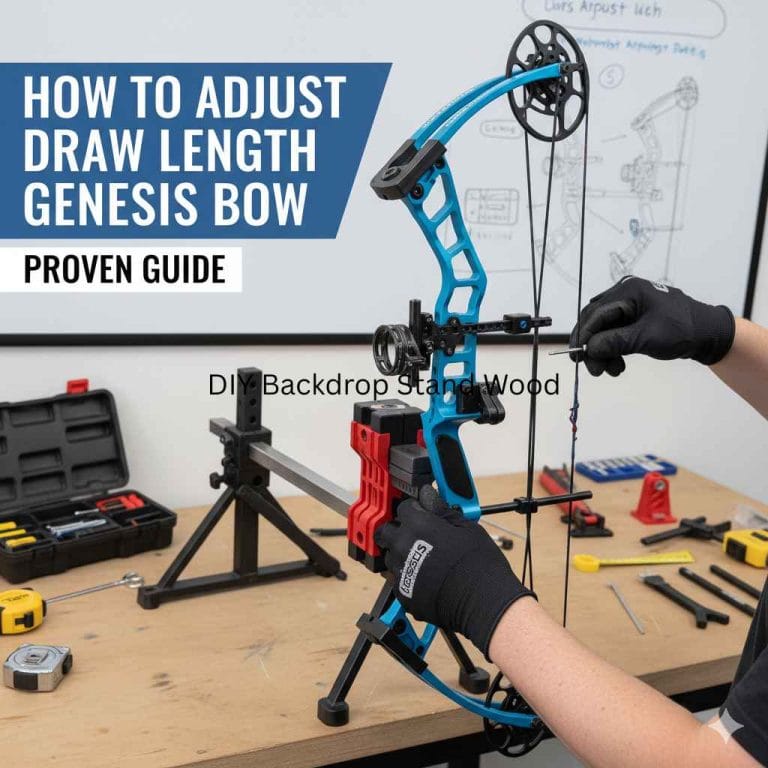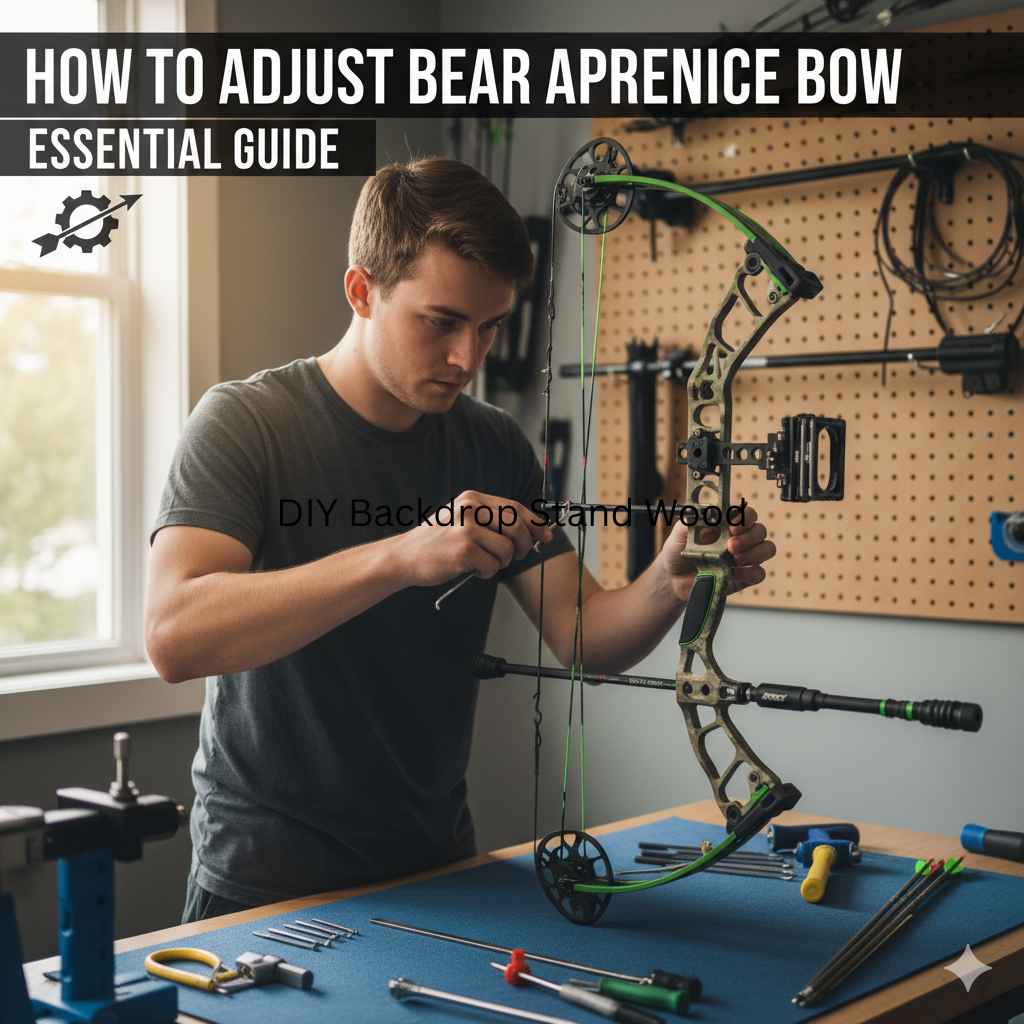
How to Adjust a Bear Apprentice Bow: Full Setup Steps
Adjusting your Bear Apprentice bow is straightforward, allowing you to customize the draw length for a comfortable and effective shooting experience. This guide will walk you through the simple steps to ensure your bow fits you perfectly, enhancing accuracy and enjoyment. For more on this, see our guide on How To Archery Hunt. For more on this, see our guide on How To Attach An Archery Sight On A Recurve Barebow. For more on this, see our guide on How To Attach Bow Safety Chain For Winch Stand.
Learning to shoot a bow is an exciting journey, and getting your equipment just right is key to enjoying yourself. Sometimes, a bow might feel a little too long or too short for your reach. This is especially common as new archers grow or discover their ideal shooting form. The Bear Archery Apprentice is a fantastic bow for young or new archers, and it’s designed so you can easily adjust its draw length. This means you can fine-tune it as you get better or if you’re sharing it. Don’t worry if this sounds complicated; we’ll break it down into easy, step-by-step instructions. By the end, you’ll know exactly how to adjust your Bear Apprentice bow so it feels like it was made just for you, leading to more confidence and better shots!
Understanding Draw Length and Why It Matters
Before we start adjusting, let’s quickly chat about what “draw length” means in archery. Think of it as the distance your bowstring travels from its resting position to where you hold it when fully drawn and ready to shoot. This distance is measured from the grip of the bow to the nocking point on the string when the bow is at full draw. It’s a really personal measurement. Getting your draw length correct is super important because:
- Comfort: A bow that’s the right draw length will feel natural and comfortable to pull back. No straining or awkward positions!
- Accuracy: When the draw length is just right, your anchor point (where you consistently place your drawing hand) will be solid. This consistency is a huge part of hitting your target accurately.
- Power: A properly drawn bow will transfer energy to the arrow most efficiently, giving you better speed and consistency.
- Safety: Shooting with a draw length that’s too long can strain your muscles and potentially lead to improper form, which isn’t good for you or the bow.
The Bear Archery Apprentice is designed to be adjustable, which is a huge advantage for growing archers or when the bow needs to fit different people. This adjustability typically comes from a system of rotating cams or modules on the bow’s limbs. These modules determine the bow’s draw length and draw weight. For the Bear Apprentice, this is usually quite straightforward, often involving rotating a module within the cam itself.
Tools You Might Need
You don’t need a full workshop for this! Most adjustments involve a few common archery tools. For the Bear Apprentice, you’ll likely need:
- Allen Wrenches (Hex Keys): This is the most common tool. You’ll need a set that includes the sizes specified in your bow’s manual (usually metric, like 3/16″ or 5/32″ in imperial, or 5mm and 7mm equivalents).
- Bow Stringer: This is CRUCIAL for safely unstringing and stringing your bow. Never try to string or unstring a recurve bow without a proper bow stringer. It can damage the bow and injure you. You can find high-quality bow stringers from reputable archery suppliers.
- Bow Square (Optional but Recommended): This helps ensure your cams are timed correctly if you’re doing more advanced adjustments, though for simple draw length changes on the Apprentice, it might not be strictly necessary.
- Measuring Tape or Archery Draw Length Tool: Useful for confirming your draw length, although the bow’s settings themselves will indicate the range.
- Your Bear Apprentice Bow Manual: Seriously, this is your best friend. It will have the exact specifications for your bow model.
Always refer to your specific Bear Apprentice bow manual. While the general principles are similar, exact screw types and module orientations can vary slightly between model years.
How to Adjust Draw Length on Bear Apprentice Bow: Step-by-Step Guide
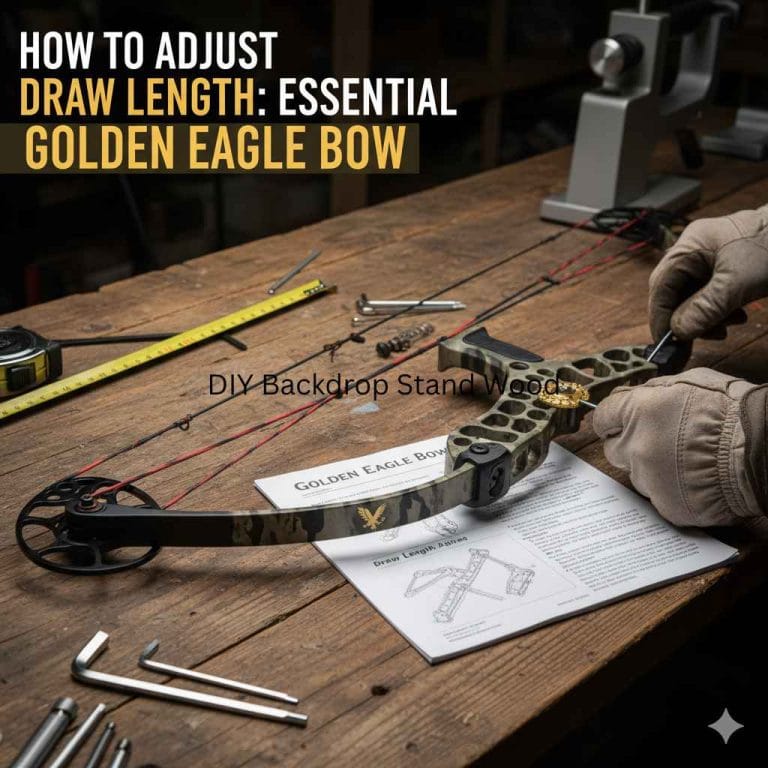
Adjusting the draw length on your Bear Apprentice bow usually involves rotating or replacing the draw length module on the bow’s cams. The Apprentice is designed for ease of use, often featuring a single-cam or hybrid-cam system where the modules are key. Let’s walk through the process. Remember, safety first!
Step 1: Unstringing Your Bow Safely
This is the most important safety step. You cannot adjust the cams or modules without unstringing the bow. Trying to do this with the bow under tension is extremely dangerous.
- Place the bottom limb of your bow securely into the pocket of your bow stringer.
- Place the stringer’s other end over the top limb tip.
- Carefully and evenly pull the stringer until the bow is flexed enough to take the tension off the string.
- Gently slide the bowstring off its cams.
- Carefully release the tension on the stringer to unflex the bow.
If you’re unsure about using a bow stringer, watch tutorial videos from trusted archery sources. Reputable retailers like Shrew Bows offers various bow stringer types, and they often have helpful guides.
Step 2: Locating the Draw Length Modules
Look at the cams at the ends of your bow limbs. You’ll see circular pieces on each cam. These are the draw length modules.
- On many Bear Apprentice models, these modules are housed within the cam itself.
- You’ll often find them marked with numbers or letters indicating the draw length setting they correspond to.
- These modules are usually held in place by one or more set screws.
Step 3: Identifying Your Current and Desired Draw Length
If you don’t know your current draw length, you can measure it. A common method is to have someone help you draw the bow (safely, and not fully) and measure from the cams to your anchor point. However, the bow’s modules will have their own settings.
Your Bear Apprentice manual will have a chart similar to this:
| Module Position / Setting | Corresponding Draw Length (Inches) | Corresponding Draw Length (Centimeters) |
|---|---|---|
| Module A | 21″ | 53.3 cm |
| Module B | 22″ | 55.9 cm |
| Module C | 23″ | 58.4 cm |
| Module D | 24″ | 61 cm |
Find the setting that matches your ideal draw length. If you’re unsure, a draw length of about 22-24 inches is common for younger archers using the Apprentice, but this varies greatly. It’s best to consult with an experienced archer or coach to determine your correct draw length. For a general guideline, you can use the “finger test”: holding your arms straight out to the sides, measure from the tip of one middle finger to the other, and divide by 2.5. However, this is a very rough estimate. A more accurate way is to measure your wingspan.
You can also check your wingspan. Measure from the tip of one middle finger to the tip of the other. Divide this number by 2.5. While not perfect, it gives a good starting point for draw length. For instance, a 60-inch wingspan divided by 2.5 is 24 inches, suggesting a 24-inch draw length.
Important Note: The Bear Apprentice bow typically offers a specific range of adjustment, for example, from 21 to 27 inches. If you need to go outside this range, you might need different modules or a different bow. You can find detailed specs on the official Bear Archery website. Always ensure your chosen draw length is within the bow’s specified limits.
Step 4: Loosening and Rotating/Replacing the Modules
Now, turn your attention back to the cam modules.
- Locate the set screws that hold the current module in place. These are usually small Allen head screws.
- Use the correct size Allen wrench to loosen these screws. You typically don’t need to remove them completely; just loosen them enough to allow the module to turn or be removed.
- Once the screws are loose, you should be able to rotate the module. Align the indicator on the module with the arrow or mark on the cam that corresponds to your desired draw length.
- If your bow requires swapping modules, remove the set screws and the original module. Install the new module, ensuring it is oriented correctly, and then re-install the set screws.
- Crucially, once the module is in the desired position, tighten the set screws firmly. Make sure they are snug to prevent any movement.
Cam Timing: For most draw length adjustments on single-cam bows like many Apprentice RTH (Ready-to-Hunt) packages, rotating modules does not affect cam timing. However, if you are ever unsure or if your bow has a two-cam system and you are making significant adjustments, it’s wise to check cam timing. A bow square can help with this, ensuring both cams are rotating in sync.
Step 5: Stringing Your Bow Safely
Once the modules are set, it’s time to restring the bow. This process is the reverse of unstringing.
- Place the bottom limb into the bow stringer pocket.
- Hook the stringer onto the top limb tip.
- Gently and evenly pull the stringer to flex the bow.
- Carefully place the bowstring back onto the cams, ensuring it’s seated properly in any grooves.
- Once the string is secure on both cams, slowly release the tension on the bow stringer to allow the bow to return to its unstrung state.
- Remove the bow stringer.
Step 6: Testing the Adjustment
Now for the moment of truth! Draw the bow back slowly and carefully.
- Does it feel like the right length?
- Can you comfortably reach your anchor point?
- Is there any strain or discomfort?
If it feels too long, you’ll need to shorten the draw length by repeating the process and moving the module to a shorter setting. If it feels too short, move it to a longer setting.
Important Check: After stringing, visually inspect that the strings are properly seated on the cams and that the set screws holding the modules are tight. Ensure the cams appear to be rotating together. For a single-cam bow, the idler wheel (the one without the draw weight module controlled by the string) should rotate freely and smoothly as you draw.
Understanding Draw Weight Adjustment (Related but Separate)
While we’re talking about adjusting your Bear Apprentice, it’s worth mentioning draw weight. Sometimes, adjusting the draw length might also allow for a slight adjustment in draw weight, or you might need to adjust it separately. On many adjustable bows, draw weight is adjusted by turning limb bolts (usually found under the limb pockets). Turning these bolts clockwise typically increases draw weight, and counter-clockwise decreases it.
However, this adjustment should also be done within the limits specified by Bear Archery. For the Apprentice, it’s often focused on draw length, and draw weight adjustments might be limited or fixed. Always consult your manual. Significant draw weight changes can affect cam timing and bow performance. For draw weight adjustments, look for a chart in your manual that shows how many turns of the limb bolt affect the draw weight and how this relates to the poundage of your bow (e.g., a 40-50 lb bow). Never back out the limb bolts more than the recommended number of turns (often around 3-5 full turns).
The relationship between draw length and draw weight adjustments is important. As draw length increases, draw weight generally increases, and vice-versa. The modules are designed to work within a specific draw weight range for that bow.
Troubleshooting Common Issues
Even with a straightforward process, things can sometimes feel a bit off. Here are a few common issues and how to solve them:
- Bow String Slips Off Cam: This is usually due to improper stringing or the string not being seated correctly in the cam groove. Unstring the bow, re-seat the string carefully, and restring. Ensure the module set screws are tight.
- Uneven Draw Cycle: If the bow feels “jerky” or uneven when you draw it, it might indicate a timing issue, especially on two-cam bows. For single-cam bows, this is less common unless there’s a significant problem with the idler wheel or string alignment. Check your manual or consult a pro shop.
- Can’t Reach Anchor Point Comfortably: This means your draw length is likely too long. You’ll need to shorten it by rotating the module to a lower number.
- Draw Length Feels Too Short, Risers Feel Cramped: This indicates your draw length is too short. Rotate the module to a longer setting.
- Creaking Noises: Check for any loose hardware, especially the module set screws. Also, ensure cables and strings are not rubbing against parts of the riser or limbs where they shouldn’t be. A small amount of archery wax on string serving can help quiet down string noises.
When in doubt, visit a certified archery pro shop. They have the expertise and tools to diagnose and fix any issues safely and efficiently. They can also help you confirm your correct draw length.
Maintaining Your Bear Apprentice Bow
Once adjusted, taking care of your bow ensures it performs well for a long time.
- Keep it Clean: Wipe down your bow with a soft, dry cloth after use, especially if it’s been exposed to dirt or moisture.
- Lubricate Moving Parts: A small amount of archery-specific wax on bowstrings and servings can prevent fraying and reduce noise. Cable slides and pivot points might benefit from a tiny drop of specialized bow lubricant, but follow your manual’s recommendations.
- Inspect Regularly: Before and after each shooting session, check your strings and cables for any signs of wear, fraying, or damage. Look for loose screws or bolts.
- Store Properly: Keep your bow in a case or bow bag when not in use to protect it from dust, moisture, and accidental damage. Avoid storing it in extreme temperatures.
- Professional Check-ups: Consider having your bow professionally inspected and tuned by an archery pro shop at least once a year, especially if you shoot frequently.
Frequently Asked Questions (FAQ)
Q1: How do I know what my correct draw length is?
A1: The most accurate way to find your draw length is to be measured by an experienced archer or at an archery pro shop. A common method involves measuring your wingspan (fingertip to fingertip with arms extended) and dividing by 2.5. However, this is an estimate. A coach can also help you find a consistent anchor point while drawing, which is key to determining your ideal draw length.
Q2: Can I adjust the draw length without unstringing the bow?
A2: No, for most modern compound or hybrid bows like the Bear Apprentice, you absolutely must unstring the bow before adjusting cam modules or making significant changes to draw length. Attempting to do so while the bow is strung is dangerous and can damage the bow or cause injury.
Q3: My Bear Apprentice bow manual says the range is 21-27 inches, but I need 28 inches. What should I do?
A3: If your desired draw length is outside the specified range of the adjustable modules, you generally cannot achieve it with the current setup. You may need to purchase different draw length modules (if available for your specific bow model and year, which is less common for integrated modules) or, more likely, consider a bow with a broader adjustment range or one designed for your longer draw length.
Q4: How tight should I tighten the set screws on the draw length modules?
A4: The set screws should be tightened firmly and securely. They need to prevent the module from rotating during the stress of shooting. However, avoid overtightening to the point where you strip the screw head or damage the threads in the cam. If you can, consult your manual for specific torque recommendations, but “snug and secure” is a good general guideline.
Q5: Does adjusting the draw length affect the draw weight?
A5: Yes, generally, increasing the draw length will slightly increase the draw weight, while decreasing the draw length will slightly decrease it. The modules are designed to keep the bow within its intended draw weight range for each setting. If your bow also.