What Does It Mean By Being Up At Archery Tournament: Proven Best
Being “Up” at an Archery Tournament means it is currently your turn to shoot an arrow on the shooting line, according to the official sequence. This is a critical moment requiring focus, strict adherence to range commands, and quick execution before the signal is given to stop shooting. Master this timing for success and safety. For more on this, see our guide on What is Archery V Shooting Competition? Key Differences Explained.
Have you ever watched an archery competition and felt a little lost when the range official yells something, and everyone suddenly starts moving? It can be confusing when you are just starting out. Knowing exactly what to do when it’s your turn—what “being up” truly means—is key to feeling confident and staying safe on the line. Many new archers feel nervous about missing their turn or slowing down the group. Don’t worry! Archery follows simple, clear steps. We will walk through every command and action, making sure you know precisely how to step up, shoot safely, and enjoy the competition. Let’s turn that confusion into calm confidence.
Understanding the Archery Tournament Flow: What “Being Up” Really Means


In archery tournaments, “being up” is the official signal that your group (or “end”) is permitted to approach the shooting line and begin the process of shooting your allotted arrows. It’s not just about having the right to shoot; it’s about following a strict sequence designed for fairness and, most importantly, safety. Archery ranges are highly structured environments. When you hear the command, a specific sequence of actions must follow.
For a beginner, the core concepts of “being up” involve:
- Preparation: Knowing your equipment is ready before your turn starts.
- Positioning: Standing correctly on the shooting line.
- Execution: Shooting your arrows within the designated time limit.
- Retrieval: Safely stepping back and waiting for the “Collect Arrows” command.
This entire process is controlled by a Range Officer or Field Captain, who uses commands and often a whistle or horn to manage safety and timing. Understanding these commands is the first step to mastery.

The Essential Range Commands You Must Know
The flow of any official archery competition—whether it’s target, field, or indoor 3D—hinges on clear communication. If you are “up,” you are acting on the Range Officer’s instruction. Missing a command is the quickest way to cause confusion or, worse, a safety issue.
Here are the fundamental commands that define when you are “up” and what you must do:
- “STAND CLEAR” or “FETCH ARROWS”: This is the signal that the previous end is finished. Everyone walks forward together, collects their arrows from the target butt (if applicable), and then walks back behind the shooting line.
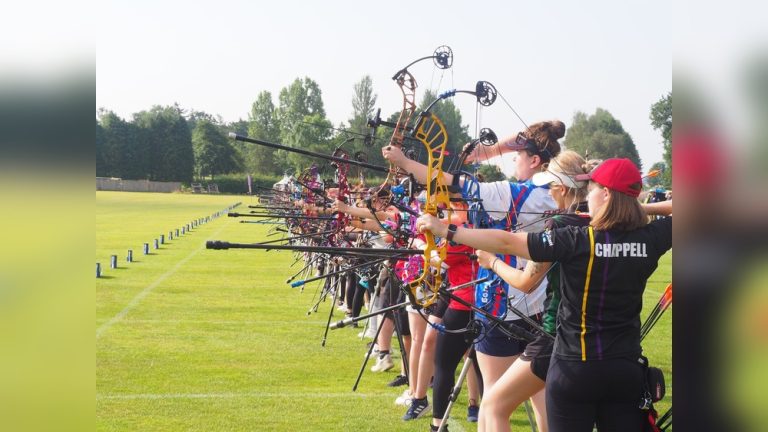
- “SHOOTERS TO THE LINE” or “LINE ON”: This is the first part of “being up.” It means: walk forward and stand on the shooting line, keeping your equipment behind the line until you are ready to shoot.
- “SHOOTERS READY” or “SHOOTERS SET”: This command confirms everyone is in position, equipment is ready, and the Range Officer is about to start the time.
- “SHO [Number] END” or “SHOOT”: This is the main command. It means you are officially “up” and can begin drawing and releasing your arrows. You have a set time limit (usually one or two minutes per arrow, depending on the format).
- “STOP SHOOTING” or Whistle Blast: This command immediately ends your shooting time. You must stop drawing your bow, lower your arrow safely, and wait.
- “LINE CLEAR” or “CLEAN THE LINE”: This means you are finished for that end. You can lower your bow, unstring it (if required), and wait for the signal to collect arrows.
The Difference Between Target and Field Shooting Phases
While the commands are similar, the rhythm changes slightly depending on the format. In standard Target Archery (like Olympic style), you usually shoot all your arrows from one static line. In Field or 3D Archery, the location changes, but the safety protocol of “being up” remains rigid.
For example, in an outdoor field course, you might move from target to target. When the group arrives at a new target:
- The Range Officer will designate the shooting distance.
- They will give the command “Shooters to the line.”
- You get up, walk to the designated shooting spot (often marked by painted lines or flags), and prepare.
It is crucial to only move forward when explicitly told. Rushing ahead before “Shooters to the Line” is a major safety violation.
Practical Steps: Executing Your “Up” Time Perfectly
So, what exactly should you be doing when you hear the command that lets you know you are “up”? This is where mental preparation meets physical action. Follow these steps to execute your end flawlessly.
Step 1: The Transition Phase (From Waiting to Ready)
Once you hear “Shooters to the Line,” your focus shifts from relaxing to active preparation. Do not rush. A controlled walk is better than a panicked sprint.
- If you have your quiver on, ensure it is secure.
- Walk deliberately to the shooting line.
- Place your shooting mat or stool down if you use one, keeping all equipment behind the physical line.
- Check your footing. Ensure you are standing straight and comfortable, facing the target at the correct distance.
Step 2: Pre-Shot Routine Activation
When the Range Officer gives the signal to start shooting (“SHOOT”), you initiate your personal pre-shot routine. This routine is your anchor—it should be the same every single time, whether you are practicing alone or competing.
A good beginner pre-shot routine includes:
- Nock Arrow: Secure the arrow on the string without fumbling.
- Stance Check: Feel your feet planted correctly.
- Raise Bow: Bring the bow up smoothly to the set or loading position.
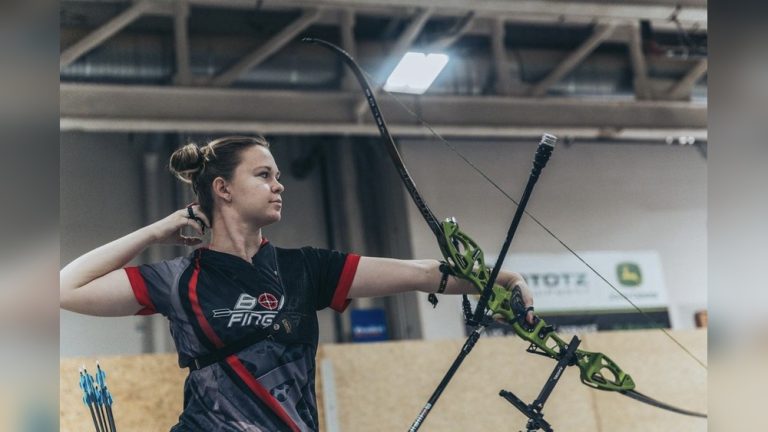
- Execute Draw Cycle: Smoothly draw to anchor point.
- Aim and Release: Execute the shot when you feel ready and aligned.
Remember, if the official shouts “STOP SHOOTING” at any point, halt your routine immediately. If the arrow is already loosed, it counts. If the bow is not drawn, you cannot shoot another arrow until the next end.
Step 3: Managing Time Under Pressure
Most serious competitions enforce strict time limits. If you are shooting six arrows in a timed end, you might have 90 seconds total. This means roughly 15 seconds per arrow, including time to reload. This is why knowing the routine is vital—it must be muscle memory.
As a beginner, focus on rhythm over speed. If you rush, you sacrifice accuracy. It is better to shoot five well-placed arrows than six rushed, messy ones. If you are the first person done, stand still and wait patiently for the others. Do not leave the line early!
| Action | Goal Time (Example) | Beginner Focus |
|---|---|---|
| Approaching the Line | 10 Seconds | Steady, controlled movement. |
| Nocking and First Shot | Within 20 Seconds of “SHOOT” | Executing the routine perfectly once. |
| Subsequent Arrows | 10-15 Seconds Between Shots | Consistent rhythm, smooth follow-through. |
| Waiting for “Stop” Command | Never move until “Clear” is called. | Patience and focus on the target until the end. |
The Psychology of Stepping Up: Overcoming Nerves
For many archers, the hardest part of being “up” isn’t the mechanics; it’s the mental pressure. Being on the line means every eye is technically on you, even if most people are focused on their own targets. This feeling is often called “target panic” or performance anxiety, and it spikes when the clock starts ticking.
Dealing with the Crowd and the Clock
Your goal when “up” is to shrink your world down to just you, your bow, and the spot you are aiming for. External noise—the clock, the crowd, other archers—must fade away. This is where visualization comes into play.
Practice visualization exercises:
- Before leaving home, spend time seeing yourself executing your perfect shot sequence perfectly, even hearing the commands in your head.
- When waiting for the command to shoot, focus on your breathing. Slow, deep breaths calm the central nervous system.
- Use positive self-talk. Instead of thinking, “Don’t miss,” think, “Execute the shot.”
The Importance of Consistency Over Perfection
A common beginner mistake is trying to shoot a “perfect” arrow when they are up. Perfection doesn’t exist in archery. Consistency does. If you are consistent with your draw length, anchor point, and release process, the arrows will group well over time.
If you pull the shot (release early due to panic), acknowledge it immediately. Do not let one bad shot derail the next five. Reset your focus, use your routine again, and trust your training for the next arrow. The beauty of tournaments is that every arrow is a fresh start, provided the Range Officer hasn’t called “STOP.”
Safety: The Non-Negotiable Part of Being “Up”
In any shooting sport, safety rules are paramount. When you are “up,” you are responsible not only for your own safety but for the safety of everyone else on that field or range. Violating safety rules can lead to immediate disqualification.
Never Shoot Past the Signal
This is the single most critical safety rule related to being “up.” When you hear “STOP SHOOTING,” you must stop drawing your bow. If your arrow is already loose, it is permissible for it to hit the target. If your bow is not drawn, you stop immediately.
Why is this so important?
- The Range Officer may have spotted a hazard downrange (a person walking, an animal, or a malfunctioning piece of equipment).
- The time limit may have expired, requiring immediate cease-fire for scoring or movement.
- If you shoot past the signal, you could potentially shoot at an active target face or into an area where people might be retrieving arrows prematurely.
Equipment Management on the Line
When you are “up,” your equipment must be handled responsibly. This means no dry-firing, even if you think you are out of arrows. A dry fire (releasing the string without an arrow) can seriously damage modern bows.
Also, ensure that while you are shooting, no one else is walking forward, backward, or standing near you. Archery etiquette dictates that archers must remain completely still and silent while others are shooting their end.
For more detailed, authoritative safety guidelines, always refer to recognized bodies like USA Archery or World Archery, as they set the standards for competitive safety protocols, often found on their official websites (USA Archery provides excellent competitive rulebooks).
Gear Check: What You Need Before You Are “Up”
A huge part of feeling ready when you are called up is knowing your gear is perfectly tuned and accessible. Fumbling for a lost finger tab or a dropped clicker wastes precious time and increases anxiety.
Essential Equipment Readiness Checklist
- Arrows: Ensure you have the correct number of arrows for the end (usually 3 or 6). They should all be properly fletched and nocked correctly.
- Tuner/Clicker: If you use a clicker, test it gently before the competition starts to ensure it sounds exactly where you want it to.
- Release Aid/Finger Protection: Whether it’s a glove, tab, or mechanical release, ensure it is securely fastened and positioned correctly on your hand before you step up.
- Quiver Placement: Your quiver should be positioned where you can smoothly retrieve an arrow without breaking your shooting stance or looking down excessively.
If you need to make any adjustment to your sight or equipment while you are “up,” it must be done extremely quickly, ideally between shots, and certainly not during the aiming phase of an arrow.
| Issue Type | When to Fix It | Impact on “Being Up” |
|---|---|---|
| Changing Sight Pin | During collection/waiting time, NOT on the line. | Wastes time; high pressure when rushed. |
| Frayed String Serving | Before the event begins. | Can cause unpredictable release inconsistency. |
| Dropping an Arrow | Immediately retrieve and nock again (if time permits). | Requires immediate recovery; use routine to reset quickly. |
| Adjusting Armguard/Strap | After “STOP SHOOTING” command. | If done while shooting, it breaks focus and rhythm. |
Scoring and Post-End Protocol
Once the Range Officer calls “STOP SHOOTING” and confirms the end is complete (usually with a second signal or command like “SCORE”), your period of “being up” transitions into scoring.
Do not rush to score or retrieve your arrows until you are explicitly told it is safe.
The Scoring Procedure
In team or individual events, one archer from the group (often the one closest to the target or designated scorekeeper) verifies the scores on their card before marking them down. When scoring, be honest and fair:
- Always verify which arrow belongs to which target face if multiple lanes are shooting simultaneously.
- If an arrow hits the line dividing two scoring zones, it counts for the higher score (unless specific rules state otherwise).
- Record the scores clearly on your official scorecard. Accuracy here prevents disputes later.
The Final Retrieval Command
After scores are recorded, you wait for the final command, usually “FETCH ARROWS” or “LINE CLEAR.” This is your signal to calmly walk forward, gather your arrows, and walk back to the waiting area or prepare for the next target location. This whole cycle ensures fairness and order throughout the tournament day.

Frequently Asked Questions (FAQ) for New Competitors
Q1: What happens if I drop my arrow while I am “up” and drawing my bow?
If you are actively drawing and drop it, immediately stop drawing, lower your bow safely (without dry-firing), and wait for the “STOP SHOOTING” command. After the end is officially over and it is safe, retrieve the arrow. If you drop it before you start drawing, you can usually nock another one quickly, provided you are within the time limit.
Q2: Can I talk to another shooter when it is my turn (“up”)?
No. When any archer is actively shooting, the line should be silent and still. Communication should only happen between the archers and the Range Officer. This maintains focus for everyone.
Q3: What is the main difference between being “ready” and being “up”?
Being “ready” happens after “Shooters Ready”—you are standing on the line, poised. Being “up” happens after the command “SHOOT”—this is when the time starts, and you are legally permitted to draw and release an arrow.
Q4: If the clock runs out, but my arrow is halfway drawn, what do I do?
Follow the “STOP SHOOTING” command immediately. If the arrow is already loosed, it counts. If it is only halfway drawn, you must un-nock it safely and wait for the next end. Never try to finish the draw once the stop command is given.
Q5: Do I have to wait for everyone in my group to shoot before I can retrieve arrows?
Absolutely. You must wait until the Range Officer gives the command to retrieve arrows (e.g., “Fetch Arrows”). Even if you shot your last arrow perfectly timed, standing up prematurely breaks safety protocol and distracts others.
Q6: How much time do I usually have to shoot my arrows once I am “up”?
This varies by competition rules (World Archery vs. local clubs), but a common time frame is 90 seconds to 2 minutes for an end of 3 to 6 arrows. Always listen to the Range Officer, as they usually announce the time frame before the shooting starts.
Final Conclusion: Master the Moment
Being “up” at an archery tournament simply means it is your official, timed turn to shoot — but in reality, it means much more.
It is the moment where:
- Your preparation meets opportunity.
- Your routine replaces nervousness.
- Your focus blocks out distractions.
- Your discipline ensures safety for everyone.
New archers often fear missing commands or feeling rushed. But once you understand the flow — Shooters to the Line → SHOOT → STOP → Collect — the entire process becomes calm and predictable.
The secret to success when you are “up” is not speed.
It is not perfection.
It is consistency and control under command.
Listen carefully. Move deliberately. Trust your routine.
When your name or group is called, step forward confidently — because you know exactly what to do.
And that confidence?
That’s what separates beginners from competitors. 🎯