How Do You Get Rid of House Sparrows: Essential Guide
To get rid of house sparrows humanely, focus on exclusion (blocking entry points), habitat modification (removing food/nesting sites), and deterrents. Legal compliance is key, as sparrows are often protected. Start by sealing holes, then make your yard less attractive to them. For more on this, see our guide on Did Two Rainbows Form When Kim Jong Il Was Born? Unveiling the Myth.
House sparrows can be frustrating visitors. They might seem small, but they can cause property damage and make a lot of noise. If you are trying to keep these common birds away from your home, garage, or porch, you are not alone. Many people find managing wildlife tricky. But do not worry! Getting control over this situation is possible with the right, safe steps. We will walk through easy, step-by-step methods you can use right away. You will learn how to make your space less welcoming for house sparrows, focusing on prevention first.
Understanding the House Sparrow Problem
Before we start removing house sparrows, we need to know exactly what we are dealing with. House sparrows (Passer domesticus) are small, brownish birds. They are not native to North America; they came over from Europe a long time ago. This distinction is important because it affects how we manage them legally. Unlike many native songbirds, house sparrows are generally not protected under the Migratory Bird Treaty Act, but always check local laws.
These birds love nesting near human structures. They build messy nests in eaves, vents, light fixtures, and under solar panels. Their droppings can stain surfaces and create unsanitary conditions. For property owners, the main goals are usually safety, cleanliness, and preventing structural damage.

Why Exclusion is Your First and Best Tool
When dealing with any pest, whether it is a pest bird or a tricky home repair, the best approach is always prevention. For house sparrows, prevention means keeping them out in the first place. This is called exclusion. Exclusion is the most effective long-term strategy because it stops the problem before it starts.
Step 1: Conduct a Thorough Sparrow Inspection
You cannot seal up entry points if you do not know where they are. Think like a sparrow looking for a cozy new home. Where are the small gaps? Walk around your entire property, paying close attention to the roofline, siding, and eaves. Look for openings the size of a dime or larger.
Common entry and nesting spots include:
- Gaps under eaves or fascia boards.
- Unscreened attic or gable vents.
- Open dryer vents or exhaust fans.
- Cracks in brickwork or stucco.
- Spaces behind poorly fitted trim or siding.
It helps to take photos of any potential spots so you can plan your repairs accurately.
Step 2: Sealing Up the Openings
Once you have identified the weak spots, it is time to seal them. Remember, house sparrows are small, so small gaps matter! Always work safely, perhaps using a sturdy ladder, and never work on electrical components.
Here is a look at the best materials for sealing gaps, depending on the location:
| Location Type | Recommended Material | Notes |
|---|---|---|
| Vents (Attic, Gable) | Hardware Cloth (1/4 inch mesh) | Use galvanized or stainless steel. Staple firmly over the opening. |
| Small Cracks/Gaps in Walls | Caulk or Weatherproofing Sealant | Use exterior-grade sealant that can handle weather changes. |
| Larger Gaps (Under Eaves) | Metal flashing or copper mesh (e.g., Stuff-It) | Stuff the mesh into the hole before covering with caulk or board. |
Expert Tip: For chimney tops, always install a proper chimney cap. This prevents birds, squirrels, and rain from getting in. If you have existing nests in unused chimneys, you must remove them before capping, ensuring the chimney is not in use for heating first.
Step 3: Protecting Exhaust and Intake Vents
Dryer vents and other utility exhausts are favorite spots. Sparrows love the warmth and the easy access. You need vent covers that allow air to pass but block birds. Look for vent covers specifically designed with tight mesh screens or swinging flaps that only open when the appliance is running. Avoid simple plastic covers, as sparrows can easily break them.
You can find government guidelines on proper venting to ensure safety and efficiency while keeping wildlife out. For instance, proper ventilation is crucial for fire safety, so ensure any mesh used does not restrict airflow too much, which could affect appliance performance (like a dryer).
Modifying the Habitat: Making Your Yard Less Appealing
Exclusion stops them from getting into your house, but habitat modification stops them from setting up shop nearby. Sparrows are opportunists; they stay where food and shelter are easy to find. Making your yard less welcoming is the second line of defense.
Eliminating Food Sources
Bird feeders are often the number one attractor for house sparrows. While you might want to feed cardinals or chickadees, sparrows thrive on spilled seed. This is where many beginner bird lovers struggle, but reducing their food supply is crucial.
Strategies for Feeder Management
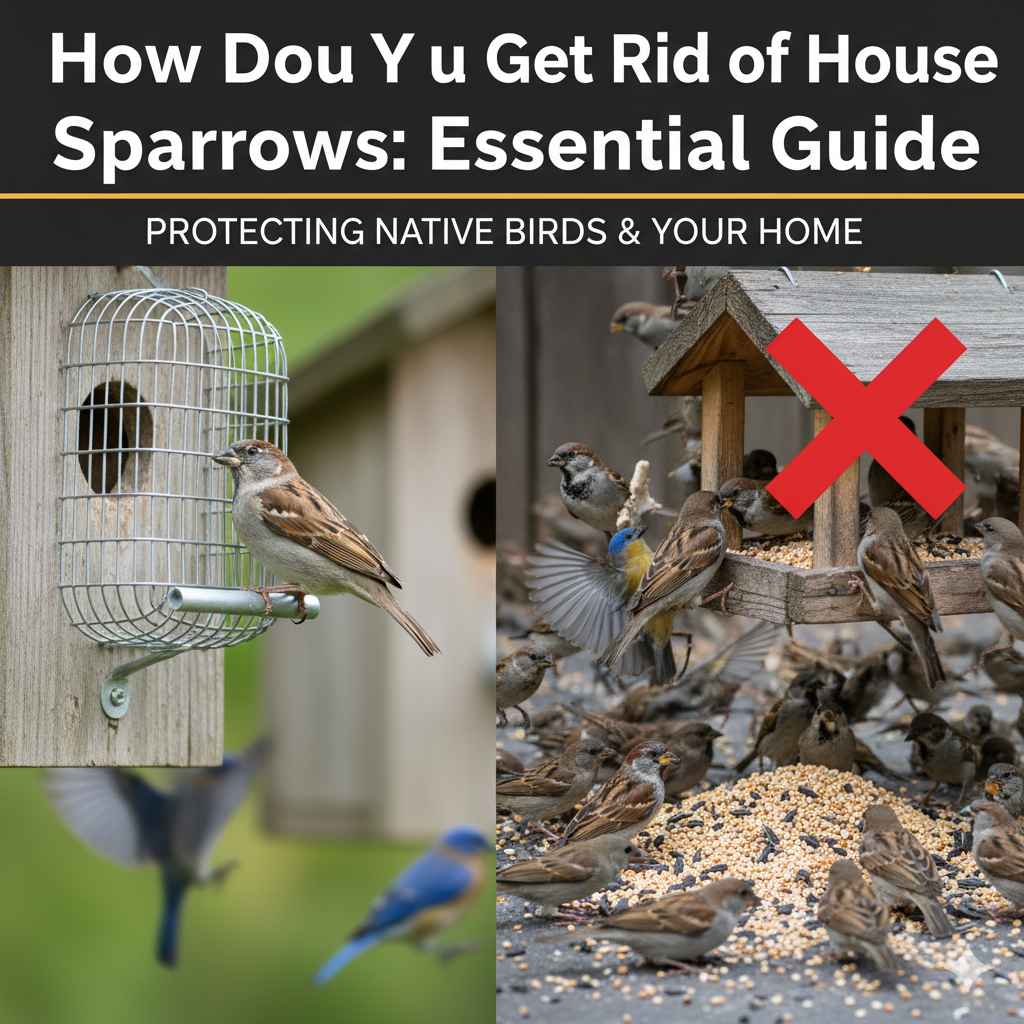
- Switch Seed Types: Sparrows love cheap mixed seed that contains millet and cracked corn. Switch to sunflower seeds or safflower seeds, which sparrows generally dislike.
- Use Sparrow-Proof Feeders: Invest in feeders designed with cages or weight-activated perches that only allow smaller birds (like finches) access, or larger birds (like doves) to feed on the ground, not the sparrows.
- Clean Up Spills Immediately: Sweep or rake under feeders daily. Seed on the ground is an open invitation.
- Consider Temporary Removal: If the problem is severe, take feeders down for a few weeks. This forces the sparrows to find food elsewhere until they move on.
Don’t forget pet food! If you feed pets outside, bring their bowls in immediately after they finish eating. Fallen crumbs from picnics or outdoor cooking areas should also be cleaned up quickly.
Removing Nesting Materials and Sites
Sparrows use grass clippings, string, feathers, and lint to build their bulky nests. Keep your yard tidy.
- Keep dense, overgrown shrubs trimmed, especially near the house. Sparrows prefer cover near their food source.
- Regularly check sheds, unused barbecues, window air conditioning units, and under decking for signs of early nesting activity. If you find an active nest (with eggs or chicks), you must wait until the young have fledged before removal, as it might be illegal to disturb active nests of certain birds. However, because house sparrows are non-native and non-protected in many areas, check your specific state regulations regarding removal timing.
Humane Deterrents: Encouraging Them to Move On
Once you have sealed entry points and removed easy food, you can use deterrents to make the remaining area uncomfortable for sparrows. These methods aim to startle or annoy the birds without harming them.
Visual Deterrents
Sparrows are easily frightened by movement and shiny, erratic objects. These work best when moved around frequently so the birds do not get used to them.
- Reflective Tape or Ribbon: Shiny, holographic tape that flutters in the breeze reflects light unpredictably, which scares birds. Place strips near problem areas or above feeders.
- Predator Decoys: Plastic owls or hawks can work initially. The key here is movement. If you leave a plastic owl in one spot for weeks, the sparrows will realize it is fake. Move the decoy every few days to mimic a real predator.
- Visual Netting: For large areas like eaves or patios where exclusion is difficult, bird netting can be stretched tightly. Use black or dark netting, as it is less visible from a distance. Ensure the mesh is small enough that birds cannot get tangled.
Auditory Deterrents
Some deterrents use sound to drive birds away. These can be effective but sometimes annoy neighbors, so use them cautiously.
Distress Calls: Specialized electronic devices broadcast the distress calls of sparrows or their predators. These sounds are highly stressful for the birds and cause them to leave the area quickly. Always ensure these devices comply with local noise ordinances.
Physical Deterrents for Ledges and Beams
If sparrows are roosting or landing on ledges, beams, or railings, you need to make those surfaces uncomfortable for them to stand on.
Bird Spikes: These are not designed to harm the bird but to prevent them from landing. They are blunt metal or plastic strips installed along ledges. They make landing impossible. Install them tightly along all surfaces where the birds perch. They are excellent for protecting areas like sign lettering or window sills.
Tension Wire Systems: For wider areas, a thin, spring-loaded wire is installed just above the surface. When a bird attempts to land, the wire flexes, causing an unstable landing that sends them flying away. These are very effective and often less visually intrusive than spikes.
What About Legal and Ethical Considerations?
This is a critical part of managing any wildlife. In the United States, the Migratory Bird Treaty Act (MBTA) protects almost all native migratory bird species. House sparrows (along with starlings and pigeons) are considered non-native, invasive species in many regions, meaning they often fall outside MBTA protection. This makes control methods easier.
However, local ordinances, county laws, or homeowners association (HOA) rules might still restrict certain types of pest control or require permits for specific methods. Always confirm your local laws before attempting removal, especially when dealing with nests or trapping.
When using exclusion or deterrents, the goal is always humane management. We want to encourage the sparrows to move elsewhere, not cause them injury. Focus on making your space undesirable.
Troubleshooting Common Sparrow Issues
Even with the best plan, sparrows can be persistent. Here are solutions for specific frustrating scenarios.
Scenario 1: Sparrows in Outdoor Lighting Fixtures
These fixtures offer a perfect, semi-enclosed nesting spot. If you find nests inside a lamp housing:
- Turn the power off at the breaker for safety.
- Carefully remove the nest material.
- Install a small piece of hardware cloth or fine metal mesh over the fixture opening, ensuring the light can still shine out effectively or that the fixture is redesigned to be bird-proofed. Some commercial outdoor light covers come with built-in barriers.
Scenario 2: Nests Under Solar Panels
Solar panels create a perfect, warm, sheltered void. This is a common, costly problem as nests can damage wiring.
The solution here is comprehensive perimeter exclusion:
- Install specialized solar panel pigeon/bird skirting—a wire mesh barrier that attaches neatly around the entire perimeter of the panel array, preventing access underneath without touching the panels themselves.
- This barrier must be low enough and tight enough to stop sparrows from crawling in. Consult a professional installer if you are unsure about installing this around electrical equipment.
Scenario 3: Persistent Roosting on Roof Lines
If they keep coming back to the same roof peak or beam:
- Use bird spikes or tension wire systems (as mentioned before) along that specific line.
- Use a high-pressure garden hose early in the morning (when they are settling in) to briefly spray the area. A sudden burst of water usually sends them off long enough for you to install a physical deterrent.
The Role of Trapping (Use with Extreme Caution)
Trapping house sparrows is a control measure, but it is often the last resort. If you choose this route, you must understand the legal implications and humane handling requirements.
Because house sparrows are generally not protected, trapping might be legal where you live, but you must verify this first. If trapping is allowed, you will need a trap designed for small birds (like a box trap or funnel trap).
Safety and Ethics of Trapping:
- Never use traps that could harm the bird (e.g., glue traps or traps involving hooks).
- If you trap birds, you must immediately deal with them according to local wildlife laws. This usually means relocation far away or humane euthanasia, which requires specific training and adherence to humane standards.
- If you are uncomfortable with the responsibility of trapping and disposal, this method should be left to licensed pest control professionals. For beginners, focus entirely on exclusion and habitat modification first.
Most often, persistent application of exclusion techniques makes trapping unnecessary. Think of exclusion as your primary defense line—strong, reliable, and safe.
Long-Term Management and Maintenance
Getting rid of house sparrows is rarely a one-time job; it requires commitment to maintenance. Think of it like taking care of a fence—it needs regular checks to stay strong.
Annual Inspection Schedule
Make it a habit to inspect your home’s exterior twice a year. A good time to do this is:
- Early Spring (March/April): Before nesting season begins, check for any wear and tear on your seals and clean out any debris that might have accumulated over winter. This is your best chance to stop a nest before it starts.
- Late Fall (October/November): Check for damage caused by summer nesting or strong weather. Repair any loose siding, caulk cracks, and ensure vent screens are still firmly in place before winter roosting begins.
Maintaining a Sparrow-Resistant Landscape
Keep the surrounding area unattractive. Even if you are feeding other birds, be vigilant about the ground underneath your feeders. Sparrows are ground feeders and will quickly take advantage of anything dropped.
Consider using high-quality, squirrel-proof bird feeders that are challenging for house sparrows to access. Remember, a well-managed yard is a less attractive yard for persistent pests.

FAQ: Beginner Questions About House Sparrows
Q1: How quickly can house sparrows nest in my eaves?
A: Very quickly! If a small gap exists, a pair can scout it out in an afternoon and start bringing in nesting material the very next day, especially during spring and summer nesting seasons.
Q2: Are house sparrows considered invasive?
A: Yes, in North America and many other places outside their native Eurasia and North Africa, they are considered an invasive species because they aggressively out-compete native birds like bluebirds and swallows for nesting cavities.
Q3: Will I accidentally trap a native songbird if I set a trap?
A: Yes, this is a major risk. Native birds like chickadees, wrens, or finches can easily enter small bird traps. This is why humane control methods like sealing holes and removing food are strongly recommended over trapping for beginners.
Q4: How long does it take for sparrows to leave an area after I remove their food?
A: If the food source is the only thing attracting them, they may move on within a week or two. If they also have a secure nesting spot nearby, they might stay longer, relying on food from elsewhere, until the nesting cycle is complete.
Q5: Is it safe to scare them off using loud noises every day?
A: Short-term loud noises can work as a deterrent, but sparrows quickly acclimate to repetitive sounds. For a long-term solution, physical barriers (exclusion) are always better than relying on noise.
Q6: What is the most important thing I must do first?
A: The single most important step is sealing every single entry point into your attic, vents, and eaves. If they cannot get inside, they cannot cause damage or nest where you do not want them.
Conclusion: Enjoying a Sparrow-Free Space
Dealing with house sparrows requires patience and a systematic approach. By focusing first on sealing every possible entry point (exclusion), then removing easy access to food and shelter (habitat modification), and finally using harmless visual reminders (deterrents), you build a strong defense system.
You have the knowledge now to assess your property, choose the right materials—like hardware cloth for vents or caulk for cracks—and start making changes today. Remember, small gaps lead to big problems, so be thorough in your inspection. With consistent effort and a focus on prevention, you will successfully discourage house sparrows and create a much more peaceful, cleaner environment around your home. Start with that inspection today, and you will see results soon!