How to Determine Draw Length for a Bow: Wingspan Method
The simplest way to determine your bow draw length is to measure your full arm span — fingertip to fingertip with both arms stretched straight out to the sides — then divide that number by 2.5. This wingspan method is accurate to within about 3/4 inch for most people and is the standard starting point coaches use. For more on this, see our guide on DIY Hair Bows With Ribbon No Sew. For more on this, see our guide on How Do You Point The Arrow In One Move.
Welcome to the range! If you’re new to archery, one of the first things that can feel confusing is figuring out the right size for your equipment. Getting your bow draw length wrong is like wearing shoes that are too small—it hurts your performance and makes learning difficult. Many beginners feel frustrated when their arrows group poorly, but often, the root cause is simply an incorrect draw length setting.
Don’t worry; this is one of the easiest things to fix once you know the steps. We are going to walk through the proven, simple methods used by coaches worldwide to find your perfect fit. This measurement is essential for safety, accuracy, and enjoying archery. Let’s find your perfect draw length so you can focus on hitting the bullseye!
Why Draw Length Is the Most Essential Measurement in Archery
Think of your bow’s draw length as the “sweet spot” for your personal mechanics. It dictates how far you pull the string back before releasing the arrow. If it’s too short, you are not using the full potential energy stored in the bow limbs. If it’s too long, you will struggle to anchor consistently, leading to sloppy releases and potential injury.
The Impact on Performance and Comfort
- Consistency: A correct draw length allows you to anchor your hand in the exact same spot every single time. Consistency is the foundation of accuracy.
- Power: A properly matched draw length ensures you are drawing the bow to its optimal weight for your body, maximizing arrow speed and kinetic energy.
- Safety: Drawing a bow too long can strain your shoulder and back muscles, leading to long-term injury.
Understanding this measurement is crucial whether you shoot a recurve, compound, or traditional longbow. While the tools differ slightly, the principle remains the same: match the bow to the archer.

Method 1: The Official Tape Measure Technique (The Gold Standard)
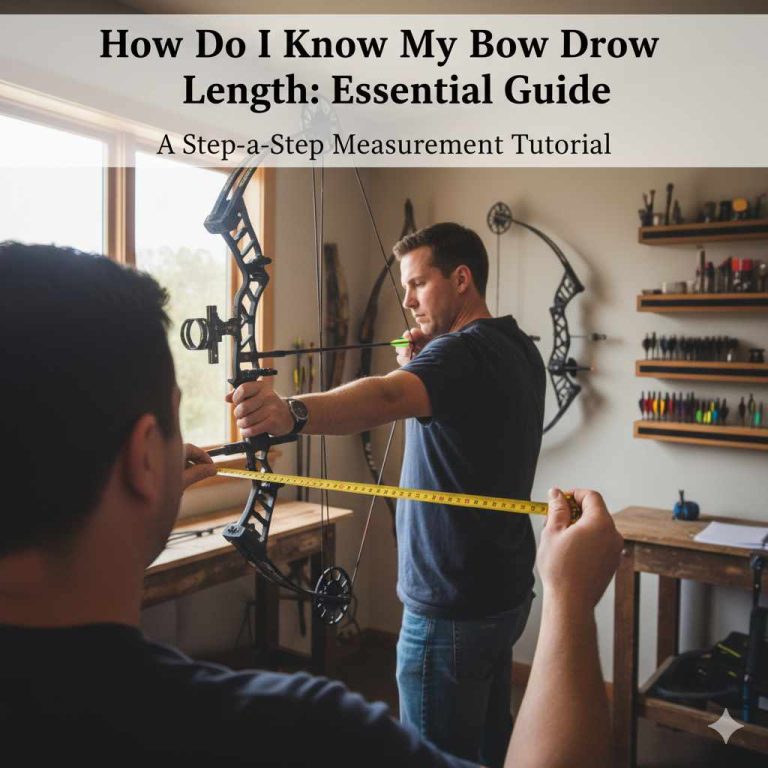
This method is the most accurate way to determine your draw length, especially when purchasing a new bow or setting up an adjustable compound bow. It mimics the physical action of drawing the bow safely without actually having the bow present.
Tools You Will Need
- A flexible tape measure (or a rigid measuring stick).
- A friend or assistant to help you hold the measuring device steady.
- A mirror, if possible, to check your stance.
Step-by-Step Guide to Measuring Your Reach
This measurement relies on your “wingspan,” which in most people, closely matches their height. However, measuring the reach directly is more reliable.
Step 1: Stand Tall and Relaxed
Stand perfectly straight with your feet shoulder-width apart. Keep your arms relaxed at your sides. You want a natural, unstressed posture, as this is how you will eventually anchor your shot.
Step 2: Extend Both Arms Sideways
Stand with your back against a wall and stretch BOTH arms straight out to your sides in a T shape, palms facing forward, at shoulder height. Keep both arms as straight as possible and your hands relaxed — don’t stretch your fingertips or hunch your shoulders forward, as this skews the measurement.
Step 3: Measure Fingertip to Fingertip
Have your assistant measure the total distance from the tip of your middle finger on one hand, straight across, to the tip of your middle finger on the other hand. This full measurement is your wingspan (arm span).
Step 4: Calculate the Draw Length Factor
Archers have a standard mathematical conversion factor used to translate this wingspan measurement into a functional draw length. For most bow types, you divide your total wingspan by 2.5.
Formula: Wingspan (in inches) ÷ 2.5 = Calculated Draw Length (in inches)
Example: If your wingspan is 70 inches, 70 ÷ 2.5 = 28 inches. Your starting draw length is 28 inches.
This result gives you a baseline. It is highly recommended to check this measurement against Method 2 to confirm your findings.
Method 2: The Paper Test or “String Stretch” Method (Archery-Specific)
This is the most direct way to determine draw length if you already have access to a bow (even a low-poundage training bow) or a piece of paracord cut to a similar length. This method simulates the actual draw process.
Tools Required
- A bow (preferably one with adjustable limbs or a low-poundage recurve).
- A long piece of string or a measuring tape for comparison.
- A partner or a stable spot to anchor the bow.
The Process for Finding Your Anchor Point
This method focuses on finding the consistent physical spot where your drawing hand naturally rests when your arm is fully extended.
- Establish a Stable Anchor: For most beginners, the anchor point is where the string touches the corner of your mouth, or sometimes slightly below your jawline (the “kisser button” spot). This must be firm and repeatable.
- Draw the Bow Safely: Place the arrow on the rest. Slowly draw the bowstring back, keeping your drawing elbow high and aligned with your shoulder. Do not overdraw.
- Find the Natural Stop: Stop drawing the moment you feel natural resistance and your hand naturally settles against your anchor point (mouth corner).
- Measure the Gap: While holding the string lightly at your anchor point, have a partner measure the distance from the bow’s string nock groove (where the arrow rests) to the grip’s throat (the inside edge of the bow handle where it meets the riser).
- Compare and Adjust: This measurement, when compared to the bow’s physical draw length setting (often marked on the cams of a compound bow), tells you if you need to adjust the limb bolts or cam modules.
Note: For traditional bows, which often have fixed limbs, the goal here is to ensure you are not overdrawing the bow past what the physical limb structure allows comfortably.
Best Pick to Confirm Your Result
Carbon Express CX Draw Length Arrow Guide
Confirms your calculated draw length in Method 1 with an actual measuring arrow before you buy or cut real arrows.
- Best for: verifying your wingspan-formula result before ordering arrows
- Why we picked it: purpose-built guide arrow takes the guesswork out of measuring
- Main drawback: an extra tool, but cheap insurance against a wrong purchase
Compare more options
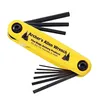 Option 1 Pine Ridge Archer’s Allen Wrench Set with Holster
| 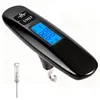 Option 2 AHOSOUTLY Archery Bow Scale, 110lb
| 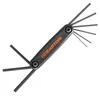 Option 3 Easton HEX Wrench, Fold-Up Allen Wrench
|
As an Amazon Associate we earn from qualifying purchases.
Compound vs. Recurve Bows: Understanding the Difference
The way draw length is set up varies significantly between the two main types of modern bows. Beginners must understand these differences to adjust their equipment correctly.
Compound Bow Draw Length Settings
Compound bows use cams (eccentric wheels) that rotate during the draw cycle. These cams often have adjustable modules that allow the archer to physically change the bow’s draw length in half-inch increments. This adjustability is a huge benefit for growing archers or when buying used equipment.
Key Adjustment Point: Check the cams. You will usually find a series of holes or markings where the module can be moved, changing the length. Always consult the manufacturer’s manual for precise adjustments on brands like Archery Trade Association (ATA) member bows.
Recurve Bow Draw Length Settings
Traditional and Olympic-style recurve bows rely less on mechanical adjustment and more on the archer’s body measurement. The draw length is determined by the length of the limbs relative to the riser (handle).
For a recurve, once you find your measurement using Method 1, you select a bow that matches that length rating (e.g., a 28-inch draw). If you purchase a takedown recurve, the length is largely set by the riser length combined with the limb length.
The Key Recurve Measurement: For recurves, the crucial measurement is often taken from the string groove (when held at the anchor point) back to the pivot point of the bow handle (the deepest part of the grip). This confirms the physical measurement against the arrow spine requirement.
The Importance of Arrow Spine Selection Based on Draw Length
Once you know your draw length, your next critical step is choosing the correct arrow spine. This is non-negotiable for safety and accuracy. Arrow spine refers to the stiffness of the arrow shaft.
A stiff arrow pulled by a long draw length will shoot poorly (porpoising or flexing too much). A weak arrow pulled by a short draw length can shatter upon release, which is incredibly dangerous.
Spine Chart Overview
Manufacturers provide spine charts that correlate draw weight (how hard you pull the bow) and your measured draw length to recommend the appropriate spine number (e.g., 300, 400, 500).
For instance, using data generally published by leading archery manufacturers, a beginner might see the following recommendation:
| Draw Length (Inches) | 40 lb Draw Weight (Spine Recommendation) | 55 lb Draw Weight (Spine Recommendation) |
|---|---|---|
| 26.0″ | 500 | 400 |
| 28.0″ | 400 | 340 |
| 30.0″ | 340 | 300 |
Always consult the specific spine chart provided by the company that made your arrows (e.g., Easton or Carbon Express), as materials can change stiffness properties.
Common Pitfalls Beginners Make When Measuring Draw Length
Even with clear instructions, beginners often fall into a few traps. Recognizing these ahead of time will save you hours of frustration later.
Mistake 1: Anchoring Too Far Forward or Back
If you anchor your hand too close to your ear (too far back), you’re over-drawing. If your hand is near your cheekbone but not touching your mouth, you are under-drawing. The anchor must be consistent—usually defined by the string touching the corner of your mouth or the tip of your nose.
Mistake 2: Not Locking the Shoulder Blades
When measuring or drawing, many people lift their drawing shoulder up toward their ear. This shortens the effective draw length and strains the shoulder. You must actively hold your shoulder down and back to engage your back muscles—this is called “back tension.”
Mistake 3: Forgetting to Account for Point-on-Point vs. Nock-on Measurement
Some archers measure from the very tip of the arrow (the point) to the string groove, while others measure from the string groove back to the handle pivot. In modern bow fitting, we almost always measure from the string’s nock groove (where the arrow sits) to the deepest part of the grip (the throat) or use the manufacturer’s specific reference point on the riser. Make sure you know which reference point your bow setter uses.
Mistake 4: Guessing Based on Height Alone
While height is a good starting point (e.g., someone 5’10” often shoots a 28” draw), many factors change this, including limb length and torso-to-arm ratio. Never trust height alone; always confirm with the reach measurement (Method 1).
Adjusting Draw Length on Compound Bows (A Closer Look)
Compound bows offer unparalleled customization, which is great, but requires precision when adjusting modules.
Tools for Adjustment
- Hex keys (Allen wrenches).
- The bow manufacturer’s module tuning guide.
- A bow press (Often required for major adjustments, best left to a pro shop for the first time).
The Process
Most modern compound cams have “draw length stops” built into the modules. To change from a 27-inch draw to a 27.5-inch draw, you typically:
- Identify the current module setting (usually indicated by a number or letter).
- Unscrew the module bolts slightly.
- Move the module one position clockwise or counter-clockwise, depending on whether you need longer or shorter.
- Tighten the bolts securely.
Safety Tip: Never attempt to adjust the limb bolts (which change the draw weight) while simultaneously changing the draw length modules, unless explicitly instructed by the manufacturer. Always perform adjustments slowly and evenly. If you feel unsure, visit an archery pro shop; they can often adjust this in minutes for a small fee, ensuring safety and precision.
Using External Resources for Draw Length Verification
While the two methods above are sufficient for most archers, sometimes cross-referencing helps build confidence. Reputable outdoor and sporting associations often provide generalized sizing guides.
For example, while not a direct measurement tool, educational resources related to youth archery programs emphasize fitting the archer to the bow correctly to promote safety. Organizations like university extension programs often publish guides on safe archery practice that stress correct equipment fit, reinforcing that draw length is foundational to good form, similar to how proper stance is foundational to golf.
When shopping for your first bow online, always verify the “size” listed by the seller. If it says “Adjustable 24–30 inches,” you can confidently purchase it, knowing you can set it to your measured length (e.g., 28 inches).

FAQ: Beginner Questions About Draw Length
Q1: If I measure 27.5 inches, should I buy a 27-inch or 28-inch bow?
If you measure exactly between increments (like 27.5 inches), it is generally recommended to start with the shorter setting (27 inches) first. It is safer to be slightly undershot than slightly overdrawn, especially when learning. You can always creep forward slightly on the string to gain that extra half-inch for comfort.
Q2: Does my draw weight affect my draw length measurement?
No. Your draw length is determined by your body’s physical geometry (arm span and anchor point). Your draw weight (how heavy the bow feels) affects your ability to hold that length consistently, but it does not change the physical measurement itself.
Q3: Can a beginner buy a bow without knowing their draw length?
It’s risky. For recurve bows, you must know your approximate length to buy the right size limbs. For compound bows, you can buy one that is fully adjustable (e.g., 24″ to 30″), but you still need to measure and set it correctly before shooting.
Q4: What is “string pinch” and how does it relate to draw length?
String pinch occurs on compounds when you draw the bow back too far, causing the string to contact your wrist or forearm awkwardly, often because the cam system is set too long. This results in a loss of control and painful shots. Correct draw length prevents string pinch.
Q5: How often do I need to re-measure my draw length?
For adults, draw length usually remains stable unless there are significant physical changes (like major weight loss/gain or injury). For young archers, you should re-measure every 6 to 12 months as they grow rapidly. If you notice sudden accuracy loss, check your anchor point first, then re-measure.
Q6: What if I use a different anchor point (e.g., below the jaw)? Does the measurement change?
Yes, the final draw length measurement of the arrow needs to correspond to that specific anchor. If you anchor lower (like under the chin), the physical draw length (string to nock) will likely be shorter than if you anchor high by the ear. Always use the same anchor point you intend to use during practice when performing Method 2.
Testing Your New Draw Length: The Final Check
Once you have set your draw length—whether by purchasing a bow matched to your measurement or adjusting a compound cam—it’s time for a final, safe test before putting on heavy arrows.
The Check List
- Draw and Anchor: Draw the bow back slowly. Does your drawing hand settle naturally and comfortably into your established anchor point (mouth/jaw)?
- Feel for Strain: Do you have to strain your shoulder or overextend your neck to reach the anchor? If yes, shorten the draw length by a quarter-inch.
- Eye Alignment: When anchored, are you looking straight down the arrow shaft toward your target? If the arrow is pointing significantly high or low relative to your dominant eye line, adjust the anchor point slightly rather than changing the draw length.
- The Release: Execute a few practice releases (without an arrow) to ensure the bow “lets off” easily without slamming your hand forward aggressively. A correct length provides a smooth, controlled stop.
Remember, the goal isn’t just to match a number; it’s to find the length where your body mechanics work together harmoniously. A perfectly set draw length should feel comfortable, strong, and repeatable. You shouldn’t have to fight the bow to hold it at full draw.