How Do Sparrows Eat: Essential Survival
Sparrows eat a varied diet of seeds, grains, insects, and even human food scraps. Learning what sparrows eat is key to understanding their survival, from finding nutritious seeds to catching small insects. This knowledge helps us appreciate their adaptability in different environments. For more on this, see our guide on How Do You Make Pew Bows.
When you see a small bird flitting about, chances are it might be a sparrow! These common little birds are everywhere, from bustling city parks to quiet country fields. But have you ever stopped to wonder exactly how they manage to survive with such a varied diet? It can seem like a simple question, but understanding a sparrow’s eating habits reveals a lot about their incredible adaptability and how they find nourishment. Don’t worry if you’re curious, because we’re going to break down exactly what sparrows eat and why it’s so important for their survival.
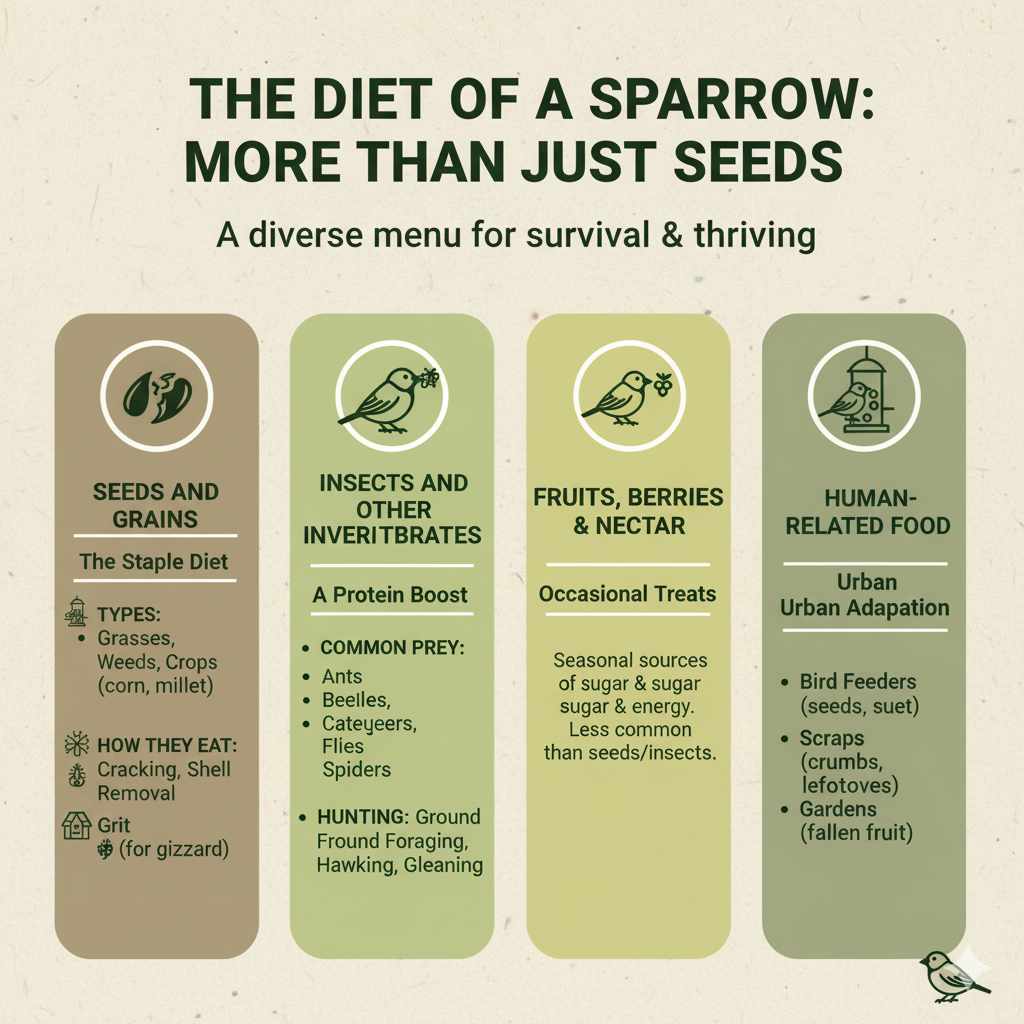
The Diet of a Sparrow: More Than Just Seeds
Sparrows are often thought of as seed-eaters, and that’s certainly a big part of their diet. However, their menu is much more diverse, changing with the seasons and the availability of food. This flexibility is a major reason they thrive in so many different places.
Seeds and Grains: The Staple Diet
Seeds and grains form the backbone of most sparrow diets. They are packed with carbohydrates for energy and essential nutrients. Sparrows have specially adapted beaks to handle a variety of seeds.
Types of Seeds:
Grasses (like foxtail, timothy, and fescue)
Weeds (like thistle, dandelion, and pigweed)
Crops (like corn, wheat, and millet when available)
How They Eat Seeds:
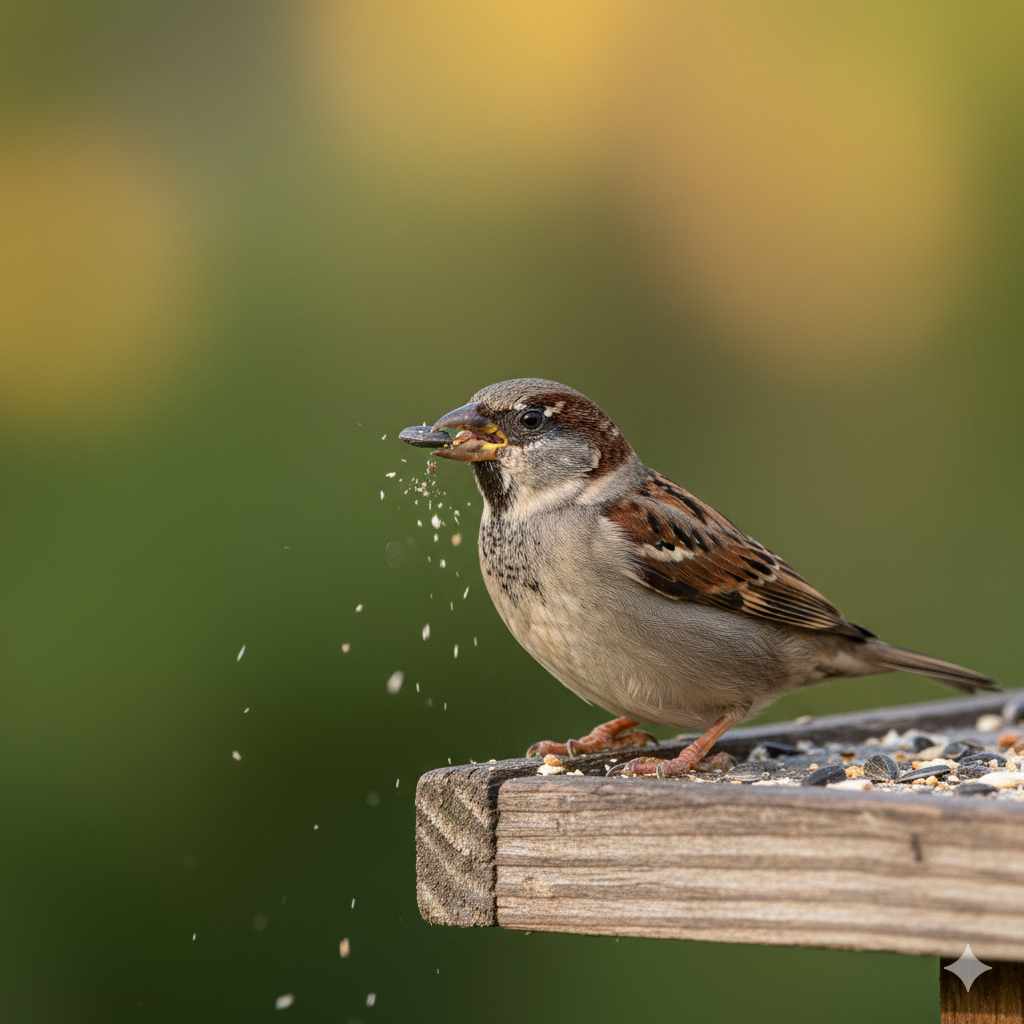
Cracking: Their beaks act like tiny nutcrackers. They hold a seed in their beak and use the powerful muscles in their jaw to crack the outer shell.
Shell Removal: Once cracked, they often push the husk away with their tongue before swallowing the inner kernel.
Grit: Sparrows, like other birds, will ingest small stones or grit. This grit is stored in their gizzard, a muscular organ that grinds food, helping to break down tough seeds that they can’t crack with their beak alone. You can learn more about bird digestion at All About Birds.
Insects and Other Invertebrates: A Protein Boost
While seeds are abundant, insects provide crucial protein and other nutrients, especially for young sparrows. During the breeding season, protein-rich insects are vital for the growth of chicks.
Common Prey:
Ants
Beetles
Spiders
Caterpillars
Flies
Grasshoppers (small ones)
Hunting Techniques:
Ground Foraging: Most sparrow species forage on the ground, hopping and pecking at insects they find in grass, leaf litter, or soil.
Aerial Hawking: Some sparrows will also snatch flying insects out of the air, darting and twisting with impressive agility.
Gleaning: They meticulously search leaves, branches, and even buildings for insects and their larvae.
Fruits, Berries, and Nectar: Occasional Treats
Depending on the species and the season, sparrows may also supplement their diet with fruits, berries, and sometimes even nectar.
Fruits and Berries: These are often consumed when other food sources are scarce or when they are particularly ripe and plentiful. They provide extra sugars for energy.
Nectar: Some sparrows might sip nectar from flowers, though this is less common than seeds and insects.
Human-Related Food: Urban Adaptation
Sparrows are incredibly adaptable and have learned to take advantage of food sources provided by humans, especially in urban and suburban areas.
Bird Feeders: Seeds, suet, and even bits of bread are common offerings at bird feeders.
Scraps: Dropped crumbs, leftovers in outdoor trash bins, and food spilled at picnics are easily exploited.
Gardens: They will happily eat fallen fruit or seeds from garden plants.
Key Adaptations for Sparrow Feeding
Sparrows wouldn’t be so successful if they didn’t have the right tools and behaviors for finding and eating their food.
The Sparrow’s Beak: A Versatile Tool
The most distinguishing feature for a sparrow’s diet is its beak. Sparrow beaks are typically conical and strong, perfectly suited for their varied diet but particularly excellent for seed cracking.
Seed Cracking Power: The size and shape of the beak vary slightly between sparrow species, but they generally possess the strength to break open hard seed shells.
Precision for Insects: While strong, the beak is also fine enough to pick up small insects and seeds.
Foraging Behavior: Constant Searching
Sparrows are almost always on the lookout for food. Their active nature means they spend a significant portion of their day searching for their next meal.
Ground Foraging: This is their primary method. They hop around, pecking at anything that looks edible in the grass, on paths, or under bushes.
Flocking: Many sparrows forage in flocks, especially outside the breeding season. This offers safety in numbers and can make it easier to find food as more eyes are scanning the environment.
Vigilance: They are constantly alert for predators while they eat, swiveling their heads and taking frequent breaks to look around.
The Role of Grit
As mentioned earlier, grit plays an essential role in helping sparrows digest their food, especially seeds.
Finding Grit: They find tiny pebbles, sand grains, or even small fragments of shells.
Storage: This grit is stored in the bird’s gizzard.
Grinding Action: The muscular walls of the gizzard contract, rubbing the grit against the ingested food, breaking it down into smaller, digestible pieces. This is vital for birds that lack teeth.
What Do Different Sparrows Eat? A Closer Look
While many sparrows share a similar adaptability, there can be slight differences in their preferred foods based on their habitat and species.
House Sparrow (Passer domesticus)
The most common sparrow we encounter, especially in urban areas, is the House Sparrow. They are incredibly opportunistic feeders.
Primary Diet: Grains and seeds are dominant, especially in rural settings. They readily consume seeds from feeders.
Urban Diet: In cities, they heavily rely on discarded human food, including bread, pastries, rice, and anything dropped in public spaces. They also consume insects year-round but increase insect consumption during breeding season. Studies on House Sparrows have shown their remarkable ability to adapt to anthropogenically modified food environments, as detailed by research such as that found in Scientific Reports.
Song Sparrow (Melospiza melodia)
Often found in more vegetated areas, Song Sparrows have a slightly different emphasis.
Primary Diet: About 75% of their diet consists of insects and other small invertebrates during the warmer months.
Winter Diet: In winter, their diet shifts to nearly 100% seeds and grains from grasses and weeds.
Foraging: They are adept at foraging in dense undergrowth, searching for insects and seeds among fallen leaves and low vegetation.
Chipping Sparrow (Spizella passerina)
Common in open woodlands and parks, Chipping Sparrows have a distinct preference.
Primary Diet: Tiny seeds make up over 60% of their diet, with a strong preference for grass seeds.
Insect Consumption: Insects, particularly caterpillars and ants, are important, especially for feeding young. They also eat beetles and other small invertebrates.
Habits: They often forage on the ground, pecking at seeds and insects.
White-Throated Sparrow (Zonotrichia albicollis)
A beautiful northern sparrow that often visits feeders.
Diet: Primarily seeds, grains, and insects.
Seasonal Changes: In summer, insects become more important, while in winter, they rely heavily on seeds. Berries and fruits are also taken opportunistically.
Feeder Visitors: They are known to frequent bird feeders, readily eating millet, cracked corn, and sunflower seeds.
Table: Comparing Diets of Common Sparrow Species
To better illustrate the dietary variations, here’s a look at how the food preferences of a few common sparrow species can differ throughout the year.
| Sparrow Species | Primary Food Type (Breeding Season) | Primary Food Type (Non-Breeding Season) | Key Food Sources | Adaptability to Human Food |
|---|---|---|---|---|
| House Sparrow | Insects and grains | Grains and seeds | Seeds, insects, bread, scraps | Very High |
| Song Sparrow | Insects and invertebrates | Seeds and grains | Insects, spiders, seeds, grain | Moderate |
| Chipping Sparrow | Insects (especially caterpillars) | Grass seeds | Seeds, grass seeds, ants, caterpillars | Low to Moderate |
| White-Throated Sparrow | Insects and seeds | Seeds and grains | Seeds, grain, insects, berries | Moderate |
The Importance of Diet for Sparrow Survival
A sparrow’s ability to eat a wide range of foods is not just a matter of preference; it’s fundamental to its survival in diverse and often challenging environments.
Energy for Daily Life
Sparrows are small, active birds. They need a constant supply of energy to fuel their high metabolism. Seeds and grains provide carbohydrates for immediate energy, while fats from insects and seeds offer sustained energy reserves.
Growth and Reproduction
For young sparrows, especially, protein is paramount. Insects are rich in the amino acids and fats necessary for rapid growth from hatchling to fledgling. Adult sparrows also need ample protein for muscle repair and egg production during the breeding season.
Adapting to Seasons
The changing seasons present different food availabilities. Sparrows that can switch from insect-heavy diets in summer to seed-heavy diets in winter are far more likely to survive. This dietary flexibility allows them to remain in an area year-round or to migrate effectively.
Navigating Human Environments
In urban and suburban areas, human activity has profoundly altered the food landscape. Sparrows that can exploit human-provided food sources like bird feeders and scraps have a significant advantage. This explains their prevalence around human settlements.
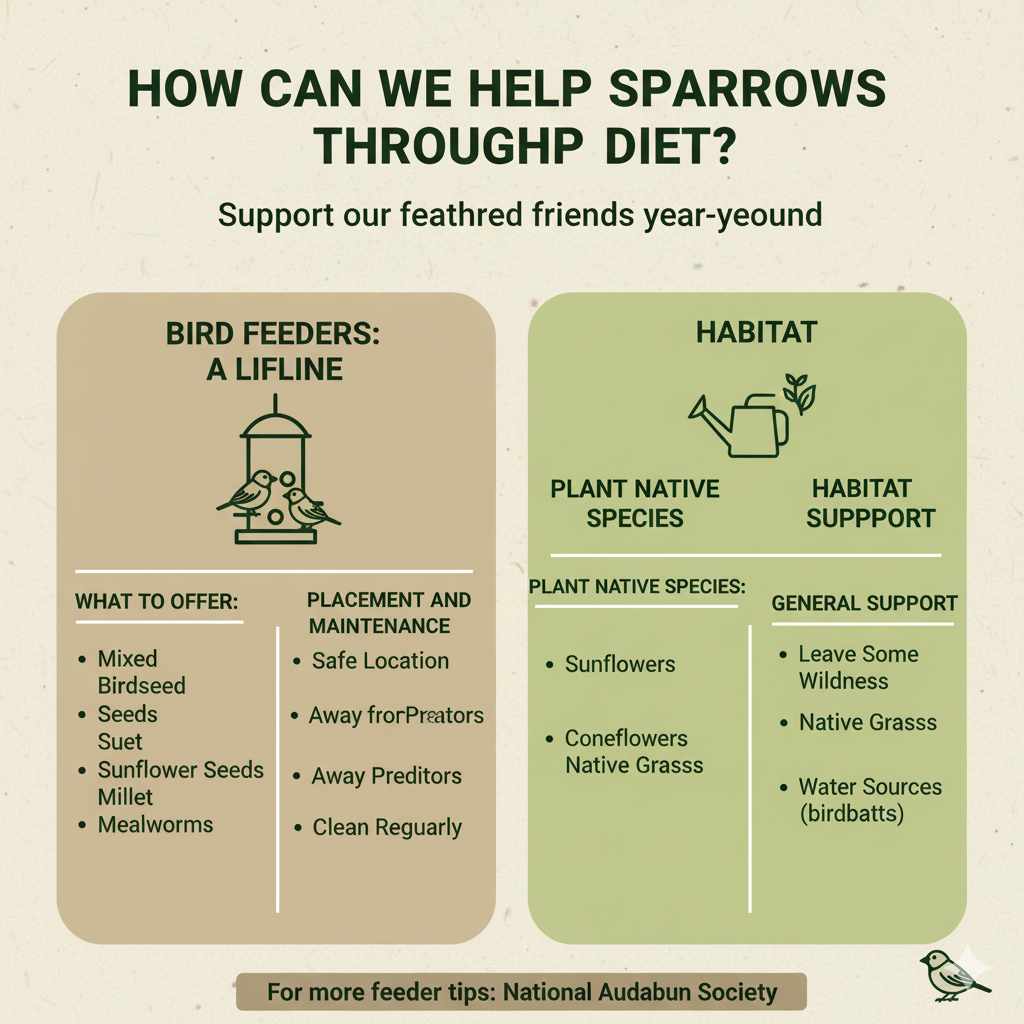
How Can We Help Sparrows Through Their Diet?
Understanding what sparrows eat allows us to better support them, especially in increasingly developed areas.
Bird Feeders: A Lifeline
Providing a well-stocked bird feeder can make a big difference for sparrows, particularly in winter when natural food sources are scarce.
What to Offer:
Mixed Birdseed: Look for blends with a good percentage of smaller seeds like millet and cracked corn.
Sunflower Seeds (Black Oil): While sparrows love these, they can be a bit large for some. Offering them cracked or in a suet feeder can help.
Millet: Small white or red millet is a favorite of many sparrow species.
Suet: Especially good in winter for providing fat and calories.
Mealworms: A high-protein treat that some sparrows will readily eat from a feeder or platform.
Placement and Maintenance: Place feeders in a safe location, away from predators, and clean them regularly to prevent disease. For more feeder tips, check out the National Audubon Society.
What to Avoid Feeding Sparrows
While sparrows eat many things, some human foods are not healthy for them.
Bread and Crackers: These offer little nutritional value. While they will eat them, they fill up on empty calories and can miss out on essential nutrients.
Salty Foods: Salt is detrimental to birds.
Moldy Foods: Can cause serious illness.
Processed Snacks: Often contain artificial ingredients and high levels of salt or sugar.
Habitat Support
Even without feeders, supporting natural food sources is crucial.
Native Plants: Planting native trees, shrubs, and flowers that produce seeds and attract insects provides natural food. For example, plants like sunflowers, coneflowers, and native grasses are excellent.
Leave Some Wildness: Allowing a corner of your yard to grow a bit wild, with seed-producing weeds and natural ground cover, can provide valuable food and shelter.
* Water Sources: Access to clean water for drinking and bathing is also essential for their health and survival.
Frequently Asked Questions About How Sparrows Eat
What is the most common food for sparrows?
The most common food for sparrows is seeds and grains, which provide them with essential carbohydrates and energy. However, their diet is very adaptable and includes a significant amount of insects and other small invertebrates, especially during the breeding season.
Do sparrows eat insects?
Yes, sparrows definitely eat insects! Insects, spiders, and other small invertebrates are a vital part of their diet, particularly for growing chicks. They catch insects by foraging on the ground or by snapping them out of the air.
Can sparrows eat bread?
Sparrows will eat bread, and it’s common to see them scavenging for crumbs. However, bread offers very little nutritional value and can fill them up quickly, preventing them from seeking out more nutritious foods like seeds and insects. It’s best to avoid feeding bread to sparrows if possible.
What kind of seeds do sparrows prefer?
Sparrows generally prefer smaller seeds such as millet, cracked corn, and smaller varieties of sunflower seeds. They have beaks adapted for cracking seeds, and these types are easy for them to handle and digest. Wild grass seeds and weed seeds are also a staple in their natural environment.
How do sparrows crack seeds?
Sparrows use their strong, conical beaks to hold a seed and their powerful jaw muscles to crack the outer shell. They often use their tongue to remove the husk before swallowing the nutrient-rich kernel. For very hard seeds, they may rely on grit in their gizzard to help grind them down.
Why do sparrows eat grit?
Sparrows eat grit, which are small stones or sand particles, to aid in digestion. They store this grit in their gizzard, a muscular organ. The gizzard then grinds the food along with the grit, helping to break down tough materials like seeds that their beaks alone cannot fully process.
Are sparrows good for the environment?
Yes, sparrows play a role in the ecosystem. As seed dispersers and insect controllers, they help manage plant populations and insect numbers. Their presence also provides a food source for predators like hawks and owls, contributing to the overall balance of local wildlife.
Conclusion
Watching how sparrows eat is a fascinating glimpse into the resilience of nature. Their ability to thrive on a diverse diet—from tiny seeds and nutritious grains to juicy insects and even the occasional human handout—is a testament to their remarkable adaptability. It’s this dietary flexibility, coupled with their keen foraging skills and specialized beaks, that allows them to be one of the most widespread bird species on Earth. By understanding their needs, whether it’s providing appropriate food at feeders or supporting natural habitats, we can all play a small part in ensuring these familiar, chirpy birds continue to thrive. So, the next time you see a sparrow, remember the incredible work that goes into every peck and seed-crack – it’s all essential survival.