How Do Field Lines Point: Unlocking Magnetic Mysteries
Have you ever wondered why a compass needle points north or how electricity flows through a wire? These everyday phenomena are all explained by the fascinating concept of field lines.
Understanding how field lines point can unlock secrets about the world around you. Imagine having the power to visualize forces that are invisible yet essential to life. This article will unravel the mysteries behind field lines and show you how they direct the forces that shape our universe.
With clear explanations and engaging examples, you’ll gain insights that will change the way you see magnetic and electric fields. Get ready to dive into a topic that is not only intriguing but also crucial for grasping the fundamentals of physics. Keep reading to explore how these invisible lines guide the forces that impact your daily life.

Credit: glasp.co
Magnetic Field Basics
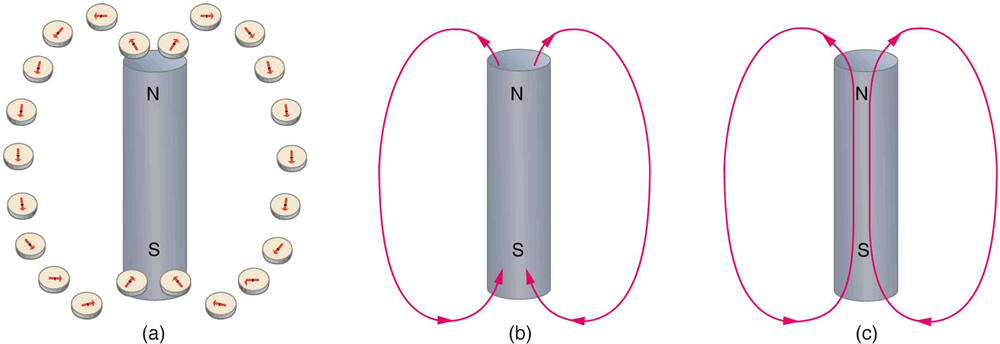
Magnetic fields are invisible forcesaround magnetic objects. They have a direction and strength. Field lines show this direction. These lines start from the north pole. They end at the south pole. They never cross each other. Stronger fields have more lines. Weaker fieldshave fewer lines.
The Earth has its own magnetic field. It acts like a giant magnet. This helps us with navigation. Animals use it too. Birds follow magnetic paths when they fly.
Magnets are common sources. They have two poles. Electricity can create magnetic fields too. This happens in wires. When electricity flows, it makes a field. The more electricity, the stronger the field. Earth itself is a big magnetic source. It has a magnetic core. This core spins and creates Earth’s field.
Credit: courses.lumenlearning.com
Field Line Concepts
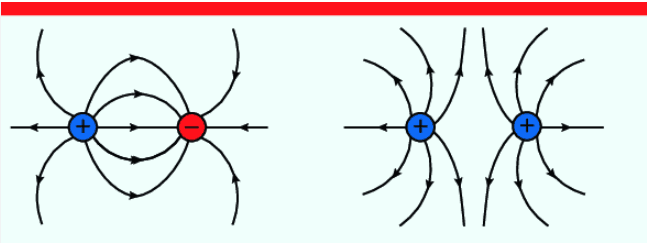
Field lines are like invisible paths. They show how forces act. Imagine them as arrows. Arrows point to where the force goes. Field lines help us see how forces move. They help us understand electric fields and magnetic fields. These lines never cross each other. They start from positive charges. They end at negative charges. They show the direction of the field. They tell us the strength too. More lines mean stronger force.
Field lines have special rules. They show force direction. They start and end at charges. Lines never cross each other. They make loops in magnetic fields. Lines are closer in strong fields. They spread out in weak fields. They always form closed loops for magnets. They make patterns that help us understand fields. These lines are tools. Tools for learning about forces.
Directionality Of Field Lines
Field lines show how forces work. They start at the north pole. Then they go to the south pole. These lines never cross each other. They make a path that is clear. This path shows the direction of force. It is like a map that helps us understand. The lines are closer near poles. They spread out as they move away. This tells us how strong the force is. Strong near the poles, weaker away. This simple pattern helps us learn about forces. It is easy and fun to see how it works.
External forces can change field lines. They can bend or twist them. This happens when something new comes close. Like a magnet or a strong object. The field lines will adjust their path. They will try to include this new force. This shows how flexible field lines are. They can adapt to different situations. This helps us understand how forces interact. It is like a dance of invisible lines. Each one finds its own place. Learning about this is like a puzzle. It is fun to see how the pieces fit together.
Applications Of Magnetic Field Lines
Magnetic field lines help in many technologies. Electric motors use them to move parts. Generators create electricity using these lines. In computers, they store data on disks. Magnetic lines make MRI machines work. This helps doctors see inside bodies. Magnetic levitation trains float on tracks using these lines. Engineers use magnets to sort metals. Magnetic sensors guide robots and cars. These lines are key to many gadgets.
The Earth has a big magnetic field. Compass needles point north because of it. This helps people find directions. Birds use it to fly south in winter. Whales swim long distances using Earth’s field. Satellites use it to stay on course. Scientists study these lines to learn about Earth. Earth’s field protects us from space rays. Without it, life would be harder.

Credit: byjus.com
Challenges In Understanding Field Lines
Field lines are not easy to understand. They show the direction of fields. Calculating these lines is tough. Many factors affect them. Electric and magnetic fields can be confusing. Math is often needed. Some people use formulas. Others use computers. Both ways can be hard.
Current models have limits. They don’t show everything. Real-world fields are more complex. Models can be simple. But they miss details. Sometimes, models make mistakes. They assume too much. This can be a problem. Scientists work to improve models. They want to make them better. But it takes time. And effort.
Future Of Magnetic Field Research
New tools help us see magnetic fieldsbetter. Scientists use advanced machinesand computers. These tools give us clear pictures of fields. They help us understand how fields move and change.
Tiny sensors can now track fields in small places. This helps in studying fields in spaceand earth. These sensors collect data quickly. It helps scientists make quick decisions.
Understanding magnetic fields can lead to new inventions. We might find better ways to use magnets in machines. This can make machines work faster and better.
Knowing more about fields can help us study planets. It can tell us about their coreand atmosphere. This can help us learn about life on other planets.
Frequently Asked Questions
What Are Field Lines In Physics?
Field lines in physics represent the direction and strength of a field, such as electric or magnetic fields. They are imaginary lines that indicate the path a positive test charge would follow. Field lines never intersect and their density indicates the field’s strength at a given point.
How Do Field Lines Indicate Direction?
Field lines indicate direction by pointing from positive to negative charges. In the case of electric fields, they emerge from positive charges and enter negative charges. For magnetic fields, they form closed loops, exiting the north pole and entering the south pole of a magnet.
Why Don’t Field Lines Cross Each Other?
Field lines don’t cross because it would imply two different directions for the field at one point. This is impossible in a consistent field, as each point in space can only have one direction of force. Thus, field lines are always distinct and non-intersecting.
Can Field Lines Represent Field Strength?
Yes, field lines can represent field strength. The density of field lines in a given area indicates the strength of the field. More lines per unit area mean a stronger field. Conversely, fewer lines per area signify a weaker field.
Conclusion
Understanding field lines helps grasp magnetic and electric forces. These lines offer a visual way to see invisible forces. They point from positive to negative charges. This direction shows the path a test charge would take. Visualizing field lines simplifies complex physics concepts.
It aids learning and comprehension. Remember, field lines never cross each other. Each line represents a unique pathway. Studying these lines reveals the nature of force fields. Keep exploring and questioning. The world of physics is vast and fascinating. Embrace the curiosity it sparks.