How Long Is Olympic Archery Range? 70m Distance Explained
The official Olympic archery range is 70 meters long for outdoor target archery. This distance is standardized for both men’s and women’s individual and team events to ensure fair competition, focusing precisely on accuracy and technique at a challenging yet manageable distance for elite athletes.
Ever wondered how far those incredible archers are shooting in the Olympics? It’s a question many of us beginners have when we see arrows flying with such pinpoint precision. The sheer distance can seem daunting! Understanding the official Olympic archery range is key to appreciating the sport and setting realistic goals for your own archery journey. Don’t worry, it’s simpler than you might think, and we’ll break it all down. Get ready to discover the magic behind the 70-meter mark and what it means for archers of all levels.
Understanding the Olympic Archery Range: More Than Just Distance
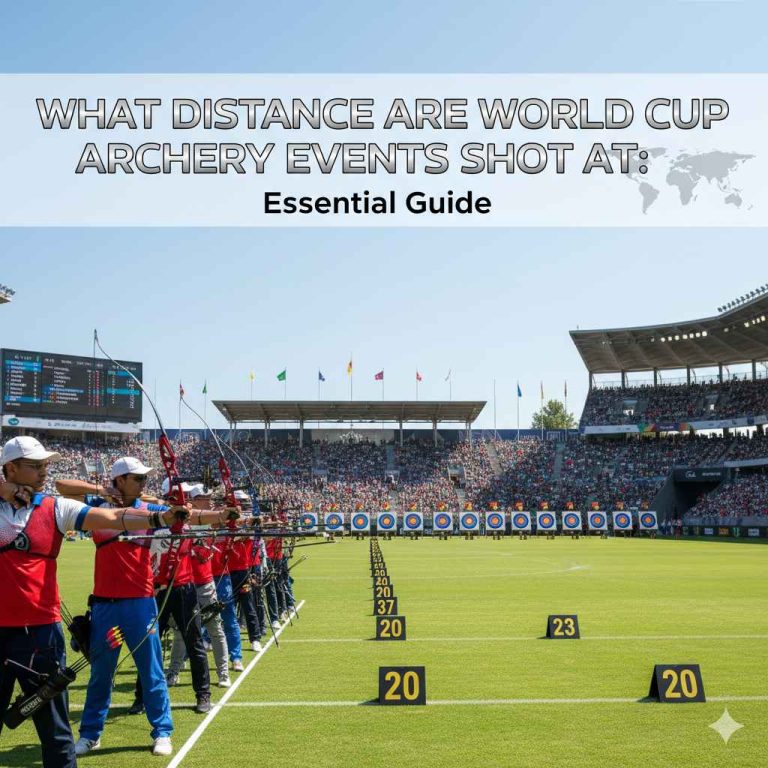
When we talk about the “Olympic archery range,” we’re primarily referring to the outdoor target archery distance. This is the competition format most people visualize when they think of Olympic archery. It’s an iconic distance where athletes demonstrate incredible skill, mental fortitude, and physical control.
The Standard: 70 Meters of Precision
For outdoor Olympic archery (which includes the individual and team events), the distance from the archer’s shooting line to the face of the target is precisely 70 meters. This standardized distance ensures a level playing field for all competitors. It’s a challenging yet achievable distance that requires a high degree of accuracy, consistent technique, and controlled breathing.
This 70-meter mark isn’t arbitrary. It’s a distance that:
Tests a wide range of shooting skills.
Allows for noticeable arrow trajectory and wind influence.
Demands precise equipment tuning and consistent form.
Provides a thrilling spectacle for spectators.
Why 70 Meters? The History and Rationale
The choice of 70 meters for Olympic archery has evolved over time. Historically, distances varied significantly. However, consistency became paramount for global competition. The 70-meter distance was adopted to strike a balance:
Challenge without Impossibility: It’s far enough to require distinct technique and equipment adjustments, but not so far that only a handful of athletes could ever perform consistently.
Equipment Development: This distance pushes the boundaries of bow technology, arrow aerodynamics, and sight systems, encouraging innovation within the sport.
Visibility and Spectacle: From a spectator’s perspective, 70 meters allows for the target to be seen clearly in arenas, while still showcasing the archer’s focus and the arrow’s flight.
According to World Archery, the international governing body for archery, the 70m distance has been the standard for Olympic Games since the 2004 Athens Olympics, solidifying its place as the benchmark for elite outdoor target archery. You can find more details on their official rules at World Archery.
What About Indoor Archery?
It’s important to note that while 70 meters is the outdoor Olympic standard, indoor archery competitions often use different distances. For example, World Archery indoor championships typically feature a 18-meter distance. This highlights how different disciplines within archery cater to varying skill sets and environmental factors. For beginners, starting with shorter, more manageable indoor distances is often a great way to build confidence and fundamental skills before tackling longer outdoor ranges.

Olympic Archery Target Face: Size Matters
The target itself is as crucial as the distance. For the 70-meter outdoor range, Olympic archers shoot at a specific target face.
Target Dimensions and Scoring Zones
The official target face for the 70-meter distance is known as the ” Mundial” target. It has a diameter of 122 cm. This might sound large, but remember the archer is 70 meters away! The target is divided into ten concentric rings, with the center being the highest scoring zone.
Here’s a breakdown of the scoring zones:
Gold: Rings 10 and 9 (Innermost)
Red: Rings 8 and 7
Blue: Rings 6 and 5
Black: Rings 4 and 3
White: Rings 2 and 1 (Outermost)
| Score Ring | Color | Diameter of Scoring Zone |
|---|---|---|
| 10 | Gold | 12.3 cm |
| 9 | Gold | 24.6 cm |
| 8 | Red | 36.9 cm |
| 7 | Red | 49.2 cm |
| 6 | Blue | 61.5 cm |
| 5 | Blue | 73.8 cm |
| 4 | Black | 86.1 cm |
| 3 | Black | 98.4 cm |
| 2 | White | 110.7 cm |
| 1 | White | 122.0 cm |
The “X” ring inside the 10-ring is used for tie-breaking. If two archers have the same score, the archer with more “X”s wins.
Why This Target Size?
The 122 cm target face at 70 meters is designed to:
Reward Accuracy: It provides a significant challenge, especially the inner gold rings, where a slight deviation can mean a missed 10 or even a miss entirely.
Be Visible: It’s large enough to be seen clearly by archers and spectators from a distance.
Allow for Correction: While demanding, it’s not so small that minor fluctuations in technique or external factors (like wind) render scoring impossible.
Olympic Archery Setup: Beyond the Range Length
The 70-meter range isn’t just an open field with a target. The entire setup is meticulously designed for optimal competition.
The Shooting Line
This is where the archer stands. It’s a clearly marked line behind which all archers must stand while shooting. Stepping over the line results in a penalty or disqualification.
The Archery Field
A standard outdoor archery field for competitions like the Olympics needs to be quite extensive. Beyond the 70-meter shooting distance, there needs to be a safe zone behind the targets for the arrows to pass through (or be stopped), ensuring no one is in danger if an arrow misses the target entirely. World Archery rules specify a minimum safety zone of 50 meters behind the target, meaning the entire area dedicated to a single target lane can be over 120 meters long.
Environmental Factors and Training
The 70-meter distance means archers must contend with environmental factors that would be less noticeable at shorter ranges.
Wind: This is the archer’s biggest adversary. Even a slight breeze can push an arrow off course. Elite archers spend countless hours practicing in various wind conditions to learn how to compensate. They learn to read the wind, adjust their aim, and shoot during lulls.
Temperature and Humidity: These can slightly affect the arrow’s flight and the archer’s comfort and grip.
Light Conditions: Sunrise, sunset, and changing cloud cover can alter atmospheric conditions.
Olympic archers train relentlessly to master shooting at 70 meters, often practicing their routine in conditions that mimic competition. For us beginners, understanding these challenges helps us appreciate the skill involved and reminds us that mastering even shorter distances takes dedication.
Equipment Considerations for 70 Meters
Shooting at 70 meters requires specific equipment designed for this distance.
Bow Draw Weight: While not excessively high for Olympic recurve archers, the draw weight needs to be sufficient to propel the arrow with enough speed and stability over the distance.
Arrow Spine: The stiffness of the arrow (its “spine”) must be perfectly matched to the bow’s draw weight and the archer’s draw length to ensure the arrow flies straight. At 70 meters, an improperly spined arrow can lead to significant misses.
Sight Pins: Archers use adjustable sights with specific pins or markings for different aiming points. For 70 meters, the sight will be set very high compared to closer distances. The archer is essentially aiming slightly above the target to account for arrow drop.
Arrow Rest: A well-tuned arrow rest is crucial for consistent arrow flight.
How Beginners Can Approach the 70-Meter Challenge
As a beginner, the thought of 70 meters might seem like scaling Mount Everest. But don’t let it discourage you! Archery is a journey, and everyone starts somewhere.
Start Close, Build Up
The most important advice for any beginner is to start with shorter distances. Your first targets might be as close as 5, 10, or 15 meters. Focus on mastering the fundamentals:
1. Stance: Learn a stable and balanced stance.
2. Grip: A relaxed, consistent grip is vital.
3. Anchor Point: Always return to the same anchor point on your face.
4. Aiming: Develop a consistent aiming method.
5. Release: A smooth, surprise release is key to accuracy.
6. Follow-Through: Maintain your form after the arrow leaves the bow.
For excellent resources on beginner archery form, check out guides from organizations like USA Archery.
Gradual Progression
Once you can consistently hit a target at a shorter distance (say, hitting the target 8 out of 10 times at 10 meters), you can start increasing the distance. Your club or coach will guide you on when and how to move back to 20m, 30m, and eventually, longer distances as your skills develop.
Understanding Trajectory
As you move further back, you’ll notice how much the arrow drops. This is called trajectory. At 70 meters, this drop is significant. Olympic archers aim well above the center of the target to compensate for this drop. This is why having a good sight system and understanding how to adjust it is so important for longer distances.
Practice Makes Perfect (and Patient!)
Don’t expect to shoot 70 meters accurately overnight. It takes practice, patience, and often, good coaching. Even shooting at 30 or 40 meters regularly will build skills necessary for longer distances.
Key Differences: Olympic Archery vs. Other Archery Disciplines
While “Olympic archery range” usually means the 70m outdoor target, it’s good to know archery has many forms.
Field Archery
Field archery is shot over a varied terrain with targets at unknown distances, often in wooded areas. The distances can range from very short to over 80 yards (about 73 meters, so similar in extreme cases, but with much more variability and environmental challenge). This discipline tests different skills, including judging distance and adapting to uneven ground.
3D Archery
This involves shooting at life-sized animal targets made of foam, placed at various distances (often marked) in a natural setting. It’s popular among bowhunters and simulates hunting scenarios. Distances are typically closer than Olympic archery but vary widely.
Indoor Target Archery
As mentioned, this is usually at 18 meters for competition. It’s a test of pure accuracy under controlled conditions, where wind is not a factor, and the archer focuses solely on form.
Compound vs. Recurve in the Olympics
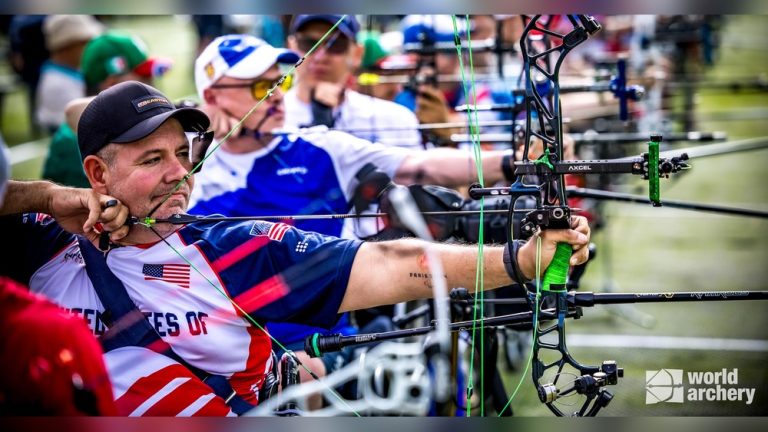
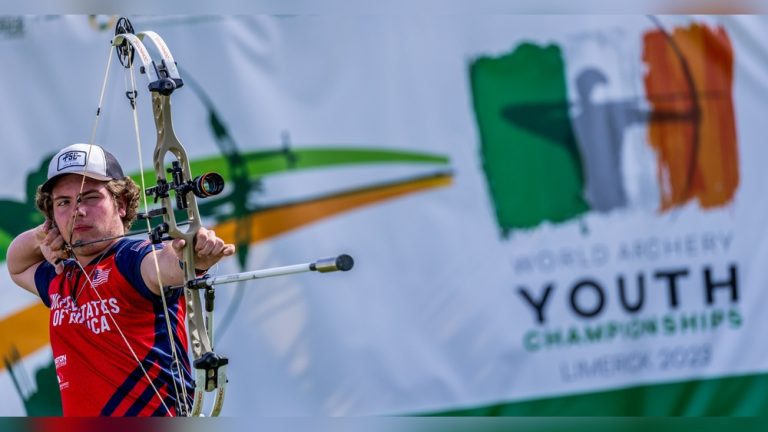
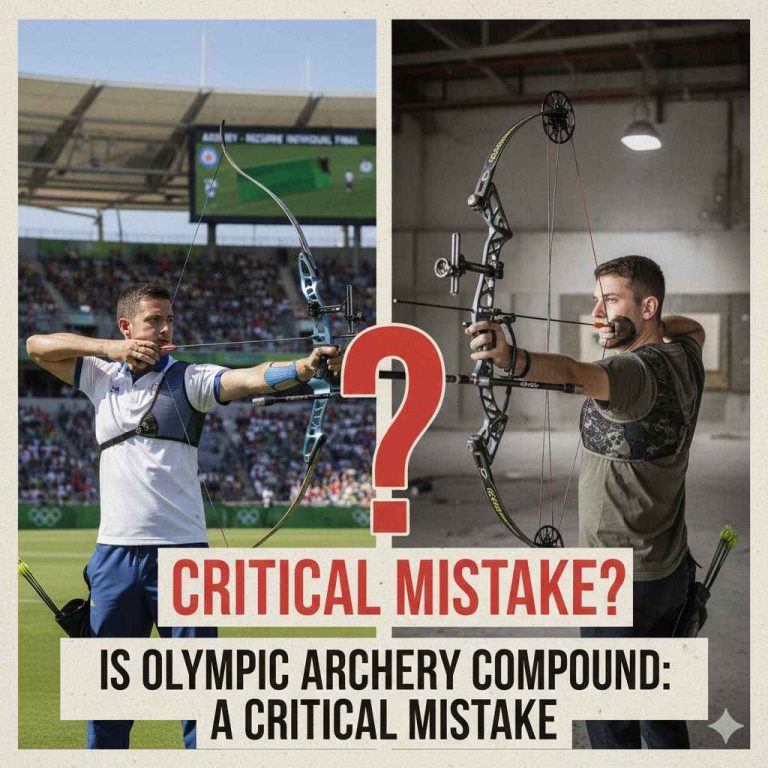
You’ll see recurve bows in the Olympics. Compound bows, with their advanced sights and release aids, are incredibly powerful and accurate but are not currently part of the Olympic Games. Recurve archery, as performed in the Olympics, relies more on the archer’s strength, control, and body mechanics.

Frequently Asked Questions (FAQ)
What is the standard distance for Olympic archery?
The standard distance for outdoor Olympic archery (both individual and team events) is 70 meters from the shooting line to the face of the target.
Are all Olympic archery events shot at 70 meters?
No, only the outdoor target archery disciplines are shot at 70 meters. Indoor archery competitions, for instance, use much shorter distances, typically 18 meters.
What is the size of an Olympic archery target at 70 meters?
The target face used at 70 meters has a diameter of 122 centimeters (approximately 48 inches).
Does wind significantly affect Olympic archers at 70 meters?
Yes, wind is a major factor at 70 meters. Elite archers spend a great deal of time learning to read and compensate for wind, as even a light breeze can significantly alter an arrow’s trajectory.
Can beginners shoot at 70 meters?
While possible, it’s highly recommended for beginners to start at much shorter distances (e.g., 5-15 meters) and gradually increase the range as their skills and confidence develop. Focusing on fundamental techniques at closer distances is crucial for long-term success.
What type of bows are used in Olympic archery?
Only recurve bows are used in Olympic archery. Compound bows, while popular in other archery disciplines, are not part of the Olympic program.
How does an archer aim at 70 meters?
Archers use a sight attached to their bow. At 70 meters, they aim significantly above the target to account for the arrow’s natural drop due to gravity. The specific aiming point on the sight is adjusted based on practice and conditions.
Conclusion: Appreciating the 70-Meter Mark
Now you know that the iconic Olympic archery range is a precise 70 meters. This distance is a cornerstone of the sport, demanding a blend of incredible physical skill, mental discipline, and finely tuned equipment. It’s a distance that has been proven to test archers thoroughly, showcasing the pinnacle of human accuracy and control.
As a beginner, don’t feel pressured to hit this mark immediately! Remember that every Olympic champion started with their first shot, likely at a very short distance. Your journey in archery is about building skills step-by-step, understanding your equipment, and enjoying the process. Focus on mastering those fundamentals, practice consistently, and you’ll gradually increase your range and accuracy.
The 70-meter challenge of the Olympics is a testament to dedication and practice. By understanding it, you gain a deeper appreciation for the athletes and a clearer vision for your own path in this rewarding sport. So, grab your bow, focus on your technique, and enjoy every arrow you shoot, no matter the distance!