What Draw Weight Is Best for Archery Competition Beginners
Most competition beginners should start around 20–25 lb on recurve or barebow and about 25–30 lb on compound, then choose the lightest weight that lets them finish a full round with a stable anchor and clean release. Too much weight causes the drawing shoulder to rise, the chest to collapse, and the release to get snatched late in the round. This guide explains how to choose a starting draw weight by bow type, round length, and form control.
What draw weight means in competition
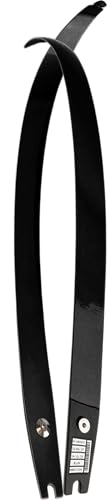
Draw weight is the force required to pull the bowstring to full draw, and it is measured in pounds. On a recurve or longbow, a mark such as 30# @ 28 inches means 30 pounds at 28 inches. That label matters, but it is not the whole story.
Draw length changes the actual number the archer pulls. A longer draw on a recurve or longbow generally increases effective draw weight, while a shorter draw generally lowers the reading. A common rule of thumb says every inch away from 28 inches changes recurve weight by roughly 2 lbs.
Why this matters for a first round
Competition is not a single shot. It is repeated ends, repeated anchor points, and repeated release quality. A bow that feels fine for three arrows can fall apart by the middle of a full round if the poundage is too high for current form and recovery.
Higher draw weight can send arrows faster, but speed helps little if anchor drifts or the bow shoulder rises under fatigue. For beginners, clean execution usually scores better than extra poundage.
What draw weight is best for beginners?
For competition beginners, the best draw weight is the lightest weight that still allows a full round with a steady anchor, a clean release, and no form collapse on later ends. That usually means a lighter recurve or barebow setup than many beginners expect, and a compound setup that is judged by holding weight, not only peak weight.
Adult beginner ranges commonly listed are 20–28 lbs for recurve and 35–55 lbs for compound. Competitive target archers often shoot 35–45 pounds on recurve and 55–70 lbs on compound, but those numbers belong to archers whose form is already stable and repeatable.
Starting ranges by discipline
Recurve and barebow beginners should usually stay in the lower part of the adult beginner range unless they can keep posture and anchor unchanged through a full practice round. Compound beginners need a separate check because let-off reduces holding effort at full draw. That makes higher peak weights more manageable than they would be on a recurve.
Target barebow usually follows recurve-style starting advice because the bow is still held under full draw weight without the same let-off advantage as a compound. For that reason, barebow beginners should think more like recurve shooters than compound shooters when choosing a start weight.
Competition beginner draw-weight table
| Discipline | Estimated current strength | Comfortable end count | Recommended starting range | First-tournament readiness note |
|---|---|---|---|---|
| Recurve | Can draw smoothly with no shoulder rise and no shaking at anchor for several reps | 6 to 8 arrows per end for multiple ends without posture collapse | 20–25 lb for most beginners; stay near the lower end if form is new | Go if the last end looks like the first: same anchor, same follow-through, no rushing |
| Compound | Can reach full draw with steady back tension and keep the sight settled through the hold | 6 to 8 arrows per end with no creeping, no bow-arm shake, and no rushed trigger or release | 25–30 lb peak weight for many beginners, with let-off making holding weight manageable | Go if peak weight does not cause face strain, target panic, or release collapse by the final end |
| Barebow | Can hold a stable anchor without torso lean or string hand drift | 6 to 8 arrows per end while keeping alignment through the last end of practice | 20–25 lb, often closer to recurve starting advice than to compound advice | Go if the bow stays controllable without needing a reset after every arrow |
A simple way to read the table: if the bow feels fine for the first two ends but your anchor shifts by the middle of the round, the draw weight is probably too high for competition readiness. If the bow feels almost too easy but the shot is quiet and repeatable, that lighter weight is often the better tournament choice.
Say your recurve is set at 22 lb and you can shoot six ends without the string creeping off your face. That is a stronger competition sign than a 28 lb bow that forces a head tilt by end four. The lighter bow may score better because the form stays the same.
A common first-timer mistake is choosing a draw weight that feels impressive at the shop instead of one that can be held steady through a full competitive round. A bow that is “something to grow into” can slow learning now. Tournament scoring rewards the archer who can repeat the shot sequence under pressure, not the archer with the highest marked poundage.
How do you know if a bow is too heavy?
A bow is too heavy when the archer can no longer keep anchor, posture, and release quality steady through the whole session. The clearest signs are anchor drift, a raised drawing shoulder, a collapsing chest, rushed release, and groups that open up as the round goes on. Fatigue that lingers into the next session is another warning sign.
Practical self-check before a tournament
Use this check on a normal practice day, not a fresh one-off shot. The point is to see whether form survives repetition, since a tournament demands the last end as much as the first.
- Warm up and shoot one short end at easy pace.
- Continue for several ends, watching whether anchor stays in the same place.
- Check whether the bow shoulder rises or the release gets snatched as the session continues.
- Stop if the last end shows obvious collapse, not just mild tiredness.
- Note whether you recover normally by the next day or feel unusually strained.
If the string hand cannot settle at the face, the bow arm wobbles, or the clicker becomes a rush point on compound or recurve work, the setup is too heavy for competition use right now. The issue is not only comfort. It is consistency.
Picture a beginner with a 26 lb recurve who starts well, then begins leaning back after the fifth end because the draw feels longer than expected. That archer is overbowed even if the bow was manageable for the first few arrows. A tournament will magnify that problem.
Recurve and compound are not the same
Recurve bow ratings are usually stated at 28 inches, so draw length matters a great deal. Compound bows need separate measurement logic because peak draw weight and holding weight are different numbers. Let-off reduces the weight held at full draw, which is why a compound can feel lighter at anchor than a recurve with a similar peak reading.
Why barebow follows recurve logic
Barebow shooters still have to control a bow under full draw weight without compound-style let-off. For that reason, barebow beginners usually do better with recurve-like starting poundage than with the higher numbers often seen in compound target setups.
Adult beginners are commonly listed at 20–28 lbs recurve and 35–55 lbs compound, but the lower end of those ranges is usually the smarter opening point for a first competition cycle. The goal is not to match advanced shooters. It is to complete a round without form breakdown.
Bow scale checks matter
A bow scale should be used to verify actual draw weight instead of trusting the label alone. Marked poundage can shift with draw length, limb type, and setup. A scale removes the guesswork and helps confirm whether the bow is truly fit for a beginner’s current shot pattern.
That matters even more when a shooter changes arrows, limb bolts, or draw length. The label on the limb is not the full story, and competition relies on repeatable numbers more than optimistic assumptions.
Should you increase draw weight before a tournament?
Only increase draw weight before a tournament if the current weight is clearly too light for control and the new weight still allows a stable anchor through the final end. A small increase can make sense when the bow feels easy, the shot stays calm, and the change can be verified with a bow scale. Otherwise, staying lighter is the smarter call.
When a small increase makes sense
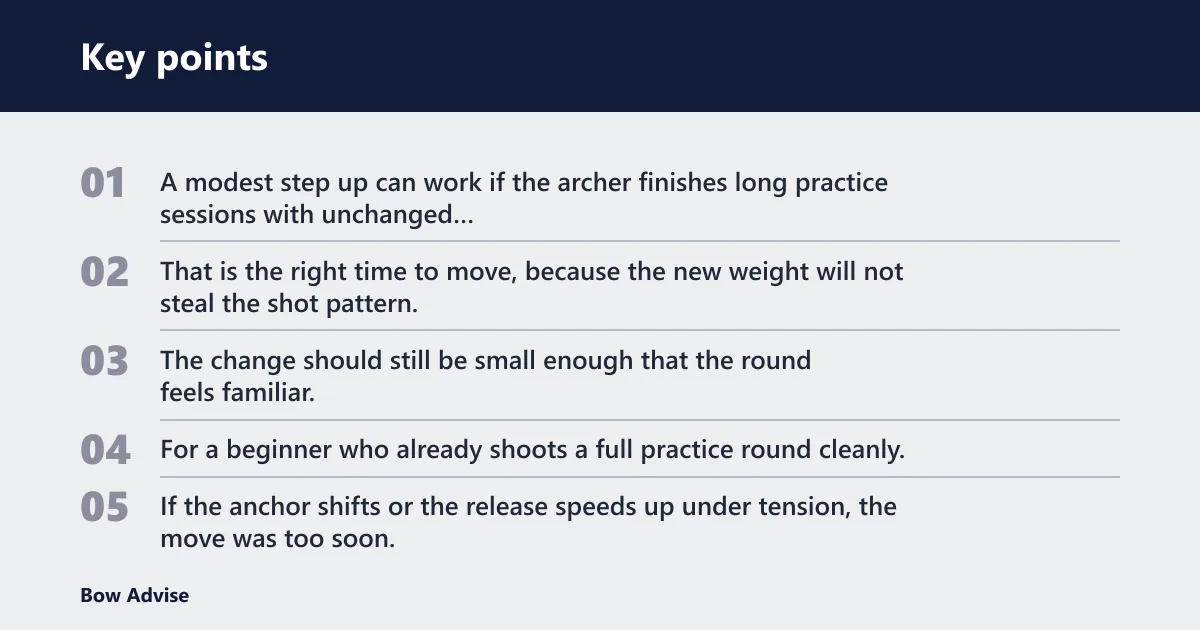
A modest step up can work if the archer finishes long practice sessions with unchanged posture, clean release, and no late-session collapse. That is the right time to move, because the new weight will not steal the shot pattern. The change should still be small enough that the round feels familiar.
For a beginner who already shoots a full practice round cleanly, a small increase may be reasonable after the bow is measured again and the first few practice ends look the same as the last few. If the anchor shifts or the release speeds up under tension, the move was too soon.
When to stay lighter
If the archer can finish only a short practice block before form starts to fall apart, the answer is no. That is true even if the bow feels manageable at the start. Competition exposes fatigue later in the round, so the safer choice is the draw weight that survives the whole session.
Should draw weight be different for recurve and compound competition? Yes. Recurve and barebow usually start lighter because the archer must hold and control the full draw weight directly, while compound shooters can tolerate more peak weight because let-off lowers what they actually hold. The setup must match the discipline, not a single universal number.
A bow shop or coach can help fit and measure the bow, but the final decision should still come back to form under repetition. If a bow passes the scale yet fails the last end, it is still too heavy for first-tournament use.
Frequently asked questions
What draw weight should a beginner use for archery competition?
Most competition beginners should start around 20–25 lb on recurve or barebow and about 25–30 lb on compound. The right choice is the lightest weight that still allows a full round with stable anchor, clean release, and no breakdown in posture as fatigue builds.
Is 20 lb enough for a beginner competition recurve bow?
Yes, 20 lb can be enough for a beginner recurve in competition, especially if it allows consistent anchor and clean shots through the whole round. It is too light only if the archer has already outgrown it and still keeps perfect form at a higher verified weight.
What draw weight is too heavy for a new archer?
A draw weight is too heavy when the bow causes anchor drift, shoulder rise, rushed release, or fatigue that changes the shot from end to end. If the archer cannot finish the session with the same form seen at the start, the bow is overbowed for now.
Does draw weight need to be different for recurve and compound competition?
Yes. Recurve and barebow usually need lighter starting weight because the archer holds the full draw directly, while compound uses peak weight and let-off, which lowers the holding load. That is why compound beginners often start differently from recurve beginners.
How do I know if my bow is overbowed?
Look for inconsistent anchor, tense shoulders, shaking at full draw, rushed release, and worse groups as the session continues. If those signs appear after only a few ends, the bow is likely too heavy. A bow scale and a practice round are better checks than the limb label alone.
How much draw weight do competitive adult archers usually shoot?
Competitive adults are often listed at 34–44 lbs for recurve and 55–70 lbs for compound. Those numbers describe experienced target archers, not starting beginners. A new archer should not copy them before form, anchor, and release are stable through a full round.