Arrow Spine vs Draw Weight: Beginner Chart for Archers
I start with actual draw weight at full draw, then pick a spine from the maker’s chart. After that, I move one spine stiffer for heavy points or longer arrows, and one spine weaker for lighter points or shorter arrows. Get it wrong and arrows fly badly, tune turns ugly, and broken shafts or bad groups burn money. This guide gives a simple beginner chart for recurve and compound bows, plus the exact point-weight and arrow-length changes that shift spine one step stiffer or weaker.
| Decision factor | Arrow Spine | Draw Weight for Beginner Archers: The Complete Chart | Winner |
|---|---|---|---|
| What it solves first | Matches shaft stiffness to the bow setup | Starts with the bow load you can actually draw | Draw Weight for Beginner Archers: The Complete Chart |
| Beginner ease | Needs spine, length, and point weight all lined up | Gives a cleaner starting point before shaft choice | Draw Weight for Beginner Archers: The Complete Chart |
| Tuning precision | Wins once you know your measured draw and arrow build | Useful only as the first step | Arrow Spine |
| Fit for recurve and compound | Same spine label can behave differently by setup | Needs more adjustment between bow types | Arrow Spine |
| Best use case | Buying shafts and finalizing a build | Choosing where to start before you shop | Tie |
What arrow spine actually means


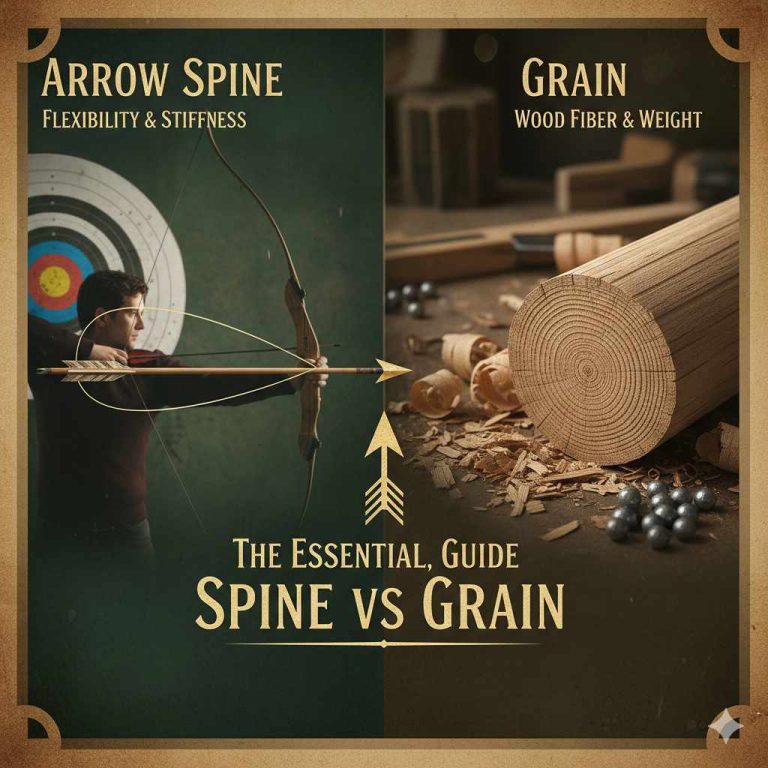
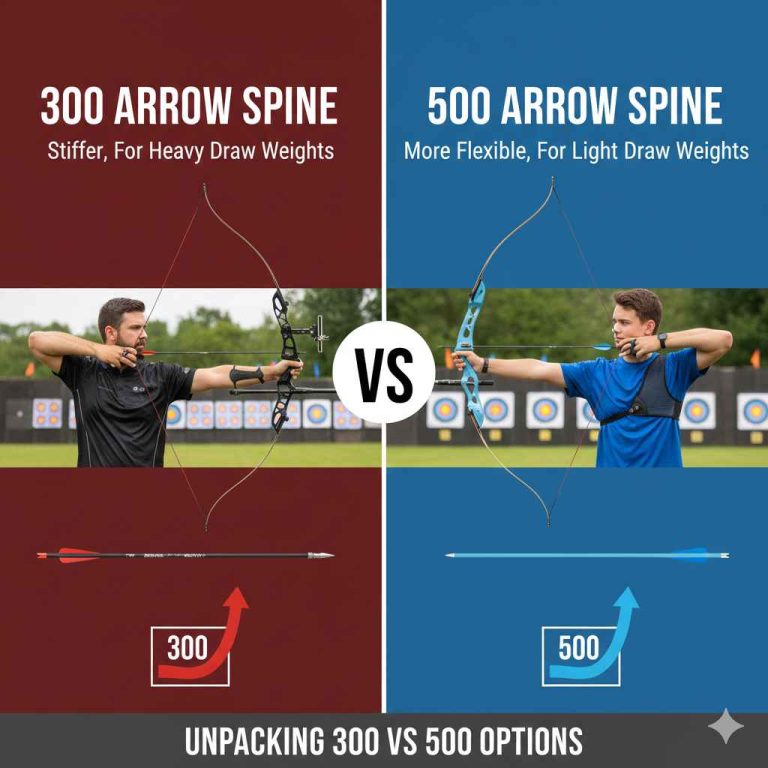
Arrow spine is the shaft’s stiffness rating. A lower number, like 300, is generally stiffer than 340 or 400, so the number by itself is not very informative until you also consider draw weight, finished arrow length, and point weight.
I treat static spine as the start, not the answer. The shaft only shows its real behavior after it leaves the string, and that dynamic spine is where beginners get tripped up.
Why spine changes after you add a point
In my experience, heavier front-end mass makes the shaft act weaker. A 100-grain point can change how the same shaft behaves compared with a lighter one, and insert and collar hardware matter too.
That matters because beginners often buy a shaft by the number on the box, then change the front end later and wonder why the groups move. The arrow did not change its label; the shot behavior changed.
According to Arrow Weight Calculator: 5 Essential Steps to Get It Right – — The sample arrow length is 29 inches.
Should you buy spine from draw weight or bow label?
Use your actual draw weight at your draw length, not the printed bow label. The label only tells you the bow’s rated weight, while your own draw length can put you several pounds above or below that number.
The label did not help me there. My actual draw weight did.
Why the label on the limb can mislead beginners
A beginner often buys arrows for the bow label, then finds the real draw cycle feels different. On a recurve, actual draw weight still depends on where you anchor. On a compound, let-off changes the feel, but the arrow still cares about the real load at release.
If you are shopping once, shop from measured draw weight. That one habit prevents a lot of weak or stiff shafts on the first buy.
How finished arrow length changes the answer
In general, longer shafts act weaker, and shorter shafts act stiffer. If you leave arrows long for safety or future tuning room, you usually need a stiffer spine than the chart would suggest for a shorter cut shaft.
That is one of the easiest beginner mistakes to fix. A small change in finished arrow length can move the build one spine class either way.
How much cut length changes the choice
I do not treat cut length as a tiny detail. A shorter one usually acts the other way.
If your form is still changing, leave a little room. Just remember that extra length pushes you toward weaker dynamic behavior.
How point weight and front-end parts shift spine
Heavier points weaken dynamic spine. Insert and collar hardware do the same because they add mass at the front of the shaft, and that mass changes how the arrow bends on release.
Beginners often count the point and forget the insert, collar, and other front-end parts. I do not. They all matter once the arrow leaves the string.
Why heavier points make the arrow act weaker
A heavier front end keeps the shaft bending longer through the shot. That makes the arrow act weaker-spined, even if the static spine number never changed.
If you buy a shaft that is already close to the edge, a heavier point can push it into weak behavior. That is why I match point weight after I have the shaft length and draw weight in hand.
Beginner arrow spine chart by draw weight
This is the chart I wish more beginners saw before buying shafts. It starts with actual draw weight, then adjusts for finished arrow length and point weight. Use it as a first-pass chart, then confirm with a shot check.
| Actual draw weight | Finished arrow length | Point weight | Recurve starting spine | Compound starting spine | Move one spine if needed |
|---|---|---|---|---|---|
| 20-24 lb | Longer than 29 in | 100 grains or heavier | 400 | 340 or 400 | Go weaker if shafts are shorter; go stiffer if shafts stay long |
| 25-30 lb | 28-29 in | 100 grains | 400 or 340 | 340 | Move weaker for long shafts, stronger for heavy front ends |
| 30-35 lb | 28-29 in | 100 grains | 340 | 300 or 340 | Choose stiffer if using heavier inserts or collars |
| 35-40 lb | 27-28.5 in | 100 grains | 340 or 300 | 300 | Long shafts push you weaker; short shafts push you stiffer |
How to read the chart
If your measured draw weight lands between rows, start in the middle and move one spine class up or down for length and point weight. Longer arrows and heavier front ends push you weaker. Shorter arrows and lighter front ends push you stiffer.
That is why a 400 spine at one build can feel fine and the same shaft can feel wrong in another. The shaft did not move. Your build changed.
Can beginners use the same chart for recurve and compound?
No, not as a blind copy. Beginners can use the same starting table, but recurve and compound bows do not behave the same at the shot, so the same draw weight can land on different spines.
A compound often sends the arrow with a different release feel and a different front-end demand than a recurve. That is why I treat the chart as shared math, then separate the final choice by bow type.
Where the same draw weight can land on different spines
A recurve shooter at a modest draw weight may need a softer shaft than a compound shooter at the same number on the scale, or the reverse depending on arrow length and point mass. The arrow only cares about the launch conditions.
That is also why a beginner should not copy a friend’s spine choice just because the bow label looks similar. The full build has to match.
What arrow spine do I need for a 20 lb recurve bow?
For a 20 lb recurve, I usually start beginners around a 400 spine if the arrows are on the long side and the point weight is around 100 grains. If the arrows are shorter or the front end is light, I may move one spine stiffer after a few test shots.
That answer is a starting point, not a final verdict. Actual draw weight, finished arrow length, and point weight still decide the real fit.
Why low draw weight can expose overly stiff arrows
Low-poundage recurves often show stiff-arrow behavior fast. The arrow may kick, group wide, or act stubborn in flight because the shaft is too rigid for the launch load.
I see that most with beginners who buy for a label instead of a measured draw. The bow looks light on paper, yet the arrows still behave wrong.
Beginner verification: how I check the first dozen shots
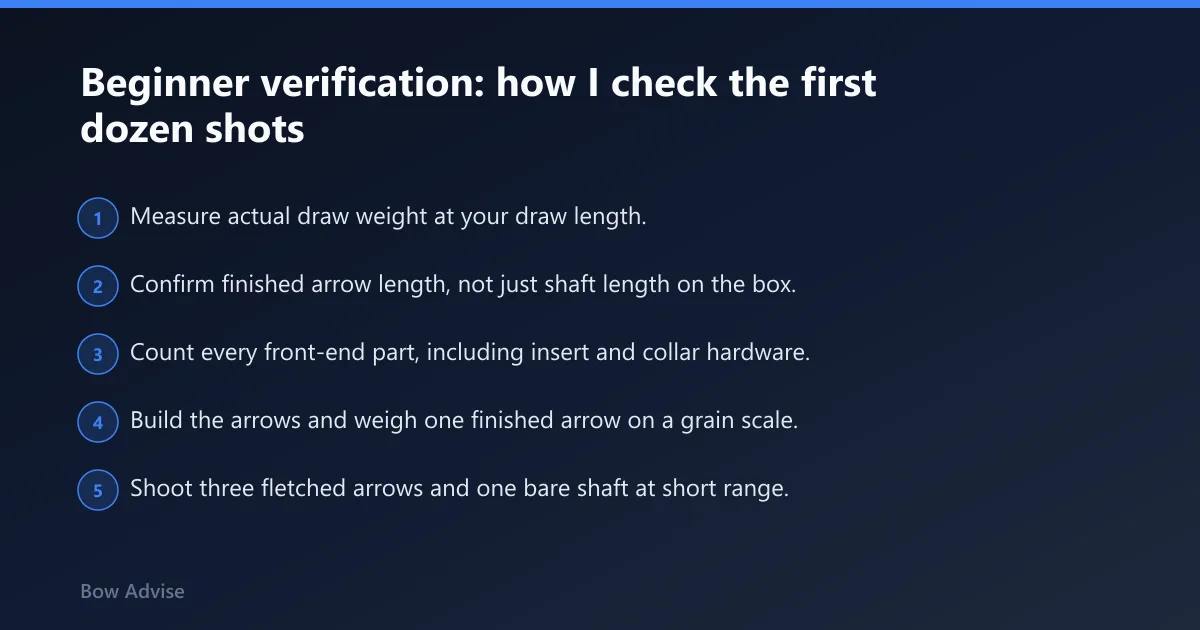
The easiest way to verify arrow spine after buying shafts is a simple shot check, and for recurve archers I start with bare shaft tune. If the bare shaft behaves like the fletched arrows at short range, the build is close enough to keep shooting and refining.
For compounds, I still want a clean paper or close-range check, but beginners do not need a full tuning lesson on day one. They need a clear stiff, weak, or ideal read on the first dozen shots.
- Measure actual draw weight at your draw length.
- Confirm finished arrow length, not just shaft length on the box.
- Count every front-end part, including insert and collar hardware.
- Build the arrows and weigh one finished arrow on a grain scale.
- Shoot three fletched arrows and one bare shaft at short range.
- If the bare shaft lands left or reacts stiff, go weaker only if the chart allows it.
- If it lands right or reacts weak, go stiffer or shorten the shaft if you still can.
What to change first if the arrow misses the mark
If the shaft is too stiff, I usually look at point weight first, then arrow length, then spine class. If it is too weak, I reverse that order and look for a stiffer shaft or a shorter finished length.
That keeps the fix simple. Beginners do not need six variables at once.
How do I match arrow spine to my draw weight?
Measure your actual draw weight at your real anchor, then use that number as the base row on the chart. After that, move one spine stiffer for long arrows or light points, and one spine weaker for short arrows or heavier points. That sequence keeps you from buying by guesswork.
What is the easiest way to verify arrow spine after buying shafts?
Build one arrow, weigh it, and shoot a bare shaft beside your fletched arrows at close range. If the bare shaft tracks well and does not show a clear stiff or weak reaction, you are close. If it does not, change one variable at a time.
Should I choose spine based on actual draw weight or labeled bow weight?
Choose actual draw weight. The label on the bow is only a starting number, and it can hide a big difference once your draw length is measured. That mistake is common, and it is one of the fastest ways to buy the wrong shafts.
How do draw length and arrow length change spine selection?
Draw length tells you the real load, and arrow length changes how that load acts on the shaft. Longer arrows behave weaker, shorter arrows behave stiffer. That is why two archers with the same bow label can land on different spine classes.
Is a heavier point going to make my arrow weaker-spined?
Yes. A heavier point, plus insert and collar hardware, makes the arrow act weaker in flight. That extra front mass changes dynamic spine, so the shaft bends more on release. If you ignore that, the chart can mislead you by one spine class.
What happens if my arrows are too stiff or too weak?
Too stiff, and the arrow often feels dead, fights tune, or groups poorly. Too weak, and it can kick hard, lose clean flight, or become hard to tune. Either way, the bow and arrow are not speaking the same language, and the groups show it fast.
Verdict
Choose Draw Weight for Beginner Archers: The Complete Chart if you are buying your first set and need a clean starting point. Choose Arrow Spine if you already know your measured draw weight and want the shaft choice that fits your finished arrow length, point weight, and tuning goal.
For most beginners, the right order is simple: measure draw weight, pick a chart row, move one spine stiffer or weaker for arrow length and point weight, then verify with the first dozen shots.
Frequently asked questions
Can beginners use the same spine chart for recurve and compound bows?
They can use the same starting chart, but not the same final answer. Recurve and compound bows behave differently at the shot, so the same draw weight may land on different spine needs once arrow length and front-end mass are added.