Why Your Arrows Curve in One Direction: Common Causes and Fixes
Consistent left or right arrow curve usually comes from three causes: launch error, setup error, or wind drift. The pattern tells you which one to fix first. Miss that pattern, and you can waste time tuning the wrong part of the bow while groups stay wide. This guide shows how to read arrow direction by distance and conditions, then work through the most likely fixes in order.
This guide is part of our Arrow direction guide for archers series.
Why arrows curve one way


A one-direction curve is not one problem. It can start at the shot, come from the bow’s setup, or show up only after the arrow leaves the bow and starts fighting air. The first job is to separate those three by what the miss does at short range, at longer range, and in wind.
Distance often makes the miss easier to see, but it does not prove the cause. A 10 mph wind can move arrows at 30 yards, and the farther you are from the target, the more the arrow will drift. That is why the same arrow may look fine at 10 yards and clearly off at 30.
For a right-handed archer, sideways errors tend to throw arrows left; for a left-handed archer, the pattern flips to the right. That pattern is a clue, not a verdict. A right-handed left miss can come from grip torque, plucking, spine mismatch, rest position, or wind.
One-direction curve diagnostic matrix
Use this table as a fast filter. Start with the symptom that matches the shot, then check the quickest test before changing anything. If the arrows only drift at distance, wind moves up the list. If the miss is present even at close range, form or setup usually deserves the first look.
| Symptom | Likely cause | Quick test | First fix |
|---|---|---|---|
| Right-handed archer hits left at 10 yards and 30 yards | Bow-hand torque, plucking, rest alignment, or spine mismatch | Watch slow-motion video for wrist roll or a sideways string hand; check paper tear at 6 to 8 feet | Relax the bow hand, then check centershot and paper tune |
| Left-handed archer hits right at 10 yards and 30 yards | Mirror image of the same launch or setup faults | Compare bare-shaft or paper tear direction with the sight picture | Fix grip, release, then setup in that order |
| Groups look centered up close, then move farther right or left as distance grows | Crosswind drift or tuning issues that only appear at longer range | Shoot the same group in calmer air or shorten the distance | Aim off for wind, then confirm tune with walk-back shots |
| Recurve arrows leave with a visible kick, then recover poorly | Anchor drift, plucking, or spine mismatch | Check chin, lip, and nose contact on every shot | Reset anchor consistency and verify spine match |
| Compound arrows start sideways even with a steady release | Rest alignment, centershot, or timing issue | Check paper tear and rest position; a bullet hole points to minimal nock travel | Adjust centershot, then retest at close range |
Right-handed and left-handed comparison
The same miss looks mirrored by handedness. A right-handed archer’s sideways errors tend to send arrows left; a left-handed archer sees the opposite. That is why the direction matters less than the pattern over distance and conditions. A left miss that stays left in calm air points to a different fix than a miss that only appears in wind.
Suppose a right-handed archer is clean at 10 yards, then every arrow lands 8 inches left at 30 yards in a 10 mph crosswind. That does not prove bad tune. It may be wind first, especially if the same bow and arrow group closer when the air is still.
Near-target versus far-target patterns
Near-target misses often point to launch steering or setup. Far-target misses often expose wind drift, weak tune, or a small release fault that only becomes obvious as distance grows. Do not treat longer-range spread as proof that the bow is wrong; it may only be showing a problem that was already there.
A common first-timer mistake is changing the sight after every far miss without checking the short-range pattern first. If the arrow is already leaving sideways, a sight move hides the real issue instead of fixing it.
Recurve and compound cues
Recurve shots often give more visible clues from the string hand and anchor. Anchor point consistency matters a great deal because a small change in chin, lip, or nose contact makes the rear sight behave as if it moved. Compound cues often show up in rest position, nock travel, and timing.
A bullet hole through paper indicates minimal nock travel. A tear can point toward a setup or timing issue that is steering the shaft at launch. For compounds, that matters because a bow that is not properly tuned can amplify every other variable in the setup.
Is it your bow hand or release?
If the arrow is already leaving crooked at close range, start with launch form. Bow-hand torque, plucking, and a collapsing front arm can all move the shaft before it clears the bow. These faults often show up the same way on target, but the quick test is different for each one.
Bow-hand torque and grip pressure
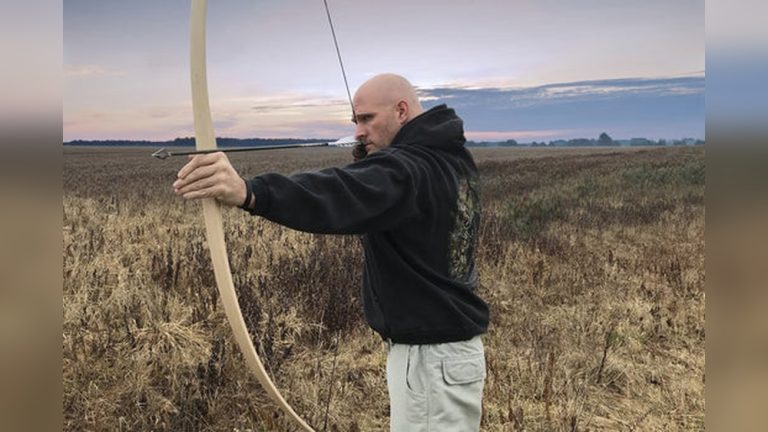
Bow-hand torque can push an arrow off line even by a few degrees of twist. A tense hand cannot be tense the exact same way twice, so a hard grip often creates left-right variation that looks random at first. For a right-handed archer, that error commonly drives arrows left.
Fix it with relaxed palm pressure and loose fingers. Keep the grip consistent from shot to shot, and avoid rolling the wrist inward at release. If the bow jumps to one side in your hand, the grip is still steering the shot.
Plucking the string at release
Plucking is a sideways draw-hand release error. It drags the back of the arrow sideways as it leaves, so the nock starts off line before the shaft can clear the bow cleanly. It shows up in both recurve and compound shooting.
Use back tension or a surprise release feel instead of a snatch away from the face. If the string hand moves straight back instead of out and around the face, the nock is less likely to be pulled sideways at release.
Collapsed bow arm and follow-through
A collapsing front arm means the bow arm drops or drifts inward at release. That changes bow rotation before the arrow clears. For a right-hander, a collapsing front arm typically drifts the bow to the right, which can shift impact and blur the true cause.
Follow-through matters because the bow should stay stable until the arrow is gone. Slow-motion video is useful here. If the front shoulder folds or the elbow softens early, the shot is not staying in line long enough.
Is the setup causing the drift?
If the miss appears at close range even when the shot looks clean, inspect the setup before chasing form. Arrow spine, rest alignment, and tune can all make a good shot look bad. In some cases the arrow is not curving because the archer is steering it; the bow is steering it.
Arrow spine and shaft match
Arrow spine should match draw weight, draw length, arrow length, and point weight. Incorrect arrow spine is described as the most common culprit for inconsistent arrow flight. Too stiff or too weak can both affect side impact, especially when the rest position or cam timing is also off.
Check the shaft first. Then check the whole setup around it. A weak arrow from a long shaft with a heavy point can behave very differently from a short shaft with a lighter point, even if both are shot from the same bow.
Arrow rest alignment and centershot
An arrow rest that is off centershot can send arrows left or right and imitate a release fault. The launch angle starts wrong, so the group may look like a hand problem when the real issue is lateral force at launch. That is why rest position belongs near the top of the checklist.
Set centershot first, then confirm the shaft tracks straight through the rest. If paper tear direction shows a clean change after a rest adjustment, the setup was part of the miss.
Paper tuning and walk-back tuning
Paper tuning is a close-range check done at about six to eight feet. A bullet hole tear through paper indicates minimal nock travel. A tear direction can point to rest position, spine, or timing problems before you move to longer distances.
Walk-back tuning verifies impact at multiple distances on a single vertical line. If the impact line walks left or right as distance increases, the setup is not holding laterally. That is a better check than guessing based on one group alone.
- Paper tune at six to eight feet.
- Set the rest and centershot before changing the sight.
- Shoot the same arrow line at several distances.
- Use the walk-back pattern to confirm lateral consistency.
Can wind or bow cant be the reason?
Yes. Wind and cant can both move impacts without any change in the shot itself. Wind becomes more visible as distance grows, while cant changes the geometry of the shot and can shift impact left or right depending on angle and setup. The key is to separate those from a bad launch.
Crosswind drift at longer range
Wind drift increases with distance, and even a light 10 mph wind can cause arrows to drift at 30 yards. If the group moves only on windy lanes or only farther out, wind belongs high on the list. A calm-day test is the cleanest check.
Shorten the distance or aim off if the wind is steady enough to read. That keeps the test honest. If the arrow comes back to line when the air settles, the bow is probably not the main problem.
How canting changes impact geometry
Canting means holding the bow so it is no longer vertical. Some archers cant on purpose for visibility, clearance, or traditional shooting style. It changes impact geometry, so a small tilt can alter where the arrow lands even if the release is clean.
Do not confuse a deliberate cant with a loose bow arm. If the bow is tilted on purpose, keep it consistent and retest before changing tune. If the tilt varies shot to shot, the bow is doing more than aiming.
Check the arrow itself
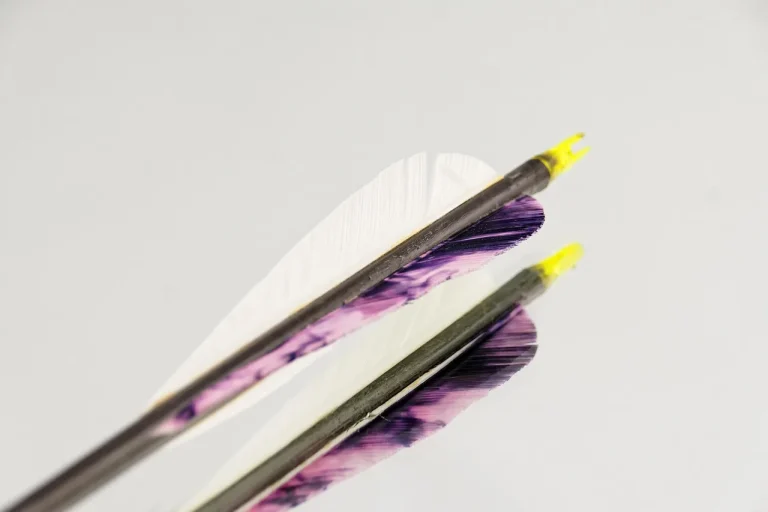
A bent shaft, loose insert, damaged vane, or poor nock fit can create sideways flight that looks like a form or tune issue. This inspection takes little time and can save a lot of chasing. If the arrow is damaged, no amount of anchor work will make it fly straight.
Roll each shaft on a flat surface if possible. Check that inserts are seated, vanes are intact, and nocks fit the string without binding or being too loose. A small defect can mimic bad tune because it changes how the shaft leaves and stabilizes.
What should I fix first when arrows keep missing to one side?
Start with the symptom, not the sight. If the miss shows up at all distances, check bow hand, string hand, and anchor first. If the miss appears mainly at short range with clean form, check rest position, spine, and paper. If it grows with distance or wind, test for drift before retuning the bow.
A common sequence is: arrow inspection, launch form, rest and centershot, spine, paper tuning, then walk-back tuning. That sequence keeps the obvious causes ahead of the hidden ones. It also stops the common mistake of adjusting the sight while the real cause stays untouched.
Frequently asked questions
Why do my arrows curve to one side after I release them?
That usually points to launch steering, setup error, or wind drift. If the curve starts right away at close range, look first at bow-hand torque, plucking, anchor drift, or rest alignment. If it grows mostly at longer distances, wind or tune is more likely than a pure release problem.
Is wind or bad tuning making my arrows drift left or right?
Wind is more likely when the miss gets worse as distance grows and the same setup behaves better in calm air. Bad tuning is more likely when the drift shows up close and stays consistent across shots. A paper tune at six to eight feet plus a walk-back test helps separate the two.
How do I tell if bow hand torque is causing arrow drift?
Look for a hard grip, wrist roll, or the bow jumping sideways at release. For a right-handed archer, torque often sends arrows left; for a left-handed archer, right. A relaxed palm pressure grip with loose fingers should reduce that sideways shift if torque is the cause.
Can an arrow rest that is off centershot make arrows go left?
Yes. An off-centershot rest can push the shaft sideways at launch and create a miss that looks like poor shooting. That is why rest alignment belongs early in the check. A paper tear or a walk-back line that stays off to one side usually points toward a setup problem.
Does arrow spine affect arrows hitting left or right?
Yes. Spine that is too stiff or too weak can move impact left or right and make tuning feel inconsistent. Spine should match draw weight, draw length, arrow length, and point weight. If the bow is tuned poorly, spine problems can look like release errors, so check the setup together.
Why do my arrows get worse at longer distances?
Distance magnifies small errors. Wind has more time to move the shaft, and tiny launch or tune issues become easier to see farther out. That does not prove the cause by itself. It just means the problem was already present and became easier to spot as range increased.
How do I stop arrows from fishtailing or veering off?
Start with the shaft itself, then check grip, release, anchor, rest alignment, and spine. Fishtailing can come from plucking, bow-hand torque, or a bad setup. Paper tuning helps at short range, and walk-back tuning confirms whether the bow holds a straight lateral line across distance.