How Native American Hunters Tuned Arrows for Big Game
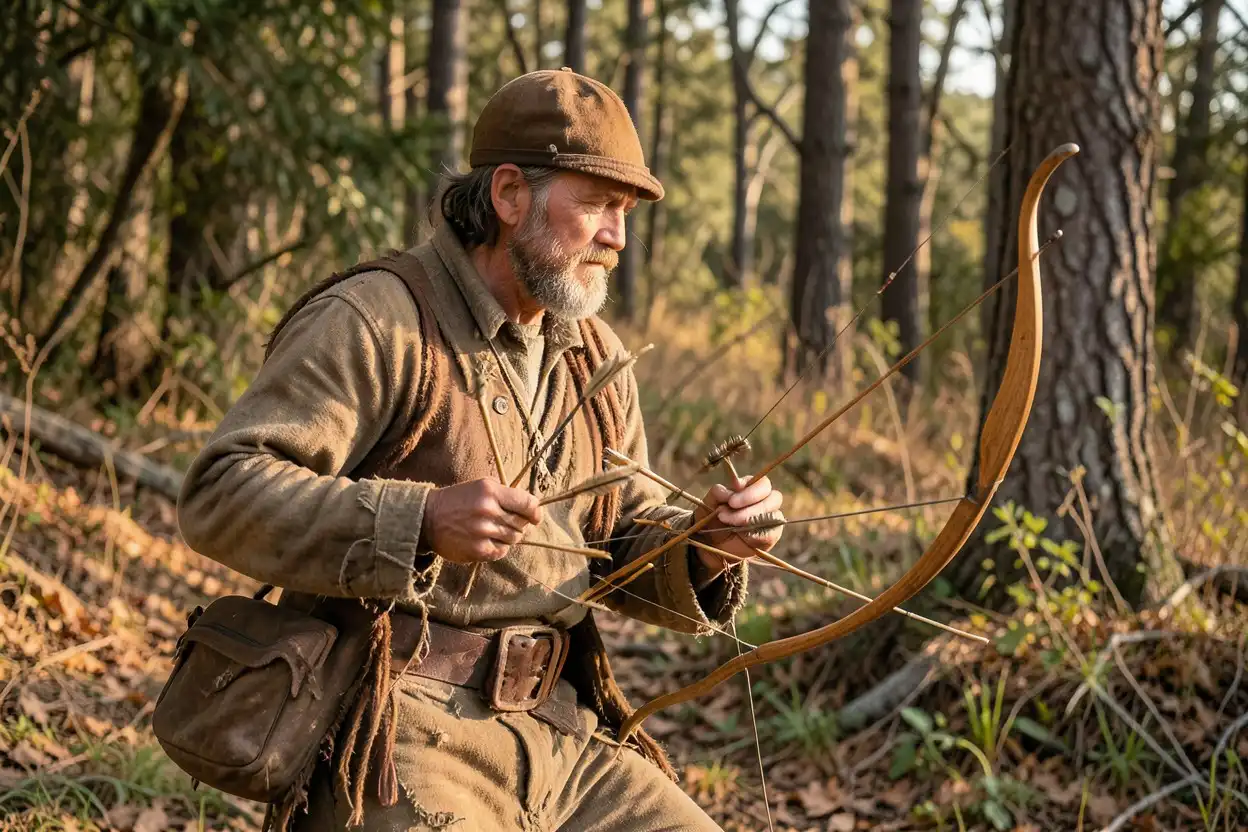
Native hunters tuned arrows to the game by changing point mass, shaft stiffness, and arrow length. Lighter points and a more flexible shaft fit birds. Heavier points and a stiffer build fit deer. For bison, they leaned on long, strong shafts with substantial mass so the arrow carried energy through hide and heavy tissue. Bad tuning costs penetration and accuracy, and it wrecks clean kills as distance grows and targets get tougher. This guide lays out the logic game-by-game using build choices that mirror traditional practice.
What did “tuning” mean for Native hunters?
For them, “tuning” meant matching arrow behavior to bow power, the shot situation, and what the target required. They did it by adjusting arrow mass in front, shaft stiffness, and arrow length. I treat it as hunting design. I want penetration, stable flight during imperfect releases, and a response that stays controlled at the short ranges that show up in real hunts.
Tuning for hunting versus tuning for target shots
Hunting tuning has different priorities than range tuning. Near-range shots exaggerate what happens right after release. Fletch stability matters, balance matters, and point weight affects how the arrow recovers. If you build for a flat target but the shot comes hurried, you’ll feel it first in how the groups form, then in how well the arrow drives through the target.
Why I separate point mass, stiffness, and length
When people talk about “spine,” they often skip point mass. Arrows may group tightly one day and feel stubborn the next after swapping points, while the shaft stays the same. A heavier front can force a too-stiff shaft into a short bend pattern that won’t recover cleanly. A lighter point can make the same shaft feel underpowered, because the arrow’s recovery and balance change.
Great Lakes as an example of regional build logic
In Great Lakes contexts, bows were about four feet long and flat, with a simple curve. Arrow shafts were made from cedar or pine. Those arrows were fletched with three feather sections, using feathers that could come from eagle, hawk, or turkey. That combination points to a working rule: the system stayed consistent enough to keep flight stable while still matching draw and hunting style.[2]
According to Arrows Guns and Buffalo – Fort Union Trading Post … — The NPS page says the bow and arrow was indispensable on the Great Plains by CE 250. (source)
How did hunters pick arrow shafts for different game?
They started with straightness, seasoning, and stiffness direction, then adjusted length for portability and clearance. Small-game arrows could be shorter and less massive. Tougher-game builds usually got heavier and stiffer so energy transferred better. Region and bow form also mattered. Mounted hunting often led to shorter bows, which pushed arrow length choices toward clearance and control.[3]
Shaft straightness and seasoning methods
I treat straightness like a real tuning input. If the shaft fights a curve, fletching only stabilizes so much. Traditional makers picked wood with straight grain, then seasoned it so it didn’t warp after working and after fletching. On the range and in the field, a warped shaft shows up as wandering flight even when the bow setup feels unchanged.
Common wood choices and what they change
Dogwood, river cane, cedar, and pine show up often in traditional discussions. Each choice changes how the shaft feels in stiffness and how the arrow behaves as it dries and takes fletching. Cedar and pine show up in Great Lakes arrow shafts, and they’re often tied to lighter, responsive hunting builds. River cane tends to feel lively. Harder woods like dogwood can hold a tighter feel when the maker matched the wood and draw weight correctly.
Length decisions by use and regional context
Length changes clearance, how much shaft stays under control, and how the arrow’s mass distribution supports flight. In Plains tradition, mounted hunting put gear to work from horseback. Mounted hunters used shorter bows, which drove shorter arrow setups. Tuning relies on “shortens the correction” logic: reducing arrow length reduces room for a mismatch between stiffness and point weight.
Stiffness matching: how spine direction ties to draw weight and point mass
Stiffness matching links bow draw weight to arrow behavior. More draw weight demands a shaft that bends the right way. If it’s too stiff, recovery can show up late. If it’s too weak, the arrow can fold too much early. Point mass then shifts effective balance, since a heavier point can make a given shaft feel like it was tuned too stiff during recovery, even when the shaft still measures the same.
Failure modes you can recognize early
If you’ve heard “my arrows feel worse after changing points,” you’ve already met the stiffness-point interaction. I sort builds by watching how fletching stays aligned in flight and how penetration changes when game gets tougher. A build that seems fine on small targets can still under-penetrate when the point must drive through heavier hide.
How were arrow points chosen for birds, deer, and bison?
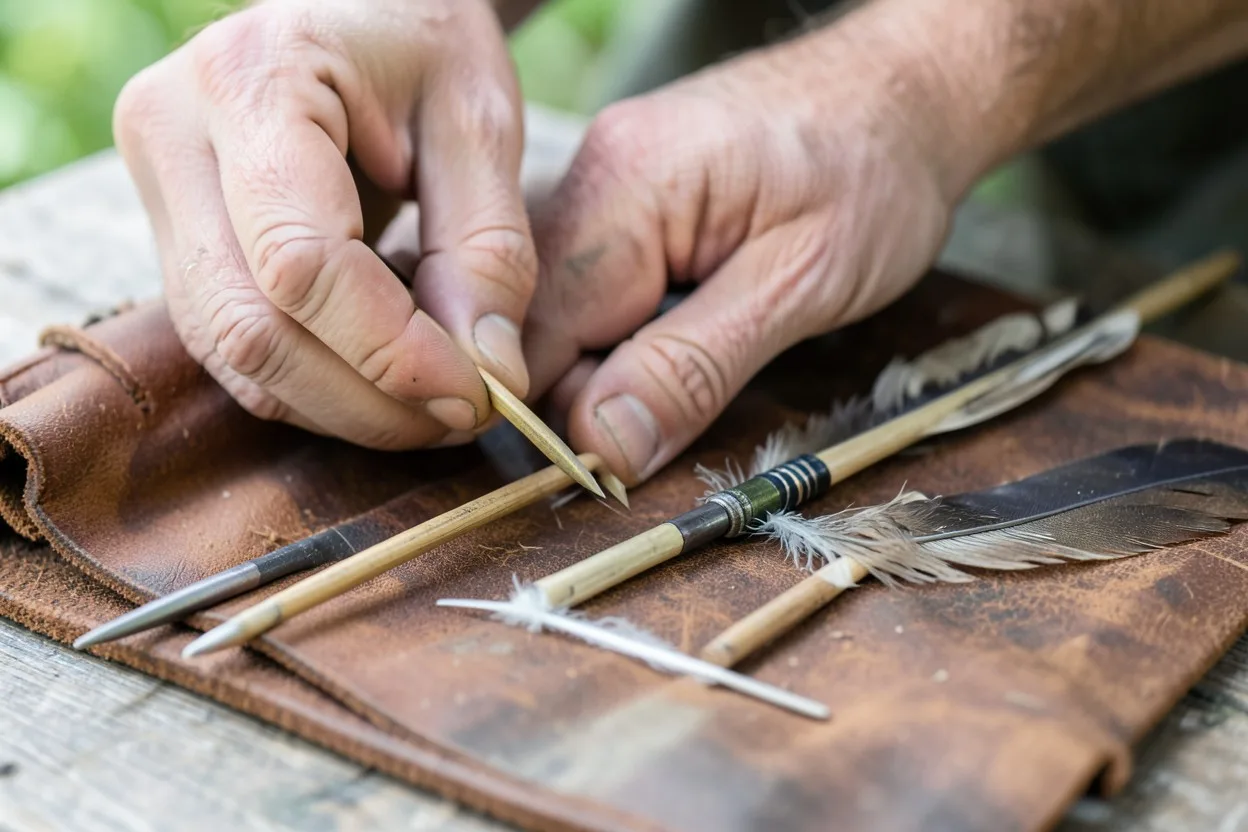
Arrow points were chosen for size and penetration needs. Small-game points could be blunted or knobbed to limit damage and keep hunting practical. Deer and moose required stronger penetration through dense tissue. For bison, hunters relied on point mass and sturdy builds to carry energy through heavy hide and tough meat. Shape and weight choices work together with shaft stiffness.
Point materials across time: stone, bone, antler, then metal
Traditional point materials often included stone, bone, and antler. Over time, iron, copper, and brass variants seem to appear through trade-era changes. The practical impact usually comes down to weight and geometry. Metal points can differ in mass and how the tip presents at impact. When point weight shifts, hunters compensate by changing shaft stiffness direction, point shape selection, or arrow length.
Point materials and trading networks
Stone projectile points were traded across wide distances, including Knife River flint. That matters for tuning because hunters may not get a perfect local match in every season. If trade brings you different point types, you can’t assume the same arrow behavior. You must treat any point swap as a tuning event.
Point types by game size
For small game and birds, blunt or reduced-cut forms were common, including blunted or knobbed arrows. That choice changes how the arrow drives. Less aggressive edge geometry can reduce deflection on small targets while keeping the arrow usable across repeated hunting days. For deer and moose, side-notched and more penetrating forms were common in function, aimed at steady penetration through tougher tissue.
Spike-like and heavy-penetration options
For bison or buffalo, point design had to handle heavy hide and still transfer energy reliably. Spike-like forms and heavier designs fit that need. With a stronger point, you usually need matching stiffness so the shaft doesn’t overbend and lose the ability to push straight through.
Common tuning mistakes when switching point types
The most common mistake I see is pairing a heavier point with a shaft that only worked with a lighter front. That shifts balance forward and changes how the arrow recovers. Another mistake is keeping the same point sharpness or geometry across game types and expecting similar flight and penetration.
How did fletching help arrows fly straight in hunting conditions?
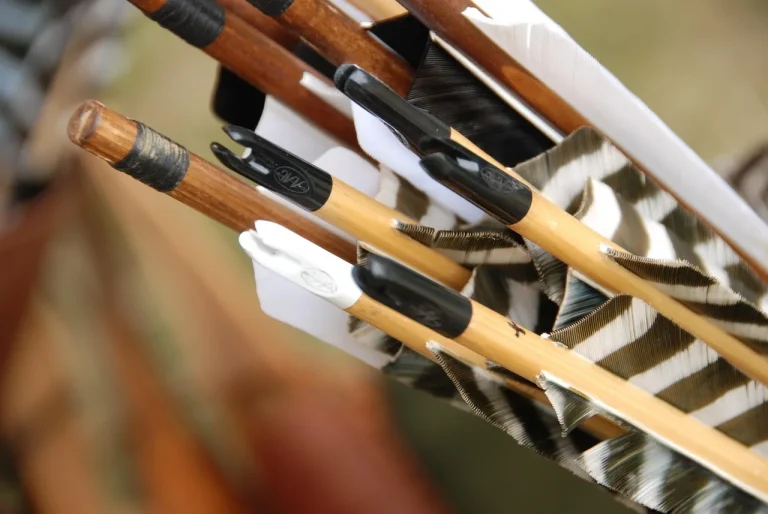
Fletching helped by stabilizing the arrow’s direction during the short, imperfect releases common in hunting. Three-feather setups are a strong traditional pattern, and tying on with sinew helped keep fletching secure when arrows rode in packs, got bumped, and were shot under changing conditions. A stable arrow lets you place shots and get predictable penetration.
Three-feather setup and feather choices
Traditional arrows often used three feather sections. Great Lakes arrows were fletched with three feather sections, and those feathers could come from eagle, hawk, or turkey. The practical role is stabilization. Consistent fletch geometry helps the arrow recover quickly after release, which matters when you shoot from uneven footing or when you’re trying to capitalize during a rushed stalk.
Stabilization role during imperfect shots
With traditional-style three-fletch flight, the arrow can tolerate some inconsistency because stabilization happens quickly and keeps happening shot after shot.
Secure tying and why it reduces “field tuning” surprises
Arrow points were traditionally tied on with sinew, and fletching was tied in a similar practical way in many traditional descriptions. When fletching stays put, tuning doesn’t drift. In hunting, that means fewer mystery misses later in the day when weather and handling change.
How did bow draw weight change arrow tuning decisions?
Draw weight controls how much the shaft must bend at full draw, so stiffness has to match that bending. Point mass changes recovery and balance. With close-range hunting draws, the correction window shrinks. A build that “sort of works” can still miss the penetration goal when the point must push through tougher targets.
Point mass and effective arrow behavior
If you raise draw weight on a bow while keeping the same shaft and swapping points, you change front-to-back balance and bend timing. Treat it as a combined system. I pick stiffness direction for the draw, then I confirm point mass doesn’t force a weird recovery pattern.
Short versus long hunting draws
Even without modern scales, hunters tune by feel. Short hunting draws reduce the time the arrow has to settle into stable flight. That makes consistent fletching and correct stiffness more important than it is for paper targets shot with steady form.
Close-range implications
Hunters usually shoot close enough that speed differences matter less than stability and what the point does on impact. If point and balance match, you can still get fast, clean penetration. If tuning misses, you see it as low penetration, unstable point behavior on target, and sometimes poor group shape.
Common mistake: matching draw weight “on paper”
A shaft can match draw weight on measurement and still be wrong if the point mass doesn’t fit the intended game. A heavier point pulls the center of effort forward, changing recovery behavior. That’s why a game-by-game approach beats one-size “spine charts.”
Game-by-game tuning table and mistakes
Use arrow tuning like a hunting design brief. Pick point style based on game toughness and penetration needs, then choose shaft stiffness direction so the bow bends the arrow correctly with that front mass. Finally, pick length for clearance and control in your actual shot context. Below is a practical comparison that also flags failure cases.
Game-by-game tuning framework (practical starting points)
| Small game | Deer-sized game | Large game / horseback use |
|---|---|---|
Suggested shaft traits: moderately flexible “hunting” build; light front balance; good straightness; shorter-to-mid length for portability. Point style: blunted or knobbed ends to reduce over-penetration and deflection on small targets. Common tuning mistakes: point too sharp or too heavy so the arrow behaves front-heavy; shaft too stiff so the arrow recovers late and groups scatter. | Suggested shaft traits: stiffness matched to bow draw weight; point mass supported by correct bend behavior; mid length with consistent fletching alignment. Point style: penetrating forms suited for deer/moose tissue; side-notched shapes are common in function for secure attachment. Common tuning mistakes: shaft too weak leading to excessive bend and poor penetration; point too light in front causing shallow penetration. | Suggested shaft traits: stronger, long, straight shafts; stiffness matched to bow’s full power so the point carries energy through heavy hide. Point style: heavier penetration-focused designs, including spike-like options depending on local tradition. Common tuning mistakes: shaft too stiff with a heavy point causing unpredictable recovery; arrow too long for mounted clearance leading to unsafe contact and ruined accuracy. |
Short decision checklist (sequence matters)
- Start with point style for the game: choose blunt/reduced-cut for birds and small targets; choose penetrating forms for deer and moose; choose heavy penetration geometry for bison/buffalo.
- Choose shaft stiffness direction for your bow draw: increase stiffness for higher draw or heavier point mass; soften for lighter points and smaller game.
- Set length for clearance and control: favor the shortest length that still supports stable flight and safe shooting in your stance or horseback setup.
- Confirm fletching stability before you trust penetration: three-feather consistency and secure tying prevent in-field tuning drift.
- Watch failure signals: if groups open, check point weight versus shaft stiffness; if penetration drops, check point mass and sharpness/geometry.
Proof points tied to the historical build reality
Great Lakes bows were about four feet long and flat with a simple curve, and Great Lakes arrow shafts were made from cedar or pine. Those arrows were fletched with three feather sections using feathers that could be from eagle, hawk, or turkey. Those details support the idea that hunters tuned in a consistent “system” where shaft material, fletching, and bow form worked together.
Extra failure cases worth reading before you build
Too stiff: the arrow can feel like it flies forward but doesn’t drive well, and penetration can fall off. Too weak: the arrow can “arrive” crooked, and heavier targets often show shallow impacts. Front-heavy: a heavier point on a too-light front balance can destabilize early flight. Too long: for mounted use, clearance issues can wreck accuracy and can even make release inconsistent.
What did mounted hunting change about arrows?
Mounted hunting reduced timing and clearance margins. Hunters adapted with shorter bows, and in many Plains contexts the bow and arrow stayed central for buffalo hunting on horseback. Arrow length and stiffness often shifted toward safer control and quick response, even if that meant trading some range for reliability from the saddle.
Shorter bows and quicker-shot constraints
The Texas Beyond History page notes that early bows were often 3 to 5 feet long, and it also notes that mounted hunters used shorter bows. Faster shooting from horseback changes how you manage follow-through, which then feeds back into arrow tuning. If the arrow is too long or too stiff for the release window, flight consistency drops.
Horseback adaptation to shaft length
Measured and tuned data shows that shorter setups usually tighten clearance. Trad Talk discussion includes arrows as short as about 24 inches including the point, and one forum post mentions shafts around 32 to 36 inches long. Those numbers aren’t universal rules, but they reflect a common design problem: in close-mounted shots, the arrow must clear the bow and remain stable while you shoot fast.
Frequently asked questions
How did Native American hunters match arrows to different game?
They matched arrows to game by changing point mass, shaft stiffness, and length together. For birds and small targets, builds leaned lighter in front and often allowed more responsive behavior. For deer and moose, stiffness and penetration-focused points mattered more. For bison, heavier point designs and stronger shafts carried energy through thick hide and tissue.
Did Native hunters use different arrow points for deer, birds, and buffalo?
Yes, the point choice tracked the target needs. Small game could be hunted with blunted or knobbed arrows, which reduces aggressive edge behavior on tiny vitals. Deer-sized game typically required more penetration-focused points. Buffalo or bison use leaned toward heavier, strong-penetration forms, sometimes with spike-like options, so the point could drive through heavy hide.
How were arrow shafts chosen or made for hunting?
Hunters chose shafts for straightness and seasoning so the arrow stayed true after making and during field use. Common materials included dogwood, river cane, cedar, and pine, with Great Lakes shafts made from cedar or pine. Shaft stiffness had to match the bow’s draw weight, and length was adjusted for portability and shot context.
What materials were used for Native American hunting arrows?
Arrow shafts were made from woods like cedar or pine in Great Lakes contexts, and also from options such as dogwood and river cane in broader traditional discussions. Points used stone, bone, and antler, with later trade-era metal including iron, copper, and brass variants. Fletching used three feather sections, and feathers could include eagle, hawk, or turkey, tied on with sinew.
How did mounted Native hunters adjust arrows for horseback hunting?
Mounted hunting changed the tuning problem because clearance and release speed dominated. The Texas Beyond History page notes mounted hunters used shorter bows, and it also states early bows were often 3 to 5 feet long. Plains peoples used bow and arrow for buffalo hunting on horseback, which pushed builders toward shorter, controllable arrows so shots stayed reliable from the saddle.
Were blunt arrows used for small game?
Yes. Small game could be hunted with blunted or knobbed arrows, which changes how the arrow behaves on impact.
How long were Native American hunting arrows?
There wasn’t one universal length across regions. In discussion circles, examples include arrows as short as about 24 inches including the point, and one forum post mentions shafts around 32 to 36 inches long. Mounted use likely skewed shorter because the Texas Beyond History page notes mounted hunters used shorter bows, which typically forces a length compromise for clearance and control.
How did hunters keep arrows flying straight without modern tuning tools?
They relied on build consistency: straight, seasoned shafts, secure three-feather fletching, and stable point attachment tied with sinew. Great Lakes arrows show that system thinking with three feather sections and consistent shaft material. Without modern tuning tools, reliability came from matching stiffness and point mass correctly for the bow and game, then keeping the arrow components intact through hunting handling.