Did Native Americans Have Sights On Their Bows
For centuries, the image of the Native American archer, silhouetted against the vast North American landscape, bow drawn in practiced hands, has captivated historians, artists, and enthusiasts alike. The bow and arrow were not merely tools of war and hunting; they were cultural icons and technological marvels, refined over generations. Yet, a question that often arises among archery experts and historical weaponry aficionados is: Did Native Americans have sights on their bows? Was their legendary marksmanship aided by technology similar to the sights found on modern archery equipment, or did their accuracy emerge solely from skill and tradition?
Exploring this question opens a fascinating window into Native American technology, adaptation, and ingenuity. To answer it, we must scrutinize archaeological evidence, oral histories, and firsthand accounts, while also comparing Native bow design to other global traditions. This journey reveals not only the technical details of indigenous archery but also the broader cultural and environmental context that shaped their approach to aiming and accuracy. Prepare to discover how Native American archers achieved extraordinary precision, and what their methods teach us about the intersection of innovation and tradition.
Key Takeaways
- Native American bows did not feature mechanical or optical sights akin to those on modern bows; aiming was accomplished using instinctive and learned techniques.
- Bow design, materials, and regional adaptations played a major role in the accuracy and effectiveness of Native American archery.
- Comparisons with other world archery traditions reveal that physical sights were generally absent from pre-modern bows worldwide.
- Modern misconceptions about Native archery often stem from misunderstandings of indigenous technology and oral traditions.
- Firsthand accounts and experimental archaeology show Native archers could achieve remarkable accuracy without artificial sights.
- Contemporary Native archers sometimes blend traditional techniques with modern equipment, but retain core elements of ancestral skill.

Credit: www.nationalgeographic.com
The Anatomy Of Native American Bows And Arrows
Materials And Construction Techniques
Native American bows varied widely across North America, reflecting the diversity of environments and available resources. Bows from the Plains tribes, such as the Lakota and Comanche, were often short, powerful, and made from osage orange or hickory, woods prized for their strength and flexibility. In the Pacific Northwest, the Yew wood bow was common, while tribes in the Southwest used materials like juniper and mesquite.
Bow construction typically involved:
- Sinew backing for added strength and flexibility
- Animal hide grips for comfort and control
- Natural adhesives derived from animal products or tree resins
Arrows were carefully crafted for balance and straightness, using reed, dogwood, or willow shafts, fletched with feathers and tipped with stone, bone, or later, metal points. The attention to detail in both bow and arrow construction contributed significantly to the archer’s ability to aim and hit targets consistently.
Functional Design: No Mechanical Sights
Despite the sophistication of bow and arrow craftsmanship, there is no archaeological or ethnographic evidence of mechanical or attached sights, such as pins, beads, or notches, on Native American bows. The bows were generally plain along the limbs and handle, sometimes decorated with paint or carvings, but never equipped with dedicated aiming devices.
Instead, these bows were designed for:
- Quick target acquisition at close to medium range
- Rapid shooting on foot or horseback
- Portability and durability in varied conditions
Bow Types Across Regions
| Region | Common Bow Type | Notable Materials | Typical Draw Weight |
|---|---|---|---|
| Great Plains | Short, sinew-backed bow | Osage orange, hickory | 40-60 lbs |
| Pacific Northwest | Longbow | Yew wood | 35-50 lbs |
| Southwest | Flatbow | Juniper, mesquite | 30-45 lbs |
| Eastern Woodlands | Self bow | Hickory, ash | 35-55 lbs |
Example: The Comanche, famed horse archers, preferred short, powerful bows that allowed for accurate shooting while riding at full speed. Their bows had no sights but were meticulously balanced for fast, instinctive aiming.
Traditional Aiming Techniques
Instinctive Shooting
The overwhelming evidence indicates Native American archers relied on instinctive shooting, a method where the archer learns to aim and release the arrow through repetition and muscle memory, rather than mechanical aids. This style is still practiced by traditional archers today.
Key elements of instinctive shooting:
- Focus on the target, not the arrow tip
- Consistent anchor point (such as the corner of the mouth or cheek)
- Fluid, practiced motion from draw to release
Through thousands of hours of practice, often beginning in childhood, Native archers developed an intuitive sense of trajectory, distance, and timing.
Secondary Visual Cues
While there were no physical sights, oral histories and ethnographic studies suggest some archers used natural reference points:
- Arrow shaft alignment with the target at full draw
- Bow hand position relative to the target
- Tip of the arrow as a rough guide for elevation at longer distances
However, these were not standardized or physically marked sights, but rather personalized habits developed through experience.
Environmental And Contextual Adaptations
Native American archers also adapted their aiming based on:
- Lighting and terrain
- Wind and weather conditions
- Target movement (stationary game vs. moving enemies)
- Shooting from horseback or concealment
These adaptive skills were highly valued and taught through mentorship and observation, rather than written manuals or equipment modification.
Example: In my experience working with traditional archery instructors, the closest parallel to Native American aiming is the instinctive shooting still used by some bowhunters, where hitting the target becomes a product of deeply internalized practice, not reliance on a sight.

Credit: southandcompanyproperties.com
Archaeological And Historical Evidence
Archaeological Finds
Examination of surviving Native American bows in museum collections and archaeological sites consistently shows no evidence of attached sights. Bows recovered from sites such as the Lovelock Cave in Nevada (dating back over 1,000 years) are devoid of notches, pins, or other aiming devices.
When compared to bows from other ancient cultures, such as the English longbow or Mongolian composite bow, the absence of sights is a global norm prior to modern archery innovations.
Ethnographic Accounts
Early explorers, traders, and anthropologists provided detailed descriptions of Native American archery. For example:
- George Catlin (artist and traveler, 1830s) noted the “unerring accuracy” of Plains archers, but described their bows as simple and unadorned by mechanical aids.
- Charles Eastman (Santee Dakota physician and author) recounted childhood lessons in archery, emphasizing practice and observation over any physical sighting device.
Comparative Global Context
| Culture | Period | Bow Sights Present? | Common Aiming Method |
|---|---|---|---|
| Native American | Pre-contact – 19th century | No | Instinctive |
| English/European | Medieval | No | Gap shooting, instinctive |
| East Asian (Mongol/Chinese) | Ancient – Early Modern | No | Thumb draw, instinctive |
| Modern Olympic | 20th century – present | Yes | Mechanical sights |
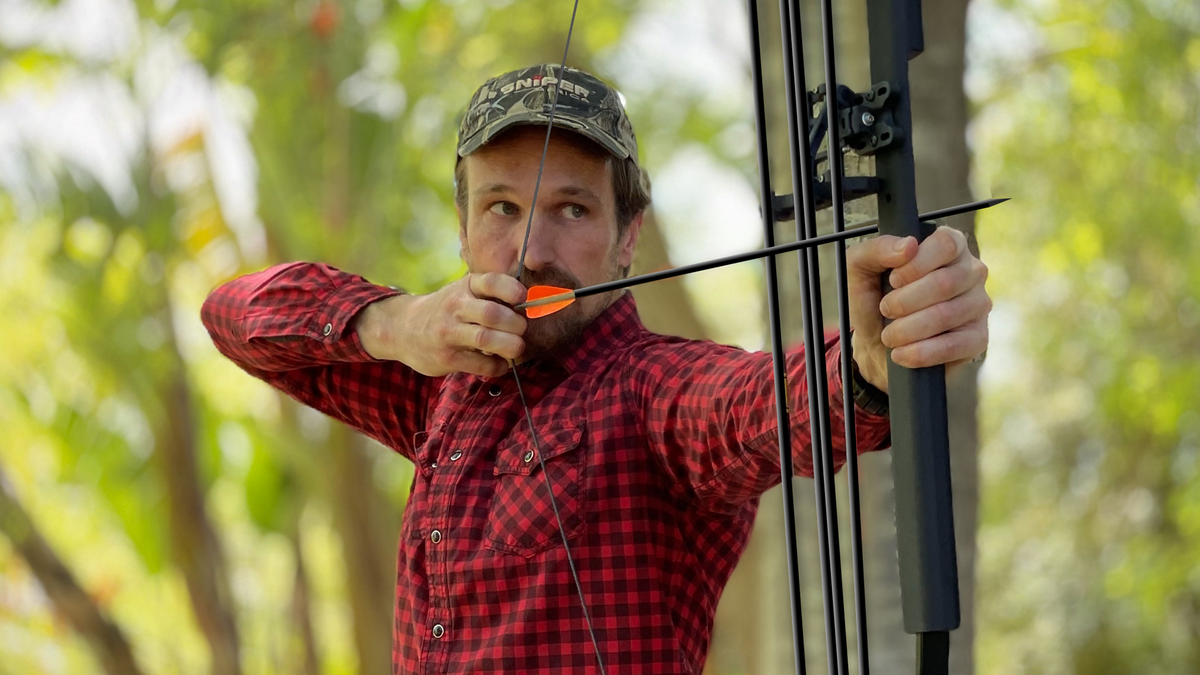
Pro Tip: If you encounter a museum bow with an unusual notch or mark, it is almost always decorative or functional (e.g., preventing hand slippage), not an aiming sight.
Credit: www.survivalarcherysystems.com
Legends, Myths, And Misconceptions
The Myth Of Advanced Bow Sights
Popular media and some historical fiction works have occasionally depicted Native bows with beads, notches, or even metallic sights attached. However, these depictions are inaccurate and unsupported by the archaeological record or indigenous oral tradition.
Such myths may stem from:
- Confusion with ceremonial or decorative features
- Projection of modern archery concepts onto historical equipment
- Misinterpretation of oral stories about archery prowess
Stories Of Supernatural Accuracy
Many Native American legends describe archers capable of extraordinary feats, hitting a bird in flight or a running deer at long distances. While these stories reflect cultural values of skill and bravery, they are not literal accounts of technological enhancement.
For example, the Lakota tale of the archer who “never missed a shot” is a metaphor for spiritual focus and dedication, not evidence of a physical bow sight.
Modern Misconceptions
Even among present-day archery enthusiasts, there is sometimes an assumption that earlier societies must have developed physical sights to achieve high accuracy. In reality, skill development through practice, mentorship, and community competition played the central role.
Example: Some 20th-century “Wild West” films have anachronistically shown Native archers using marked bows, but such imagery is purely cinematic and not grounded in historical fact.
Case Studies: Native Archery In Practice
The Comanche Horse Archer
The Comanche developed a reputation as unmatched mounted archers in the 18th and 19th centuries. Their bows, typically around 40 inches long and backed with sinew, were optimized for shooting at speed and from horseback. Comanche archers trained from childhood, often learning to shoot accurately while riding bareback and controlling their mount with their knees.
Key points:
- No bow sights; aiming was instinctive and dynamic
- Shooting range: 15 to 30 yards for moving targets
- Rapid shot sequences (2-3 arrows in quick succession)
The Iroquois Hunter
In the dense forests of the Northeast, the Iroquois Confederacy relied on self bows made of hickory or ash. Hunters stalked deer and small game, shooting from ambush or concealment. Accuracy was paramount, but no sights were used, hunters relied on keen observation, silent movement, and years of practice.
Example: Ethnographer Lewis Henry Morgan described Iroquois boys receiving their first bows at age six, practicing daily, and learning to judge distance and angle by experience alone.
Modern Traditional Archery Competitions
Today, Native American communities often host traditional archery tournaments. These events prohibit modern sights or stabilizers, emphasizing historical techniques. Participants report that hitting targets at 20-30 yards is routine after sufficient practice, highlighting the enduring effectiveness of instinctive aiming.
| Event | Permitted Equipment | Use of Sights | Average Hit Rate |
|---|---|---|---|
| Comanche Little Arrow Shoot | Wood bows, natural arrows | No | 70-80% at 25 yards |
| Northwest Bow Festival | Yew longbows, sinew-backed bows | No | 65-75% at 30 yards |
The Science Of Archery Accuracy
Factors Affecting Accuracy
Modern research into archery physics helps explain how Native American archers achieved high accuracy:
- Arrow spine and weight: Properly matched arrows fly straighter and resist wind drift
- Bow draw weight: Affects arrow speed and trajectory; higher weights favored for hunting large game
- Shooting form: Consistent anchor, smooth release, and stable posture are critical
Ballistics And Trajectory
Without sights, archers had to learn how arrow trajectory changed with distance. This skill, known as gap shooting in modern archery, was internalized by Native archers through repeated practice.
- At close range (under 20 yards), the arrow flies relatively flat
- At longer ranges, the archer must elevate the bow, compensating for gravity
Example: Experimental archaeology studies have shown that experienced instinctive archers can group arrows within a 6-inch circle at 20 yards, a level of accuracy sufficient for both hunting and combat.
Cognitive And Neuromuscular Training
Research published in the journal “Human Movement Science” demonstrates that repetitive archery practice increases hand-eye coordination, proprioception, and spatial judgment, all crucial for accurate shooting without sights (Human Movement Science).
Pro Tip: Instinctive aiming is a skill that develops over years, but even beginners can improve rapidly with focused, mindful practice, mirroring the teaching traditions of Native archery mentors.
The Evolution Of Bow Sights: A Global Perspective
The Emergence Of Bow Sights
Physical bow sights, such as pins, peep sights, and fiber optics, are a modern invention, first appearing in competitive archery in the early 20th century. Prior to this, archers worldwide relied on instinctive or gap shooting methods.
Why Sights Were Not Used In Native America
Several reasons explain the absence of sights in Native American bows:
- Practicality: Sights would be easily damaged or obstructed in dense brush, on horseback, or during fast movement.
- Material limitations: The technology to produce precision metal or adjustable sights was unavailable.
- Cultural traditions: Emphasis was placed on skill and adaptability, not on technological augmentation.
Comparison With Other Cultures
| Culture | Earliest Use of Sights | Primary Purpose |
|---|---|---|
| Native American | Never (pre-contact – 19th c.) | Hunting, warfare |
| English/European | Early 20th c. | Target archery |
| Japanese (Kyudo) | Never | Spiritual, ceremonial |
| Modern Competitive | 1910s-present | Precision competition |
Example: The English longbow, famed for its use at the Battle of Agincourt, was also shot without sights, relying on years of rigorous training.
Preserving And Reviving Traditional Archery
Modern Native Archery Movements
Across North America, Native communities are revitalizing traditional archery, teaching young people ancestral techniques and the cultural importance of the bow and arrow. Organizations such as the National Native American Archery Association host clinics, competitions, and workshops, often emphasizing the absence of sights as a mark of authentic tradition.
Integration With Modern Archery
Some contemporary Native archers participate in mainstream tournaments using modern compound bows with sights, but many prefer to honor their heritage by using wood bows and instinctive shooting.
- Hybrid approaches: A few experiment with adding simple marks or bands to their bows as personal references, but these are not standardized or formally recognized as sights.
- Cultural significance: The act of shooting without sights is seen as a celebration of ancestral skill and resilience.
Educational Outreach
Efforts to educate the public about Native archery often focus on dispelling myths about bow sights and highlighting the complexity of instinctive aiming. Museums, tribal programs, and living history demonstrations play a key role in this outreach.
Smithsonian Magazine features several in-depth articles on the resurgence of Native archery and the accuracy achieved without sights.
Example: Youth Archery Programs
On the Navajo Nation, youth archery clubs teach children to craft their own bows and arrows from local materials, emphasizing traditional shooting stances and instinctive aiming. These programs have led to a resurgence of interest in archery as both a sport and a cultural practice.
Frequently Asked Questions
Did Any Native American Tribes Experiment With Adding Sights To Their Bows After European Contact?
There is no documented evidence that Native American tribes adopted or experimented with mechanical or optical sights on their bows, even after exposure to European firearms technology. Instead, most tribes that continued archery traditions post-contact maintained their established methods, focusing on instinctive aiming and skill.
European influence led to the adoption of firearms rather than the modification of bows with sights.
How Did Native American Archers Estimate Distance Without Rangefinders Or Sights?
Native archers developed a keen sense of distance through experience, observation, and repeated practice. They would often use visual cues in the environment, such as the size of the target, intervening trees, or shadows, to judge range. In hunting scenarios, they learned to approach within effective shooting distance (typically 15-30 yards) before taking a shot, minimizing the need for precise distance measurement.
Are There Any Surviving Examples Of Native Bows With Markings That Could Be Used As Sights?
While some surviving Native bows have decorative markings, carvings, or paint, none have been conclusively identified as functional sights or aiming references. Most marks are interpreted as symbolic, ceremonial, or purely decorative. Ethnographic and archaeological studies have not found any evidence of intentional sighting marks analogous to modern archery sights.
Did Native Americans Teach Specific Aiming Drills Or Exercises To Improve Accuracy?
Yes, traditional archery instruction often involved games, competitions, and targeted drills designed to enhance hand-eye coordination and muscle memory. Young archers practiced by shooting at moving objects, swinging targets, or small game, gradually increasing difficulty as their skills improved. Such methods helped internalize the trajectory and aiming process without reliance on artificial aids.
Do Any Modern Native American Archers Use Sights On Traditional Bows Today?
In traditional archery circles and at cultural events, the use of mechanical or optical sights on Native-style bows is generally discouraged, as it is seen as inconsistent with heritage practices. However, some Native archers who compete in mainstream target archery may use modern bows with sights.
For cultural and educational demonstrations, authenticity is prioritized, and bows are used in their original, sightless form.
The enduring image of the Native American archer, bow drawn, eyes locked on the target, remains a profound symbol of skill, adaptation, and tradition. Historical, archaeological, and ethnographic evidence all point to the same conclusion: Native American bows did not have sights. Their formidable accuracy was the result of honed instinct, relentless practice, and deep environmental awareness. Today, as traditional archery experiences a resurgence, new generations are learning these ancient methods, preserving a legacy that continues to inspire and challenge both historians and archers around the world.