Index Finger Release vs Thumb Release for Bowhunters
Finger Release is usually the better starting point for most bowhunters. Thumb Release fits better if you wear thick gloves or want a thumb-led trigger you can control more deliberately; pick the one that lets you hold anchor without snapping the trigger. Choose wrong, and you can build target panic, blow close shots on deer, or create anchor drift that ruins clean releases. This guide compares both styles for hunting, shot quality, and switching risk, then gives a simple decision tree for anchor, gloves, and trigger control.
How finger release and thumb release compare
| Decision factor | Finger Release | Thumb Release | Winner |
|---|---|---|---|
| Learning curve | Usually easier because the wrist-strap format is simple to attach, draw, and fire with the index finger. | Usually steeper because hand position, thumb pressure, and release discipline all need more practice. | Finger Release |
| Anchor repeatability | Can be very repeatable when the wrist strap length and head position are consistent. | Can be very repeatable, but only if the grip, finger placement, and wrist angle stay consistent. | Tie |
| Glove and cold-weather use | Usually better, especially with thick gloves and cold fingers, because wrist straps stay attached and are easy to manage. | Less friendly with thick gloves, because the handheld body can be harder to seat cleanly and keep secure. | Finger Release |
| Drop and retention risk | The wrist strap keeps the release on the hunter, which helps prevent drops and speeds access. | Can be dropped or fumbled unless it is carried well, often with a lanyard or pocket plan. | Finger Release |
| Shot-execution ceiling | Can be clean, but some models make trigger punching easier if the hunter uses the index finger like a rifle trigger. | Often rewards back tension and a surprise break, which can support cleaner execution for disciplined shooters. | Thumb Release |
| Best fit for hunting access | Strong for tree stands, ground blinds, and cold-weather sits where quick access matters. | Strong for hunters who can manage secure carry and want a higher shot-quality ceiling. | Depends on setup |
Learning curve
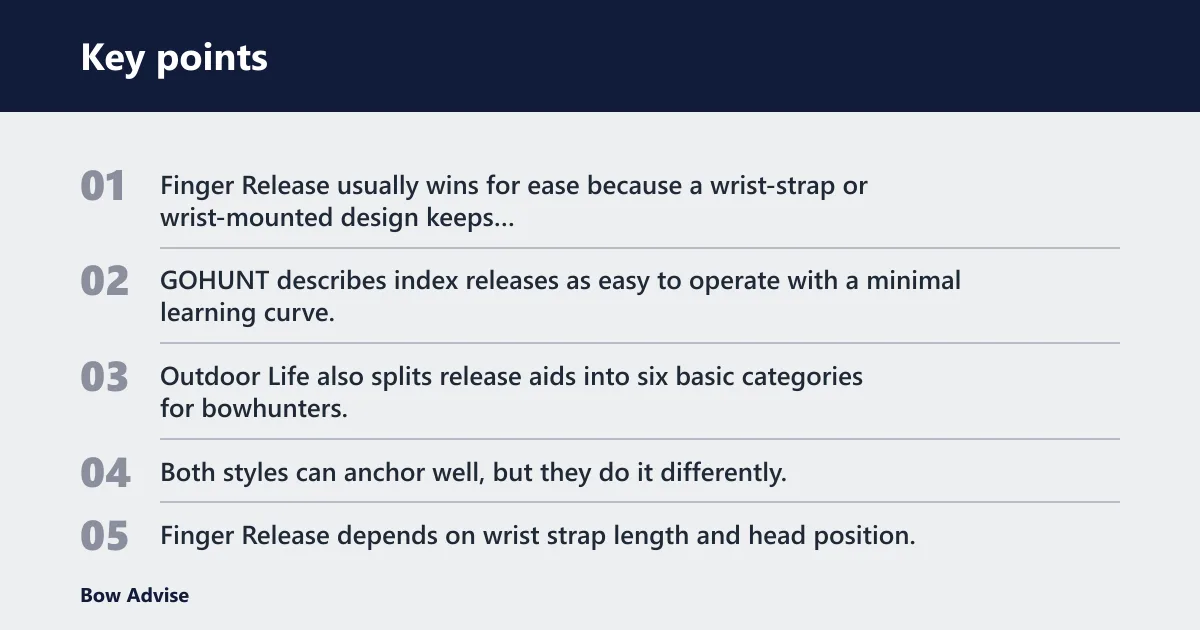
Finger Release usually wins for ease because a wrist-strap or wrist-mounted design keeps the release attached and simple to index. GOHUNT describes index releases as easy to operate with a minimal learning curve, and that matches why many hunters start there. Outdoor Life also splits release aids into six basic categories for bowhunters, which matters because the category you choose changes how much practice the shot needs.
Anchor repeatability
Both styles can anchor well, but they do it differently. Finger Release depends on wrist strap length and head position, while Thumb Release depends on where the hand lands on the handle and how the fingers wrap around it. That means anchor quality affects peep alignment and comfort in both cases, not just one.
Glove use and cold weather
Finger Release usually wins here because wrist straps are practical for hunting and stay attached when gloves are bulky. Extreme Outfitters notes that index releases are reliable in cold weather and with gloves, which fits the way many late-season hunters actually shoot. A handheld Thumb Release can still work, but it is less forgiving when fingers are stiff or gloved.
Drop risk and access
Finger Release is harder to lose in a tree stand because the wrist strap keeps it on the hunter. Thumb Release often needs a lanyard or a pocket-carry plan, especially when the hunter is climbing, drawing, or reaching for gear. The same source notes that thumb buttons can be hung on the D-loop in a stand, but that is only useful if the setup stays organized and secure.
Shot-execution ceiling
Thumb Release often gets the edge for cleaner shot execution because it can reward back tension better than a simple index trigger. The same source says thumb releases have a higher accuracy ceiling, which is believable because the thumb button can be used with less conscious trigger punch. That said, the release does not solve form by itself. A rushed thumb press can still wreck the shot.
Index finger release
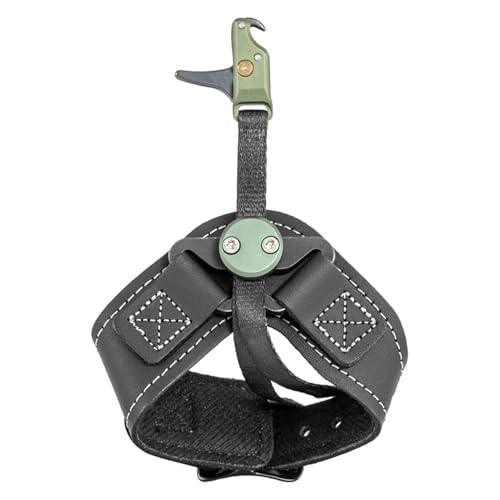
Finger Release is a wrist-strap or wrist-mounted release fired with the index finger. It is the common hunting style for a reason: the setup is simple, the learning curve is short, and the release stays attached to the hunter through the shot.
Wrist strap and trigger control
The wrist strap is the main hunting advantage. It keeps the release attached, prevents drops, and makes it fast to grab in a tree stand or blind. The same source describes index releases as easy to operate and suited to command shooting, which is exactly why they are common in hunting.
The downside is trigger control. A hunter who slaps the index trigger too hard can punch the shot, and that habit is one of the most common ways target panic shows up on a wrist-strap release. The risk is not the release itself so much as the way the finger learns to press it.
Why it is easy to learn
Finger Release usually feels natural because the shot sequence is familiar: hook the D-loop, draw, anchor, aim, and press. That simplicity helps beginners, especially whitetail hunters who want a short path from setup to hunting use. Outdoor Life’s B3 Nemesis Flex at $50 is a reminder that entry-level wrist-strap options can stay practical without turning the purchase into a project.
Where it can cause punch-trigger problems
Some index releases make it too easy to anticipate the break. The hunter sees the pin float, gets tense, and drives the trigger instead of increasing pressure smoothly. That can create creeping trigger travel, flinching, or a hard stop at anchor that hurts peep alignment and follow-through.
A common first-timer mistake is setting the release so short that the finger sits deep on the trigger at full draw. That often leads to instant punch pressure. A better setup lets the finger contact the trigger pad cleanly without crowding it.
Thumb release
Thumb Release is a handheld or palm-held release fired with a thumb button. It usually takes more practice, but it can support cleaner shot execution through back tension when the hand position and anchor are set correctly.
Handheld setup and thumb button
The main difference is that the release sits in the hand instead of on the wrist. Outdoor Life’s UltraView Button 2 is listed as the best thumb button release, and it includes an adjustable third finger plus a D-loop retention clip. Those features matter because the third finger helps stabilize the grip and the clip helps keep the release oriented near the loop.
Thumb buttons can feel more natural at anchor for some hunters because the hand can settle into one repeatable position. That said, the release length and the angle of the handle change where the anchor lands on the jaw, cheek, or corner of the mouth.
Back tension and shot execution
Thumb Release often earns praise because it can make back tension easier to use. The thumb can rest on the button while the shot breaks through continued pulling, which can produce a cleaner surprise release than an index finger jab. That is a real advantage for hunters who struggle with punching.
But the release is not magic. If the thumb fires too deliberately, or if the hunter creeps into the button while aiming, target panic can still show up. The shot can become just as rushed as a bad index-trigger shot.
Carry, drop risk, and lanyard use
Thumb Release is less forgiving when moving through a stand, climbing, or handling gear. It may need a lanyard or a pocket-carry plan, because a dropped handheld release can vanish into leaves, snow, or a stand platform. That risk matters more in hunting than on a target line.
Picture a hunter in a cold ladder stand with thick gloves and a small platform. A wrist-strap release is hard to drop and quick to grab. A Thumb Release can still work, but only if the carry method is deliberate and the hunter can seat it without fumbling.
How do anchor and fit change the shot?
Anchor point repeatability matters as much as release style. If the anchor shifts, peep alignment changes, comfort changes, and the sight picture changes with it. Thumb Release can feel excellent with one anchor and awkward with another, while Finger Release can feel stable or sloppy depending on strap length and hand position.
Anchor point repeatability
Anchor is the repeatable contact point at full draw. With Finger Release, the wrist strap and trigger head determine where the hand lands. With Thumb Release, the handle shape and the finger pressure determine how the hand sits against the face or jaw. Repeatability is the goal, not just comfort.
Peep alignment and comfort
When anchor is consistent, peep alignment usually settles faster and the shot feels calmer. When it is off, the archer may find the sight creeping high, low, left, or right every time the bow comes to full draw. Comfort matters because an uncomfortable anchor encourages early movement and hurried trigger use.
D-loop length and draw-length checks
The setup side matters here. D-loop length changes how far the release sits from the string, and that can shift anchor contact points. A change in release style can also change effective draw length enough to matter for peep height and posture, so a check of draw length is smart before hunting season, not after a bad group shows up.
- Check where the release lands on the face at full draw.
- Check whether the peep centers without head strain.
- Check whether the D-loop lets the trigger or thumb sit naturally, not cramped.
- Check whether the bow feels the same at draw and at anchor after the release swap.
- Adjust draw length or loop length only if the new anchor changes head position or peep alignment.
Does a thumb release help with target panic?
Thumb Release can help some bowhunters with target panic, but it does not cure the problem by itself. It often reduces trigger punching because the shot can be built around back tension instead of a sharp index-finger press. If the shooter still rushes the thumb button, the same panic pattern can return.
Why trigger punching happens
Trigger punching usually starts when the hunter wants the arrow gone before the sight picture settles. The finger or thumb fires the shot early, often because of fear, over-aiming, or pressure on a live animal. That creates poor follow-through and inconsistent release timing.
When a thumb release helps
Thumb Release helps most when the hunter commits to pressure build instead of a deliberate jab. The cleaner the anchor and the steadier the pull through the shot, the more the release can reward back tension. That is why many target archers and some hunters prefer it.
When it can still fail
Thumb Release can fail if the hunter presses too hard, too soon, or from the wrong hand position. It can also fail if the shooter uses it like a push-button and ignores the tension behind the shot. The tool may change the feel, but it does not replace discipline.
Release choice by hunting setup
Hunting setup changes the decision. Tree stand hunters usually care more about retention and quick access. Ground blind hunters often care about bulky clothing and quiet movement. Spot-and-stalk hunters care more about carrying the release securely while moving and about getting a clean shot after a hard draw cycle.
Tree stand hunters
Finger Release is often the safer practical pick in a stand because the wrist strap keeps it attached. That helps prevent drops, and it makes the release easy to find in the dark or while balancing. A thumb button can work well from a tree stand, but only if the hunter has a clean carry method and enough room to handle the release without fumbling.
Ground blind hunters
Finger Release usually fits ground blinds well because bulky gloves, limited space, and quick shots all favor a simple wrist-mounted design. A blind also reduces some of the movement penalty that comes with a wrist strap. Thumb Release still has a place here for hunters who want a cleaner shot break, but the setup must stay organized.
Spot-and-stalk hunters
Thumb Release often makes more sense for spot-and-stalk hunters who value controlled execution and can manage the handheld format. The tradeoff is carry risk, especially if the hunter is crawling, climbing, or drawing from awkward positions. Finger Release is still valid, especially in cold weather or when the hunter wants the release attached at all times.
Index and thumb release scorecard
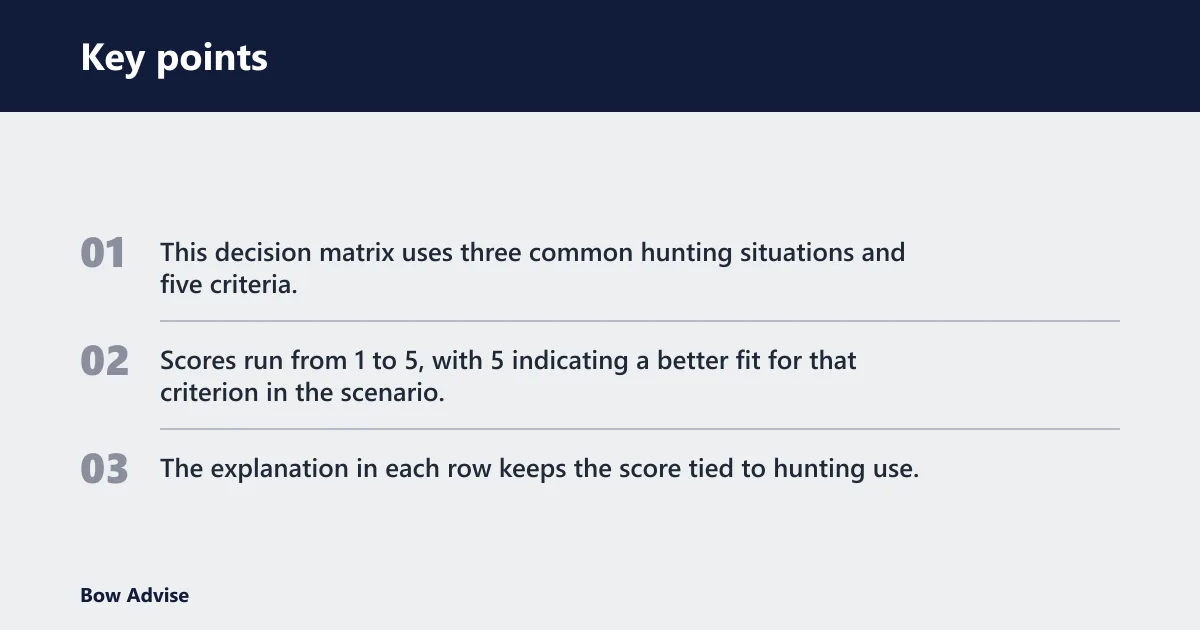
This decision matrix uses three common hunting situations and five criteria. Scores run from 1 to 5, with 5 indicating a better fit for that criterion in the scenario. The explanation in each row keeps the score tied to hunting use, not just general preference.
Finger release vs thumb release matrix
| Criterion | Finger Release | Thumb Release | Winner | Why |
|---|---|---|---|---|
| Ease | 5 | 3 | Finger Release | The wrist strap makes setup and firing simpler in a stand. |
| Anchor consistency | 4 | 4 | Tie | Both can anchor well if the loop, hand position, and draw are repeatable. |
| Glove use | 5 | 3 | Finger Release | Thick gloves are easier to manage with a wrist-mounted release. |
| Drop risk | 5 | 2 | Finger Release | The wrist strap keeps the release attached and reduces the chance of fumbling it off the platform. |
| Target-panic risk | 3 | 4 | Thumb Release | A disciplined thumb shot can reduce punch-trigger habits, but only if the hunter avoids pressing early. |
Finger release vs thumb release matrix
| Criterion | Finger Release | Thumb Release | Winner | Why |
|---|---|---|---|---|
| Ease | 5 | 3 | Finger Release | Blind hunting rewards a simple draw-and-fire setup. |
| Anchor consistency | 4 | 4 | Tie | Either release can repeat well if the same contact points are used every time. |
| Glove use | 5 | 3 | Finger Release | Bulky gloves are easier to live with on a wrist strap than on a handheld body. |
| Drop risk | 5 | 3 | Finger Release | A wrist strap stays with the hunter, while a thumb button needs more careful carry. |
| Target-panic risk | 3 | 4 | Thumb Release | Hunters who fight trigger punching often get a cleaner surprise break from a thumb button. |
Finger Release vs Thumb Release matrix
| Criterion | Finger Release | Thumb Release | Winner | Why |
|---|---|---|---|---|
| Ease | 4 | 3 | Finger Release | Long hikes and odd shooting positions favor the less fiddly setup. |
| Anchor consistency | 4 | 4 | Tie | Both can be consistent, but only if the hunter keeps the same setup under movement. |
| Glove use | 4 | 3 | Finger Release | Cold mornings and wind often make a wrist strap more practical. |
| Drop risk | 4 | 3 | Finger Release | A tethered wrist strap is harder to misplace while moving over ground. |
| Target-panic risk | 3 | 4 | Thumb Release | A smoother tension-based shot can help when the hunter has time to settle after the stalk. |
Choose Finger Release if… / Choose Thumb Release if…
Finger Release is the better pick if you hunt from a tree stand, wear gloves often, want the release attached to your wrist, or need the shortest path to a workable hunting setup. Thumb Release is the better pick if your anchor is already repeatable, you want to reduce trigger punch, and you are willing to manage the handheld release carefully.
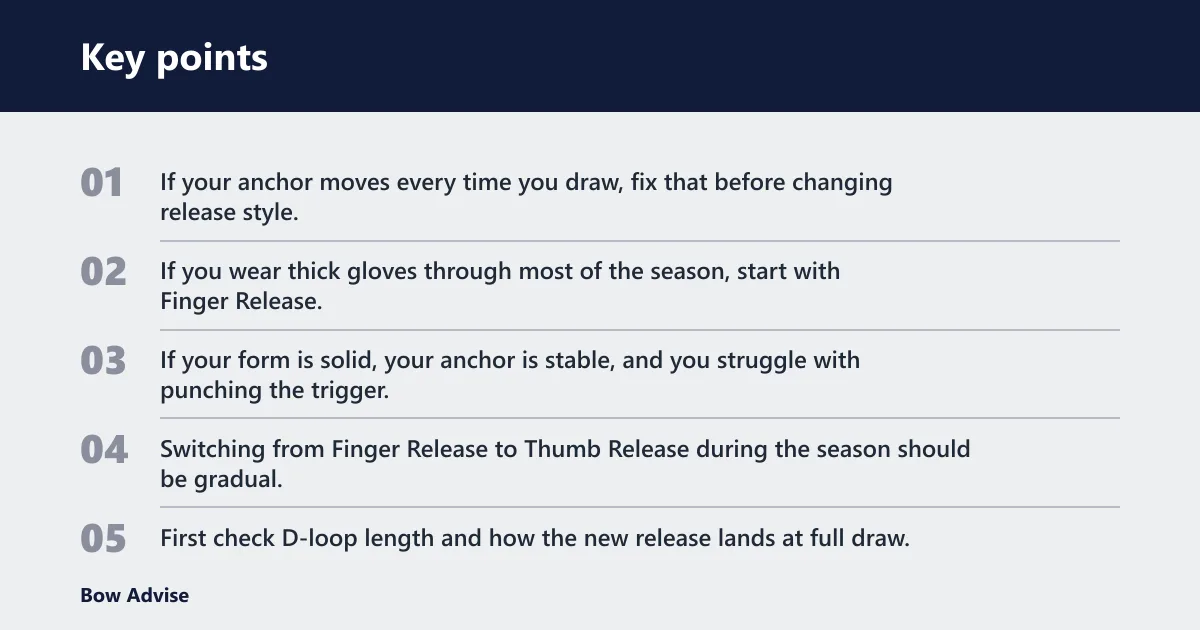
Decision tree for anchor and glove use
If your anchor moves every time you draw, fix that before changing release style. If you wear thick gloves through most of the season, start with Finger Release. If your form is solid, your anchor is stable, and you struggle with punching the trigger, Thumb Release deserves serious attention.
Transition plan for switching midseason
Switching from Finger Release to Thumb Release during the season should be gradual, not a blind swap the week before opener. First check D-loop length and how the new release lands at full draw. Then confirm peep alignment, adjust draw length only if the anchor changed, and spend enough practice time to remove the urge to stab the thumb button.
Common setup mistakes to avoid
Do not shorten the D-loop just to force a tighter anchor. Do not switch release styles and keep the old anchor habit if the new handle shape does not match it. And do not carry a Thumb Release loosely in a stand or blind without a secure plan, because a dropped handheld release can cost the shot before the deer ever steps clear.

Frequently asked questions
Is an index finger release or thumb release better for bowhunting?
Neither is always better. Finger Release is usually better for hunters who want a simple, attached, glove-friendly hunting tool. Thumb Release is better for hunters who can keep a repeatable anchor and want a cleaner shot execution path through back tension. The right choice depends on setup, not trend.
Which release is easier for a beginner to use?
Finger Release is usually easier for a beginner because the wrist strap makes it simple to hold, draw, and fire. GOHUNT calls index releases easy to operate with a minimal learning curve. That does not mean it is the only valid choice, but it is usually the faster way to get hunting-ready.
Can I hunt with a thumb release from a tree stand?
Yes, but the carry plan has to be solid. The same source notes that thumb buttons can be hung on the D-loop in a stand, which shows they are workable there. The main risk is dropping or fumbling the handheld release, so secure carry and clean handling matter a lot.
Which release is better with gloves and cold weather?
Finger Release usually wins in cold weather because wrist straps are reliable with gloves and stay attached to the hunter. The same source says index releases are reliable in cold weather and with gloves. Thumb Release can still work, but thick gloves make it harder to handle and carry cleanly.
How do I avoid punching the trigger on an index release?
Set the trigger so the finger contacts it cleanly, not deep and crowded. Then press through the shot instead of trying to make it break on demand. If the sight picture makes you rush, shorten the hold time, improve the anchor, and practice with a smoother pressure build rather than a snap press.
What are the pros and cons of switching from wrist strap to thumb release?
The main pro is shot quality potential. A Thumb Release can reduce trigger punching and support back tension. The main cons are a steeper learning curve, a new anchor feel, and the need to carry it securely so it is not dropped in a stand, blind, or while stalking.
Should I choose a release based on my anchor point?
Yes. Anchor point repeatability is one of the biggest practical differences between these releases. If one style lets you hit the same face contact and peep alignment every time, it is likely the better hunting choice. If the anchor shifts, the release choice is not the problem by itself.