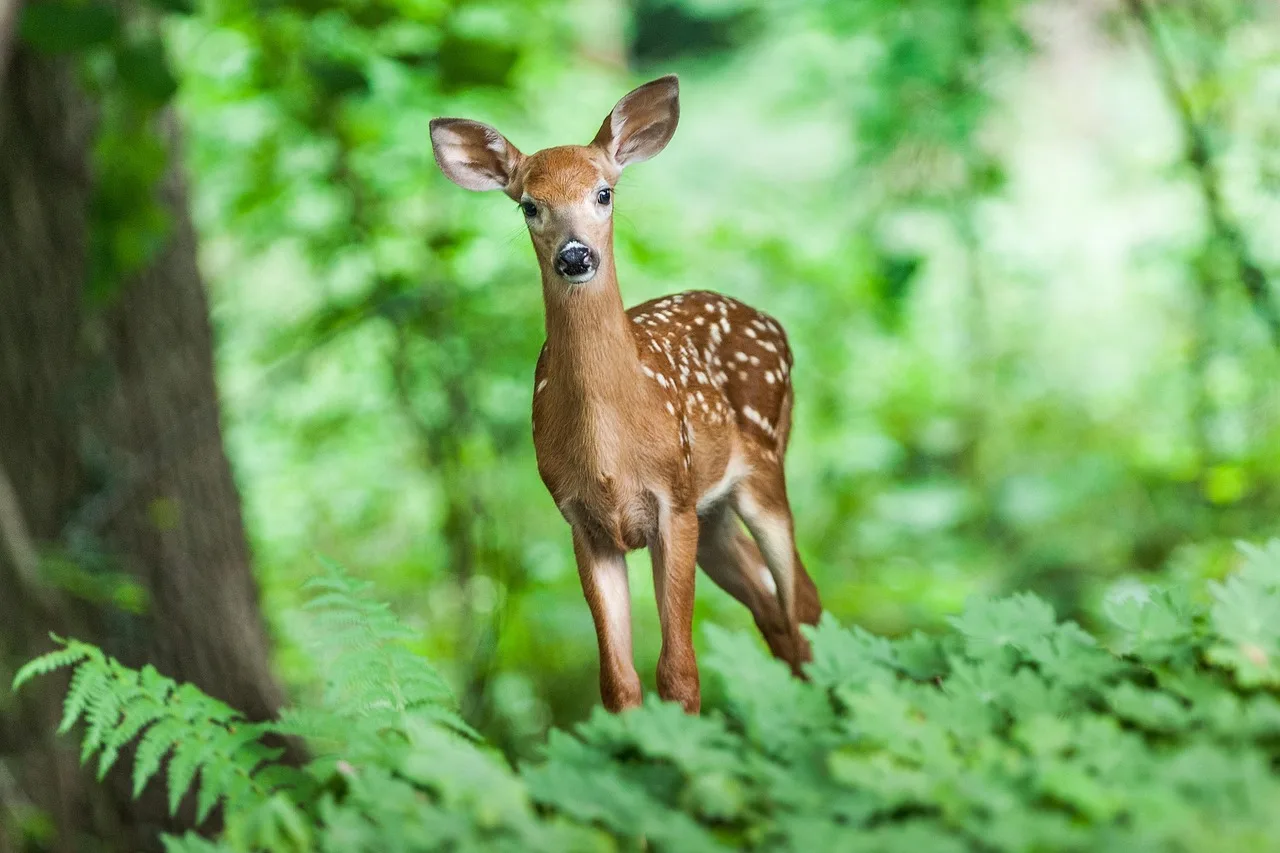
What Is the Best Wind Direction for Bowhunting?
The best wind for bowhunting is the wind that carries your scent away from the buck’s likely travel line. If a stand sends odor across that route, do not hunt it. Bad wind ruins solid spots fast. This guide gives a simple stand-wind rule for rolling hills, creek bottoms, and rut travel routes.
No universal best wind: match scent flow to buck travel
There is no single best wind direction for every whitetail setup. Wind direction is the main factor in hunt success, but the right call changes with terrain, deer movement, and your access route. A west wind may fit many hunters, yet the useful wind is the one that keeps odor off the expected buck line.
The simple stand rule for picking wind direction
Use this rule: choose a stand only if the current wind carries human odor away from where the deer is most likely to travel, and away from the route used to reach the stand. If that wind pushes scent into bedding cover, a trail, or a crossing point, the setup is wrong for that hunt.
How buck travel lines change the answer
Bucks do not use one lane every day. They shift between bedding cover, feeding edges, doe travel, and scent-check routes, especially during the rut. A wind that works on a field edge may fail on a creek-bottom trail just 60 yards away, because the downwind side changes with the terrain.
Wind, scent, and deer travel
Wind moves human odor in a scent cone, and the downwind edge of that cone is where setups fail most often. Crosswind and headwind can work if the cone stays away from the buck’s line of travel. A downwind setup is the highest-risk option because it points scent toward where deer are expected to be.
Crosswind, headwind, and downwind setups
A crosswind can work well when the stand sits off the trail and the scent cone drifts into empty cover. A headwind is usually better than a downwind setup because it keeps odor off the forward travel line. A downwind setup is only safe if terrain blocks the buck from entering the cone, and that is rare.
Wind direction changes of 180 degrees can flip a good stand into a bad one in a short time. That matters more on edges, saddles, and bottoms where deer can approach from multiple angles. A wind that starts clean and swings late can expose the entry trail, the setup tree, or both.
Why obstructions can bend scent but not erase it
Brush, creek cuts, ridges, and timber trunks can break up the scent cone, but they do not remove it. Odor can wrap around obstructions, pool in low spots, and slide along cover edges. That is why a “hidden” stand still needs a wind that keeps the likely travel line outside the cone.
Picture a 12-yard trail on a leeward ridge face with a thick oak trunk between the stand and the trail. If the wind turns from steady west to a light swirl, that trunk may slow the drift, but it will not stop your scent from reaching the trail if the air starts rolling over the top.
How thermals change the call
Thermals are driven by temperature movement: warm air rises and cool air sinks. In hills and valleys, that creates another layer on top of the forecast wind. A wind that looks acceptable on paper can fail if the thermal flow carries scent into the travel line.
Morning down-valley flow
In the morning, valley thermals usually move down the valley before switching later in the day. In a common pattern, that switch can happen sometime before about 11 A.M. This makes low bottoms risky early because sinking air can pull scent downhill into the same places deer use to travel.
Afternoon up-valley flow
Later in the day, valley thermals often reverse and flow uphill. In that example, the change happened closer to sunset. That means a stand that is safe at daylight can become exposed in the afternoon if the thermal pulls scent up and over the ridge or toward a bedding edge.
Why hills and valleys punish calm assumptions
Valleys and steep draws create the strongest thermal problems because the air has a clear path to move. Calm conditions do not mean still air; they often mean slower air that can swirl, stall, and mix with thermal flow. In those spots, the wind forecast alone is not enough.
When should you skip the hunt?
Skip the hunt when the wind swirls enough that you cannot predict where the scent cone will go. Calm days can create swirling winds that get hunters busted, while steady wind is usually easier to read. Light wind can still work, but only if the flow stays consistent at the stand and on the access route.
Swirling wind as a no-go sign
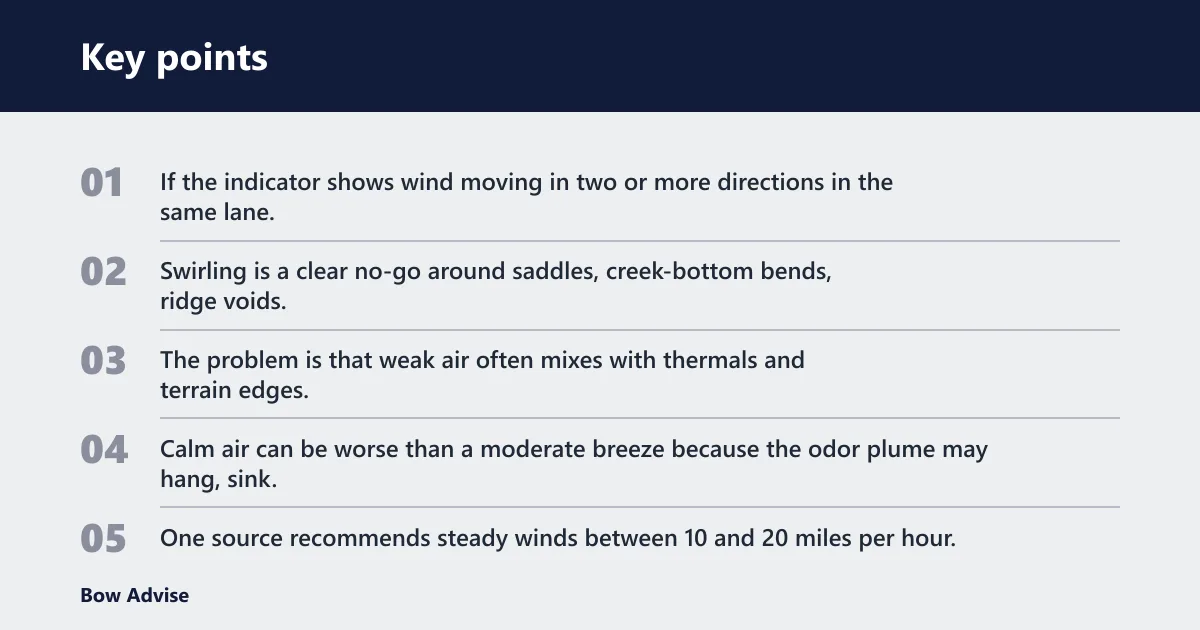
If the indicator shows wind moving in two or more directions in the same lane, the setup is compromised. Swirling is a clear no-go around saddles, creek-bottom bends, ridge voids, and narrow draws because the buck can catch scent from angles that the forecast never showed. That is especially true near bedding cover.
Light wind versus calm air
Light wind is not automatically bad. The problem is that weak air often mixes with thermals and terrain edges, which makes the scent cone unstable. Calm air can be worse than a moderate breeze because the odor plume may hang, sink, and then shift suddenly when a thermal or small gust takes over.
When wind speed helps and when it hurts
Steady winds between 10 and 20 miles per hour. That range can help because a strong wind can keep wind direction more consistent than lighter air. Still, strong wind also increases noise, moves leaves, and can make deer travel patterns less predictable, so it is not an automatic green light.
Suppose a hunter sets a stand on the edge of a 3-acre field where deer enter from a single corner. A steady wind of about 14 miles per hour that carries scent into open pasture may work, while a day of about 5 miles per hour that lifts and spins in the same corner is a better reason to stay home.
Stand selection by terrain
Stand choice should match the terrain type, the likely deer route, and the wind’s path through that shape. Ridge tops, creek bottoms, valley bottoms, field edges, bedding edges, and funnels all react differently. The best wind for one may be a bad wind for another, even on the same property.
Ridge top and saddle setups
Ridge tops can work with a wind that moves scent off the side where deer travel, but saddles are risky because air often speeds up and swirls there. A ridge-top setup is better when the access route stays on the non-travel side and the buck is expected to cross below or beside the stand. Saddles deserve extra caution on calm days.
Creek bottoms and valley bottoms
Creek bottoms and valley bottoms are thermal traps. Morning down-valley flow can drag odor into the bottom, and afternoon up-valley flow can pull scent back up toward bedding or exit routes. If the route crosses the same drainage the deer use, a good wind can fail when thermals shift.
Field edges, bedding edges, and funnels
Field edges can be excellent when the wind carries scent into a field, open water, or other dead space away from the trail. Bedding edges demand more discipline because bucks often scent-check the downwind side of cover before moving. Funnels are efficient travel routes, which makes the wind decision more important, not less.
A common first-timer mistake is setting up on the downwind side of a bedding edge because the trail looks obvious. If the buck’s approach line is only about 30 yards long and the entry route crosses the scent cone, the stand may already be compromised before the first arrow is nocked.
Wind direction matrix
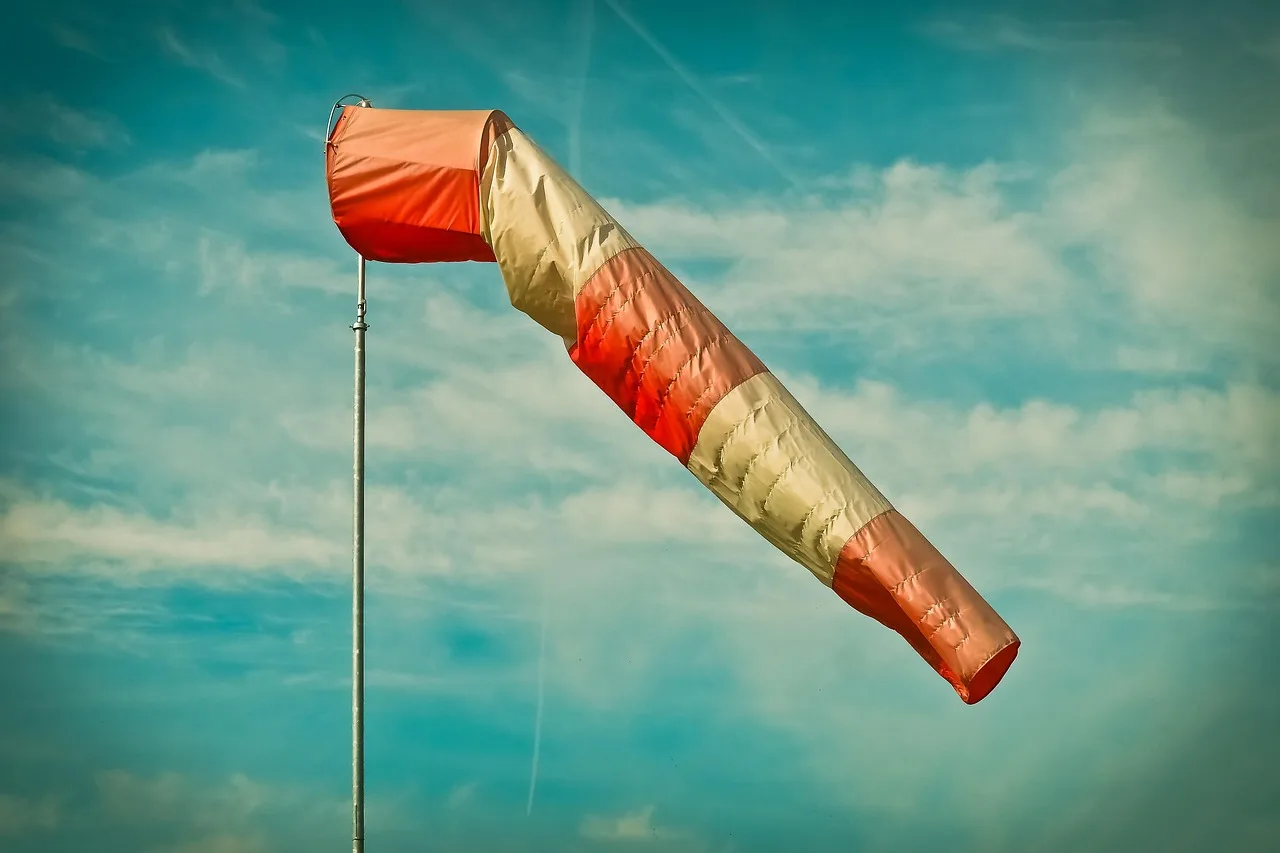
This matrix gives a simple go/no-go guide for common setups. Use it with the forecast, the terrain, and the access route. If the setup says no-go, do not force the hunt just because the spot is good on other days.
| Setup type | Morning/evening | Wind consistency | Thermal risk | Recommended hunt decision |
|---|---|---|---|---|
| Ridge top | Morning | Steady | Moderate | Go if scent stays off the buck route; use a crosswind or slight headwind. |
| Ridge top | Evening | Steady | Low to moderate | Go if the access route stays clean and the wind does not push into the travel side. |
| Field edge | Morning | Steady | Low | Go if the scent cone drifts into open ground, not into the first cover line. |
| Field edge | Evening | Variable | Low | Go only if the entry and exit both stay outside deer sight and scent paths. |
| Creek bottom | Morning | Steady | High | No-go if the morning thermal pulls scent down the bottom toward the trail. |
| Creek bottom | Evening | Steady | High | Go only if the wind holds firm and the buck route stays on the opposite bank. |
| Valley bottom | Morning | Steady | Very high | No-go unless the travel line is outside the valley flow and access is clean. |
| Valley bottom | Evening | Steady | Very high | No-go if the up-valley thermal can carry scent toward bedding or an exit trail. |
| Bedding-edge | Morning | Steady | High | Go only if the wind blows away from bedding and the approach avoids the downwind side. |
| Bedding-edge | Evening | Steady | High | No-go if the buck can scent-check from the downwind side before entering cover. |
| Funnel | Morning | Variable | Moderate to high | No-go if the wind swings through the pinch point or the saddle void. |
| Funnel | Evening | Steady | Moderate | Go if the wind is stable and the deer line stays fully outside the scent cone. |
Morning and evening go/no-go rules
Morning hunts should be more conservative in bottoms and draws because down-valley flow can carry scent straight into travel lanes. Evening hunts often favor setups where the wind can be held away from bedding cover and the route in stays hidden from deer movement. If either half of the day creates a bad drift, skip it.
How do you read wind in the field?
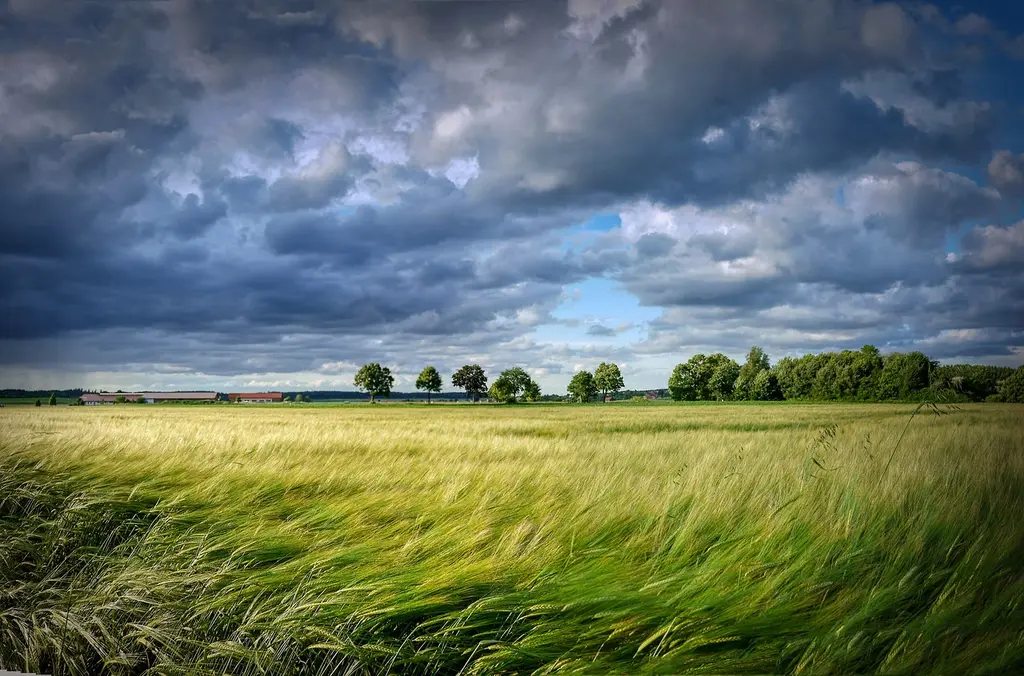
Use wind indicators at the stand, not just the truck. Milkweed seeds, cotton tufts, and powder sprays show current flow and reveal small shifts that a forecast cannot. The best field check is simple: verify what the air is doing at head height, waist height, and along the trail edge before you settle in.
- Check the forecast for current wind direction and the next wind shift after a front.
- Look for speed changes across the day, not just the morning reading.
- At the stand, release milkweed, cotton, or powder and watch the drift for about two or three releases.
- Compare the drift at the setup tree to the drift along the access route.
- If the air turns, swirls, or pushes toward bedding cover, back out and adjust the plan.
Checking the forecast for shifts and variability
Current wind direction matters, but future direction matters too. Watch for wind shifts after fronts, because a clean morning can become a bad evening if the air rotates or speeds up. Wind speed variability matters as much as direction when the goal is to keep the scent cone off the deer line.
Matching access routes to the wind
A good stand can still be ruined by a bad walk in. Plan the entry and exit so your odor does not cross bedding cover, the trail you expect a buck to use, or the open lane where deer stage. If the access route forces a downwind walk through the same area, pick another stand.
When winds meet, the safest move is usually to hide the approach behind terrain and keep the route on the side the deer do not use. The air must be checked at the exact place the hunter will stand and the exact place the deer will pass.
Frequently asked questions
What is the best wind direction for bowhunting deer?
The best wind direction is the one that keeps your scent off the deer’s likely travel line for that exact setup. There is no universal best. A west wind may work on one ridge and fail in a creek bottom, so terrain, thermals, and access route must decide the call.
Should I hunt if the wind is swirling?
Usually no. Swirling wind makes the scent cone unpredictable, especially in saddles, bottoms, and near bedding cover. If the wind keeps shifting direction at the stand or along the approach, deer can catch scent from angles you cannot control, and the risk of getting busted rises fast.
How many stand setups do I need for different wind directions?
Most whitetail hunters do better with multiple stand locations rather than forcing one tree to work for every wind. The exact number depends on the property, but a useful goal is at least a few options for different travel lines, so one bad wind does not kill the whole hunt plan.
Is a steady 10 to 20 mph wind good for bowhunting?
Often yes, if it is steady and matches the setup. Steady winds between 10 and 20 miles per hour. That range can keep direction more consistent than calm air, but the stand still has to protect the downwind side and the access route.
How do thermals affect bowhunting in hills and valleys?
Thermals can change the scent cone even when the forecast wind looks fine. Warm air rises and cool air sinks, so valleys often get morning down-valley flow and later up-valley flow. In hills and valleys, those shifts can move odor into bedding cover or across a trail.
How do I hunt a bedding area without getting winded?
Keep your scent off the bedding cover and off the downwind travel route. Set the stand so the wind carries odor away from the buck’s likely approach, and use an access path that does not blow into the bedding area. If that cannot be done, the bedding edge is a no-go.