What Time of Day Do Mature Bucks Cruise During the Rut?
Mature bucks are often reported to cruise most during the first few hours after daylight, with another pulse late in the morning during the seeking phase and on lower-pressure days. Miss that window, and a rut sit can go dead while the best deer slip past after you leave. The real answer depends on rut phase, wind direction, scent control around bedding edges, and how close your stand is to doe bedding cover.
When mature bucks cruise


What cruising means during the rut
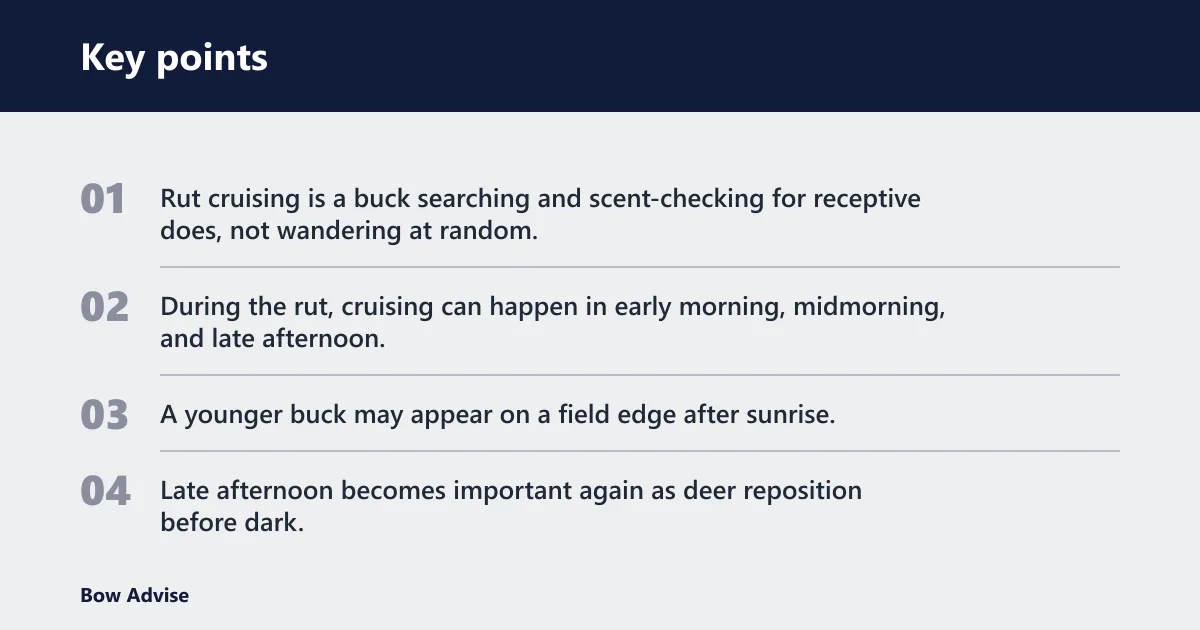
Rut cruising is a buck searching and scent-checking for receptive does, not wandering at random. Older bucks, usually 3.5+ years, tend to move with more caution than younger deer, and they often use cover, wind, and terrain to stay hidden while they search.
During the rut, cruising can happen in early morning, midmorning, and late afternoon. The strongest daylight window often comes during peak rut, when more does are receptive and bucks spend more time covering bedding edges and nearby travel routes.
Why older bucks move differently than younger deer
Mature bucks are more likely to use the downwind side of doe bedding areas, where they can scent-check without stepping into the open. They also respond faster to pressure. On heavily hunted ground, the same deer may shift from obvious travel lanes to thicker cover and less predictable routes.
That caution matters. A younger buck may appear on a field edge after sunrise. A mature buck often uses cover first, then checks does from a safer angle, which is why the best rut setup is usually tied to bedding geometry instead of a random edge.
The daily window: early morning, midmorning, and late afternoon
Early morning is strong because bucks often finish overnight movement and begin checking bedding-related routes near daylight. Midmorning matters more than many hunters expect, especially during peak rut, when a buck that gets pushed or misses a doe can keep moving after the first few hours of light. Late afternoon becomes important again as deer reposition before dark.
That pattern is why a short sit can miss the best rut movement. If the first movement was quiet and the woods stayed calm, the better deer may not show until the late-morning lull, especially on days with less pressure and stronger breeding activity.
Rut phase and daylight timing
Pre-rut cruising before peak breeding
Before peak rut, cruising usually starts later and stays narrower. Bucks are active, but they are still tied more tightly to food, cover, and predictable evening movement. Daylight encounters often depend on a sharp wind, a known doe area, and a stand that catches a buck moving between cover pockets.
Photoperiod is the main driver of rut timing, not short-term weather swings. That means weather can speed up or slow visible movement for the day, but it does not change the larger breeding clock that sets when cruising starts to build.
Peak rut and the longest daylight window
Peak rut is when the greatest number of does are in estrus and receptive to breeding. That is when bucks are described as cruising hard, and daylight movement can stretch well beyond a normal morning window. A hunter who leaves after dawn often misses the most valuable part of the sit.
onX cites November 4, plus or minus one day, as one rut timing target, November 13 as a median breeding day, and November 16, plus or minus two days, as a productive late-rut period. Those dates are useful as timing markers, but the best sit still depends on local sign and pressure.
Post-peak movement after does are bred
After the peak, cruising narrows again. Bucks still check does, but the daylight window often becomes shorter and more conditional. They may still move in the morning or late afternoon, yet the all-day feel fades unless local breeding activity is still high or new does cycle back in.
Suppose a 160-acre private tract has fresh tracks entering a thick creek-bottom doe area at 9:30 a.m. after two calm, low-pressure days. That does not mean the whole morning is hot everywhere. It means the rut phase and the cover edge line up, so a longer sit near the bedding side is worth more than a quick edge setup at the food plot.
Do mature bucks cruise all day during the rut?
Mature bucks do not cruise all day in a flat, constant way. They are most likely to show extended daylight movement during peak rut, and even then the best window usually comes in pulses. A late-morning sit can pay off, but only if the phase, wind, and pressure all support movement.
When late-morning movement is worth a long sit
Late-morning movement is worth staying for when the woods are still breeding-active, the wind lets you cover a bedding edge without blowing it out, and fresh sign shows travel between cover pockets. That is when a buck can continue scent-checking after the first wave of daylight movement passes.
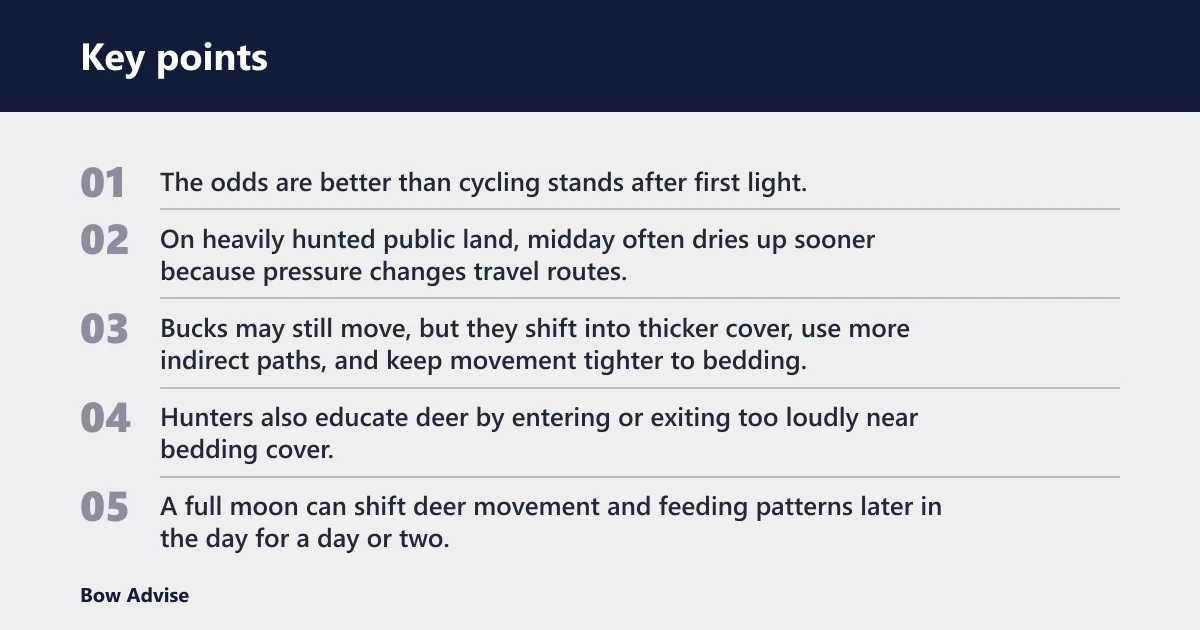
A practical rule: if you are on private ground with moderate to low pressure, fresh rubs or tracks in the last 24 hours, and a setup that covers the downwind edge of a doe bedding area, stay until at least late morning. The odds are better than cycling stands after first light.
When midday dries up on pressured ground
On heavily hunted public land, midday often dries up sooner because pressure changes travel routes. Bucks may still move, but they shift into thicker cover, use more indirect paths, and keep movement tighter to bedding. That can make the obvious edge stand less productive than a hidden interior setup.
Hunters also educate deer by entering or exiting too loudly near bedding cover. Quiet access matters because a mature buck that catches scent or noise early may not abandon the area, but it often changes the side of the bedding cover it uses and reduces daylight exposure.
How full moon and cold fronts change the answer
A full moon can shift deer movement and feeding patterns later in the day for a day or two. onX recommends staying out longer on November 6 and 7 after the November 5 full moon, which makes sense when the moon has already pulled activity later and the rut phase is still active.
Cold fronts can improve daylight movement, but they do not replace rut phase. A sharp temperature drop can help movement show up sooner or stronger, yet if the breeding window is weak or the pressure is high, the bucks may still keep to cover and move only in short bursts.
Rut cruising timing matrix
This table turns the timing question into a sit plan. The hours are the most likely windows, not a promise, and the setup type should match both rut phase and local pressure.
| Rut phase | Most likely cruising hours | Best setup type |
|---|---|---|
| Pre-rut | First 2 hours after daylight, then late afternoon | Wind-tight edge near doe cover and a known travel corridor |
| Peak rut | First 2 to 4 hours after daylight, plus late morning | Downwind bedding edge near interior travel, with quiet access |
| Post-peak rut | Early morning and brief late-afternoon movement | Interior cover near a remaining doe pocket or travel pinch |
| Low-pressure private land | First light through late morning, with a second pulse late day | Long sit on a bedding-side edge or inside transition |
| Pressured public land | First light, then a narrower late-morning window if the area stays calm | Concealed setup on the downwind side of thick cover or a pinch point |
| Cold-front days | Early morning through midmorning, often with steadier daylight movement | Stand that covers fresh sign and a funnel between bedding and cover |
| Post-full-moon mornings | Later than normal, often midmorning after a quiet start | Stay on a calm setup longer instead of shifting at dawn |
Stay all day if: you are in peak rut, the wind favors the bedding edge, fresh sign is active within 24 to 48 hours, and pressure is low enough that deer are still using daylight routes. If two of those four are missing, a long sit is harder to justify.
Where bucks travel when cruising
Doe bedding areas and downwind edges
Doe bedding areas are the main travel magnet during the rut because cruising bucks key on receptive does. The best interception point is often the downwind edge, where a mature buck can scent-check bedding cover without exposing itself in open ground.
That detail matters more than most hunters give it credit for. A field edge near a bedding area may look obvious, but the better shot often comes from the side that lets the buck use the wind first. The exact side changes with wind direction, so the stand does too.
Interior scrape zones inside cover
Interior scrape zones are more valuable than easy field-edge scrapes when the goal is daylight rut travel inside cover. They sit in the middle of the route that bucks actually use, especially between bedding and food, and they are more likely to catch a daylight mover than a visible edge scrape.
Interior sign is not a magic spot by itself. It matters because it sits in the same cover system as the buck’s scent-checking route. In other words, the scrape is a clue, but the real target is the travel line tied to bedding, wind, and safety.
Pinch points that compress movement
Pinch points are terrain features that funnel deer movement through a narrow corridor. Saddles, drainage crossings, fence crossings, and narrow timber strips are classic examples. They do not create rut movement, but they compress it into a lane a bowhunter can predict.
These spots work best when they are aligned with the wind and entry route. A pinch point that looks ideal on a map can fail if the approach blows scent into bedding cover or if the setup forces a noisy entry past where mature bucks already bed.
How pressure changes cruising routes
Public land versus low-pressure private land
Low-pressure private land often gives a wider daylight window because deer are not constantly pushed. Bucks can cruise more openly, shift between bedding pockets, and return to the same route later in the morning. That makes a longer sit more valuable.
Pressured public land is different. Mature bucks often move earlier, quieter, and deeper in cover, then stop moving when the area gets noisy. On those properties, a daylight rut hunt usually works best when it starts before first light and stays tucked away from obvious entry paths.
Quiet entry, exit, and stand access
Quiet access can matter as much as stand height or concealment. If a mature buck learns that a crossing, trail, or creek edge gets disturbed every morning, it may still use the bedding area, but it will change the route or wait until later. That is one reason pressure can shrink the daylight window.
-
Map the bedding edge.
Pick the side of the doe bedding area that the wind covers without spilling scent into the core bedding cover. That is the side a mature buck is more likely to use when scent-checking.
-
Choose the quietest access.
Use a route that avoids blowing through the same corridor deer use. A longer walk is often better than a noisy shortcut, especially on public land.
-
Hold through the lull.
Do not leave right after the first movement burst. If the rut phase is strong and the wind is right, the late-morning lull can be the window that matters most.
Why thick cover beats obvious edges under pressure
Thick cover beats obvious edges because pressured bucks prefer places that reduce exposure. That may mean a buck uses a narrow timber strip, a drainage lip, or a scrubby pocket just off the main trail instead of the easy field line everyone can see.
A common first-timer mistake is sitting the nearest open edge because it looks productive on a map. If the deer have been pressured for days, the mature buck may still be there, but it will use a deeper route and only appear on the hidden side of the bedding cover.
What setup fits the day?
Low-pressure private land
On low-pressure private land, the best setup is usually a long sit that covers the downwind side of a doe bedding area or an interior travel lane between bedding and food. The morning window can last well into late morning if the deer are not being bumped.
Pressured public land
On pressured public land, the best setup is tighter and more concealed. Hunt a pinch point, drainage crossing, or narrow timber strip that forces a buck through cover without advertising your presence. Quiet access and a controlled exit are part of the setup, not an afterthought.
Cold-front days
On cold-front days, lean on fresh sign and stay on stand longer than usual if the rut phase is active. A front can sharpen daylight movement, but the best spot still needs to match the bedding edge and wind. A cold snap on weak rut timing is not the same as peak rut on calm private land.
Post-full-moon mornings
After a full moon, expect a slower start and be patient into midmorning. A moonlit night can push movement later for a day or two, so leaving at 9:00 a.m. can cut off the best part of the morning. That is especially true in early November, when rut timing is already close to a productive peak.
Frequently asked questions
What time of day do mature bucks cruise during the rut?
Mature bucks usually cruise most during the first 2 to 4 hours after daylight, with a second pulse late morning during the seeking phase and on low-pressure days. The exact window changes with rut phase, wind, and pressure, but midmorning is often more important than hunters expect.
Do mature bucks move best in the morning or evening during the rut?
Both can matter, but morning usually gives the best chance to intercept a cruising buck near bedding cover. Evening movement is real, yet it is often more tied to repositioning and feeding. During peak rut, a morning sit is usually the stronger default unless local sign points elsewhere.
Why do bucks cruise past midmorning during the rut?
Because the rut keeps breeding pressure active after daylight starts. A buck may miss a receptive doe, circle back after checking bedding cover, or continue scent-checking after the first morning pulse fades. On low-pressure ground, that late-morning behavior is more visible and more huntable.
How late in the morning do mature bucks still move during the rut?
On good rut days, mature bucks can still move well into late morning, especially during peak rut and on quiet property. On pressured public land, that window is usually shorter. If the bedding edge is right and the wind is clean, staying until 10:00 or 11:00 a.m. can pay off.
What weather conditions make mature bucks cruise more in daylight?
Cold fronts can improve daylight movement, and light stable winds can help a hunter hold a stand near bedding cover. A full moon is different because it can push deer movement later for a day or two. Weather helps, but photoperiod still controls the larger rut timing.
Do mature bucks cruise all day during peak rut?
No. Peak rut can extend daylight movement far beyond normal, but it does not make bucks equally active every hour. The best action still comes in pulses, often early morning and again late morning. All-day movement is most likely when pressure is low and breeding activity is high.
Where do mature bucks travel when cruising for does during the rut?
They often travel along the downwind side of doe bedding areas, through interior scrape zones, and across pinch points that compress movement. Saddles, drainage crossings, and fence crossings can all matter if they sit between bedding and the next cover block. The wind decides which side is best.
What is the best sit time for a rut bowhunt?
The best sit time is usually a long one. If the rut phase is strong, the wind is right, and you are set on a bedding-side travel line, stay through the late-morning lull. Short sits are more likely to miss the second pulse that shows up after first light.
How does hunting pressure change when mature bucks cruise?
Pressure makes bucks move deeper, quieter, and more cautiously. It can shrink daytime cruising, push deer into thicker cover, and change the side of a bedding area they use. On public land, pressure also makes quiet entry and exit more important than the actual stand tree.
Do mature bucks move more after a cold front during the rut?
Often yes, but only when the rut phase is already active. A cold front can improve daylight movement and make cruising more visible, yet it does not replace breeding timing. The best hunt is still the one that matches the right wind, cover, and pressure level for that day.