How Moon Phase Affects Rut Bowhunting Movement
Use moon phase as a secondary filter only after you confirm rut stage and pressure; on bright, full-moon nights, start about 60 to 90 minutes earlier, and on dark nights, stay closer to prime late-morning movement. Used alone, moon phase can pull you into the wrong stand window and waste a low-odds sit on pressured deer. This guide turns moon phase into a simple same-day decision rule for rut hunts, especially on public land.
Why rut drive overrides lunar cues
Moon phase changes night light level, and that can shift some deer activity from daylight to night feeding. The effect is real, but small compared with rut stage, pressure, and weather. During the rut, buck movement can still break from the pattern when breeding drive takes over.
New moon nights are dark. Full moon nights are bright at their peak, so more feeding may happen after sunset and before sunrise. That does not lock bucks to night movement, though. Morning activity, midday movement, and evening activity still depend on where the rut is and how much pressure the herd feels.
Why rut drive can override moon effects
During the peak breeding period, the sex drive override is stronger than the moon cue. Bucks may keep moving through daylight even when a full moon pushes more feeding to nighttime. A locked-up, low-visibility phase can also make movement look random because deer spend more time with does and less time on open travel routes.
That is why the same moon phase can produce different results. A bright moon on a lightly hunted farm may shift deer later in the day, while the same moon on a noisy public parcel may have little visible effect because bedding shifts and pressure already changed the pattern.
Does moon phase matter more during the rut?
Moon phase matters more as a timing filter than as a cause of rut movement. In pre-rut, bucks still respond to feeding schedules and early cruising. In peak breeding, rut drive can overpower moon effects. In the trickle rut, when the main chase wave fades, moon phase can matter a little more because deer often return to more regular travel.
Pre-rut, peak breeding period, and trickle rut
Pre-rut is often where moon phase can be most useful for picking a morning or evening sit. Bucks are cruising, but they have not fully committed to breeding movement yet. A dark night can bring earlier dawn activity, while a bright night can delay visible movement into late morning.
At peak breeding, the rule changes. Bucks may move regardless of moon phase, especially if a hot doe pulls them. That is where many hunters overread the moon and miss the better decision: sit the best cover all day, then adjust entry time and stand height to pressure and wind.
In the trickle rut, moon phase can matter again because daytime chasing drops off. Bucks still travel, but often in narrower windows. A bright moon may push more movement toward midday; a dark moon may keep the best chance closer to first light and the late morning lull.
When moon phase matters less than rut stage
If the woods are in full peak breeding, the rut stage usually outranks moon phase. If sign shows fresh tracks, hot scrapes, and active does, the better plan is to hunt the stage, then use moon phase to fine-tune the exact stand time. That keeps the moon from becoming the main filter.
New moon and full moon movement patterns
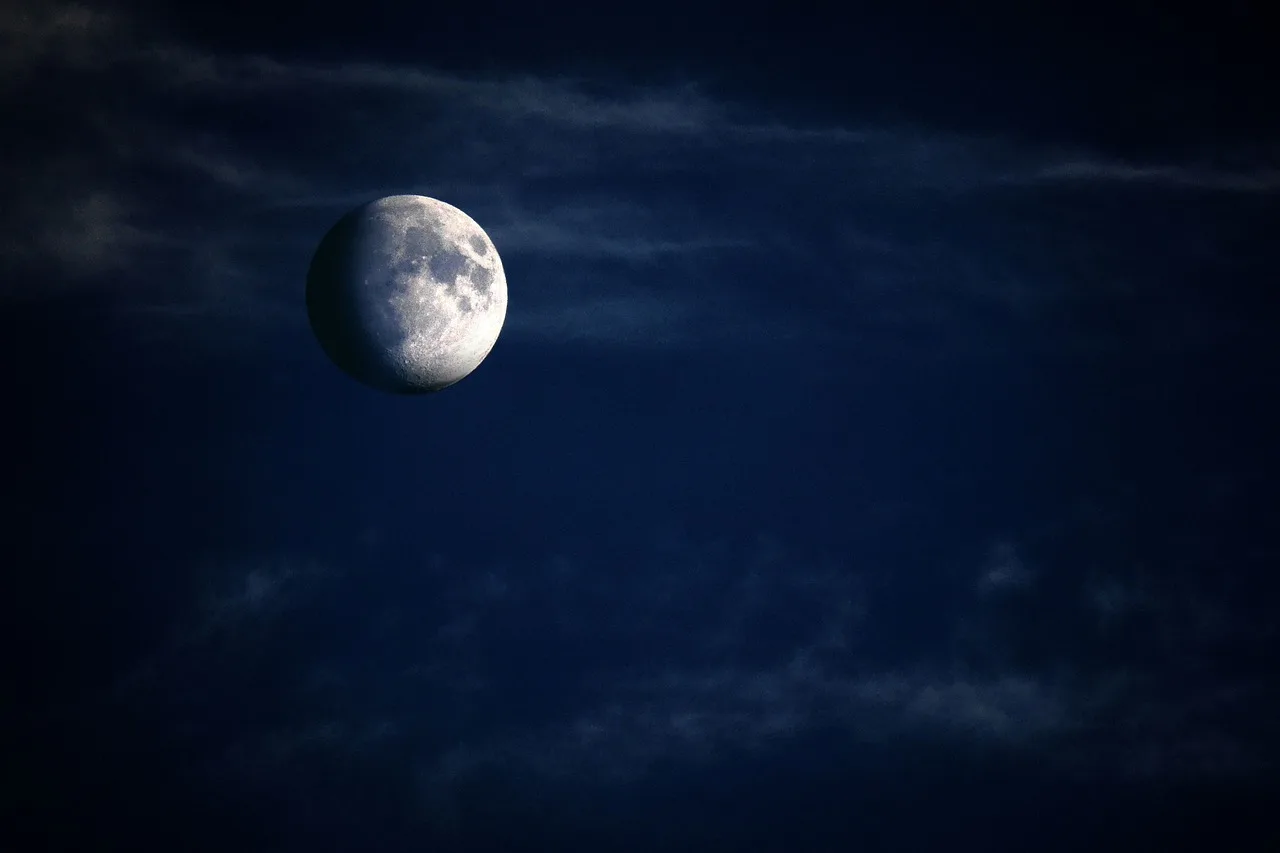
New moon and full moon are the two phases hunters ask about most because they create the strongest light difference. A new moon brings darker nights and can push deer toward dawn and early morning. A full moon adds light, so some deer feed more at night and show more movement later in the day.
New moon: darker nights and earlier daylight movement
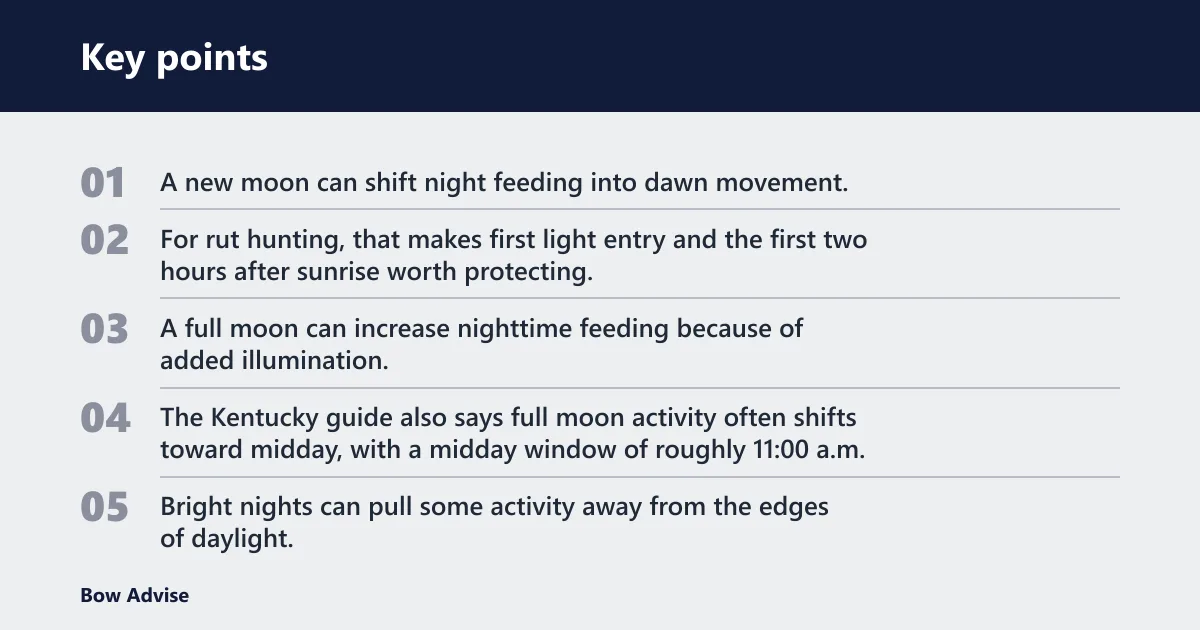
A new moon can shift night feeding into dawn movement. Deer activity can shift from night feeding to dawn movement on a new moon, and a Kentucky guide says the new moon pushes deer activity toward dawn and early morning. For rut hunting, that makes first light entry and the first two hours after sunrise worth protecting.
On a dark moon, bucks may still move well in the morning, then settle earlier if pressure is light and temperatures are stable. If a cold front arrives with a temperature drop and a steady wind direction, the better call is often to be on stand before legal light and stay through the first strong feeding window.
Full moon: brighter nights and more night feeding
A full moon can increase nighttime feeding because of added illumination. The Kentucky guide also says full moon activity often shifts toward midday, with a midday window of roughly 11:00 a.m. to 3:00 p.m. for full moon hunting. That does not mean every buck will move then, only that the odds improve enough to justify staying put.
Bright nights can pull some activity away from the edges of daylight. That is why a full moon rut often rewards patience, especially on days with cloud cover that dulls the moonlight effect the night before.
Picture a ridge funnel on public land after two noisy evenings. A full moon is overhead, but the real factor is pressure. If deer already shifted bedding because of people, the midday window can be better than a dawn-only sit, especially if the wind keeps the approach quiet.
First quarter and last quarter as middle-ground phases
First quarter and last quarter usually sit between the extremes. They do not create the same bright-night effect as a full moon or the same dark-night effect as a new moon. That makes them useful as supporting clues, not stand-alone answers.
The last quarter can matter because one study described the most extreme late-day movement there. That makes the last hour of daylight a reasonable target when pressure is moderate and the wind is usable. First quarter often behaves like a neutral phase, so rut stage and weather should decide the sit.
Rut moon decision matrix
| Rut stage | Moon phase | Expected daytime movement window | Pressure level | Recommended hunt tactic |
|---|---|---|---|---|
| Pre-rut | New moon | First light through late morning | Low to moderate | First light entry, then hold through morning activity |
| Peak breeding period | Full moon | 11:00 a.m. to 3:00 p.m. | Low | All-day sit with midday focus |
| Trickle rut | First quarter | Morning activity and late morning | Moderate | Hunt travel corridors with a wind-safe entry |
| Trickle rut | Last quarter | Last hour of daylight | Moderate to high | Set up for evening movement and exit quietly |
| Ignore moon trigger | Any phase | Any window | Noisy pressure, fresh bedding shift, or strong weather break | Use pressure and weather first; hunt the best travel line |
The matrix is the simple rule: stage first, pressure second, moon third. If the rut is hot and pressure is light, the moon can help set the hour. If pressure is high or weather is driving deer movement, the moon should get bumped down the list.
How solunar timing fits your sit
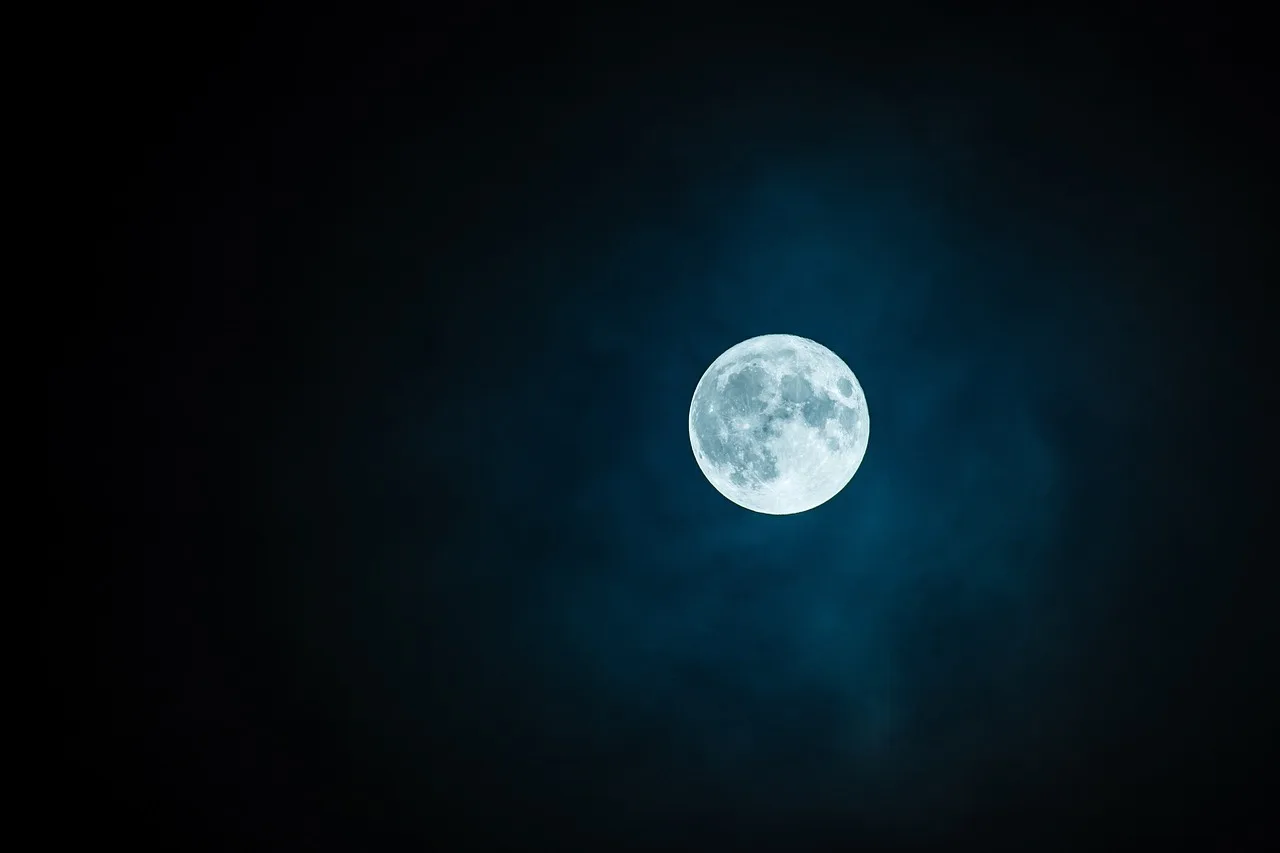
Solunar timing is a secondary tool, not a full plan. Moon overhead and moon underfoot can point to stronger movement periods, and moonrise and moonset can line up with major periods. Minor periods are smaller windows around those transitions. Use them to sharpen the stand time you already picked from rut stage and pressure.
Moon overhead and moon underfoot
Moon overhead and moon underfoot are the two timing points most hunters check first. They are often tied to major periods, when movement can rise for a short window. That matters most when the rut stage already suggests deer should be on their feet.
If a full moon puts the best solunar window near midday, an all-day sit makes sense. If a new moon pushes the better window into early morning, a first light entry is the cleaner choice. Solunar timing should confirm the sit, not invent it.
Moonrise and moonset
Moonrise and moonset can help bracket morning and evening activity. On a bright moon, moonset near dawn may support later morning movement. On a dark moon, moonrise near evening may matter less than fresh pressure or a cold front.
A common first-timer mistake is choosing a sit because a chart says “good moon” while ignoring wind direction. If the wind drifts scent into bedding, the solunar window will not save the hunt. Deer will still use the safest route.
Major periods and minor periods
Major periods are the best places to look for movement spikes. Minor periods can still matter, but they are usually not strong enough to override bedding security or pressure. That is why a midday major period during a full moon rut can be worth an all-day sit.
Say your pressure is light, the wind is steady, and a cold front drops temperatures overnight. A full moon with a strong midday major period would support a long sit. Change only one part of that setup, say, add noisy access on public land, and the same chart becomes much less useful.
When hunting pressure beats moon phase
Hunting pressure can matter as much as, or more than, moon phase. Noisy pressure changes bedding shifts, travel routes, and the amount of daylight deer are willing to show. On public land, that effect is often stronger than the moon itself. On private land with low disturbance, moon phase can be easier to see in the daylight pattern.
Noisy pressure and bedding shifts
When pressure spikes, deer often move beds, shorten travel, or hold tighter to cover. That can create a midday movement response that looks like a moon effect, but the real cause is intrusion. If the woods are getting bumped before dawn, the best answer is usually to hunt less access, not chase a different moon phase.
Pressure vs moon interaction is simple: if pressure is loud, it can bury the lunar signal. If pressure is light, moon phase has more room to matter. That is especially true during the trickle rut, when bucks are still active but more willing to settle into a pattern.
Public land vs private land response
Public-land deer often react faster to pressure because they may hear more entry noise, more stands, and more weekend human traffic. A full moon on pressured public ground may still produce daylight movement, but the window can be narrower and later. Private-land deer with less disturbance may show the lunar shift more cleanly.
That means a full moon rut plan on public land should lean toward all-day sits and flexible midday hunts. On private land, the same moon may justify a more targeted entry once the deer are already patterned. The stand time should fit the disturbance level first.
Should you change your stand time?
Yes, but only after you confirm rut stage, pressure, and weather. On high-odds rut days, all-day sits make sense. On darker nights, first light entry often fits better. On bright nights, midday hunts can pay off, especially during peak breeding. When pressure is high, the last hour of daylight may be the safest visible movement window.
All-day sits on high-odds rut days
When the rut is hot, a full-day sit is often a strong default. That is especially true if a cold front, barometric pressure rise, or cloud cover shift lines up with a known travel route. The point is to stay in the woods when daylight movement can happen at any hour.
- Check rut stage first. Look for chasing, fresh rubs, hot scrapes, or doe groups that signal pre-rut, peak breeding period, or trickle rut. That tells you whether moon phase should matter much at all.
- Read pressure next. Note recent noise, parking pressure, and bedding shifts. If deer are already reacting to people, treat moon phase as a tie-breaker only.
- Match the moon phase. Use a new moon for first light and late morning, a full moon for midday, and first quarter or last quarter as support for morning or evening sits. Keep the phase in the background, not the lead.
- Adjust for weather. Favor cold fronts, temperature drops, steady wind direction, and useful cloud cover. If weather strongly favors movement, it outranks the moon.
- Choose the sit window. Pick all-day, first light, midday, or last hour of daylight based on the strongest overlap between rut stage, pressure, and the moon cue.
First light entry on darker nights
On a new moon, first light entry is often a good fit because deer may move earlier into daylight. Get in before dawn and avoid loud access. If the weather is stable and pressure is low, that first two-hour window can be the cleanest chance of the day.
Midday hunts during bright nights and peak rut
Should I hunt midday during a full moon rut? Yes, that is often the best adjustment when peak breeding and bright nights line up. The Kentucky guide’s 11:00 a.m. to 3:00 p.m. window is a useful target, but only when pressure does not already shut the deer down. Midday sits are strongest when buck movement is likely to be late.
Last hour of daylight when pressure is high
When pressure is loud, the last hour of daylight can be the best visible window, especially during the last quarter. Deer that avoided open movement all day may rise once human pressure fades. If the wind is right, that late window can beat a morning sit that got bumped by early hunters.
Frequently asked questions
How does the moon phase affect rut bowhunting movement?
Moon phase changes night light level, which can shift some deer from night feeding to daytime movement or the reverse. During the rut, that effect is secondary. Rut stage, pressure, and weather still decide most of the daylight pattern, especially on public land.
Is a full moon or new moon better for bowhunting during the rut?
Neither is automatically better. A new moon can favor first light and early morning movement, while a full moon can favor midday hunting and later daylight movement. The better choice depends on rut stage, pressure, and whether weather is already pushing deer to move.
Do bucks move more during the day when there is a full moon?
Sometimes, but not always. A full moon can push more feeding to nighttime, and some guides say daytime movement shifts toward midday. That trend is useful, yet rutting bucks may still move whenever a hot doe or pressure change forces them to travel.
Should I hunt midday during a full moon rut?
Yes, often. The strongest full-moon rut setup is a midday sit inside the 11:00 a.m. to 3:00 p.m. window, especially during peak breeding. Use that plan when pressure is manageable and weather is not already favoring a different window.
Does moon phase matter less than weather during the rut?
Usually yes. Cold fronts, barometric pressure changes, wind direction, temperature drops, and cloud cover often move deer more than moon phase does. If weather and moon point in different directions, weather should usually win because it changes comfort and travel more directly.
What is the best moon phase for hunting the whitetail rut?
The best moon phase depends on the rut stage you are in. New moon helps early daylight movement, full moon can help midday hunting, and first quarter or last quarter are support phases. There is no single best phase that beats rut timing and pressure on every hunt.