Best Weeks for Midwest Rut Bowhunting (2026): Research Shows
The best week to bowhunt the Midwest rut is usually the first full week after peak local doe receptivity starts, but the highest-odds choice shifts by latitude and hunting pressure: earlier in the south, later in the north, with the best action when mature bucks are covering does in daylight. Miss that window, and you often burn sits on low-odds travel days while pressured deer go mostly nocturnal. This guide shows how to pick your rut week using pressure, latitude, and doe activity.

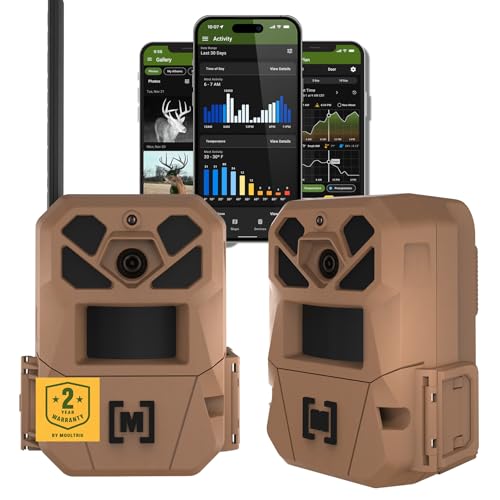
- Real-time photos via mobile app
- AI buck detection and alerts
- Auto-connects to four US carriers

- Includes a storage case for the heads
- Uses standard thread screw-in design
- Precision machined for straight flight

- Waterproof and nitrogen-purged housing
- Phase-coated BaK-4 prisms for contrast
- Rubber-armored for outdoor durability
Quick comparison
The first two weeks of November are commonly reported as a broad rut peak across the Midwest. The first week often wins in much of the region. The second week can be equal or better on northern ground, on larger public tracts, or anywhere heavy pressure delays daylight movement and pushes breeding activity later.
| Rut week | Pressure level | Buck movement | Calling risk | Best stand type | When to stay home |
|---|---|---|---|---|---|
| Late October | Best on low-pressure private ground | Good pre-rut cruising near food and bedding edges | Moderate to high; keep it light | Edge funnels, scrape lines, doe exit routes | Warm weather, no fresh sign, or heavy disturbance |
| First week of November | Best all-around week on many Midwest farms | Highest odds for daylight rut travel | Moderate; use sparingly and at close range | Travel corridors, bottlenecks, crosswind setups | When repeated human intrusion has already spooked deer |
| Second week of November | Better on pressured ground and farther north | Strong, but can shift to midday and bedding-side movement | Lower; listen and react more than you call | Transition trails, bedding cover edges, isolated timber | When doe numbers are low and movement is already fading |
| Lockdown / post-rut | Useful only on the right property | Patchy, shorter windows, often around food | Low; avoid overcalling | Food-to-bedding routes, late-season travel lanes | Open-country areas with little cover or poor doe ratio |
How we chose
This decision guide uses four filters: local breeding timing, hunting pressure, daytime buck movement, and property type. Those factors matter more than a single calendar date.
The best week changes with latitude because breeding timing runs earlier in the south and later in the north. It also shifts with deer education. A farm that gets little pressure can peak earlier than a public parcel a mile away.
We also separate rut phases so the week choice stays useful in the field. Pre-rut, peak rut, lockdown, and post-rut each call for different stand sites and different levels of risk.
Why the first week of November is the top pick in much of the Midwest
The first week of November is the safest top pick because it lands in the center of the Midwest rut window for many states and usually overlaps the best daylight movement. Mature bucks are more likely to cruise during legal shooting light then than they are in late October or after the main chase window fades.
That does not make it a fixed date. Northern areas often lag southern areas by several days, and a high-pressure tract can slide later still. A flat answer fails too many properties.
When late October can beat the calendar
Late October can outhunt early November on low-pressure private ground, especially where food sources are close to bedding cover. On those properties, older bucks may move before the main chase spike because they are still predictable and less educated.
Late October also earns a look when warm weather has stalled movement and local sign shows bucks cruising scrapes near field edges, timber fingers, and fencerows. A small drop in temperature can put a better buck on his feet two or three days before the common peak.
Are the first two weeks of November really the best days to hunt the rut?
Yes, for most Midwest hunters, the first two weeks of November are the best rut stretch. The first week usually gives the cleanest peak movement, while the second week often catches the tail end of chasing, the start of lockdown behavior, or delayed breeding on pressured properties and in northern latitudes.
That said, “best” means highest odds, not guaranteed daylight action. Warm fronts, poor doe ratios, and repeated intrusion can flatten the window fast. A good week on paper still underperforms when deer have already been bumped or baited by pressure from other hunters.
How pressure and latitude change the answer
South of the central Midwest belt, peak breeding often arrives a bit earlier, so the better week may lean toward late October into the first days of November. Farther north, the second week can be just as strong because breeding and chase can run later.
Public land often behaves later than private land because deer there see more human traffic and become more cautious. Private parcels with light pressure can show mature buck daylight movement sooner, especially if does are concentrated and cover is limited.
How low-pressure hunting changes rut timing and buck movement
Pressure changes both timing and behavior. Deer that get bumped too often shorten their movement windows, switch to thicker cover, and reduce daylight use. Mature bucks are especially sensitive because their home range is often small enough to let them survive by sidestepping risky routes.
Low-impact hunting keeps the rut hunt in play. That means fewer trips to the stand, quieter access, cleaner entry and exit routes, and stand rotation only when necessary. Scent control matters, but intrusion control matters more.
What mature bucks do under pressure
Mature bucks usually travel less in daylight than younger deer, but they can cover surprising ground when the rut is hot. Their daylight movement rises when they are checking does, scrapes, and funnels that connect bedding to food. Heavy pressure shrinks that window and pushes them to the edges of cover.
On a hard-hit public parcel, a buck may still be active, but the movement may shift to the middle of the day or to less obvious routes. That is why the same week can be excellent on one property and mediocre on another.
Low-impact rules that matter most
Limit extra visits. Get in, hunt, and leave. Repeated scouting during the rut can educate deer faster than the hunting itself.
Use clean access. Approach from the downwind side, keep noise down, and avoid crossing open feeding areas in daylight. Scent and noise are both part of pressure.
Rotate only when needed. If a stand gets winded or burned, move to another route instead of hunting the same line every day. Repeated intrusion can erase a good setup.
Where to hunt: scrapes, rub lines, funnels, and travel routes
Scrapes and rub lines matter, but only when they connect to a real travel route. A scrape beside nowhere is not enough. The better setup is a scrape cluster on the edge of a timber patch, a fencerow pinch, or a bedding-to-food transition trail that deer already use.
In Midwest farm country, those travel routes often run through shelterbelts, CRP edges, cattail sloughs, creek crossings, and narrow timber strips between food and bedding. Small habitat shapes can create big rut funnels.
Best stand sites for each rut phase
Pre-rut stands often work best on scrape edges, buck bedding exits, and first-light travel lanes. Peak-rut stands should favor funnels and bottlenecks where a buck can intercept does without exposing himself for long.
During lockdown or post-rut, shift closer to bedding cover and food-to-bedding routes. Deer may travel less, but they still need to move between secure cover and feeding areas.
Midwest farm-country habitat that holds rut traffic
- Timber patches that link larger blocks of cover
- Fencerows that narrow movement between fields
- CRP that offers bedding and staging cover
- Shelterbelts that hide buck approach routes
- Cattail sloughs that give deer secure daytime cover
What week produces the most mature buck daylight movement in the Midwest?
The first week of November is often reported to produce some of the best mature buck daylight movement across much of the Midwest. That is the strongest all-around answer because it aligns with peak local breeding in many areas, yet still falls before too many bucks lock down or get pushed fully nocturnal by pressure.
But the best week for daylight movement can slide one way or the other. Southern states and early-breeding properties can peak slightly earlier. Northern areas, big public tracts, and highly pressured farms often move the best a bit later, especially if the doe pool is large and spread out.
Odds framework for mature buck daylight movement
Think in ranges rather than guarantees. On a low-pressure private farm with good doe density, the first week of November is often the best shot at consistent daylight movement. On medium-pressure ground, the second week can tie or beat it. On high-pressure public land, peak-looking sign may still produce poor daylight movement if deer have already been educated.
Say your farm has fresh scrapes along a timber finger and a heavy doe trail between CRP and picked corn. That setup favors the first week of November because a mature buck can cruise that edge in daylight without exposing himself for long.
When should you hunt the second week of November?
Hunt the second week of November when pressure is high, when you are north of the strongest early peak, or when local doe activity is still building. That week often pays better on public land and on properties with thick cover, where bucks can move later without being exposed.
It is also a smart choice when the first week was burned by warm weather or too much access traffic. In those cases, the second week may be the first clean window where bucks feel safe enough to travel in daylight again.
When the second week beats the first
The second week can beat the first on ground where hunters have already pressured deer into thicker cover. It can also shine on farms with a poor doe ratio, where bucks keep searching longer and stay on their feet deeper into the month.
That makes the second week a better bet for hunters who can only make a short trip and need a little correction from the local herd pattern. It is often the smarter week for a public-land sit, especially if other hunters have already hit the obvious edges.
Lockdown and post-rut: when is it worth the sit?
Lockdown and post-rut are worth hunting when you have limited time, strong local sign, or a property that still holds does in secure cover. This is not the highest-odds week overall, but it can still produce if the property has enough bedding, food, and age structure to keep bucks in the area.
After the peak chase, deer often shift to shorter movement windows. Bucks may bed more, feed more, and move less visibly during daylight unless weather or fresh doe activity pulls them out.
When to stay home
Stay home if the weather is warm, the deer have been bumped repeatedly, and the property offers little cover. Those conditions stack against you, especially during lockdown or after the main rut wave has passed.
A common first-timer mistake is forcing all-day sits on a tired piece of public ground after several hunters have already walked the obvious trails. If the sign is old and the access is burned, a sit can become a long lesson in bad timing.
Best rut week selector table
Use this as a field decision tool, not a calendar rule. Pick the week that matches your pressure level, breeding timing, and stand access, then avoid the weeks that look good on paper but do not fit the property.
| Situation | Best week | Why it fits | Stand focus | Call plan |
|---|---|---|---|---|
| Low-pressure private farm in southern Midwest | Late October to first week of November | Earlier breeding and less deer education can pull bucks out before the common peak | Scrape edge, fencerow pinch, food-to-bedding route | Light grunts only, brief and infrequent |
| Mid-pressure farm in central Midwest | First week of November | Best overlap of breeding activity and daylight movement for many properties | Travel corridor, funnel, crosswind setup | Use calls only when a deer is close or visible |
| High-pressure public land in northern Midwest | Second week of November | Delayed activity and cautious deer often shift the better action later | Thick bedding edges, transition trails, cattail or timber cover | Minimal calling; let deer make the mistake |
| Property that just got hammered by hunters | Lockdown or post-rut, only if fresh sign remains | Deer may settle again after disturbance, but only in secure cover | Food-to-bedding routes and sheltered exits | Avoid overcalling; silence is safer |
| Poor doe ratio or very warm conditions | Wait for a better window | Breeding activity and daylight movement can both soften | Do not force a marginal setup | Skip aggressive calling |
How many days should you plan for a Midwest rut hunt?
Plan for at least several days, and preferably a full week, if you want a real shot at the best rut action. The rut is not one clean morning. It is a moving window of movement peaks, bedding shifts, weather changes, and pressure response.
A shorter hunt can still work, but longer stays help because you can wait out warm weather, pressure spikes, and off days. If the property is large and the sign is fresh, an all-day sit may matter more than stacking multiple short sits.
Why all-day sits matter
All-day sits matter because rut movement often peaks outside the first and last hour. Deer may move midmorning, around noon, or again in the late afternoon when they switch between bedding and food. Weather can shift those windows even more.
Cold fronts, falling temperatures, and calm conditions often improve daytime movement. Warm, stable weather can compress it. That is why a full-day hunt has more value during the rut than a quick morning sit.
What is the best time of day to bow hunt during the rut?
The best time of day during the rut is all day, but the highest-value windows are often late morning and early afternoon. Bucks may be cruising for does after first light, then again when bedding areas settle and deer resume movement between cover and food.
Do not leave after the first slow hour. Many rut encounters happen after most hunters are already gone. That is especially true on pressure-heavy public land and on farms where deer shift toward thicker cover during daylight.
When grunting and rattling fit best
Grunt calls and rattling antlers work best during the rut week when a buck is already searching, not when deer are tight and suspicious. Use them sparingly during the first week of November or during a strong pre-rut cruise, then back off when movement slows or deer are already jumpy.
Overcalling hurts fast. A short grunt sequence may pull attention. A loud rattling sequence can work when bucks are competing, but repeated use in thin cover or on pressured ground can sound fake and push deer away.
Calling rules that keep you honest
Call only with context. Use grunts or rattling when you have a reason to think a buck is nearby, cruising, or already keyed up. Random calling on every sit creates noise without a target.
Keep the volume modest. Short, believable sequences usually beat long, repeated calling. A little sound is often enough on a windy day or in broken cover.
Stop if deer react badly. If deer freeze, circle, or drift off, go quiet. The goal is to add curiosity, not alert the whole travel route.
Suppose a hunter sits a funnel between a CRP field and a timber patch during the first week of November. If a mature buck appears on the downwind edge of the trail, one short grunt sequence may be enough to turn him for a shot. If the same setup gets no response, more calling usually makes things worse, not better.
Which week should you pick?
Pick the first week of November if you have one good, low-impact setup on private land, or if your property sits in a part of the Midwest where breeding starts early. Pick the second week if pressure is heavy, if you are farther north, or if the first week was already disrupted by hunters and warm weather.
Choose late October only when sign is hot, access is clean, and your ground carries little pressure. Choose lockdown or post-rut only when the property still holds deer and you can hunt bedding-side routes without blowing them out. The best week is the one that matches the property, not the calendar.
Frequently asked questions
What is the best week to bowhunt the rut in the Midwest?
The first week of November is usually the best all-around week, with the first two weeks of November as the broader peak window. The exact best week shifts with latitude, pressure, and local breeding timing, so a northern public parcel can peak later than a southern private farm.
How do pressure and low-impact hunting affect rut timing and buck movement?
Pressure can shorten daylight movement and shift rut activity deeper into cover. Low-impact access, limited stand rotations, and careful scent and intrusion control help keep deer moving naturally. On pressured ground, the better week may move later because deer need time to settle.
Should I hunt early rut or peak rut for the best bowhunting odds?
Peak rut usually gives the best all-around odds because mature bucks are more likely to travel in daylight while searching for does. Early rut can beat peak rut on quiet private ground, though, especially where buck sign is fresh and does are concentrated near food and bedding edges.
Does rattling and grunting work better during the rut week or later?
They work best during the rut week, especially when bucks are already cruising and willing to investigate. Later in the season, calling can still work, but the risk of overcalling rises as deer become more cautious. Keep it short and use it only when the setup supports it.