Different Nocks for Crossbows: Flat, Moon, Capture & More
Crossbow nocks come in types like flat, half-moon, capture, and advanced designs such as Alpha-Nock—always match your nock to your crossbow model for safe, accurate shots and to avoid damage.

SAS
SAS Crossbow Nock Flat End - Dozen…
- Flat End Crossbow Nocks
- .2985 or .303 Diameter
- Nock Size: .2985 dia. FITS : Easton Carbon Bolts - Parker Super Magna Bolts - Barnett ( Except Game Crusher )
As an Amazon Associate I earn from qualifying purchases.
For a closely related bow or archery topic, Different Names for Crossbows: Essential Must-Have gives readers a useful next step.
Hey there, fellow archery enthusiast! If you’re new to crossbows or just getting started with bolts, you might have noticed that the little piece at the end—the nock—comes in different shapes. It can be confusing why there are so many options and which one to use.
Many beginners worry about picking the wrong nock, leading to poor accuracy or even safety issues like a dry-fire. Don’t stress—it’s a common question, and getting it right is easier than you think.
In this guide, I’ll walk you through the main types of crossbow nocks, their uses, and simple tips to choose the best one. We’ll keep things straightforward and fun, so you can shoot with confidence. Let’s dive in and make sense of it all!
What Is a Crossbow Nock and Why Does It Matter?
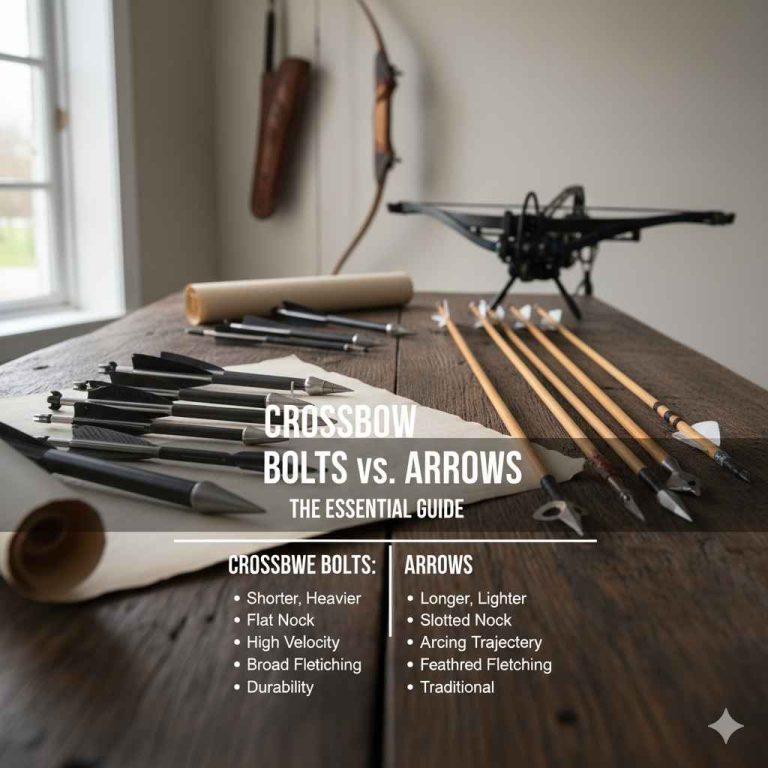
A nock is the small component at the rear of your crossbow bolt (or arrow) that connects to the bowstring. It holds the bolt in place until you pull the trigger, then helps transfer all that power smoothly for a straight, accurate shot.
The shape of the nock is crucial because modern crossbows are faster and narrower than older models. A mismatched nock can cause the string to slip over or under the bolt, leading to inaccurate shots, string wear, or even damage to your crossbow.
Always check your crossbow manufacturer’s recommendations—it’s the safest way to go. Using the wrong type might void your warranty or cause problems.
Main Types of Crossbow Nocks
There are four primary nock types you’ll encounter, plus some modern upgrades. Each has its strengths depending on your crossbow design.
- Flat Nock: Simple and flat on the back. Common on recurve crossbows like Excalibur models.
- Half-Moon Nock (also called Moon or Crescent Nock): Features a shallow concave groove for better string capture.
- Capture Nock: Deeper groove that “captures” the string more securely, similar to vertical bow nocks.
- Advanced Designs (like Omni-Nock or Alpha-Nock): Hybrid or improved versions for modern compound crossbows.
Let’s break them down further.
1. Flat Nocks
Flat nocks are the oldest and simplest design—just a flat surface where the string pushes.
They work great on wider-axle crossbows or recurves because the string angle allows easy contact without slipping.
Pros:
- Easy to load in any orientation—no need to align vanes perfectly.
- Less chance of misloading.
- Durable and inexpensive.
Cons:
- On narrow, high-speed compound crossbows, the string might slip over or under, causing issues.
- Not ideal for rail-less designs.
Best for: Excalibur and similar recurve crossbows. Many experts note flat nocks provide consistent accuracy on these models.
2. Half-Moon Nocks
These have a slight half-moon shaped groove that helps center the string and prevent it from jumping off the bolt.
You must load them with the odd-colored vane (cock vane) down in the rail groove for proper alignment.
Pros:
- Better string retention than flat nocks on compound crossbows.
- Widely available and affordable.
Cons:
- Must be loaded correctly every time—wrong orientation can cause dry-fires.
- Can wear the string serving faster on narrow bows.
Best for: Brands like Barnett that specifically recommend them.
3. Capture Nocks
A deeper version of the half-moon, with a groove that more fully encompasses the string.
Some “snap” onto the string for extra security.
Pros:
- Excellent string capture, reducing slip risks.
- Good for faster crossbows.
Cons:
- Still requires proper vane alignment.
- May not suit ultra-narrow modern bows perfectly.
Best for: Certain compound models needing stronger retention.
4. Advanced Nocks: Omni-Nock and Alpha-Nock
Omni-Nocks (from TenPoint) have multiple grooves (usually three or six micro-grooves) so you can load in any orientation while still capturing the string well.
Alpha-Nocks are TenPoint’s latest, with a deeper channel, elongated ears, and smooth base for even better engagement on narrow, high-performance crossbows.
Pros:
- No need to index vanes precisely (like flat nocks but safer).
- Reduces string wear and prevents shoot-over/under.
- Improves accuracy and consistency.
Cons:
- Brand-specific—required for TenPoint and Wicked Ridge to maintain warranty.
- Slightly more expensive.
Best for: Modern narrow compound crossbows from TenPoint or similar high-speed models.
Comparison Table: Crossbow Nock Types
| Nock Type | Loading Orientation | String Capture | Best For | Common Brands |
|---|---|---|---|---|
| Flat | Any | Basic | Recurve/wide axle | Excalibur |
| Half-Moon | Must align vane down | Good | Many compounds | Barnett, others |
| Capture | Must align vane down | Better | Faster compounds | Parker, various |
| Omni/Alpha | Any | Excellent | Narrow high-speed | TenPoint, Wicked Ridge |
How to Choose the Right Nock for Your Crossbow
Follow these simple steps:
- Check your owner’s manual or the manufacturer’s website for recommended nock type.
- Match exactly—brands like TenPoint require Alpha-Nocks for safety and warranty.
- If buying new bolts, get ones with the correct factory-installed nocks.
- For replacements, measure your bolt shaft diameter and choose compatible nocks (e.g., press-fit or glue-in).
- Consider lighted nocks for hunting—they help track your shot in low light.
Pro Tip: Never mix nocks unless your manual says it’s okay. As noted by experts at TenPoint Crossbow Technologies, mismatched nocks on narrow bows can lead to premature string wear or simulated dry-fires.
Lighted Nocks: A Fun Upgrade
Many nocks come in lighted versions (like Lumenok or TenPoint’s Alpha-Brite). They activate on launch and glow to show your bolt’s flight path—super helpful for recovering game or seeing hits in dim light.
Available in most types (flat, half-moon, etc.). Just ensure compatibility with your crossbow.
Safety Tips for Using Nocks
- Always inspect nocks for cracks or wear before shooting.
- Load carefully—keep fingers clear of the rail.
- Use the nock your crossbow requires to prevent accidents.
- Practice at the range to get comfortable with loading.
Remember, safety first! Proper nock use keeps archery fun and injury-free.
Another Comparison: Pros and Cons Table
| Type | Pros | Cons |
|---|---|---|
| Flat | Easy loading, forgiving, good accuracy on recurves | Risk of string slip on compounds |
| Half-Moon/Capture | Secure string hold, widely used | Requires precise alignment |
| Advanced (Omni/Alpha) | Best engagement, no alignment needed, less wear | Brand-specific, higher cost |
Conclusion
Choosing the right nock might seem small, but it makes a big difference in your crossbow’s performance, safety, and enjoyment. Stick with what your manufacturer recommends—whether it’s a reliable flat nock for your recurve or an advanced Alpha-Nock for a high-speed compound—and you’ll shoot straighter and safer.
As you practice, you’ll build confidence and see your groups tighten. Archery is all about that satisfying thump of a perfect hit. Grab the right bolts, head to the range, and have fun out there! If you have questions about your setup, feel free to check resources from trusted brands like TenPoint (tenpointcrossbows.com) or Lancaster Archery Supply (lancasterarchery.com) for more details.
Keep shooting straight, and enjoy every moment on the range or in the field!
Frequently Asked Questions
1. What happens if I use the wrong nock type?
Using a mismatched nock can cause the string to slip, leading to inaccurate shots, string damage, or a partial dry-fire that harms your crossbow. Always follow manufacturer guidelines.
2. Can I switch from half-moon to flat nocks?
It depends on your crossbow. Flat nocks are safer on recurves like Excalibur, but risky on compounds needing moon/capture styles. Check your manual first.
3. Are lighted nocks worth it?
Yes, especially for hunting! They illuminate your bolt’s path, helping you track hits and recover game faster in low light.
4. Do all crossbows use the same nock size?
No—nocks fit specific bolt shaft diameters (e.g., .297″ or .300″ ID). Measure your bolts or buy matched sets.
5. What’s the best nock for beginners?
Start with whatever your crossbow recommends. Flat or Omni-style are forgiving for loading, building confidence without hassle.
6. How do I install or replace a nock?
Most are press-fit—push firmly into the shaft. For glue-in, use archery adhesive. Ensure it’s straight and secure.
7. Why do some brands require specific nocks like Alpha-Nock?
Modern narrow crossbows need deeper engagement to prevent shoot-over/under issues. Brands design them for optimal safety and accuracy.
Related pick: Check today's price on Amazon