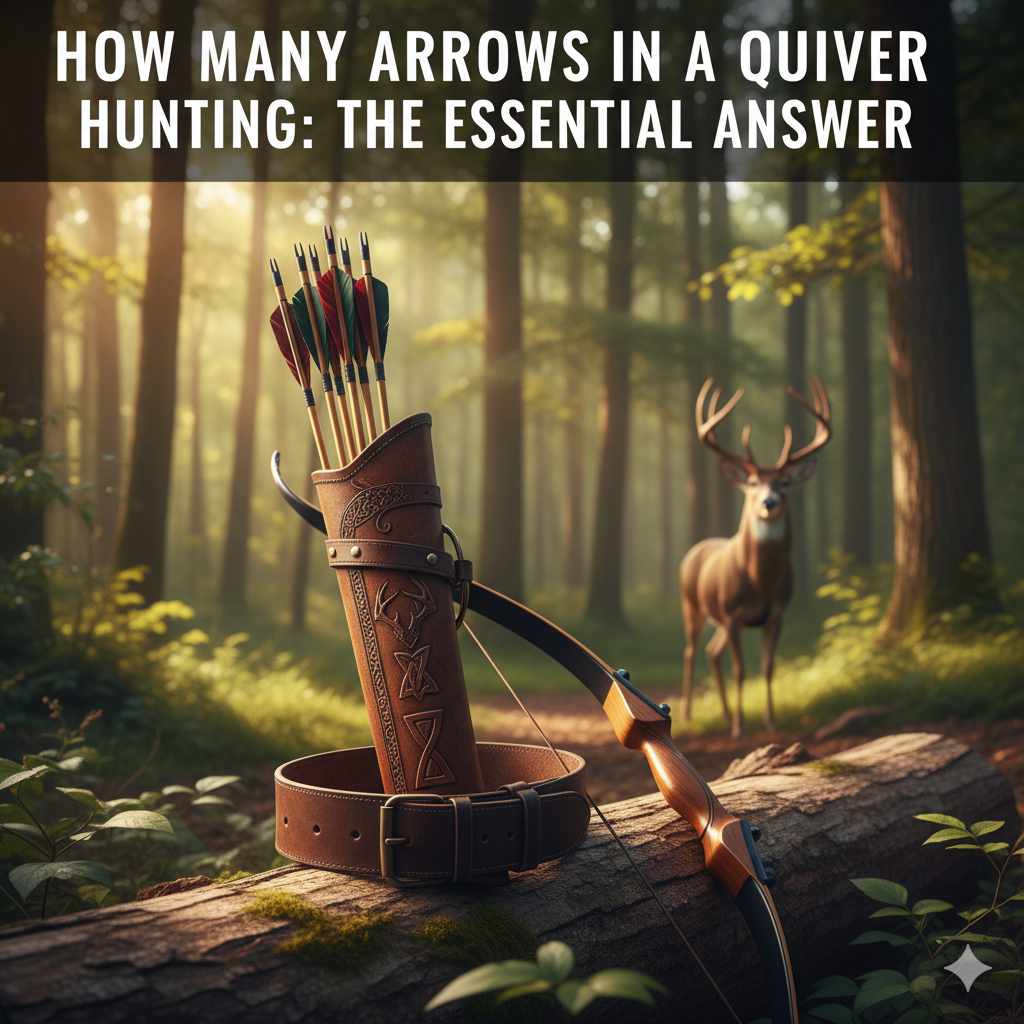
For most bowhunters, a quiver holding five to six arrows is the ideal balance of preparedness and practicality. This provides enough arrows for your primary shot, potential follow-up shots, and even a small game or practice arrow, without adding excessive weight or bulk to your bow setup.
Hello, fellow archers! Salman here. If you’re getting into bowhunting, you’ve probably asked yourself a simple but important question: “How many arrows do I actually need in my quiver?” It’s a great question, and the answer isn’t always as straightforward as you might think. Packing too few arrows can leave you unprepared, while packing too many can weigh you down.
Feeling a little confused? Don’t worry. Many new hunters wrestle with this. You want to feel confident and ready, not clumsy or anxious. The good news is that finding your perfect number is easy once you know what to consider. In this guide, I’ll walk you through everything you need to know to decide on the right arrow count for your hunt. We’ll look at different hunting styles, your gear, and your own confidence level to find that sweet spot.
Why the “Right” Number Isn’t Just One Number
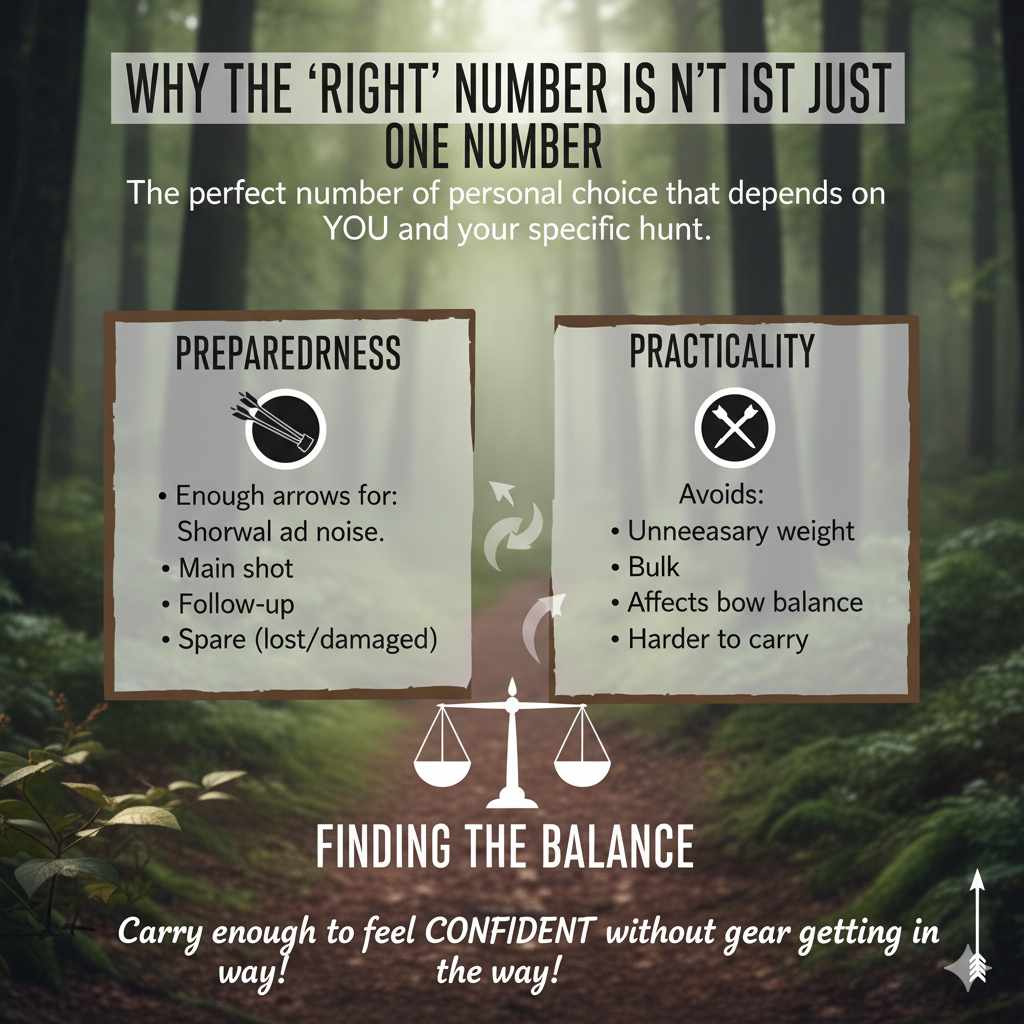
You might see experienced hunters carrying three arrows, while others have quivers packed with six or more. Neither is wrong. The perfect number of arrows is a personal choice that depends entirely on you and your specific hunt. Think of it less like a rule and more like a strategy.
The core idea is to find a balance between two things:
- Preparedness: Having enough arrows to handle whatever the hunt throws at you. This includes your main shot, a potential follow-up shot, and maybe a spare in case one gets lost or damaged.
- Practicality: Avoiding unnecessary weight and bulk. Every arrow adds weight, which can affect your bow’s balance and make it harder to carry, especially on long treks.
Your goal is to carry enough arrows to feel confident without letting your gear get in the way. Let’s explore the factors that will help you find that perfect balance.
Key Factors That Influence Your Arrow Count
To figure out your ideal arrow count, you need to think about a few key things. Your hunting style is the biggest piece of the puzzle, but your gear and experience level also play a huge role.
Type of Hunt (The #1 Factor)
Where and what you’re hunting will have the biggest impact on how many arrows you should carry. A short sit in a deer stand is very different from a multi-day elk hunt in the mountains.
Whitetail Deer from a Treestand or Blind
This is one of the most common types of bowhunting. You’re typically stationary, waiting for a deer to come within a known distance. Shots are often close (20-40 yards), and you usually only get one good opportunity.
- Recommended Arrows: 3 to 5
- Why: You need one arrow for your primary shot. It’s wise to have a second ready for a quick follow-up if necessary. A third or fourth arrow acts as a backup in case you drop one, it gets damaged, or your first shot wasn’t perfect. Carrying more than five often adds unnecessary weight for this style of hunting.
Elk in the Backcountry
Hunting elk, especially in the mountains, is a whole different ball game. These hunts are physically demanding, and you could be miles from your vehicle or camp. You might face longer shots, and the rugged terrain increases the risk of losing or breaking an arrow.
- Recommended Arrows: 5 to 8
- Why: You need more arrows to account for the unknown. You might take a long-distance shot and miss, or an arrow could get damaged while navigating rough country. Having a few extras provides a crucial safety net when you can’t just go back to the truck for more.
Small Game Hunting
Hunting for rabbits, squirrels, or grouse is a high-volume activity. You can expect to take multiple shots in a single outing. Arrows can also be lost more easily in thick grass or brush.
- Recommended Arrows: 6 or more
- Why: Since you’ll be shooting more often, you need more ammo. Many small game hunters use special arrows with judo points or other blunts that prevent the arrow from burying itself, but it’s still smart to carry plenty of extras.
Your Confidence and Skill Level
Be honest with yourself about your shooting skills. Your confidence plays a big part in how many arrows you feel you need.
- Beginners: If you’re new to bowhunting, it’s completely normal to feel a little nervous. Carrying an extra arrow or two can provide a huge mental boost. It gives you peace of mind, knowing that a single missed or deflected shot won’t end your hunt.
- Experienced Archers: A seasoned hunter who practices year-round might feel perfectly confident with only three arrows. They trust their ability to make a clean, ethical shot and may prefer a lighter, more streamlined setup.
No matter your skill level, consistent practice is key. The more you practice with your broadheads from hunting positions (like from a treestand or kneeling), the more confident you’ll be in that all-important first shot.
Quiver Type and Capacity
The quiver you use will naturally limit how many arrows you can carry. Most modern quivers are bow-mounted, but hip and back quivers are also options.
| Quiver Type | Common Capacity | Pros | Cons |
|---|---|---|---|
| Bow-Mounted | 3 to 8 arrows | Arrows are always ready; convenient. | Adds weight and torque to the bow; can make the bow feel unbalanced. |
| Hip/Side Quiver | 6 to 12 arrows | Keeps bow light and balanced; easy access to arrows. | Can snag on brush; can be noisy if arrows rattle. |
| Back Quiver | 12+ arrows | Carries many arrows; out of the way for walking. | Difficult to access arrows quietly and quickly; not ideal for thick woods. |
For most hunters, a 5 or 6-arrow bow-mounted quiver is the standard choice. It offers a great compromise between capacity and convenience. If you choose a bow-mounted quiver, remember to practice shooting with it full, as the added weight will change how your bow feels.
Local Regulations and Laws
Finally, always be sure to check your local hunting regulations. While it’s rare for states to have laws limiting the number of arrows you can carry, it’s always your responsibility as a hunter to know the rules. Your state’s Department of Fish and Wildlife website is the best source for this information. You can find a directory of state agencies through the U.S. Fish and Wildlife Service.
Breaking Down Your Quiver: What Each Arrow is For
It’s helpful to think of each arrow in your quiver as having a specific job. This mindset helps you stay organized and ensures you’re prepared for different scenarios. Let’s use a standard 5-arrow quiver as an example.
| Arrow Number | Purpose | Arrow Tip | Notes |
|---|---|---|---|
| Arrow 1 | The “Money Shot” | Primary Broadhead | This is your go-to arrow. It should be perfectly tuned and you should have the most confidence in it. Keep it in the most accessible spot in your quiver. |
| Arrow 2 | The Follow-Up | Identical Broadhead | Ready for a quick second shot if the first one wasn’t perfectly placed or if the animal doesn’t go down immediately. |
| Arrow 3 | The Backup | Identical Broadhead | This is your insurance policy in case you drop or damage one of your first two arrows in the heat of the moment. |
| Arrow 4 | The Small Game / Practice Arrow | Judo Point or Field Point | Perfect for an opportunistic shot at a rabbit or squirrel. It can also be used to take a safe practice shot to check your sights if you’ve had a long, bumpy hike in. |
| Arrow 5 | The “Just in Case” | Identical Broadhead | An extra broadhead-tipped arrow for pure peace of mind. You’ll probably never need it, but you’ll be glad it’s there if you do. |
This system ensures you are ready for your primary target, a follow-up, and even a surprise opportunity, all while having backups for mishaps.
The Pros and Cons of Carrying More vs. Fewer Arrows
Still on the fence? Let’s break down the advantages and disadvantages of carrying a full quiver versus a lighter one. This can help you decide which side of the balance you prefer to be on.
Carrying More Arrows (6+)
This approach prioritizes maximum preparedness.
- Pro: Peace of Mind. You’ll rarely worry about running out of arrows. This can be a significant confidence booster, especially on long or remote hunts.
- Pro: Ready for Anything. You have enough arrows for multiple shot opportunities, small game, or to cover any arrows lost or damaged during the hunt.
- Con: Increased Weight. More arrows mean more weight. This can make your bow feel top-heavy and cumbersome, potentially affecting your aim over time.
- Con: More Noise and Bulk. A full quiver is bulkier and can be more prone to snagging on branches. Arrows can also rattle if the quiver isn’t high quality, creating unwanted noise.
Carrying Fewer Arrows (3-4)
This minimalist approach prioritizes mobility and simplicity.
- Pro: Lighter, Better-Balanced Bow. With fewer arrows, your bow will be lighter and feel more balanced in your hand, which can help with steady aiming.
- Pro: Less to Snag. A smaller quiver profile means you’re less likely to get caught up in thick brush while stalking an animal.
- Pro: Encourages Shot Discipline. Knowing you have limited ammunition encourages you to be patient and wait for only the best, high-percentage shots.
- Con: Less Room for Error. A single miss, a deflected arrow, or a damaged broadhead can potentially end your hunt early. This can create pressure or anxiety.
Practical Tips for Managing Your Arrows in the Field
Once you’ve decided on your number, how you manage your arrows is just as important. Here are a few tips to keep your arrows secure, quiet, and ready.
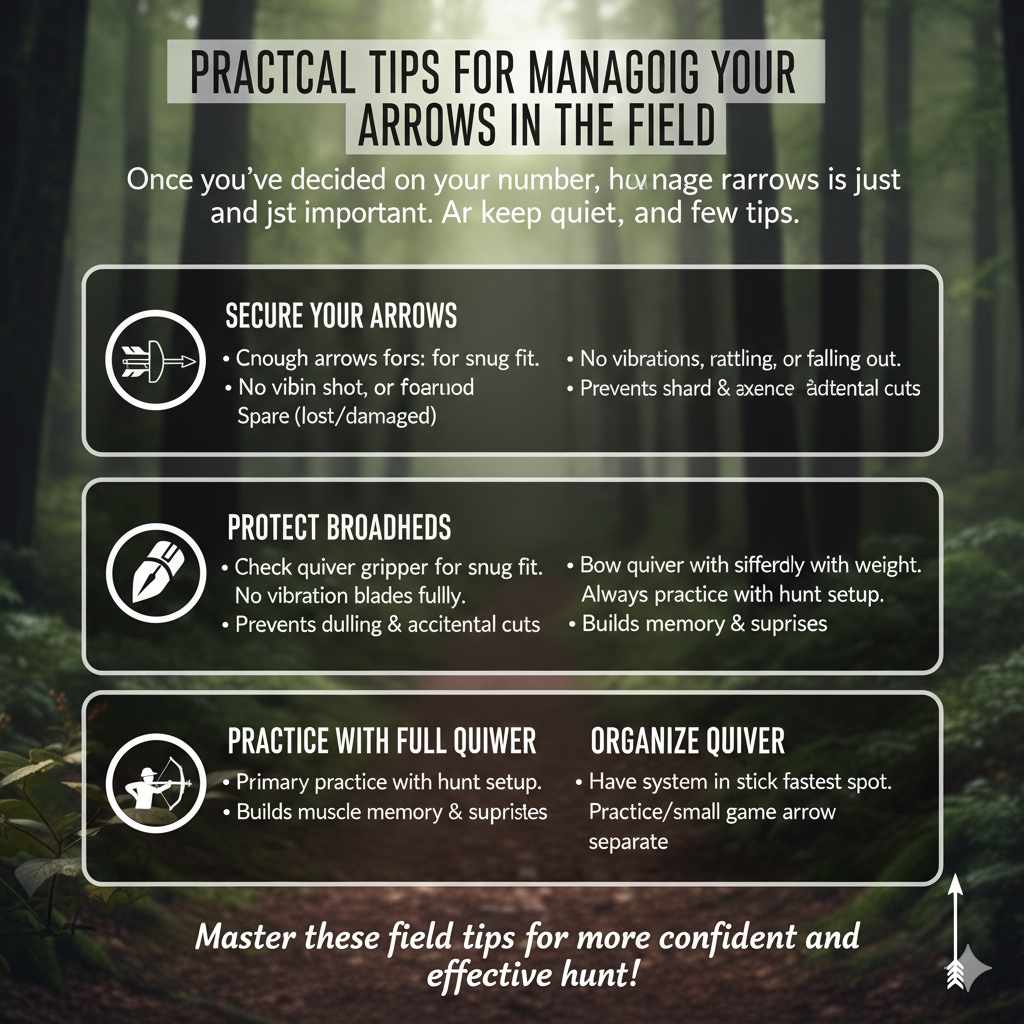
- Secure Your Arrows: Before every hunt, check your quiver’s arrow gripper. It should hold your arrows snugly so they don’t vibrate, rattle, or fall out while you’re walking. A piece of foam in the quiver hood can also help silence broadheads.
- Protect Your Broadheads: Always use a quiver with a sturdy hood that fully covers your broadheads. This protects the razor-sharp blades from getting dull and, more importantly, protects you from accidental cuts.
- Practice with a Full Quiver: This is a big one! Your bow will shoot differently with the weight of a quiver and arrows attached. You should always practice with the exact setup you plan to hunt with. This builds muscle memory and ensures there are no surprises when the moment of truth arrives.
- Organize Your Quiver: Have a system and stick to it. Always place your primary arrow in the same spot—usually the one that’s fastest and quietest to remove. Place your practice point or small game arrow in a spot where you won’t grab it by mistake.
Frequently Asked Questions (FAQ)
How many arrows did medieval archers carry?
Medieval military archers, like English longbowmen, carried a lot more arrows! They typically carried a sheaf of 24 arrows, often called a “quiverful,” into battle. Because they were shooting in volleys, they needed a high volume of arrows, which is very different from a hunter who needs just one well-placed shot.
Is it okay to hunt with just one arrow?
While technically possible, it’s not recommended. Hunting is unpredictable. You may need a quick follow-up shot to ethically and humanely recover an animal. Carrying at least two or three arrows is a much more responsible and ethical approach.
Do I need different arrows for different game in my quiver?
Generally, you should use the same arrow and broadhead combination for your primary game animal (like deer or elk) to ensure consistency. However, it’s a great idea to carry one arrow tipped with a field point or a small game head (like a judo point) if you might have a chance to hunt a rabbit or squirrel.
How does a hip quiver change how many arrows I should carry?
A hip quiver doesn’t add weight to your bow, so you can carry more arrows without affecting your bow’s balance. Hunters who use hip quivers, especially those on spot-and-stalk hunts, might carry 6 to 8 arrows because the extra weight is on their body, not their bow.
What’s the best quiver capacity for a beginner?
A 5-arrow quiver is an excellent choice for a beginner. It provides enough arrows to build confidence (a primary, a follow-up, and a few backups) without being overly heavy or bulky. It’s the most versatile option for nearly all hunting situations.
Should my practice arrows be the same as my hunting arrows?
Absolutely. Your practice arrows should be identical to your hunting arrows in spine, length, weight, and fletching. You can practice with field points, but you should always take a few shots with your broadheads before the season starts to ensure they fly true. Many broadhead manufacturers now offer practice tips that match the weight and flight of the real thing.
Can I use a back quiver for hunting?
Traditional archers often use back quivers, but they can be challenging for modern bowhunting. They make it difficult to draw an arrow quietly, and they can be noisy and clumsy in thick brush. For most hunting situations, a bow-mounted or hip quiver is a more practical choice.
Conclusion: Find Your Confidence Number
So, how many arrows should you carry in your quiver when hunting? As you can see, there is no single magic number. However, for most hunters in most situations, a five-arrow quiver provides the perfect blend of readiness and practicality.
Start with five arrows. Think about what each one is for: your main shot, a follow-up, a backup, a small game arrow, and one for peace of mind. As you gain more experience, you can adjust that number up or down based on your confidence, your hunting style, and the specific demands of each trip into the woods.
The most important thing is that you feel prepared and confident in your setup. Practice with your gear, know your effective range, and choose the number of arrows that lets you focus on the hunt. Good luck, and shoot straight!