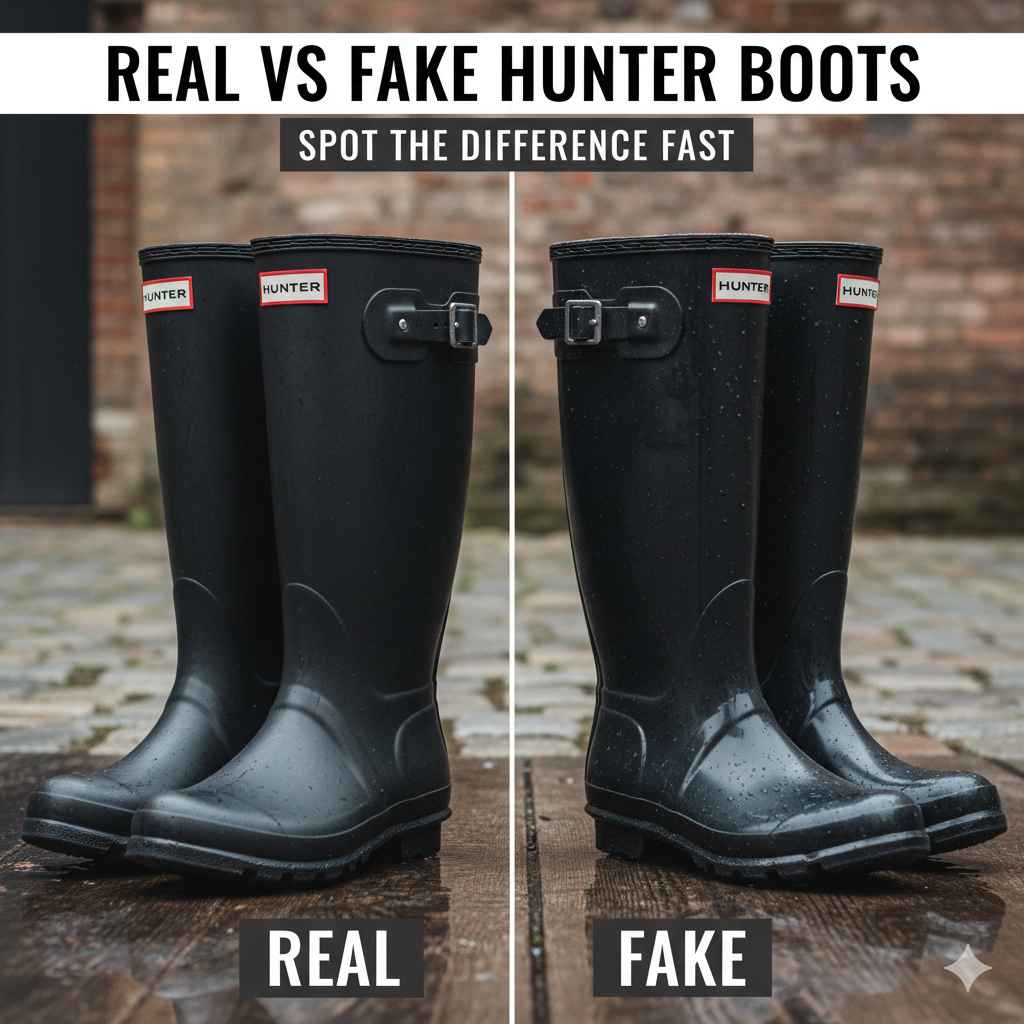
Buying designer boots can feel tricky. Sometimes, what looks real might be a fake. This is especially true for popular items like Hunter boots.
You want to make sure you get the genuine article. Figuring out the difference between real and fake Hunter boots can be hard if you don’t know what to look for. But don’t worry!
We’ll show you exactly how to spot the difference fast. It’s a simple step-by-step guide to help you get authentic boots every time.
Real Vs Fake Hunter Boots Spot The Difference Fast
It’s important to know how to tell if your Hunter boots are the real deal. Fakes often look very similar at first glance. But there are small details that give them away.
Paying attention to these details will save you from buying a counterfeit product. We will go through each key area to help you become an expert at spotting fakes.
Authentic Hunter Boot Logos and Branding
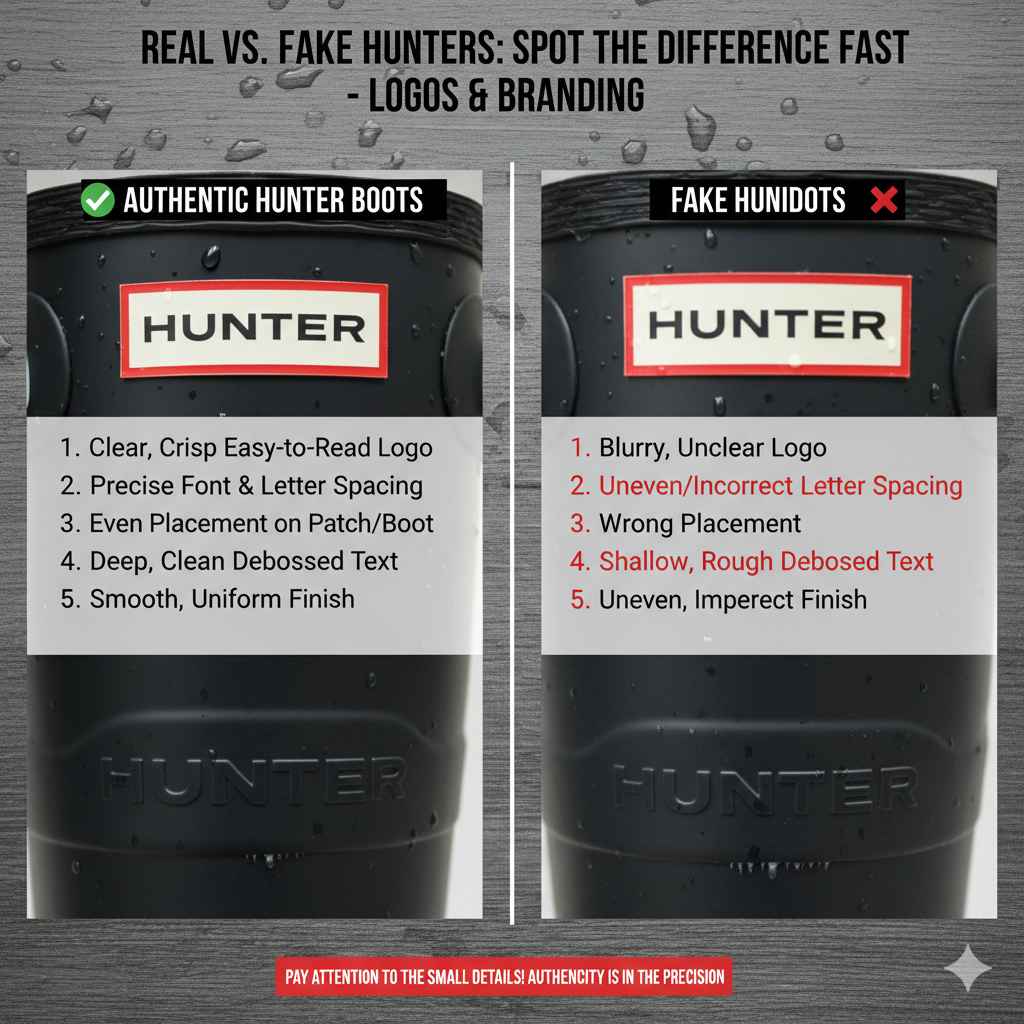
The logo on real Hunter boots is a very important clue. It should be clear, crisp, and easy to read. The font and placement of the logo are consistent on genuine boots.
Fake boots might have a blurry logo. The letters could be uneven or spaced incorrectly. Sometimes, the logo on fakes is in the wrong spot or uses a slightly different font.
Always check the Hunter logo on the boot itself and on any tags or boxes.
The word “Hunter” is usually debossed or printed on the outside of the boot shaft. It’s typically a rich, dark color. On a fake pair, the printing might be lighter or smudge easily.
It could also feel raised or rough to the touch. Real Hunter boots have a smooth, uniform finish. The debossing is precise and clean.
Look closely at the details of the logo. On genuine boots, the “H” in Hunter has a specific shape. The “N” and “T” are also distinct.
Counterfeits often get these small shapes wrong. They might appear too thin or too thick. Sometimes, the spacing between letters is off.
This is a sign that the boot might not be authentic.
Quality of Materials and Construction
Real Hunter boots are made from high-quality natural rubber. This gives them a distinct feel and smell. The rubber is smooth, flexible, and has a slight sheen.
It doesn’t feel plastic-like or stiff. Fake boots often use cheaper synthetic materials. These materials can feel hard, smell chemically, or look dull.
The construction of authentic Hunter boots is also very well done. The seams are neat and strong. There are no loose threads or sticky glue visible.
The boot should feel sturdy and well-put-together. Fakes might have sloppy stitching. You might see glue oozing out from the soles or seams.
The overall finish on a real pair is polished and precise.
The sole of a real Hunter boot is also a key indicator. It’s usually thick and durable, with a deep tread pattern for good grip. The Hunter logo is often embossed on the sole as well.
The tread pattern on fakes might be shallower or have a different design. The rubber of the sole on a genuine pair feels solid and substantial.
Real vs Fake Hunter Boots Comparison Table
| Feature | Real Hunter Boots | Fake Hunter Boots |
|---|---|---|
| Logo | Crisp, clear, precise font, correct placement | Blurry, uneven letters, wrong font, incorrect placement |
| Material | High-quality natural rubber, smooth, slight sheen, flexible | Cheap synthetic material, stiff, plastic-like, chemical smell, dull |
| Construction | Neat seams, no loose threads or excess glue, sturdy feel | Sloppy stitching, visible glue, loose threads, flimsy feel |
| Sole | Thick, durable rubber with deep tread, clear logo | Thinner, less durable, shallow tread, logo may be missing or unclear |
| Smell | Faint rubber smell | Strong chemical or plastic smell |
Examining the Details of Hunter Boots
Beyond the main logo, other small details matter. Real Hunter boots have specific hardware if they include buckles or straps. These are usually well-made, often with the Hunter logo etched onto them.
Fake boots might use cheap metal that feels light or looks flimsy. The buckle mechanism on fakes might also be stiff or not work smoothly.
The inner lining of real Hunter boots is also of good quality. It’s usually smooth and comfortable. You won’t find rough edges or uncomfortable seams inside.
Some genuine Hunter boots have a branded insole. Check if this insole is present and if the branding on it looks authentic.
The heel of a real Hunter boot is well-defined and integrated into the sole. It offers good support and stability. Counterfeits might have a poorly formed heel.
It could look like it’s just glued on or not match the rest of the boot’s construction.
Where to Buy and Red Flags to Watch For
Buying Hunter boots from authorized retailers is the safest way to ensure authenticity. These include official Hunter stores, reputable department stores, and well-known online fashion retailers. Be very cautious of deals that seem too good to be true.
If you see Hunter boots being sold on unofficial websites, street stalls, or through social media marketplaces at a significantly reduced price, they are likely fakes. These are common places where counterfeit goods are sold. The sellers often claim they are “overstock” or “discounted” items, but this is rarely the case.
When shopping online, always look for secure payment options. Check the website for a clear return policy and contact information. If a seller is unwilling to provide these, it’s a major red flag.
Look for customer reviews, but be aware that even fake sellers can sometimes create fake positive reviews.
One common scenario is finding “Hunter” boots for sale on a platform that also sells many other unbranded or generic items. Authentic brands usually have dedicated sellers or official channels. A seller offering a wide range of designer items alongside suspiciously cheap Hunter boots should raise suspicion.
Another red flag is poor quality packaging. While packaging can be damaged in transit, completely flimsy or incorrect branding on the box is a bad sign. Real Hunter boots come in a sturdy box with clear branding and product information.
Price as an Indicator of Authenticity
The price of Hunter boots is a significant factor. Genuine Hunter boots are a premium product, and they come with a premium price tag. While sales and discounts do happen, you will rarely find them for a fraction of their usual cost.
If you see a pair of Hunter boots being sold for half price or less than the typical retail value, it’s a strong indicator that they are not authentic. Counterfeiters can afford to sell their fakes at very low prices because their production costs are much lower. They use cheaper materials and cut corners on quality.
Consider this real-life example: A customer spotted “Hunter” boots advertised online for $50. The typical retail price for similar Hunter boots is usually between $100 and $200. The extremely low price was a clear warning sign.
Upon closer inspection, the boots had a blurry logo and stiff material, confirming they were fakes.
It’s wise to set a budget and stick to it. If a deal seems too good to be true, it almost always is. Instead of chasing a cheap price, focus on finding genuine boots from trusted sources.
This way, you invest in quality and style that will last.
Authentic Hunter Boot Fit and Comfort
Real Hunter boots are designed for comfort and a good fit. They are made with a flexible rubber that conforms to your foot. The sizing is usually quite accurate to standard shoe sizes.
When you try on a pair of genuine Hunter boots, they should feel snug but not tight. There should be enough room for thicker socks, which is important for warmth and comfort in wet weather.
The footbed inside a real Hunter boot is often cushioned. This provides support and makes them comfortable for extended wear. The ankle area is designed to provide a secure fit without being restrictive.
You should be able to walk comfortably without your feet sliding around too much.
Fake Hunter boots often miss these comfort features. The rubber might be too stiff, causing blisters or rubbing. The sizing can be inconsistent, leading to a poor fit.
The inside might be hard and unsupportive. This lack of comfort is a clear sign that you might not have a genuine pair. You’ll likely notice this difference quickly if you’ve owned real Hunter boots before.
Checking For Product Codes and Serial Numbers
Many genuine Hunter boots come with unique product codes or serial numbers. These are often found on a tag inside the boot or on the box. This number helps the manufacturer track their products and ensures authenticity.
While not all fakes will have these, sophisticated counterfeits might try to replicate them.
If you find a product code, you can sometimes cross-reference it on the official Hunter website. However, this feature might not be available for all older models. Still, the presence of a well-formatted and clear product code is a positive sign.
A missing or smudged code on a tag inside the boot is a red flag.
When examining a product code, check for correct formatting. It should look like it belongs on a manufactured product. Poorly printed numbers or letters that are out of place suggest a fake.
This is a more advanced detail, but it can be a helpful confirmation if you’re unsure.
The Smell Test: A Subtle Indicator
Natural rubber has a distinct smell. Real Hunter boots usually have a mild rubber scent. It’s not overpowering or unpleasant.
It’s the natural aroma of the material used in their construction.
Fake boots, on the other hand, often use cheaper synthetic materials. These materials can emit strong chemical or plastic odors. This smell is usually quite noticeable and can be quite unpleasant.
If your new boots have a strong, artificial chemical smell, it’s a very strong indicator that they are not authentic Hunter boots.
This “smell test” is a quick and easy way to assess the quality of the materials. It’s a subtle clue that many counterfeiters struggle to replicate. The scent of real rubber is a sign of quality manufacturing.
Spotting Real Vs Fake Hunter Boots Fast
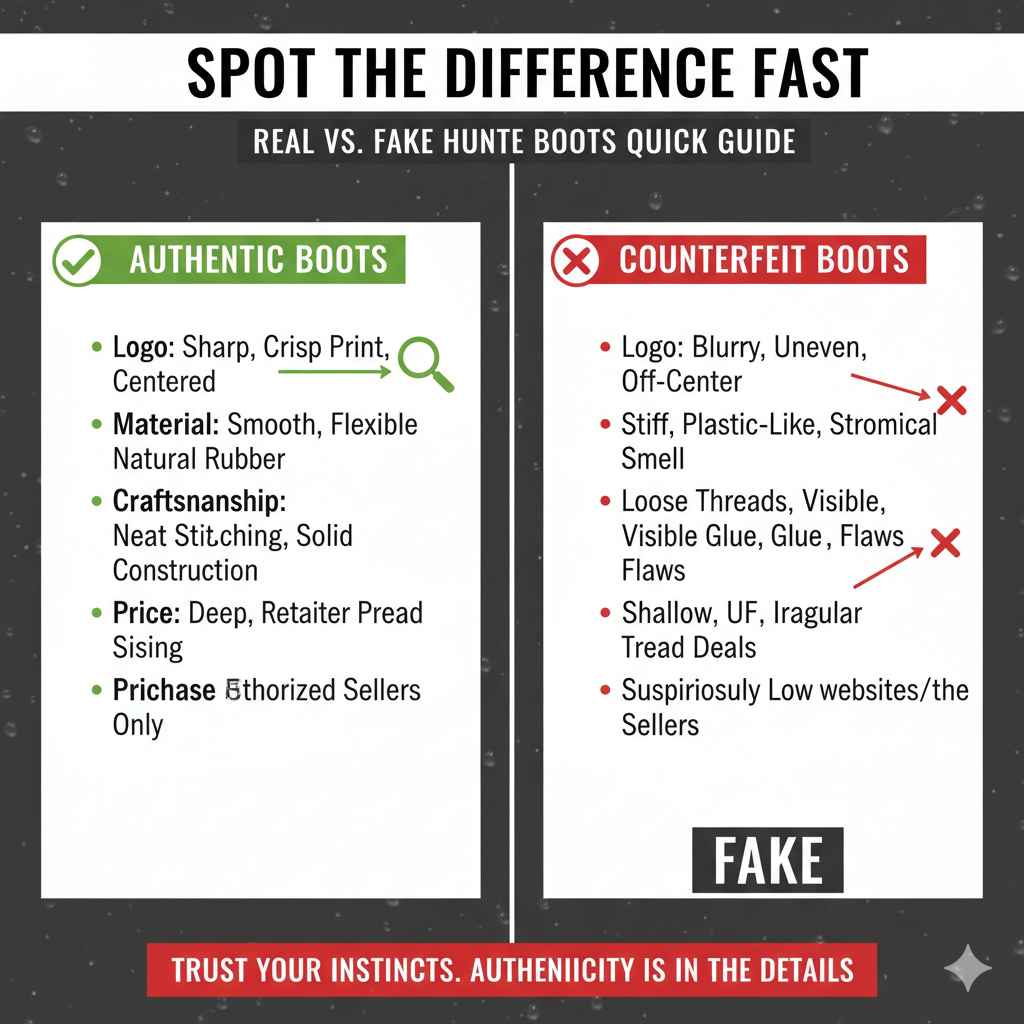
To quickly identify real versus fake Hunter boots, focus on a few key areas. First, inspect the logo. It must be sharp and perfectly placed.
Then, feel the material. Real rubber is smooth and flexible, not stiff or plastic-like. Check for neat stitching and a solid sole.
Compare prices; if it’s suspiciously low, be wary. Buying from authorized sellers is always the best bet. With these quick checks, you can spot fake Hunter boots much faster.
Frequently Asked Questions
Question: How can I be sure the website I’m buying from is an authorized Hunter retailer?
Answer: You can check the official Hunter website. They usually have a list of authorized retailers. If a website isn’t on their list, it’s best to be cautious.
Question: What if the boots look good but feel a little stiff?
Answer: A little stiffness when new can be normal as the rubber hasn’t been worn yet. However, if they feel hard, unyielding, or uncomfortable to bend, they might be fake.
Question: Do all real Hunter boots have a serial number?
Answer: Not all models will have a clearly visible serial number. However, many do. The absence of one doesn’t automatically mean fake, but its presence and clarity are good signs.
Question: Can I return fake Hunter boots if I buy them by mistake?
Answer: Returning fakes depends on where you bought them. If you bought from an authorized retailer, you can return them. If you bought from an unofficial source, it might be difficult or impossible to get a refund.
Question: Are there any specific countries where fake Hunter boots are commonly sold?
Answer: Counterfeit goods are sold worldwide. However, unofficial online marketplaces and markets in countries with less strict intellectual property enforcement are common sources for fakes.
Final Thoughts
Spotting real vs fake Hunter boots fast is all about careful observation. Always check the logo’s crispness and placement. Feel the quality of the rubber; it should be smooth and flexible.
Examine the construction for neatness and strong seams. Be wary of prices that seem too good to be true. Trust authorized sellers for the best chance at genuine boots.