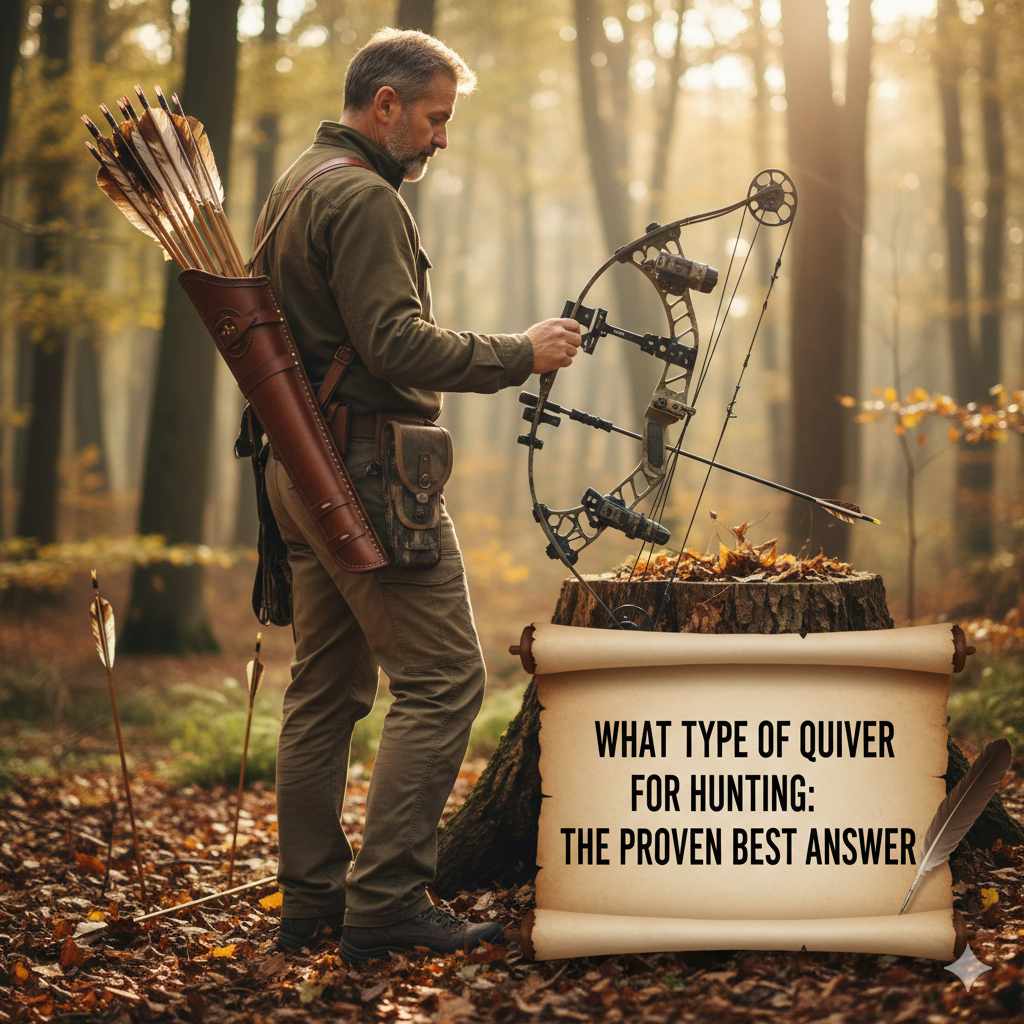
For most hunting situations, a bow-mounted quiver is the proven best choice. It keeps arrows secure, quiet, and instantly accessible with minimal movement. This design ensures you are always ready for a shot without snagging on brush or making noise, which is critical for a successful and ethical hunt.
Choosing your first hunting quiver can feel like a big decision. With so many styles on the shelf, it’s easy to get confused. You might wonder if the classic back quiver from the movies is a good choice, or if that simple hip quiver will do the job. A poor choice can lead to lost arrows, missed opportunities, and a lot of frustration in the woods.
Don’t worry, I’m here to help clear things up. We’re going to walk through the different types of quivers together. I’ll show you what makes a great hunting quiver and explain why one style stands out as the absolute best for nearly every hunter. Let’s get you set up for success!
When you’re out in the field, every piece of gear matters. Your quiver, the holder for your arrows, is one of the most important. Its job is more than just carrying arrows; it needs to keep them safe, quiet, and ready at a moment’s notice. Let’s explore the main types of quivers so you can see why hunters overwhelmingly trust one design over all others.
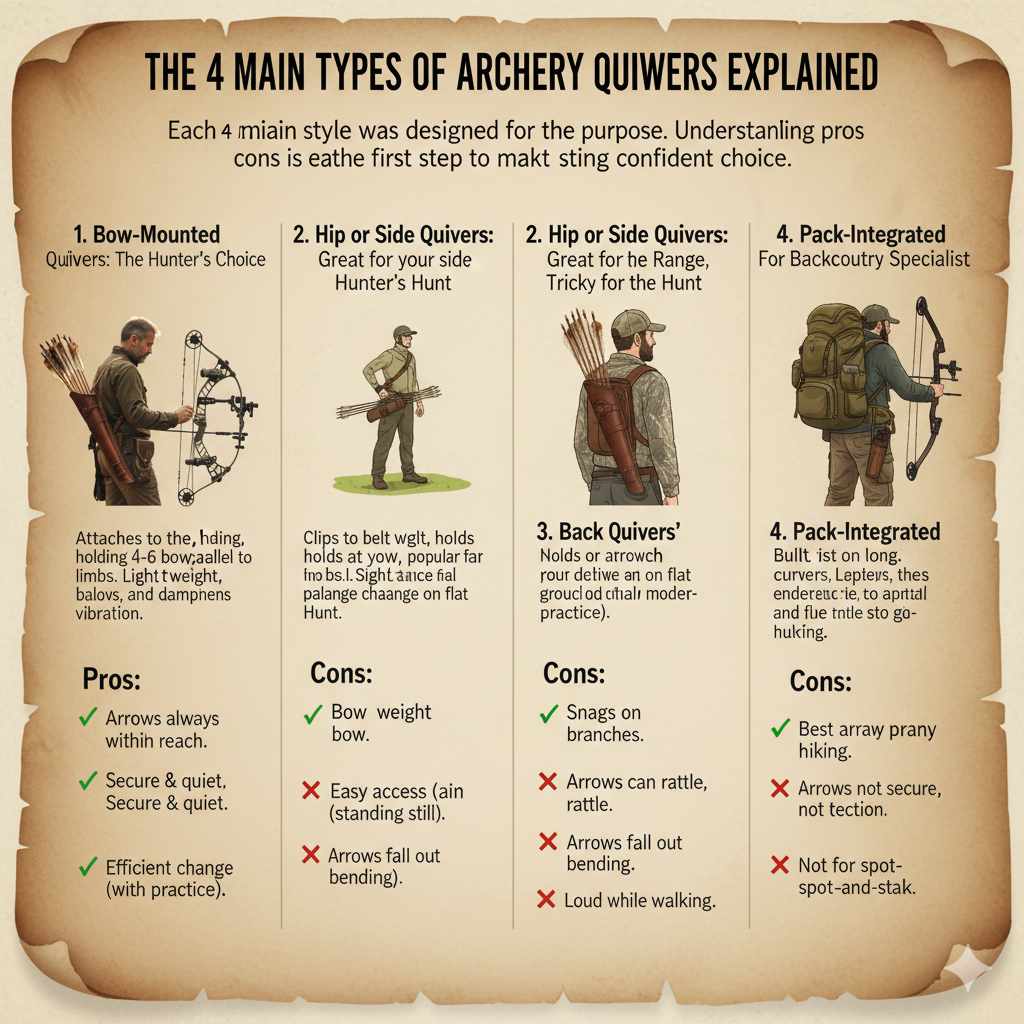
The 4 Main Types of Archery Quivers Explained
Each quiver style was designed for a purpose. While some are great for walking around a practice range, only a few are truly built for the demands of hunting. Understanding the pros and cons of each is the first step to making a confident choice.
1. Bow-Mounted Quivers: The Hunter’s Choice
This is the most popular type of quiver for bowhunting, and for good reason. A bow-mounted quiver attaches directly to the riser of your bow, holding your arrows parallel to the limbs. They typically hold between four and six arrows, which is plenty for most hunting trips.
Modern designs are incredibly lightweight and engineered to work with your bow, not against it. Many even help balance the bow and dampen vibration, which can make your shot quieter and more stable.
- Pros: Arrows are always within reach, requiring almost no body movement to grab one. They hold arrows securely, so there’s no rattling or falling out as you move through thick woods. This is the quietest and most efficient option for hunting.
- Cons: It adds a little weight directly to your bow. Some shooters feel it can slightly alter the bow’s balance, but this is easy to get used to with practice.
2. Hip or Side Quivers: Great for the Range, Tricky for the Hunt
A hip quiver, also called a side quiver, clips onto your belt or slides over it. It holds your arrows at your side, usually with the arrow nocks pointing up and forward. They are very popular among target archers because they make it easy to grab arrow after arrow while standing on a flat, open range.
However, in a hunting situation, they present several challenges. When walking through brush, the quiver can easily snag on branches. Bending over can cause arrows to fall out, and drawing an arrow requires a large arm movement that can alert nearby game.
- Pros: Keeps your bow lightweight and unencumbered. Very easy access to arrows when you’re standing still in an open area.
- Cons: Prone to snagging on terrain. Arrows can rattle and make noise. Drawing an arrow is a large, visible motion. Arrows can fall out when crouching or bending.
3. Back Quivers: The “Robin Hood” Style
The back quiver is the classic style you see in movies. It’s a tube or pouch worn over the shoulder that holds arrows on your back. While it looks iconic, it is widely considered the least practical quiver for modern bowhunting.
Reaching over your shoulder to pull out an arrow is a huge, noisy motion. It’s nearly impossible to do this quietly and without being spotted by an animal. Furthermore, arrows can easily fall out if you have to bend over to crawl under a branch. They also tend to rattle loudly with every step you take.
- Pros: Can hold a large number of arrows. Offers a traditional, classic aesthetic.
- Cons: Extremely difficult to draw an arrow from quietly or without significant movement. Arrows are not secure and can fall out. Noisy while walking.
4. Pack-Integrated Quivers: For the Backcountry Specialist
Some hunting backpacks are designed with a built-in quiver or have a system for attaching one. This is a great option for hunters who are hiking deep into the backcountry and won’t be actively hunting along the way. It keeps the arrows completely protected and out of the way during a long trek.
The major downside is accessibility. Your arrows are on your back and often secured by straps. Getting an arrow is a slow process that is not practical when you encounter an animal unexpectedly. This style is best for hunters who hike to a treestand or blind and then remove their pack.
- Pros: Offers the best protection for arrows during transport. Keeps your hands and bow free while hiking long distances.
- Cons: The slowest and least accessible option. Not suitable for spot-and-stalk hunting where a quick shot might be necessary.
Hunting Quiver Comparison Chart
Seeing the options side-by-side makes the best choice clear. Here’s how the different quiver types stack up on the features that matter most to a hunter.
| Feature | Bow-Mounted Quiver | Hip/Side Quiver | Back Quiver | Pack-Integrated Quiver |
|---|---|---|---|---|
| Accessibility | Excellent | Good | Poor | Very Poor |
| Stealth (Quiet & Low Movement) | Excellent | Fair | Poor | Excellent (When Stored) |
| Arrow Security | Excellent | Fair | Poor | Excellent |
| Best For | All-Around Hunting | Target Range / Open Field | Traditional Archery (Non-Hunting) | Backcountry Hiking to a Spot |
Key Features to Look for in a Hunting Quiver
Once you’ve decided on a bow-mounted quiver, there are a few key features that separate a great quiver from a mediocre one. Paying attention to these details will ensure your quiver performs when it counts.
Arrow Grippers
The grippers are the rubber slots that hold your arrow shafts. A good quiver will have at least two separate gripper points. This dual-gripper design holds the arrow much more securely than a single-gripper design, preventing any rattling. Look for grippers made from durable, weather-resistant rubber that won’t get stiff and brittle in the cold.
Broadhead Hood
The hood is the most important safety feature of a quiver. It covers the razor-sharp broadheads, protecting both you and the blades. The hood should be deep enough to fully enclose your broadheads and made from a tough, puncture-resistant material. The inside should be lined with sound-dampening foam to prevent the blades from making noise if they shift.
Noise and Vibration Dampening
Stealth is everything in hunting. The last thing you want is your gear making noise. High-quality hunting quivers are designed to reduce noise and vibration. They use rubber components and tight-fitting parts to eliminate rattling. Some models are even designed to absorb vibration from the bow when you shoot, making your setup quieter overall.
Lightweight and Adjustable Design
Every ounce matters when you’re carrying your bow all day. Look for a quiver made from lightweight materials like carbon or polymer. A good quiver should also be adjustable. Being able to move the quiver closer to the bow or adjust its angle can significantly improve your bow’s balance, making it easier to hold steady for the shot.
One-Piece vs. Two-Piece Quivers
Bow-mounted quivers come in two main styles: one-piece and two-piece.
- A one-piece quiver is a single unit that attaches to the bow in one spot, usually via a quick-detach bracket. This makes it easy to take on and off.
- A two-piece quiver attaches to the bow at two separate points, typically on the upper and lower limb pockets. This makes them extremely secure and often provides better balance, though they are not as easy to remove quickly.
For most hunters, a modern one-piece quiver offers the perfect blend of stability and convenience.
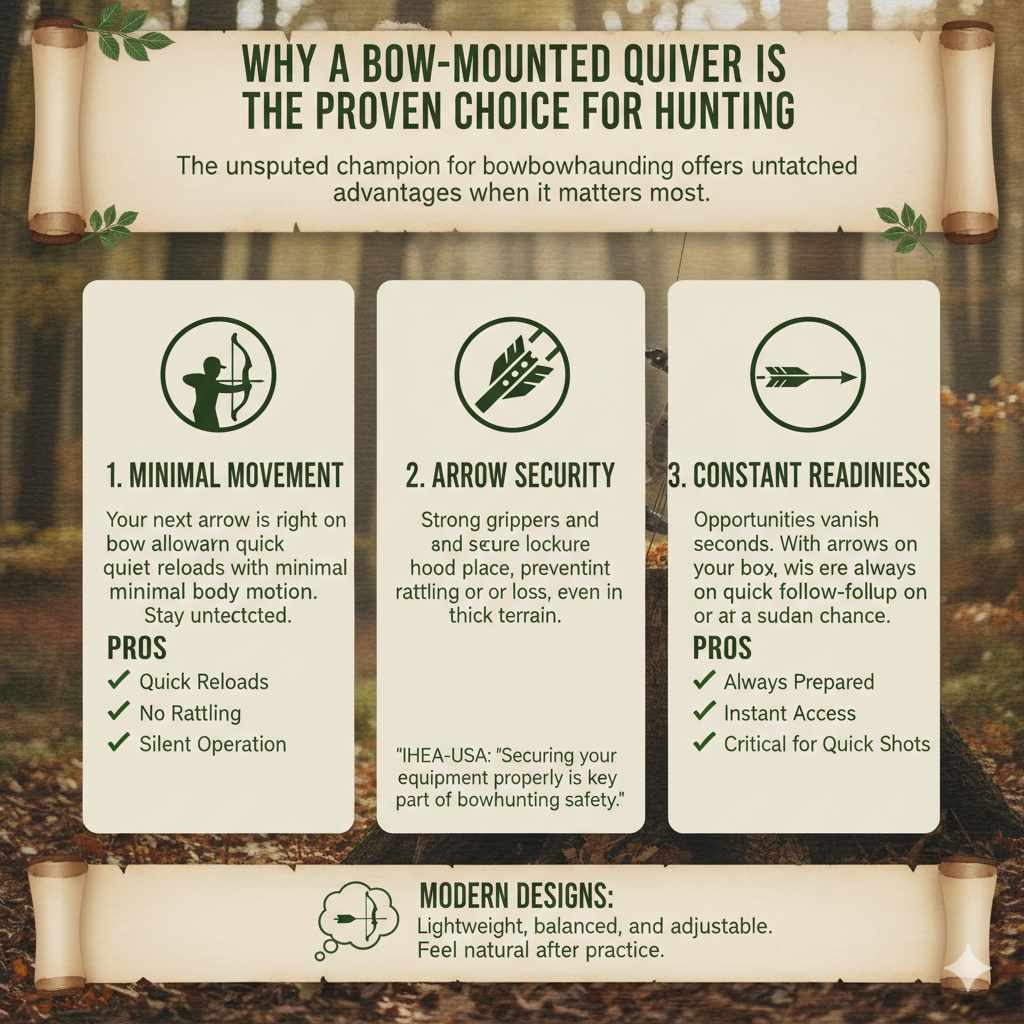
Why a Bow-Mounted Quiver is the Proven Choice for Hunting
Now that we’ve covered the options, let’s focus on why the bow-mounted quiver is the undisputed champion for hunting.
The number one reason is minimal movement. Imagine you’re in a treestand and a deer walks into your shooting lane. With a bow-mounted quiver, your next arrow is right there. You can nock another arrow with a small, quiet hand movement. With a hip or back quiver, you’d have to make a large, sweeping motion with your arm, which is a surefire way to get spotted.
Second is arrow security. As you stalk through thick woods, climb into a stand, or navigate rough terrain, your arrows need to stay put. Bow-mounted quivers use strong grippers and a secure hood to lock arrows in place. You never have to worry about them rattling or falling out and getting lost or damaged. According to the International Hunter Education Association (IHEA-USA), securing your equipment properly is a key part of bowhunting safety, and a good quiver is essential for this.
Finally, there’s readiness. Hunting opportunities can appear and disappear in seconds. Having your arrows on your bow means you are always prepared. Whether you need a quick follow-up shot or you get a sudden chance on a stalk, your ammo is right where you need it, when you need it.
While some hunters worry that a bow quiver will make their bow heavy or awkward, today’s designs have solved these problems. They are lighter than ever, and many are adjustable to help you achieve perfect balance. After a few practice sessions, having the quiver on your bow will feel completely natural.
FAQs: Your Hunting Quiver Questions Answered
Let’s tackle some of the most common questions beginners have about hunting quivers.
1. How many arrows should a hunting quiver hold?
For most hunting situations, a quiver that holds four to six arrows is ideal. This gives you enough arrows for a full day of hunting without adding unnecessary weight or bulk to your setup. It’s rare to need more than a couple of arrows on a hunt, but it’s always better to have a few extras just in case.
2. Does a bow-mounted quiver affect my shot?
Yes, any weight added to your bow can slightly affect its balance and how it shoots. However, this is easy to manage. The key is to always practice with your quiver on and full of arrows. This ensures you are used to the weight and balance of your full hunting setup, so there are no surprises when it matters.
3. Can I use a target quiver for hunting?
It’s strongly recommended that you do not use a target-style hip quiver for hunting. They are not designed to be quiet or secure in rough terrain. They can snag on branches, and your arrows can easily fall out or rattle, potentially spooking game and creating an unsafe situation with exposed broadheads.
4. What’s the difference between a one-piece and a two-piece bow quiver?
A one-piece quiver is a single unit that attaches to your bow with one bracket, making it easy to remove. A two-piece quiver has separate top and bottom pieces that attach directly to the bow’s riser or limbs. Two-piece quivers are generally more rigid and can offer better balance, while one-piece quivers offer more convenience.
5. How do I stop my arrows from rattling in my quiver?
If your arrows are rattling, first check that they are properly seated in the grippers. Make sure the grippers are clean and in good condition. If the rattle is coming from the broadheads, ensure the foam in the hood is thick enough to hold them securely. Some hunters add extra foam or a piece of fabric inside the hood for added silence.
6. Should I take my quiver off in a treestand?
This is a matter of personal preference. Many hunters find it more convenient to detach their one-piece quiver and hang it on a hook within easy reach. This lightens the bow for the shot and reduces the bow’s profile. Others prefer to leave it on so the arrows are always attached to the bow. Try both methods and see what works best for you.
Conclusion: The Clear Choice for a Confident Hunt
Choosing the right gear is a huge part of building confidence as a bowhunter, and your quiver is no exception. While the traditional look of a back quiver is appealing and a hip quiver works perfectly at the range, neither is truly suited for the unpredictable nature of the hunt.
For stealth, security, and immediate access when every second counts, the bow-mounted quiver is the proven best answer. It keeps your arrows protected and ready, allowing you to move quietly and react quickly. By choosing a quality, lightweight model and practicing with it on your bow, you’ll have a setup you can trust completely.
My best advice is to visit a local archery shop. Hold a few different bow-mounted quivers, see how they attach, and feel the weight. The right quiver will feel like a natural extension of your bow and prepare you for a safe, successful, and enjoyable time in the woods. Happy hunting!