When Was the Composite Bow Invented: Uncovering Its Origins
The story of the composite bow is more than just an account of a weapon, it is a story of human ingenuity, migration, and cultural exchange. Imagine people living thousands of years ago, hunting and fighting for survival. They needed tools that were strong, light, and reliable. The composite bow was their answer. But when, exactly, was this remarkable invention born? And what drove its development? To understand, we must look at ancient civilizations, the materials they used, and the reasons behind their technological leaps. By the end of this article, you’ll know not only when the composite bow first appeared, but also why it changed history.
What Is A Composite Bow?
The composite bow is not just a regular bow made from a single piece of wood. Instead, it is constructed by combining several materials. The main parts are usually wood, horn, and sinew. The horn provides compression strength, sinew adds flexibility, and wood acts as the base structure. This special design makes the bow more powerful and compact than simple wooden bows.
Composite bows can store more energy and shoot arrows faster and farther. This was a huge advantage for ancient warriors, especially those on horseback. The unique construction also allowed people living in dry or cold areas to use materials that were available locally, making it possible to craft strong bows even where good wood was rare.
Early Bow Technology: A Short Overview
Before the composite bow, people used self bows. These are bows made from a single piece of wood. The self bow was simple to make and worked well in many climates, but it had limits. For example, very long bows were needed for extra power, which made them difficult to use on horseback or in tight spaces.
Archaeological evidence shows that simple wooden bows existed at least 10,000 years ago. The famous Holmegaard bows from Denmark, dating to around 7000 BCE, are among the oldest known. However, these were not composite bows.
The need for a smaller, stronger, and faster bow led to the development of the composite bow. But when did people first create this advanced weapon?
The Oldest Evidence: When Was The Composite Bow Invented?
Determining the exact date of the composite bow’s invention is difficult. There are no written records from the time, and organic materials like sinew and horn do not survive well over thousands of years. However, by analyzing archaeological finds, ancient art, and historical records, scholars can estimate a likely timeline.
Archaeological Findings
The earliest strong evidence for composite bows comes from Central Asia. Artifacts and depictions suggest that composite bows were in use by around 2500 BCE. The Sintasha culture in the Eurasian Steppe, for example, left behind burial sites with bow fragments and related tools from this period.
In Egypt, wall paintings from the 12th Dynasty (about 1991, 1802 BCE) show warriors using bows with a distinct curved shape, likely indicating composite construction. Meanwhile, ancient Mesopotamian art from the Akkadian and Sumerian periods also shows short, recurved bows, another clue that composite bows were known in the region.
Literary Sources
The Epic of Gilgamesh (written around 2100 BCE) mentions bows but does not describe their construction in detail. Later texts from the Assyrian and Hittite empires (around 1300, 800 BCE) specifically mention bows made from multiple materials.
Timeline Summary
Most experts agree that the composite bow was invented sometime between 2800 BCE and 2200 BCE in Central Asia or the Middle East. From there, the technology spread quickly, changing the way armies fought and how people hunted for food.
Here is a comparison of early bow types and their main features:
| Bow Type | Materials | Approximate Invention Date | Main Use |
|---|---|---|---|
| Self Bow | Wood | ~7000 BCE | Hunting, Warfare |
| Composite Bow | Wood, Horn, Sinew | ~2500 BCE | Warfare, Mounted Archery |
| Recurve Bow | Wood or Composite | ~1000 BCE | Warfare, Sport |
Why Was The Composite Bow Invented?
Understanding the reasons behind the invention of the composite bow helps explain its rapid spread and long-lasting impact.
- Need for Power and Portability: Nomadic groups on the Eurasian Steppe needed bows that were easy to carry on horseback but still powerful enough to penetrate armor or hunt large animals.
- Material Shortages: Good bow wood was rare in the steppes and deserts. By using horn and sinew, people could make strong bows even in areas with few trees.
- Military Advantages: Armies with composite bows could shoot farther and with more force. This gave them a clear edge over enemies using simple wooden bows.
- Versatility: The composite bow could be used in many climates, from deserts to snowy plains, because the glue and materials could be adapted for local conditions.
Example: The Mongols, centuries after the invention, became famous for their composite bows. Their weapons allowed them to conquer huge territories quickly because their arrows could outrange most enemies.
How The Composite Bow Changed Warfare
The invention of the composite bow was a turning point in military history. Armies could now attack from a distance, strike quickly, and retreat before the enemy could respond.
Horse Archers
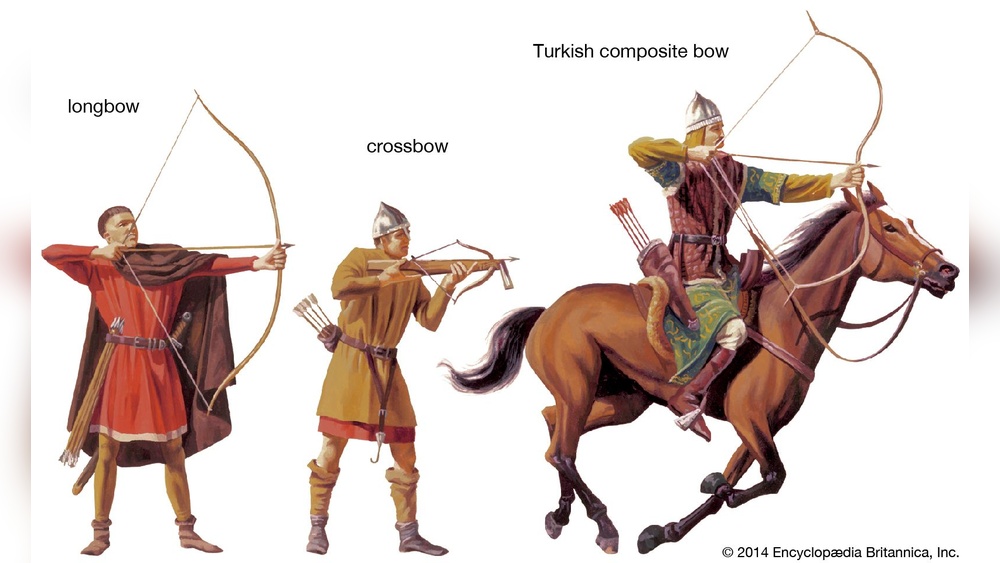
The composite bow was perfect for mounted archers. It was short enough to use on horseback but strong enough to kill an armored opponent. The Scythians, Parthians, and later the Mongols became legends because of their horse archers.
Siege Warfare And Defense
Composite bows were also useful in sieges. Defenders could shoot arrows over walls, while attackers could target enemies from a safe distance. The power and range of composite bows made them a key part of ancient and medieval armies.
Battle Examples
- Battle of Carrhae (53 BCE): The Parthians defeated a much larger Roman army using horse archers with composite bows. The Romans could not match their range or mobility.
- Mongol Invasions (13th Century): The Mongol Empire grew rapidly because their archers were fast, accurate, and deadly from a distance.
Spread Of The Composite Bow Across The World
The composite bow did not stay in one place. It spread from Central Asia to China, the Middle East, Europe, and even North Africa. Each region adapted the bow to their needs and local resources.
In China
By the Shang Dynasty (c. 1600, 1046 BCE), composite bows were used by Chinese armies. They improved the design, making it more effective for infantry and cavalry.
In The Middle East
The Assyrians, Persians, and other empires made the composite bow their main weapon. The famous Persian Immortals carried these bows, and their armies became feared across the ancient world.
In Europe
The composite bow was less common in Western Europe, where longbows and crossbows were preferred. However, contact with eastern armies during wars and migrations brought the technology westward.
In Egypt And North Africa
Egyptian pharaohs equipped their charioteers with composite bows. The weapon became a symbol of royal power and military skill.
Below is a comparison of composite bow use across major regions:
| Region | Earliest Use | Key Users | Special Features |
|---|---|---|---|
| Central Asia | ~2500 BCE | Scythians, Mongols | Horseback use, powerful design |
| China | ~1600 BCE | Shang, Han Dynasties | Refined construction, mass production |
| Middle East | ~2000 BCE | Assyrians, Persians | Chariot warfare, elite archers |
| Egypt/North Africa | ~1800 BCE | Egyptians, Libyans | Chariot archery, prestige weapon |

Credit: archerygb.org
How Did People Make Early Composite Bows?
The process of making a composite bow was complex and time-consuming. Craftsmen needed skill, patience, and the right materials.
- Gathering Materials: The three main ingredients were wood (for the core), horn (usually from sheep or buffalo, for the belly), and sinew (animal tendons, for the back).
- Shaping and Laminating: Each material was cut and shaped, then glued together with natural adhesives (often from fish bladders or animal hide).
- Wrapping and Binding: To strengthen the bow, sinew was wrapped tightly and allowed to dry for months.
- Finishing: The finished bow was often painted or covered with bark or leather to protect it from moisture.
Pro Tip: Humidity and temperature are critical during construction. Too much moisture can ruin the glue, and the bow may break under stress. That’s why, in my experience, modern recreations of composite bows require climate control for the best results.
Advantages And Disadvantages Of The Composite Bow
To understand the true impact of the composite bow, it helps to look at both its strengths and weaknesses.
Main Advantages
- Powerful for Its Size: Shorter than self bows, but with more energy.
- Portable: Easy to carry, especially on horseback.
- Efficient Use of Local Materials: No need for long, straight wood.
Main Disadvantages
- Complex to Make: Requires advanced skills and months of drying.
- Sensitive to Weather: Too much rain or humidity can weaken glue and sinew.
- Expensive: High-quality materials and expert labor made these bows valuable.
Here is a side-by-side comparison of the composite bow and other common types:
| Bow Type | Power | Size | Weather Resistance | Production Time |
|---|---|---|---|---|
| Composite Bow | High | Short | Low | Long |
| Self Bow | Medium | Long | High | Short |
| Longbow | High | Very Long | Medium | Medium |

Credit: www.bow-international.com
Non-obvious Insights About The Composite Bow
Many people think the composite bow was simply a better version of a wooden bow. In reality, its invention marked a shift in how societies organized their armies and even their economies.
- Composite bows were status symbols. In some cultures, only nobles or elite warriors owned them because they were so hard to make and repair. This made the weapon not just a tool, but a sign of power.
- The design influenced other technologies. The idea of combining different materials for strength and flexibility inspired the construction of other weapons, tools, and even buildings.
- Maintenance was a secret skill. Owners needed to know how to store and care for their bows. A poorly stored composite bow could come apart in just a few months, especially in wet climates.
The Composite Bow In Myth And Legend
The composite bow appears in many legends, often as a weapon of heroes or gods. In the Mahabharata, the bow Gandiva is said to be made by the gods and is unbeatable in battle. In Central Asian folklore, legendary archers like Alpamysh and Manas use composite bows to defeat enemies and monsters.
These stories show how important the composite bow became, not just as a weapon, but as a symbol of skill, strength, and even divine favor.

Credit: archery360.com
The Decline Of The Composite Bow
With the rise of gunpowder weapons in the late Middle Ages, the composite bow slowly disappeared from most armies. Firearms were easier to use, required less training, and were more effective against armor.
However, composite bows continued to be used for sport, hunting, and cultural ceremonies in many parts of Asia and the Middle East. Even today, traditional bowyers craft replicas for enthusiasts and historians.
Modern Use And Revival
In recent years, there has been a revival of interest in composite bows, especially among history fans, martial artists, and sports archers. Modern materials like fiberglass and carbon fiber are sometimes used, but the principles remain the same.
Pro Tip: If you want to try shooting a composite bow, start with a lighter draw weight. Historical bows could pull 80, 100 pounds or more, but beginners should work up slowly to avoid injury.
For more details on the history and construction of the composite bow, see this Wikipedia article.
Frequently Asked Questions
When Did The First Composite Bows Appear In China?
Composite bows were used in China by the Shang Dynasty, which ruled from about 1600 to 1046 BCE. Archaeological finds show that these early Chinese composite bows were already quite advanced, and the design improved over time, especially during the Han and Tang dynasties.
Did Native Americans Use Composite Bows?
Most Native American tribes used self bows or sinew-backed bows, not true composite bows with horn cores. However, some groups, especially in the Great Plains, adopted features of composite construction after contact with European settlers, using bison horn and sinew to strengthen their bows.
How Long Did It Take To Make A Composite Bow?
Crafting a traditional composite bow often required several months. The main delay was drying time, as the glue and sinew layers had to cure slowly to prevent cracking. Some expert bow