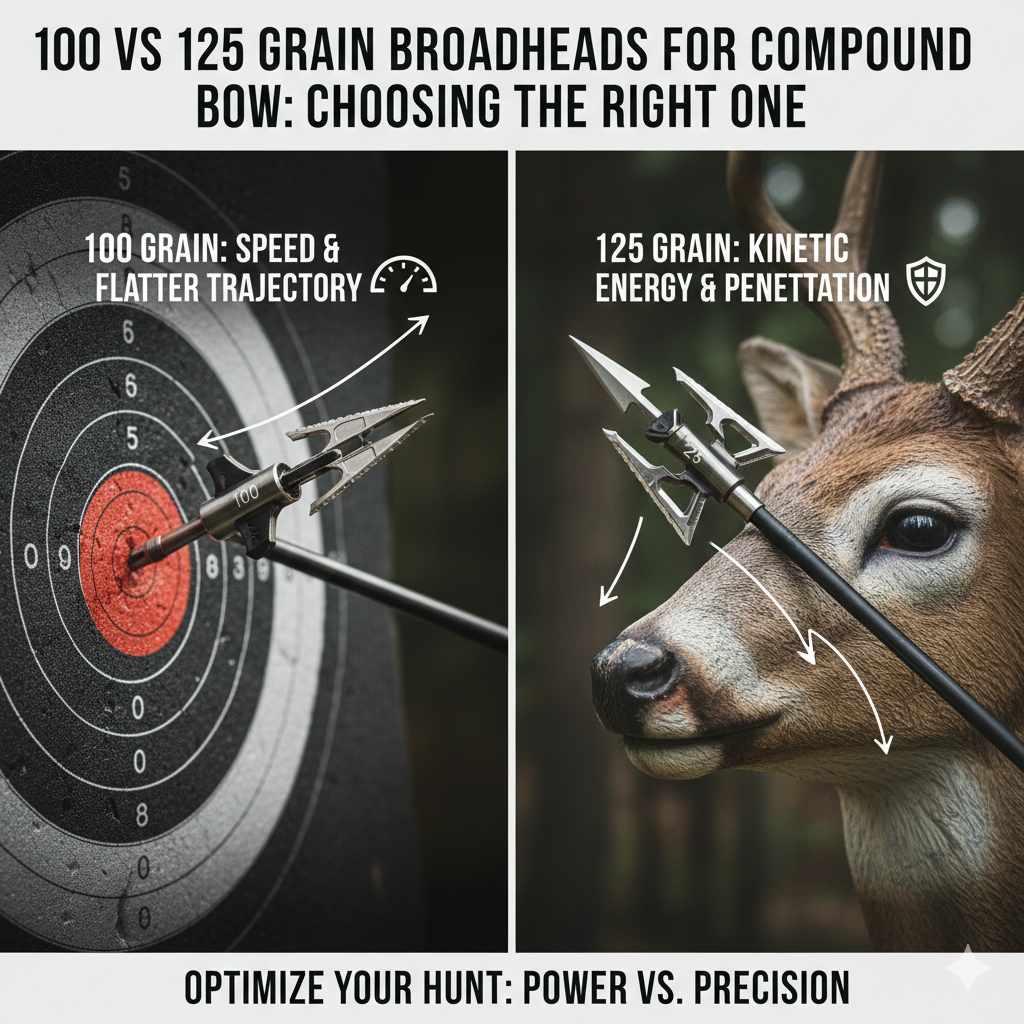
Choosing the right broadhead can be tricky, especially when you’re starting with compound bows. The decision between 100 vs 125 Grain Broadheads for Compound Bow is a common one, and it’s something many archers struggle with at first. Don’t worry; it’s easier than it seems! This post will break down the differences in a simple, step-by-step way, helping you pick the perfect broadhead for your hunting needs. Get ready to explore the factors that impact your choice, ensuring more accurate shots and successful hunts. Let’s get started!
Understanding Broadhead Basics
Before exploring the specifics of 100 vs 125 grain broadheads, it’s important to grasp some basic concepts about these vital pieces of archery equipment. A broadhead is essentially the arrowhead you attach to your arrow shaft for hunting purposes. They are called “broadheads” because they have blades that are wider than the arrow shaft itself, allowing them to inflict more damage to the target. These blades are designed to slice through tissue and cause a quick, humane kill. The choice of broadhead affects your arrow’s flight, penetration, and the damage it inflicts. Properly matching your broadhead to your bow setup and hunting style can greatly improve your success rate in the field. This foundation is essential before we examine the differences between 100 and 125 grain broadheads.
What is Grain Weight?
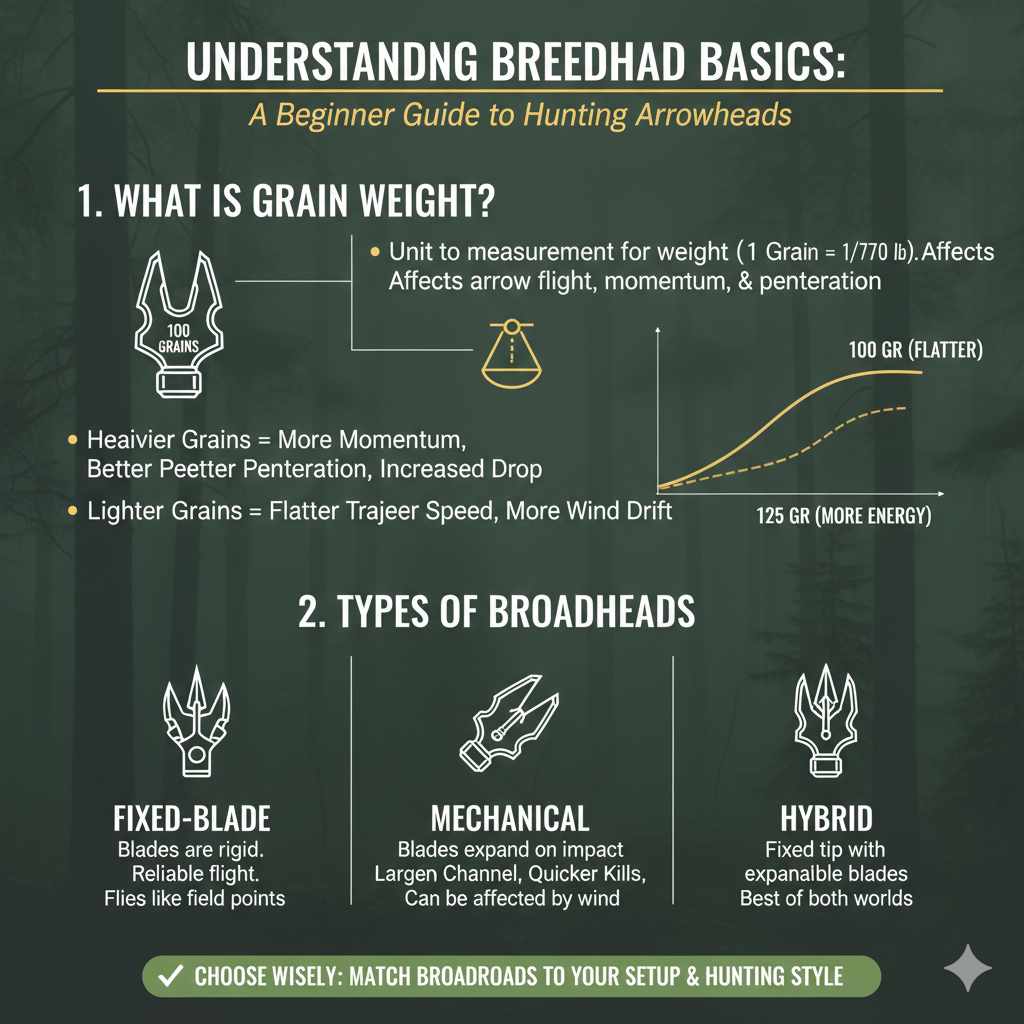
Grain weight is a unit of measurement used in archery to determine the weight of a broadhead (or other components like arrows). It is an essential factor because it directly affects how your arrow flies. The heavier the broadhead, the more it can impact arrow flight, and the more momentum it will have upon impact. This measurement is crucial for achieving accurate shots and consistent penetration when hunting. A heavier grain weight means the broadhead has more mass, which can translate into better penetration through bone and tougher targets. Conversely, a lighter grain weight might result in a flatter trajectory over long distances. The grain weight is typically marked on the broadhead packaging, and it’s essential to consider the total arrow weight, including the broadhead, shaft, fletchings, and nock, when tuning your bow.
Types of Broadheads
Broadheads are available in various styles. The two main types are fixed-blade and mechanical (or expandable) broadheads. Fixed-blade broadheads have blades that are fixed in place, while mechanical broadheads deploy their blades upon impact. Each type has its own advantages and disadvantages. Fixed-blade broadheads are known for their durability and consistent flight, and they typically fly very similarly to field points, the practice tips that archers use. Mechanical broadheads, on the other hand, are designed to open on impact. This can result in larger wound channels, contributing to quick kills. However, they may be subject to mechanical failures, and their flight characteristics can sometimes be affected by factors like wind. The choice between these two types depends on your bow setup, hunting style, and personal preference. The 100 vs 125 grain options are available in both categories.
- Fixed-blade broadheads: These broadheads have blades that do not move and are fixed in place. They offer a simple design and are generally more durable. They are reliable and often fly with the same flight characteristics as field points, meaning they tend to hit the same spot.
- Mechanical broadheads: Also known as expandable broadheads, these have blades that deploy upon impact with the target. This often results in a larger cutting diameter, creating larger wound channels and potentially quicker kills.
- Hybrid broadheads: These blend the features of fixed and mechanical broadheads. They may have a fixed tip with expandable blades. This design aims to provide the best of both worlds.
- Choosing the right type: The best type depends on your bow, hunting style, and experience. Fixed blades are reliable and often easier to tune, while mechanical broadheads can create larger wound channels.
The Impact of Grain Weight
The grain weight of a broadhead is a key aspect to consider when choosing the right one for your compound bow. The grain weight influences arrow trajectory, momentum, and overall performance. Heavier broadheads have more momentum, potentially leading to better penetration, but they may also have a more pronounced trajectory. Lighter broadheads fly flatter, meaning they have less drop over a given distance, but might sacrifice some penetration capabilities. The appropriate grain weight also ties into factors such as arrow shaft spine, draw weight, and draw length, all of which contribute to the accuracy and effectiveness of your shots. Understanding this impact is essential to achieve optimal results in the field.
Arrow Trajectory and Drop
Arrow trajectory describes the path your arrow takes from your bow to the target. It’s curved due to gravity. The amount your arrow drops over distance is directly impacted by the broadhead’s grain weight. Lighter broadheads have a flatter trajectory, meaning the arrow drops less over the same distance, which can be advantageous at varying distances. Heavier broadheads, conversely, have a more pronounced arc, requiring you to account for more drop when aiming. This is very important. For example, if you’re hunting at 40 yards, a heavier broadhead might require you to aim slightly higher than a lighter one to compensate for drop. Hunters typically aim for a balance between trajectory and penetration, selecting a broadhead grain weight that suits their typical shooting distances and hunting conditions. The flatter trajectory helps improve accuracy.
Momentum and Penetration
Momentum is a measure of an object’s mass in motion. With broadheads, it’s what drives the arrow into the target. Heavier broadheads have more momentum than lighter ones, assuming the arrows are traveling at the same speed. This increased momentum can lead to better penetration, especially when encountering bone or tough hide. However, it’s crucial to balance momentum with other factors. While more momentum is great for penetration, it may also lead to a more curved trajectory, and you want to be accurate. The arrow’s kinetic energy is also crucial, and this is determined by both arrow weight and arrow speed. Penetration is all about putting energy into the target.
- Heavier broadheads:
- Increased momentum.
- Better penetration.
- More pronounced trajectory.
- Lighter broadheads:
- Less momentum.
- Potentially less penetration.
- Flatter trajectory.
100 vs 125 Grain: A Comparative Look
The difference between 100 and 125-grain broadheads isn’t just about weight. It is essential to consider the overall impact on your shooting. The 25-grain difference can influence your arrow’s flight characteristics, momentum, and how the arrow performs in the air. The best choice depends on many factors, like your bow setup, draw weight, and hunting style. The sections that follow will provide a direct comparison. Here’s a brief exploration of the specifics, including the advantages and disadvantages of each. When selecting the proper broadhead, this helps you make an informed choice that suits your particular archery needs.
Advantages of 100 Grain Broadheads
100-grain broadheads offer several benefits that appeal to many archers. They typically have a flatter trajectory compared to heavier options. This flatter trajectory means less drop over distance, improving accuracy at varying ranges, especially when you are unsure of the distance. Because they are lighter, 100-grain broadheads may also result in a slightly higher arrow speed. This can lead to increased kinetic energy at impact. This can result in a more efficient energy transfer upon impact, leading to a quicker kill. They’re often suitable for bows with lower draw weights. They are available in various styles, including both fixed-blade and mechanical designs. This makes it simple to discover a broadhead that fits your bow and hunting method.
Advantages of 125 Grain Broadheads
125-grain broadheads are selected by many hunters seeking enhanced penetration. The added weight contributes to increased momentum. This added momentum can be extremely helpful when hunting larger game. They can provide a significant advantage when you encounter tough hide or bone. The 125-grain broadheads often have improved accuracy with heavier arrows, especially at longer distances. The heavier weight can help with the arrow’s stability in flight, resulting in better accuracy in windy conditions. The 125-grain broadheads are available in various designs, including both fixed-blade and mechanical options. Their heavier weight can make them an excellent choice for hunters who prioritize penetration and accuracy, particularly with heavier game.
| Feature | 100 Grain Broadhead | 125 Grain Broadhead |
|---|---|---|
| Trajectory | Flatter | More pronounced arc |
| Arrow Speed | Potentially faster | Slightly slower |
| Momentum | Less | More |
| Penetration | May be less | Potentially better |
Choosing the Right Grain Weight
The choice between 100 and 125-grain broadheads comes down to matching the broadhead to your specific archery setup, hunting style, and goals. There are many factors that influence the decision, including draw weight, arrow spine, and the type of game you’re hunting. The most important factor is the performance you want from your arrows. Taking the time to consider all of the elements will ensure that your chosen broadhead suits your needs. The proper weight gives you the best chance of making ethical and effective shots. The next parts of the post will give you a guide to ensure you make the right choice.
Factors to Consider
The best broadhead choice is not the same for everyone. Several elements will influence your decision. Your bow’s draw weight is one of the most important considerations. Heavier draw weights often pair well with heavier broadheads. The arrow spine also needs consideration. It must match the broadhead weight and your bow’s draw weight. The type of game you hunt affects your decision. Hunters of larger game often select heavier broadheads for added penetration. The typical shooting distance is another element. Shorter distances may be more forgiving regarding trajectory, while longer distances may favor a flatter trajectory. Understanding how these factors interact will lead you to choose the best broadhead for your archery needs.
- Draw Weight:
- Heavier draw weight: may benefit from heavier broadheads.
- Lighter draw weight: may perform better with lighter broadheads.
- Arrow Spine:
- Must match the broadhead weight and bow’s draw weight.
- Ensures proper arrow flight and accuracy.
- Game Type:
- Larger game: often benefits from heavier broadheads for improved penetration.
- Smaller game: may perform well with lighter broadheads.
Testing and Tuning
Once you’ve narrowed down your choices, testing and tuning your setup is essential. This involves shooting your bow with different broadheads at various distances to assess their flight characteristics. Observe if the arrows consistently hit the target at the same point of impact as your field points. If the broadheads hit consistently at the same spot, this suggests proper tuning. If the broadheads group differently, you may need to adjust your bow or arrow setup. This process can involve adjusting the arrow rest, nock point, or arrow spine. Correct tuning makes sure your arrows fly accurately. Proper testing and tuning ensures that your broadheads and arrows fly true, increasing your hunting success and providing a more ethical shot.
Scenario Analysis
- Scenario 1: Whitetail Deer Hunting in a Wooded Area: A hunter typically shoots at distances of 20-30 yards. They have a compound bow with a draw weight of 60 pounds.
Analysis: In this situation, the hunter could select either 100 or 125-grain broadheads. The 100-grain broadheads might offer a slightly flatter trajectory for shots at varying distances. The 125-grain broadheads could provide more momentum, ensuring enough penetration, particularly if a shoulder bone is hit. Testing each broadhead to see which flies most accurately out of the hunter’s bow setup is essential.
- Scenario 2: Elk Hunting at Longer Ranges: A hunter typically takes shots at 40 yards or more in open terrain. They are using a compound bow with a 70-pound draw weight.
Analysis: The hunter will likely benefit from using 125-grain broadheads because of the greater penetration. The higher draw weight also allows for effective use of the heavier broadhead. The slightly more curved trajectory of the 125-grain head can be compensated for by using range finders and practice. The importance is ensuring proper arrow flight and consistent grouping at the anticipated hunting distances.
Frequently Asked Questions
Question: Does the difference in grain weight significantly affect arrow speed?
Answer: Yes, there is a difference. Generally, a lighter broadhead (like 100-grain) will result in a slightly faster arrow speed compared to a heavier one (like 125-grain). The actual difference will depend on the bow setup, but it’s often in the range of a few feet per second.
Question: Will a 125-grain broadhead always penetrate better than a 100-grain broadhead?
Answer: Not necessarily. While 125-grain broadheads usually have more momentum, the actual penetration depends on many factors, including the arrow’s kinetic energy, the broadhead design, and where the arrow strikes the animal. A well-placed shot with a 100-grain broadhead can be just as effective.
Question: Is it necessary to retune my bow when switching from field points to broadheads?
Answer: Often, yes. Field points and broadheads have different weights and flight characteristics. This means that your arrow may not hit the target at the same point when you switch between them. You might need to make adjustments to your arrow rest, nock point, or even the arrow spine to achieve accurate arrow flight.
Question: Are fixed-blade broadheads or mechanical broadheads better for 100-grain or 125-grain options?
Answer: Both fixed-blade and mechanical broadheads are available in 100-grain and 125-grain options. The choice between them depends on your preference and bow setup. Some archers prefer the durability and reliability of fixed blades, while others like the larger cutting diameter offered by mechanical broadheads.
Question: How can I determine the best broadhead grain weight for my specific bow setup?
Answer: Begin by shooting both 100-grain and 125-grain broadheads and compare their accuracy. Your decision will depend on how the arrows group and how well they fly with your existing arrow spine and bow setup. You may need to tune your bow to find the most accurate combination.
Final Thoughts
Choosing between 100 vs 125 Grain Broadheads for Compound Bow comes down to balancing several elements. Each has its advantages. A 100-grain broadhead may offer a flatter trajectory, potentially boosting accuracy at longer distances, while a 125-grain head can provide increased momentum, enhancing penetration. Your draw weight, arrow spine, and the type of game you hunt play key roles. To make the best choice, consider the trajectory and penetration needs for your setup. Testing and tuning are essential. Take the time to practice with your chosen broadheads. This ensures you can hit your target confidently and make a clean, ethical shot. By carefully exploring these factors, you will be well-equipped to select the ideal broadhead. This will improve your accuracy and increase your chances of a successful and ethical hunt. Now go out there and make the shot!