Are Carp Populations Going Down? Bow Fishing’s Impact
Bowfishing can significantly impact localized carp populations, helping to control their numbers in specific waterways under proper management. However, it’s not causing a widespread, nationwide decline. Responsible practices and regulated seasons are key to maintaining a healthy ecosystem. For more on this, see our guide on Are Youth And Womens Bow the Same? Key Differences Explained.
Are you curious about what’s happening with carp populations in our lakes and rivers? It’s a common question among anglers and nature enthusiasts alike. Sometimes, you might hear whispers about how activities like bowfishing could be changing things. It can be a bit confusing to sort through all the information, but don’t worry! As your guide to all things archery, I’m here to break it down for you. We’ll look at what bowfishing is, how it works, and what its real impact is on carp. Get ready to understand this engaging sport and its role in aquatic ecosystems. Let’s dive in!
Understanding Carp and Their Impact
Before we talk about bowfishing, let’s understand why carp are even a topic of discussion. Carp are an introduced species in many parts of the world, meaning they weren’t originally found there. While they can be a fun fish to catch for some, they can also cause problems when their populations get too high.
In large numbers, carp can really stir up the bottom of lakes and ponds. This muddies the water, which makes it harder for plants to grow. These aquatic plants are super important! They provide food and shelter for native fish and other wildlife. When the plants suffer, the whole ecosystem can be affected. That’s why managing carp populations is often a goal for fisheries managers.
What is Bowfishing? A Beginner’s Guide
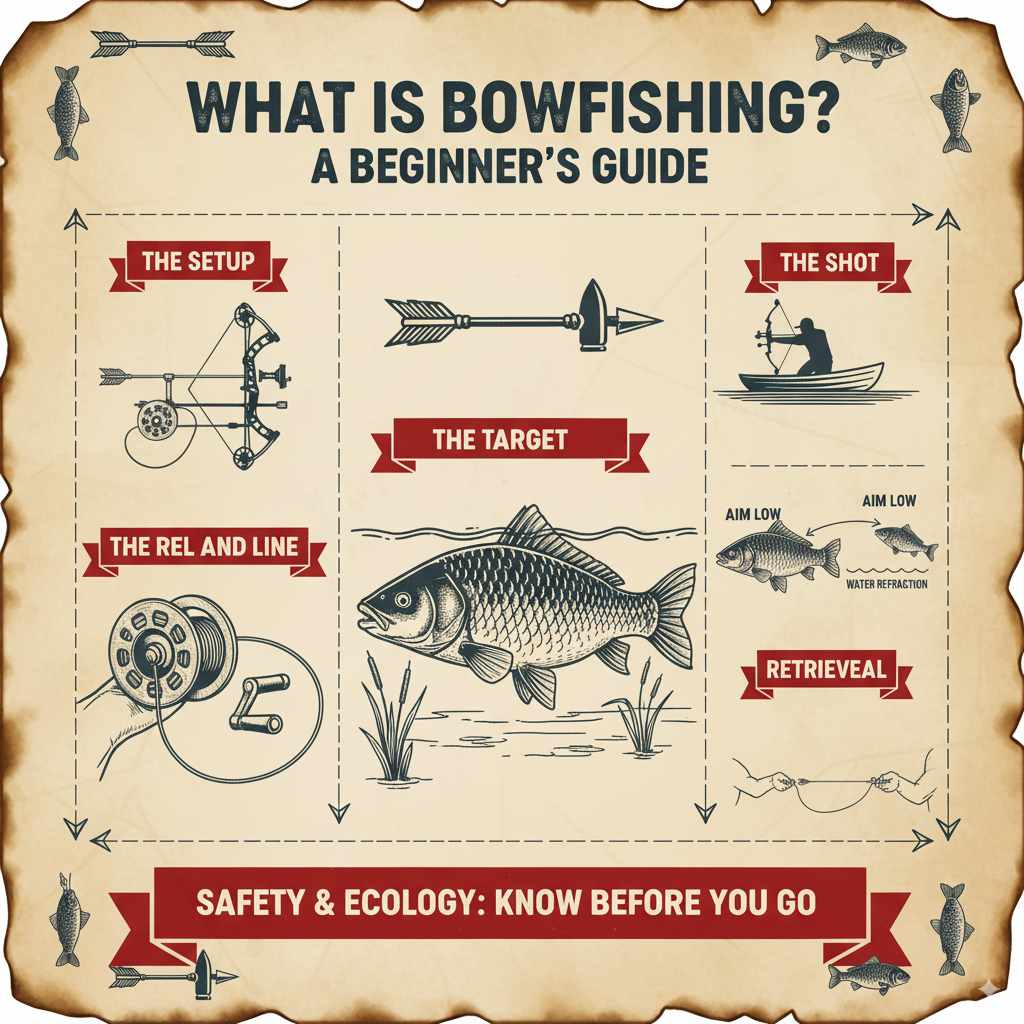
Bowfishing is an exciting and unique way to fish. Instead of using a traditional rod and reel, you use a bow and arrow. Here’s how it generally works:
- The Setup: You’ll need a bow, which can be a compound bow or a traditional recurve bow. Attached to your bow is a reel specifically designed for bowfishing. This reel holds a strong, durable line that is spooled onto the arrow.
- The Arrow: Bowfishing arrows are different from hunting arrows. They are heavier, often made of fiberglass or carbon, and have a barbed tip. The barb helps to secure the fish once it’s hit, preventing it from escaping.
- The Reel and Line: The fishing reel is mounted on the bow, and the line runs through a special opener on the arrow rest. This line is critical as it connects your arrow to the real, allowing you to retrieve the fish.
- The Target: Bowfishing is typically done for rough fish, like carp and gar, which are often considered invasive or overpopulated. It’s usually practiced in shallow water where fish are more visible.
- The Shot: You aim your bow at the fish, much like you would in archery. When you release the arrow, it travels through the water. The water makes the arrow slow down much faster than it would in the air, so you need to aim slightly below the fish to compensate for this refraction.
- Retrieval: Once you hit a fish, you use the reel to draw it in. It’s a thrilling process!
Safety is a top priority in bowfishing, just like in any archery activity. Always be aware of your surroundings, ensure you have a clear line of sight, and never draw your bow unless you intend to shoot. Most fishing regulations apply, so it’s important to know the local rules and seasons.
The Proven Impact of Bowfishing on Carp Populations
Now, let’s talk about the big question: are carp populations going down due to bowfishing? The answer is nuanced, but research shows it can have a significant effect in targeted areas. Bowfishing is a hands-on method for removing fish, and when practiced consistently in a specific location, it can absolutely lead to a reduction in carp numbers.
Here’s why bowfishing can be effective:
- Direct Removal: Unlike some other fishing methods, bowfishing aims to remove the fish from the water. Every fish successfully harvested by a bowfisher is one less fish contributing to spawning and population growth.
- Targeting Specific Areas: Bowfishing is often done in shallower waters where carp congregate, especially in the spring during their spawning season. This allows bowfishers to target areas where carp are most accessible and abundant.
- Efficiency in Certain Conditions: In clear, shallow water, bowfishing can be a very efficient way to remove a large number of fish quickly, especially when compared to methods that might catch many non-target species or require more time per fish.
However, it’s important to understand that bowfishing’s impact is usually localized. It’s rare for bowfishing alone to cause a widespread, decline across entire states or regions. Large bodies of water have vast capacities, and carp are prolific breeders. While bowfishing can be a valuable tool for managing carp in specific lakes, ponds, or stretches of river, its effectiveness depends on several factors:
- Intensity of Fishing: The more bowfishers are actively and regularly fishing an area, the greater the impact will be.
- Water Conditions: Clear, shallow water makes bowfishing more successful. In murky or deep water, it’s much harder to spot and shoot carp.
- Carp Biology: Carp reproduce rapidly. For bowfishing to keep up with natural reproduction rates across a huge water body is a significant challenge.
- Management Goals: Fisheries biologists often use bowfishing as part of a larger management strategy. It’s typically used to supplement other methods aimed at controlling invasive species or reducing pressure on native fish habitats.
According to the Australian National Bass Championship Bowfishing for Carp Program, bowfishing has been identified and utilized as a method for carp population control, demonstrating its recognized role in management efforts.
Bowfishing Techniques for Beginners
If you’re interested in trying bowfishing, it’s a fantastic sport that combines archery skills with fishing. Here are some beginner-friendly techniques to get you started:
Choosing the Right Equipment
Getting the right gear is the first step. Don’t worry about having the most expensive setup; focus on what works for you and learn to use it well.
- Bow: For beginners, a compound bow with a draw weight around 40-50 lbs is often recommended. It’s powerful enough and manageable. Some people also use recurve bows. Make sure the bow is set up for bowfishing, which includes a reel seat.
- Bowfishing Reel: A dedicated bowfishing reel is essential. These can be a retriever style (where the line winds onto a spool) or a spin-cast style. Many beginners find spin-cast reels easier to manage initially.
- Arrows: Use fiberglass or carbon bowfishing arrows. They are heavy-duty and designed to withstand water. Ensure they have barbs on the tips.
- Bowfishing Line: A strong braided line, often rated at 50-100 lbs test, is used. It’s usually brightly colored so you can see it.
- Finger Tabs or Release Aid: Protect your fingers or use a release aid to maintain consistency.
- Safety Gear: Wear a life vest if you’re in a boat or wading in deep water. Eye protection is always a good idea.
Stepping Up Your Aim: Important Considerations
Aiming in water is different! Here are some tips:
- Aiming Point: Water bends light. This means the arrow appears to hit higher than it actually does. You’ll need to aim below the fish. The deeper the water, the more you need to adjust. A common rule of thumb is to aim about 15-20% below the fish for typical depths.
- Distance: Estimating distance in water can be tricky. Practice judging distances in various water conditions. Don’t take shots that are too far. Shorter, more accurate shots are always better.
- Fish Movement: Fish are always moving. Try to anticipate where the fish will be when the arrow arrives. Aim where the fish will be, not where it is.
- Angle: The angle you shoot from also matters. Try to shoot as close to perpendicular to the fish’s path as possible for better accuracy.
Where and When to Bowfish for Carp
Carp are often most accessible and catchable during specific times and in certain environments:
- Shallow Water: Carp love shallow, warmer waters. Look for backwaters, coves, and areas with aquatic vegetation where they can feed and bask.
- Spring Spawning: During their spawning season (typically late spring), carp move into very shallow areas, often in large groups. This is prime time for bowfishing.
- Murky or Clear: While clear water is ideal for visibility, carp can also be found in murkier waters. You’ll need to rely on seeing them swim up or sensing their presence.
- Dawn and Dusk: Like many fish, carp can be more active feeding during the early morning and late evening hours.
Bowfishing Safety Tips for Beginners
Safety is paramount. Here are some essential tips:
- Know Your Target and What’s Beyond: Always be absolutely sure of your backstop. Never shoot towards people, boats, or property. Ensure there’s nothing behind your target that could be dangerous if the arrow misses or passes through.
- Arrow Safety: Never draw your bow unless you are actively hunting and have a clear shot. Keep your fingers or release on the string until you are ready to shoot.
- Wading Safety: If wading, wear sturdy water shoes to protect your feet from sharp objects. Be aware of currents and the depth of the water. A life vest is highly recommended.
- Boat Safety: If bowfishing from a boat, ensure you have a stable platform and are aware of where other people are on the boat. Keep all gear secure.
- Know the Regulations: Always check your local fishing and bowhunting regulations. There are often specific rules about seasons, bag limits, and legal equipment for bowfishing. For example, many states have specific licenses or stamps required for bowfishing. The U.S. Fish and Wildlife Service provides information on federal regulations, and state wildlife agencies detail local rules.
The Positives and Potential Downsides of Bowfishing for Carp
Like any management tool, bowfishing has its pros and cons. Understanding these helps us appreciate its role and limitations.
Pros of Bowfishing for Carp
- Effective Population Control: As we’ve discussed, it’s a direct method of removing fish, which can significantly reduce carp numbers in targeted areas.
- Engaging Activity: It’s an exciting sport that gets people outdoors and interacting with their environment.
- Targets Undesirable Species: It focuses on invasive or problematic species, helping to protect native aquatic life and habitats.
- Year-Round Opportunity (in some areas): Depending on local regulations, bowfishing can be an option outside of traditional fishing seasons.
- Low Impact on Native Fish: When practiced correctly, bowfishing generally targets rough fish in shallow waters, minimizing bycatch of game species.
Cons and Considerations
- Potential for Bycatch: While less common in shallow water bowfishing for carp, accidental hooking of native species is possible. Strict adherence to regulations and careful aiming reduces this risk.
- Requires Specific Skills: It demands practice and skill with both archery and understanding aquatic environments.
- Impact is Localized: It’s not a sweeping solution for nationwide carp problems but an effective tool for local management.
- Water Clarity Dependent: Success is often dictated by water conditions.
- Ethical Harvesting: Ensuring fish are killed quickly and humanely is important. Proper shot placement is key, and entanglement of lines can be an issue if not managed.
A study published by the University of Wisconsin Extension highlights how bowfishing can be used as a tool for aquatic invasive species management, specifically mentioning common carp, and provides guidance on its implementation.
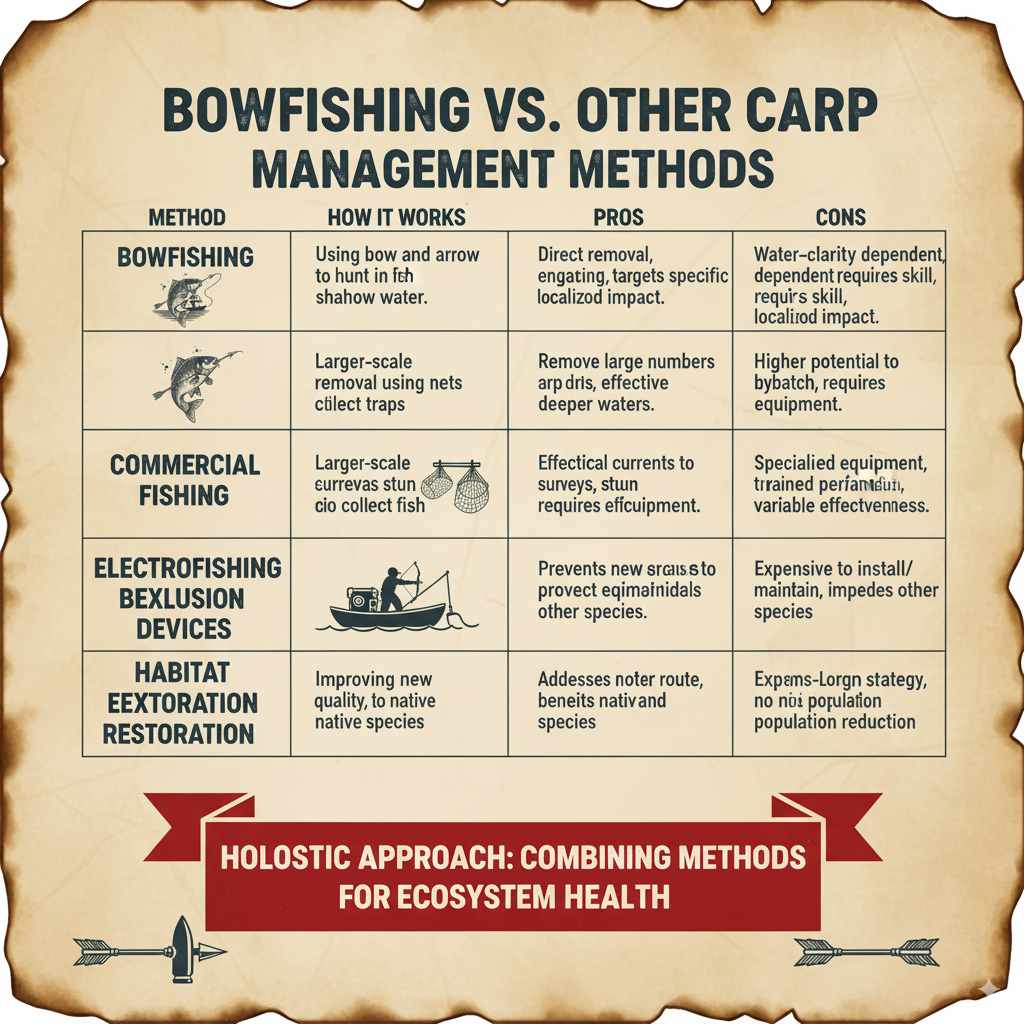
Bowfishing vs. Other Carp Management Methods
Bowfishing isn’t the only way to manage carp. Other methods are also used, often in combination.
| Method | How it Works | Pros | Cons |
|---|---|---|---|
| Bowfishing | Using a bow and arrow to hunt fish in shallow water. | Direct removal, engaging, targets specific species, localized impact. | Can be water-clarity dependent, requires skill, localized impact only. |
| Commercial Fishing (Nets, Traps) | Larger-scale removal using nets (like hoop nets or gill nets) or traps. | Can remove large numbers in a single effort, effective in deeper waters. | Higher potential for bycatch, requires permits and specialized equipment. |
| Electrofishing | Using electrical currents to stun fish for collection and removal. | Effective for surveys and targeted removal, can be selective. | Requires specialized equipment and trained personnel, can vary in effectiveness with water conditions. |
| Barriers/Exclusion Devices | Physical structures to prevent carp migration or entry into sensitive areas. | Prevents new introductions, protects specific habitats. | Can be expensive to install and maintain, may impede movement of other species. |
| Habitat Restoration | Improving water quality and native plant growth to make areas less favorable for carp. | Addresses the root cause, benefits native species. | Long-term strategy, does not immediately reduce existing populations. |
Bowfishing offers a unique blend of sport and ecological benefit. While it effectively reduces carp in areas where it’s practiced consistently, fisheries managers often see it as one part of a larger puzzle. Combining bowfishing with other methods, habitat improvements, and strict regulations can provide the most comprehensive approach to managing carp populations and preserving freshwater ecosystems.
Frequently Asked Questions (FAQ) About Bowfishing and Carp
Q1: Is bowfishing legal everywhere?
A1: No, bowfishing legality varies by state and sometimes even by specific bodies of water. You must check your local fishing and hunting regulations before you go. Licenses or permits are often required.
Q2: Can bowfishing hurt native fish populations?
A2: While the primary target is usually rough fish like carp, there’s a small risk of bycatch. However, by focusing on shallow waters where carp are abundant and aiming carefully, experienced bowfishers minimize this risk. Most regulations are designed to protect native species.
Q3: How do I know if carp populations are actually going down because of bowfishing?
A3: Fisheries biologists monitor fish populations through surveys. If bowfishing efforts are intensive and consistent in a particular lake or river, biologists may observe a reduction in carp numbers during these surveys. It’s often part of a broader management plan, so attributing decline solely to bowfishing can be complex.
Q4: What’s the best time of year for bowfishing for carp?
A4: The best time is often during the spring when carp are actively spawning in shallow waters. However, carp can be bowfished in other seasons as well, especially in shallower backwaters or coves where they congregate.
Q5: Do I need to be an expert archer to go bowfishing?
A5: You don’t need to be an expert, but you do need some basic archery skills and practice. Bowfishing has unique challenges like aiming in water. Starting with a beginner-friendly setup and practicing regularly will help you improve quickly.
Q6: Is bowfishing dangerous?
A6: Like any activity involving bows and water, there are risks. Safety is crucial. Always be aware of your surroundings, know your target and what’s beyond it, wear appropriate safety gear (like a life vest), and follow all regulations. Proper training and practice significantly reduce risks.
Q7: Does bowfishing really make a difference for the environment?
A7: Yes, by controlling populations of invasive or overabundant species like carp, bowfishing can help protect native aquatic plants, improve water clarity, and create better habitats for native fish and wildlife. It’s a valuable tool for ecological balance when managed correctly.
Conclusion
So, are carp populations going down due to bowfishing? The answer is that bowfishing can indeed have a proven, significant impact on localized carp populations.