
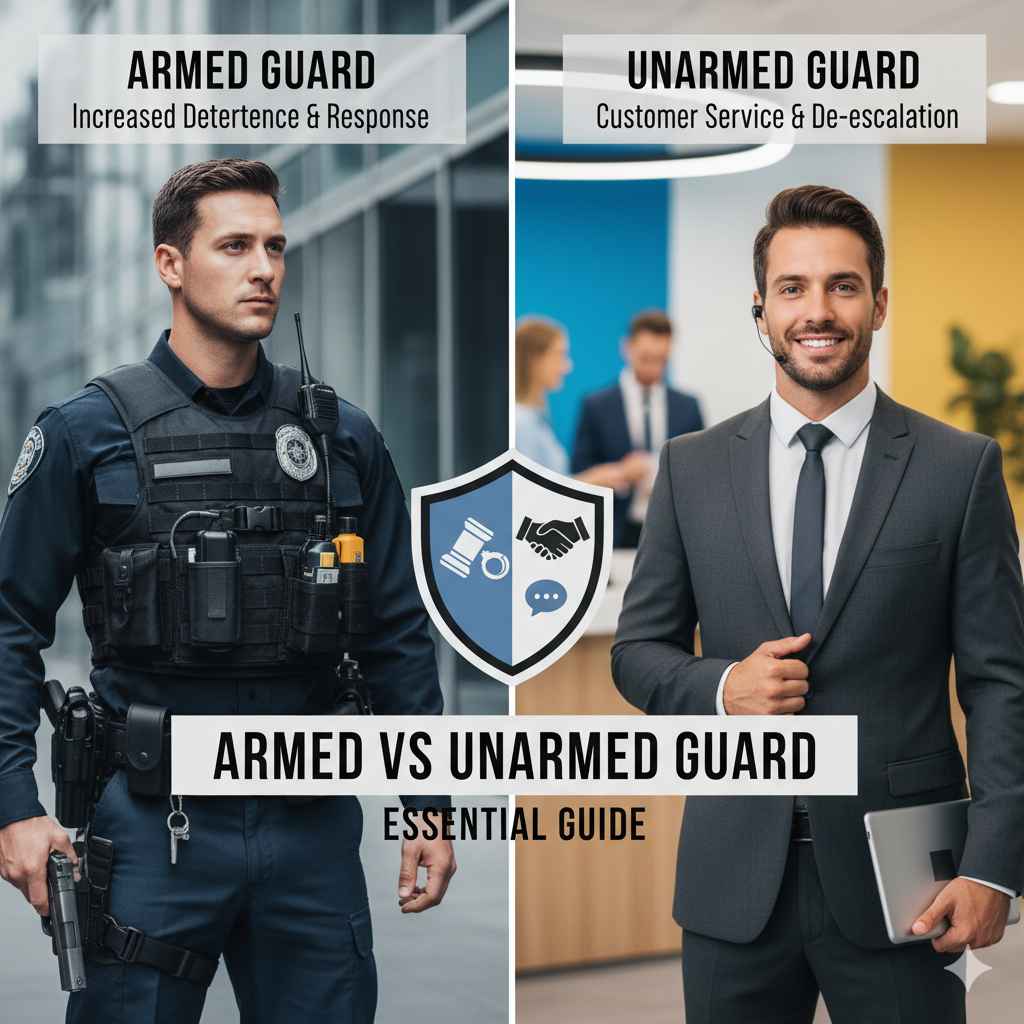
Armed vs Unarmed Guard: Choose the right security depends on the risk level. Armed guards offer superior deterrence and response for high-threat areas, while unarmed guards excel at access control and visible presence for lower-risk sites, offering a cost-effective solution.
Deciding between an armed and an unarmed security guard often feels confusing. You need reliable protection, but the differences between these two options seem huge, especially when considering cost, training, and necessary legal paperwork. It’s easy to feel overwhelmed trying to pick the perfect fit for your home or business. Don’t worry! We are going to break down exactly what each type of guard does, the skills they need, and when you should hire one over the other. Think of me as your guide, making this complex choice simple and clear, so you can secure your property confidently. Let’s walk through everything you need to know, step by step.
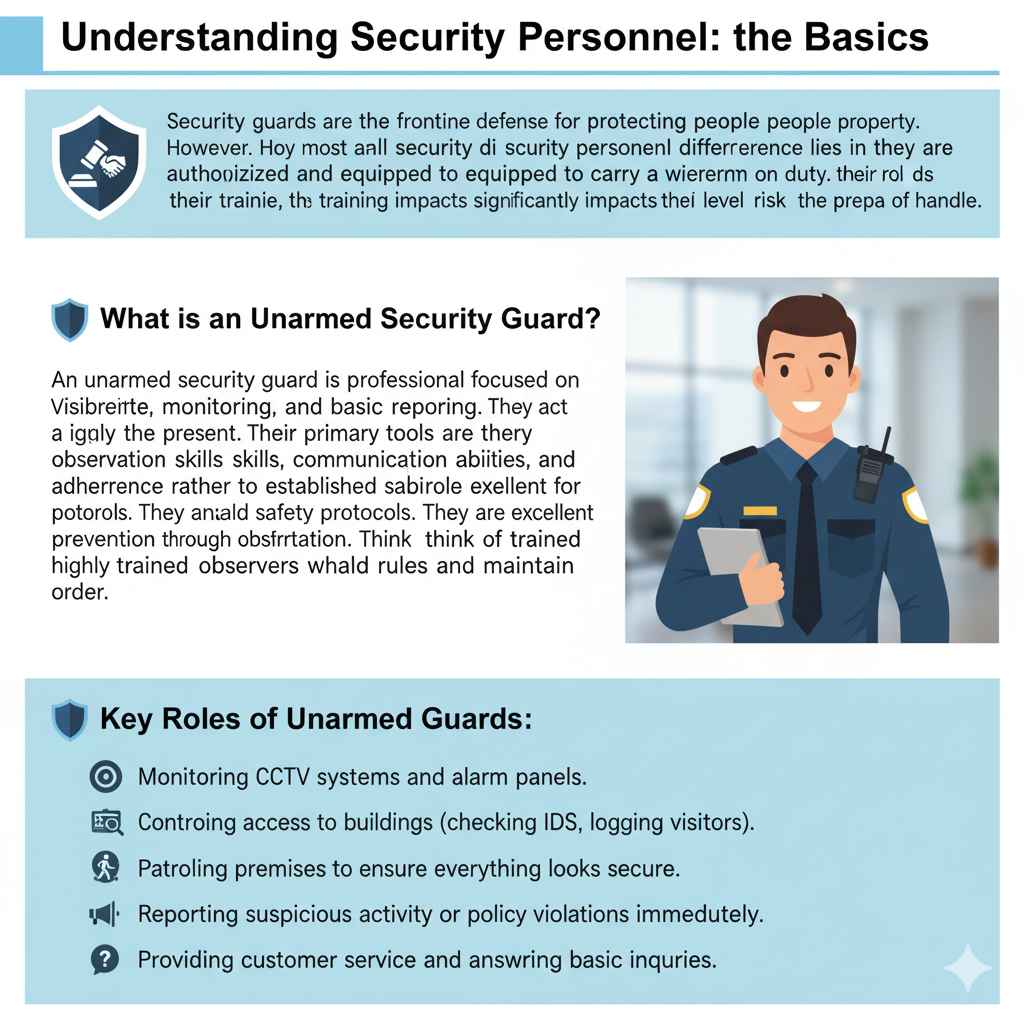
Understanding Security Personnel: The Basics
Security guards are the frontline defense for protecting people and property. However, not all security personnel are the same. The most fundamental difference lies in whether or not they are legally authorized and equipped to carry a firearm while on duty. This distinction significantly impacts their training, their role, and the level of risk they are prepared to handle.
What is an Unarmed Security Guard?
An unarmed security guard is a professional focused on visibility, deterrence, monitoring, and basic reporting. They act as a highly visible deterrent simply by being present. Their primary tools are their observation skills, communication abilities, and adherence to established safety protocols.
They are excellent for settings where the goal is prevention through observation rather than direct confrontation. Think of them as highly trained observers who uphold rules and maintain order.
Key Roles of Unarmed Guards:
- Monitoring CCTV systems and alarm panels.
- Controlling access to buildings (checking IDs, logging visitors).
- Patrolling premises to ensure everything looks secure.
- Reporting suspicious activity or policy violations immediately.
- Providing customer service and answering basic inquiries.
What is an Armed Security Guard?
An armed security guard is a professional who has undergone extensive specialized training and holds the necessary legal licenses to carry a weapon (usually a firearm) while on duty. Their role often involves situations where the potential for serious violence or high-value asset protection is a realistic concern.
Hiring an armed guard significantly increases the level of immediate protective response capability at your location. They are trained not only in observation but also in the safe handling, storage, and appropriate use of deadly force when legally justified.
Key Responsibilities of Armed Guards:
- All duties performed by an unarmed guard.
- Deterring high-risk criminal activity through visible armament.
- Responding to active threats or intrusions using necessary force as a last resort.
- Transporting high-value assets that require immediate armed response capability.
- Protecting individuals whose lives may be directly threatened.
Training and Legal Requirements: The Big Divide
The training and legal hurdles necessary to become armed versus unarmed are vastly different. These differences directly affect the cost and suitability of the guard for a particular job site.
Training for Unarmed Guards
The training required for unarmed guards focuses heavily on soft skills, legal boundaries, and basic safety procedures. While rigorous, it does not involve firearms qualification.
The focus is on understanding the law regarding citizen’s arrest, appropriate use of force (which is limited to defense of self or others), report writing, and site-specific protocols.
Typical Unarmed Guard Training Components:
- Basic Security Officer Licensing (State-mandated minimum hours).
- Emergency Response Procedures (Fire, medical incidents).
- Customer Service and Professional Conduct.
- Observation and Incident Reporting techniques.
- Understanding State Laws regarding trespassing and detainment.
Training for Armed Guards
Armed guards require all the training of unarmed guards, plus significant, specialized training regarding firearms proficiency, safety, and the laws governing lethal force. This training is usually mandated and re-certified regularly.
In the United States, the requirements are set at the state level. For example, in many states, guards must meet specific qualifications set by the Department of Public Safety or equivalent regulatory bodies. You can often check state-specific licensing requirements through official state government websites, such as those managed by the Texas Department of Public Safety or the California Bureau of Security and Investigative Services, to see the depth of initial and ongoing qualification required.
Essential Armed Guard Training Additions:
- Classroom instruction on use of force statutes and legal justification.
- Intensive firearms safety courses and written exams.
- Live-fire range qualification (often quarterly or semi-annually).
- Defensive tactics and scenario-based training involving weapons draw and deployment.
- Equipment maintenance and secure carrying procedures.
Armed Vs Unarmed Guard: A Side-by-Side Comparison
To make the decision easier, let’s put the key operational differences side-by-side. This comparison helps highlight where each type of guard provides the best value.
| Feature | Unarmed Security Guard | Armed Security Guard |
|---|---|---|
| Primary Function | Deterrence, Observation, Access Control | Deterrence, Response to High Threat, Asset Protection |
| Legal Authority | Limited to citizen’s arrest/detainment under general law. | Includes all unarmed roles, plus the legal right to use a firearm when necessary for self-defense or defense of others. |
| Training Intensity | Moderate (Focus on communication and observation) | High (Includes extensive firearms qualification and legal use-of-force training) |
| Cost to Hire | Lower Hourly Rate | Significantly Higher Hourly Rate (due to specialized training, insurance, and licensing) |
| Insurance/Liability | Standard Liability Coverage | Higher Liability Coverage required due to the presence of a lethal weapon. |
| Public Perception | Visible presence, routine patrol, low intimidation factor. | High deterrence, can sometimes increase tension depending on the environment. |
When to Choose an Unarmed Guard
Unarmed guards are the backbone of general security. They are the right choice when your primary need is presence, rule enforcement, and visibility, rather than countering immediate, serious physical threats.
If your environment is generally safe but requires structure and monitoring, save your budget for unarmed professionals.
Ideal Scenarios for Unarmed Guards:
- Office Buildings/Corporate Lobbies: Managing visitor logs and ensuring employees badge in correctly.
- Retail Stores (Low Theft Areas): Monitoring entrances and discouraging petty shoplifting through presence.
- Construction Sites (After Hours): Preventing unauthorized entry and vandalism when equipment is present.
- Residential Communities/HOAs: Controlling gate access and conducting routine perimeter checks.
- Events with Low Confrontation Risk: Directing traffic or managing queues at a public gathering.
For these environments, the visual reassurance of a uniformed guard provides excellent value. They establish a professional barrier without escalating the situation unnecessarily.
When You Absolutely Need an Armed Guard
If the risk assessment of your property or the nature of your business involves high-value assets, high-profile individuals, or known high-crime areas, an armed guard becomes a necessity, not just an option. They provide the highest level of immediate physical defense.
Hiring armed personnel signals a very serious commitment to security. It often satisfies insurance requirements for certain high-value inventory.
Ideal Scenarios for Armed Guards:
- Banks and Credit Unions: Protecting tellers and large amounts of cash during operational hours.
- Jewelry Stores and High-End Valuables Retail: Deterring organized, high-stakes robbery attempts.
- Executive Protection (Bodyguards): Protecting individuals facing specific, credible threats of violence.
- Sensitive Government or Research Facilities: Where unauthorized access could result in national security risks or severe intellectual property loss.
- Locations with High Violent Crime Rates: Areas where standard police response times might be slow, requiring immediate on-site defense capability.
Remember, an armed guard is more expensive because you are paying for specialized, regularly tested skills that must remain sharp. Using them inappropriately can sometimes make a situation worse by escalating minor issues into armed confrontations, so ensure the risk justifies the level of response.
Cost Implications: Budgeting for Security
The difference in cost between armed and unarmed services is one of the most significant factors for many clients. This difference reflects the increased training, insurance liability, and specialized gear required for armed personnel.
Factors Driving Higher Armed Guard Costs:
- Insurance Premiums: Companies carrying armed guards must maintain much higher liability insurance policies to cover potential incidents involving firearms.
- Training Recertification: State laws mandate regular (often quarterly) range time and requalification, which is a continuous operational cost passed on to the client.
- Specialized Licensing Fees: The administrative cost of maintaining state-issued guard licenses and firearm permits is higher.
- Higher Wages: Due to the intense training and increased responsibility, armed guards command significantly higher hourly wages than their unarmed counterparts.
Generally, you can expect an armed guard to cost anywhere from 30% to 75% more per hour than an unarmed guard, depending heavily on the regional market and the specific state licensing laws.
The Legal Aspect: Use of Force and Liability
This is perhaps the most critical area where armed and unarmed guards diverge. Every guard operates within strict legal boundaries, but the boundaries for an armed individual are much narrower and more scrutinized.
Use of Force Continuum for Unarmed Guards
Unarmed guards follow a strict “use of force continuum” heavily emphasizing de-escalation. Their authorized force is usually limited to physical restraint necessary to prevent a crime or detain a suspect until law enforcement arrives—often referred to as a “citizen’s arrest” depending on state law.
If an unarmed guard uses excessive physical force beyond what is reasonably necessary, they (and the hiring company) face criminal and civil liability, just like any private citizen.
Use of Force Continuum for Armed Guards
Armed guards are trained to use the use of force continuum, but they also have the legal option of lethal force when facing an imminent threat of death or serious bodily harm. This capability is heavily regulated.
The crucial difference is justification. If an armed guard uses their weapon inappropriately, the resulting legal fallout is severe, potentially involving criminal charges for the guard and massive civil lawsuits against the security company and the client. This is why the constant, rigorous training mentioned earlier is mandatory; the law expects perfection when a firearm is drawn.
Beyond Deterrence: The Role of Soft Skills
While the presence of a weapon is a powerful tool, security is often more about preventing a situation from ever reaching a dangerous point. This is where soft skills, equally important for both types of guards, come into play.
Communication and De-escalation
A well-trained guard, regardless of armament status, should always prioritize talking and de-escalation over physical confrontation. A guard who can calmly talk down an agitated person is more valuable than one who immediately jumps to physical restraint.
Good security professionals are excellent observers and communicators. They notice subtle shifts in body language, recognize potential problems before they happen, and use clear, authoritative, yet polite language to enforce rules.
Report Writing and Documentation
Whether a guard stops a minor theft or witnesses a major incident, clear, accurate documentation is vital. Good incident reports:
- Provide necessary details for police follow-up.
- Serve as primary evidence in insurance claims or court cases.
- Help the client adjust their security protocols for the future.
For armed guards, the written report detailing why force was used (or not used) is subject to the highest level of legal scrutiny.
Making the Final Decision: A Practical Checklist
To help you determine which guard type fits your needs, run through this quick checklist. Answer honestly about the current risk profile of your location.
| Risk Factor Question | Suggests Unarmed Guard | Suggests Armed Guard |
|---|---|---|
| Is your primary concern theft of low-value goods or trespassing? | X | |
| Are you protecting high-value assets (cash, jewels, sensitive data)? | X | |
| Is there a known history of workplace violence or active threats in the area? | X | |
| Is your main goal visible deterrence and access control (e.g., apartment gates)? | X | |
| Does your insurance policy mandate armed protection for your inventory? | X | |
| Is budget the absolute top priority, and risks are minimal? | X |
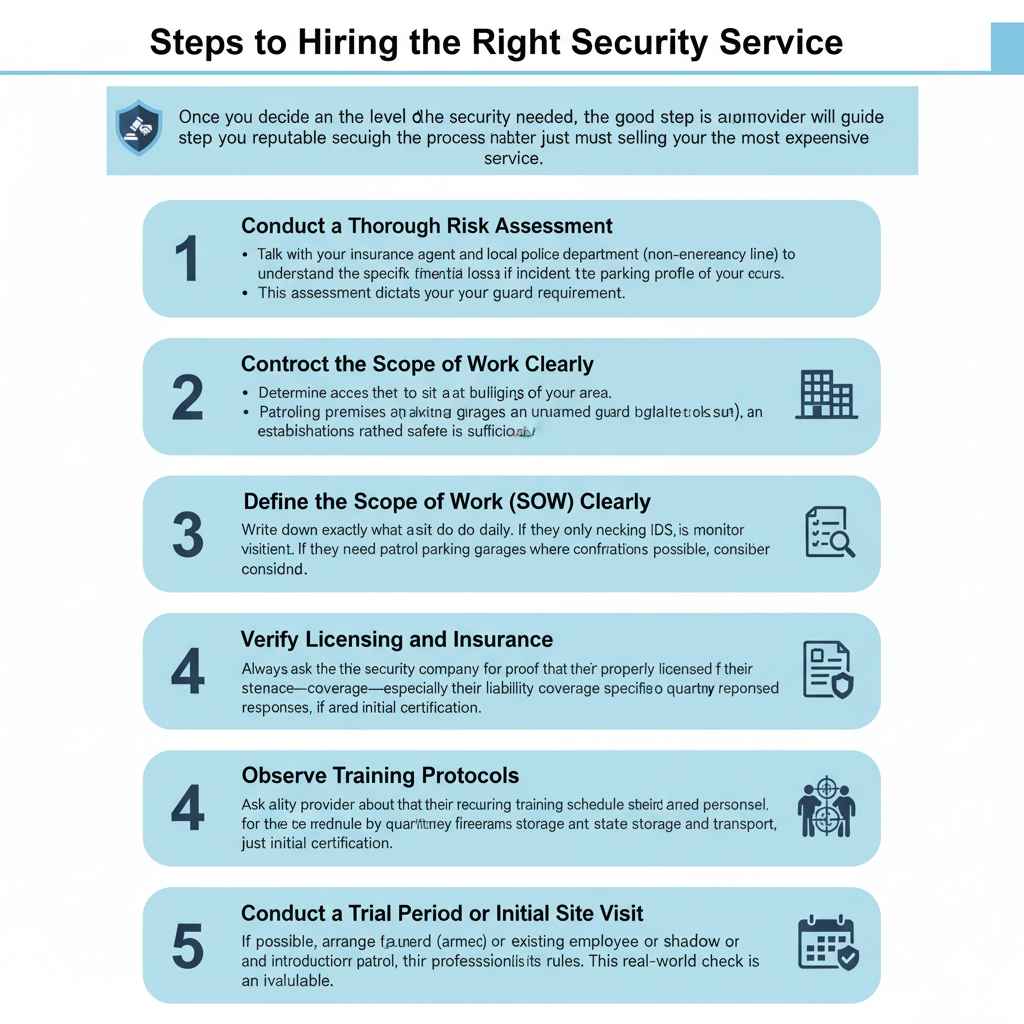
Steps to Hiring the Right Security Service
Once you decide on the level of armament needed, the next step is choosing a reputable security provider. A good provider will guide you through this process rather than just selling you the most expensive service.
Step 1: Conduct a Thorough Risk Assessment
Talk with your insurance agent and local police department (non-emergency line) to understand the specific crime profile of your area. Determine the maximum potential loss if an incident occurs. This assessment dictates your guard requirement.
Step 2: Define the Scope of Work (SOW) Clearly
Write down exactly what the guard needs to do daily. If they only need to sit at a desk and monitor cameras, an unarmed guard is sufficient. If they need to patrol parking garages where confrontations are possible, consider armed.
Step 3: Verify Licensing and Insurance
Always ask the security company for proof that their officers are properly licensed by the state. Crucially, verify their insurance coverage—especially the liability coverage specific to armed responses if you choose that route. Security companies must adhere to strict operational standards regarding firearm storage and transport, as mandated by state regulatory boards.
Step 4: Observe Training Protocols
Ask the provider about their recurring training schedule for their armed personnel. A quality company will show you evidence of quarterly or semi-annual firearms requalification, not just the initial certification.
Step 5: Conduct a Trial Period or Initial Site Visit
If possible, arrange for the guard (armed or unarmed) to shadow an existing employee or conduct an introductory patrol. Observe their professionalism, adherence to your site rules, and communication style. This real-world check is invaluable.
FAQ: Beginner Questions About Security Guards
Q1: Can an unarmed guard physically stop a thief?
A: Yes, an unarmed guard can use reasonable physical force to detain someone who has committed a crime (citizen’s arrest), but they must be careful not to use excessive force. Their primary tool is reporting and deterrence, not physical engagement.
Q2: Is hiring armed guards always safer?
A: Not necessarily. While armed guards offer superior defense against high-level threats, introducing a weapon can sometimes escalate minor incidents. The safest choice depends entirely on matching the guard’s capabilities to the specific threat assessment of your location.
Q3: How much more expensive is an armed guard compared to an unarmed guard?
A: Armed guards are significantly more expensive, often costing 30% to 75% more per hour than unarmed guards due to extensive training, higher liability insurance costs, and specialized licensing requirements.
Q4: Do unarmed guards need to carry ID or wear a uniform?
A: Yes. Reputable security companies require all guards to wear a professional uniform that clearly identifies them as security personnel. They must also carry their state-issued security license identification at all times while on duty.
Q5: Can a security guard from a different state work at my location?
A: Generally, no, not without specific endorsement. Security licensing is regulated at the state level. If you hire a security company that operates across state lines, they must ensure their guards meet the specific licensing and training requirements for the state where your property is located.
Q6: What happens if an armed guard uses their weapon unnecessarily?
A: If an armed guard uses their weapon without legal justification (i.e., not in defense against imminent threat of death or serious bodily harm), they face criminal charges, and the security company and the client can face massive civil liability lawsuits.
Conclusion
Choosing between armed and unarmed security guards ultimately comes down to risk level, environment, and security goals. Unarmed guards are ideal for locations where the main focus is monitoring, access control, and visible deterrence. They provide a professional presence that helps prevent minor incidents and maintain order in places like offices, residential communities, and retail stores.
On the other hand, armed guards are best suited for high-risk environments where there is a real possibility of serious crime or threats. Their advanced training and ability to respond to dangerous situations make them essential for protecting high-value assets, sensitive facilities, or individuals facing credible risks.
Before making a decision, conduct a proper risk assessment, review insurance requirements, and work with a licensed, reputable security provider. The right choice is the one that balances safety, legal responsibility, and budget, ensuring your people and property remain protected without creating unnecessary risk.
In the end, effective security isn’t just about weapons—it’s about trained professionals, smart planning, and the right level of protection for your situation.