Figuring out Arrow Spine Differences: Simple Guide can feel tricky, especially when you’re just starting archery. It involves picking the right arrow for your bow. Many beginners find it tough to match arrows perfectly to their setup, leading to arrows that fly off-target. But don’t worry! This guide will help you sort through arrow spine and make the right choices for better accuracy. We’ll break down everything step by step, so you can pick the perfect arrows. Let’s get started!
What is Arrow Spine and Why Does It Matter?
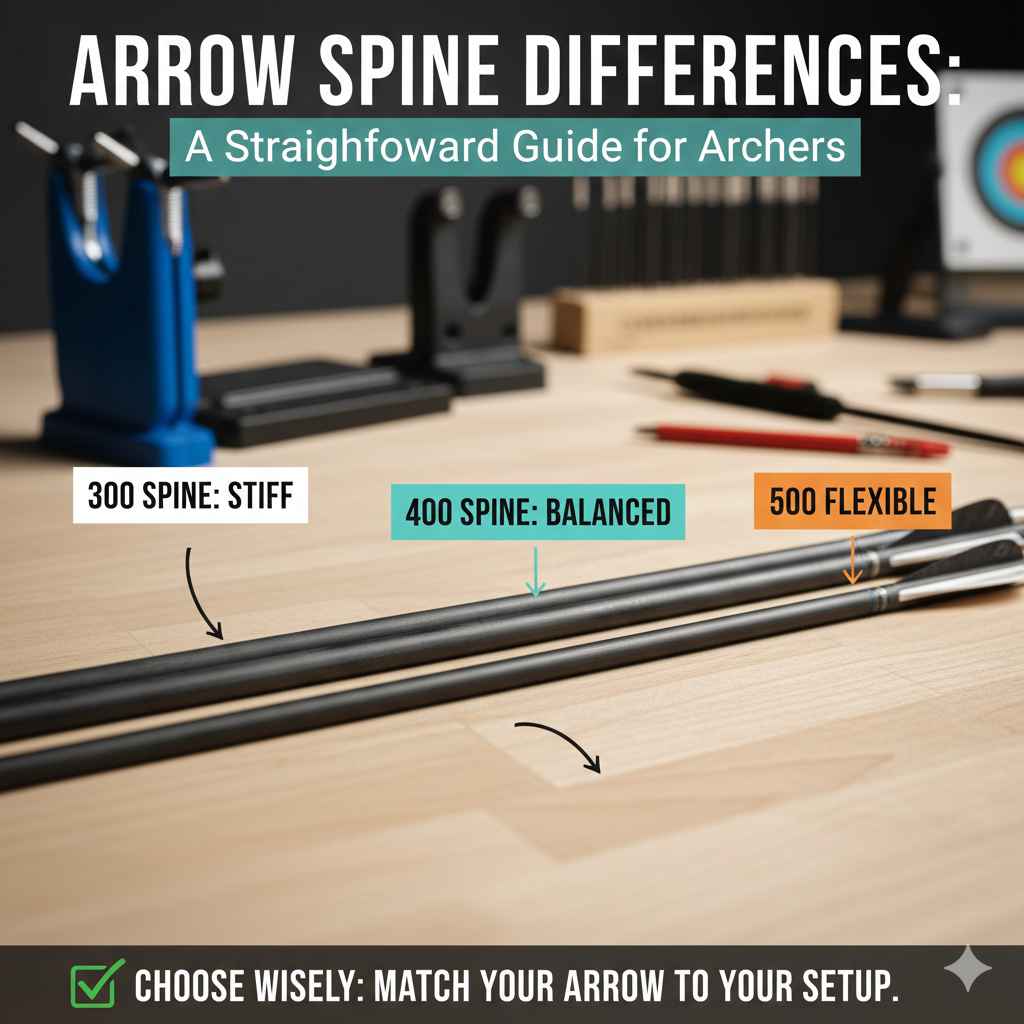
Arrow spine refers to the stiffness or flex of an arrow. It’s a super important factor for how your arrow flies. When you shoot an arrow, it bends a little bit as it leaves the bow. The amount it bends depends on how stiff the arrow is. Choosing the correct spine ensures the arrow flexes just the right amount, allowing it to fly straight and hit your target accurately. The right spine helps the arrow recover from that initial flex and fly true.
Breaking Down Arrow Spine Terminology
Arrow spine is measured in different ways, and knowing these terms helps you choose the right arrow. Here’s a quick overview of the key terminology:
- Spine Deflection: This is the most common measurement. It shows how much an arrow bends when a weight is applied to the middle. The measurement usually represents the amount the arrow bends in inches when a standard weight (often 1.94 pounds) is hung from the center of the arrow while it’s supported on the ends. A lower number means a stiffer spine, and a higher number means a more flexible spine. For example, a spine of .500 means the arrow bends .500 inches under the weight.
Deflection is usually measured in inches.
- Dynamic Spine: This describes how an arrow behaves while it is in motion when shot from a bow. This takes into account the different forces acting on the arrow during the shot cycle. Different archers will require varying dynamic spine measurements based on their individual setup.
This measurement helps archers find arrows for their individual preferences.
- Static Spine: This is a simple measurement of an arrow’s flexibility. It’s what you often see listed on arrow shafts. Static spine is an arrow’s ability to bend under a static load, usually specified in inches of deflection, as mentioned earlier. It’s a good starting point but doesn’t account for all the factors in play when shooting.
Static spine is useful for the initial arrow selection.
- Weight of the Arrow: Heavier arrows often have better penetration, but they also require more power from the bow. Lighter arrows fly faster, but are more susceptible to wind drift. Your choice of arrow weight will depend on the type of archery you are doing.
Experimenting with arrow weight can help you find the best balance of speed and power.
Understanding these terms is like learning a new language. Once you get the hang of it, you will have a better chance of matching the arrows to your bow.
Choosing the Right Arrow Spine for Your Bow
Selecting the correct spine involves several factors, including your bow’s draw weight and draw length. A mismatch can lead to inaccurate shots, because the arrow won’t fly straight. If the spine is too stiff (too little flex), the arrow will fly to the left (for right-handed archers). If the spine is too weak (too much flex), the arrow will fly to the right. Correct spine selection can drastically improve accuracy. Let’s explore the key elements.
The Role of Draw Weight and Draw Length
Draw weight and draw length are two key measurements when choosing your arrow spine. The draw weight is how much force is needed to pull the bowstring back. The draw length is how far back you pull the bowstring. These two measurements greatly affect how much the arrow flexes. A higher draw weight requires a stiffer spine, while a longer draw length also often requires a stiffer spine. Using a spine chart can assist in determining the best arrow to get. It’s always best to be precise when measuring your draw length to avoid any inconsistencies.
- Draw Weight: A heavier draw weight adds more force to the arrow, causing it to bend more when it leaves the bow. Therefore, you generally need a stiffer arrow spine for a heavier draw weight. A good rule of thumb is to increase your spine stiffness as your draw weight increases.
A heavier draw weight requires a stiffer spine.
- Draw Length: A longer draw length also means more energy is transferred to the arrow, which increases the required spine stiffness. Archers with longer draw lengths will often need stiffer spined arrows. Ensuring that your draw length is measured accurately is important.
Use proper measurement techniques to determine the draw length.
- Bow Type: Different bows, like compound and recurve bows, have different ways of transferring energy to the arrow. Compound bows generally have more efficiency and transfer more force. This can impact the spine. Recurve bows generally are a little more forgiving.
The type of bow impacts your arrow spine choice.
Understanding these variables helps you make the most informed choices, ensuring your arrows fly true.
Using Spine Charts and Testing Arrows
Arrow spine charts are valuable tools. They can assist you in finding the right arrow spine. These charts consider factors like draw weight, draw length, and the type of bow. It’s always important to use charts from the arrow manufacturer because they will provide the most accurate information. After you select the spine from the chart, testing arrows is just as important. Test your arrows on a target to verify they are flying straight. Minor adjustments may be needed to achieve perfect flight.
- Consulting Spine Charts: Most arrow manufacturers provide spine charts. These charts are based on extensive testing and data. Input your draw weight and draw length to find the recommended spine. These are excellent starting points for choosing the correct arrows.
Use charts to help narrow down the spine range.
- Paper Tuning: Paper tuning is a simple test that can help you see how your arrow is flying. It involves shooting an arrow through a paper sheet. This allows you to check for any inconsistencies with arrow flight. The tears in the paper will indicate if you need to adjust your arrow spine or bow.
Paper tuning helps indicate needed adjustments.
- Bare Shaft Testing: This method involves shooting arrows without fletching (the vanes). It’s another way to see if your arrow is flying correctly. If the bare shaft impacts the target differently from fletched arrows, then you need to adjust your spine.
Bare shaft testing verifies arrow flight characteristics.
By using charts and testing methods, you can fine-tune your setup for optimal performance.
Advanced Adjustments: Tuning Your Arrows
Often, getting the perfect arrow flight takes more than simply selecting an arrow from a spine chart. The bow setup plays an important role. Advanced archers often fine-tune their setup. This can involve adjusting the weight of the arrow, the point weight, or the bow itself. These small changes can really impact your grouping.
Adjusting Point Weight and Arrow Length
The weight of your arrow points and the arrow length can adjust arrow flight. A heavier point will make the arrow flex more, acting like a weaker spine. Conversely, a lighter point will stiffen the arrow’s behavior. Arrow length also plays a role: a longer arrow flexes more than a shorter one with the same spine. Point weight is especially useful for fine-tuning your arrow flight after you’ve already selected the correct spine. By understanding these adjustments, you can further improve accuracy.
- Point Weight: Changing the weight of your arrow points is a common way to fine-tune arrow flight. Adding weight to the front of the arrow (the point) makes the arrow flex more. Removing weight does the opposite, making it fly stiffer. Adjusting point weight is useful for correcting slight flight problems.
Change point weights to optimize arrow flight.
- Arrow Length: Cutting your arrows shorter increases stiffness. If your arrow is a bit too weak, this can help. Conversely, lengthening the arrow, if possible, can help if the arrow is too stiff. Always check the arrow manufacturer’s recommendations for cutting.
Adjust arrow length for precise tuning.
- Nock Position: The nock (the part that clips onto the bowstring) also plays a part. Moving the nock up or down on the string can affect the arrow flight. This is called “nock travel.” Experimenting with the nock point position can also assist with tuning.
Use nock adjustments for fine-tuning.
These adjustments allow you to dial in your setup, helping you achieve pinpoint accuracy.
Impact of Other Bow Components
Besides the arrow itself, many other bow components impact arrow flight. The type of rest, the bowstring, and even the type of stabilizer you use can affect how the arrow leaves the bow. Every aspect of the bow setup works together. Archers that understand how each part functions often perform better. It is crucial to have a well-maintained bow and know how each part affects the process.
- Rest Type: The arrow rest supports the arrow as it leaves the bow. Different rests have different effects on arrow flight. For instance, a drop-away rest usually offers better clearance than a fixed rest. The rest should allow the arrow to launch cleanly without interference.
Pick the right rest for arrow flight.
- Bowstring Quality: A high-quality bowstring is critical for consistent arrow flight. A stretching or inconsistent bowstring can negatively affect accuracy. It is important to inspect andMaintain a good bowstring.
- Stabilizers: Stabilizers can help with bow balance and reduce vibration, which impacts arrow flight. They can affect how the bow reacts during the shot cycle. Experimenting with different stabilizer setups can help an archer find an ideal balance and improve accuracy.
- Stabilizers contribute to a balanced bow.
Keep these components in mind, and you will have better control.
Real-World Examples and Scenarios
Applying the information to real-world scenarios helps in gaining better understanding. Let’s explore a few situations, showing the impact of spine choice.
- Scenario 1: A beginner archer, with a 50-pound draw weight and a 28-inch draw length, initially selects arrows based on a spine chart. The chart recommends a .400 spine. However, after shooting, the arrows consistently hit the target to the left. After paper tuning, the archer sees a tear indicating the arrow is too stiff. The archer reduces the point weight or uses an arrow with a slightly weaker spine to improve arrow flight and grouping.This illustrates the use of tuning to make adjustments.
- Scenario 2: An experienced archer switches from a 60-pound to a 70-pound draw weight. They realize that their arrows are now impacting the target to the right. The arrows are flying with a weak spine. This archer needs to switch to a stiffer spine or use shorter arrows, which will help correct the issue.Changing a key component demands changes to other components.
- Scenario 3: A hunter is preparing for an elk hunt. The hunter is using a compound bow and is very concerned about accuracy, especially at longer distances. The hunter spends some time carefully tuning their bow. The hunter selects the right arrow spine and uses a variety of tuning techniques. The hunter is able to consistently hit a target at 60 yards, providing greater confidence on the hunt.Proper tuning improves performance on the range.
These examples highlight the importance of understanding the concepts of arrow spine differences. By practicing these methods, you can have greater success on the range and in the field.
| Feature | Too Stiff (Weak Spine) | Too Weak (Stiff Spine) |
|---|---|---|
| Impact on Target | Arrows impact to the left (for right-handed archers) | Arrows impact to the right (for right-handed archers) |
| Paper Tuning Tear | A tear to the right | A tear to the left |
| Recommended Action | Increase point weight or use a weaker spine | Decrease point weight or use a stiffer spine |
The table provides a simple way to visualize the impact of spine on arrow flight.
Frequently Asked Questions
Question: Why is arrow spine so critical?
Answer: Arrow spine affects how well an arrow flies. If the spine isn’t right, the arrow won’t hit its target accurately. The right spine ensures the arrow flexes just the right amount, allowing it to recover from that initial flex and fly true.
Question: How do I know what spine I need?
Answer: Use an arrow spine chart provided by the arrow manufacturer. These charts take into account your draw weight, draw length, and bow type. These charts are useful for starting your search for the right arrow.
Question: What’s the difference between static and dynamic spine?
Answer: Static spine is a measurement of the arrow’s stiffness when it is not in motion. Dynamic spine describes how the arrow flexes while flying. Dynamic spine is affected by the bow’s characteristics and shooting style.
Question: Can I adjust my arrow spine?
Answer: Yes, you can make adjustments to the arrow’s behavior. Change the point weight, arrow length, or even the nock position. These modifications can help fine-tune arrow flight and increase accuracy. The best thing is to test and experiment to find what works best.
Question: Where can I get help choosing the right spine?
Answer: Go to your local archery shop. The staff can help you measure your draw weight and draw length. They can provide advice and recommendations based on your needs. They also will be able to help you test your setup.
Final Thoughts
Grasping Arrow Spine Differences: Simple Guide might seem like a lot at first, but it is not difficult to learn. We have looked at the fundamentals, including what it is, why it is important, and how to select the correct arrow. Remember, the goal is always consistent arrow flight, achieved by matching the arrow spine to your bow. You now have the knowledge of choosing arrows and adjusting your setup. Take the steps to pick the correct arrows for your specific needs, and then put them to the test. With some practice, you will be hitting your target accurately. Keep practicing, and you’ll find the right arrows for you!