
So, you’re getting into archery, and you’ve probably heard about Broadhead vs Field Point for Target Practice. It’s a common question for beginners, because the differences can seem tricky. Don’t worry, it’s not as hard as it looks! This guide will break things down simply, step by step, so you’ll know exactly which arrowheads to use. First, we’ll look at the basics to help you get started.
Deciphering Arrowhead Types and Their Uses
Choosing the correct arrowhead is essential for archery. There are two primary types: field points and broadheads. Each has different features that make them suitable for various shooting scenarios. Field points are perfect for target practice and are commonly used by beginners. Broadheads, with their sharp blades, are typically employed for hunting. Selecting the proper arrowhead contributes to accuracy, safety, and the intended outcome of your shot. Choosing the right arrowhead type ensures the safety of others and the archer.
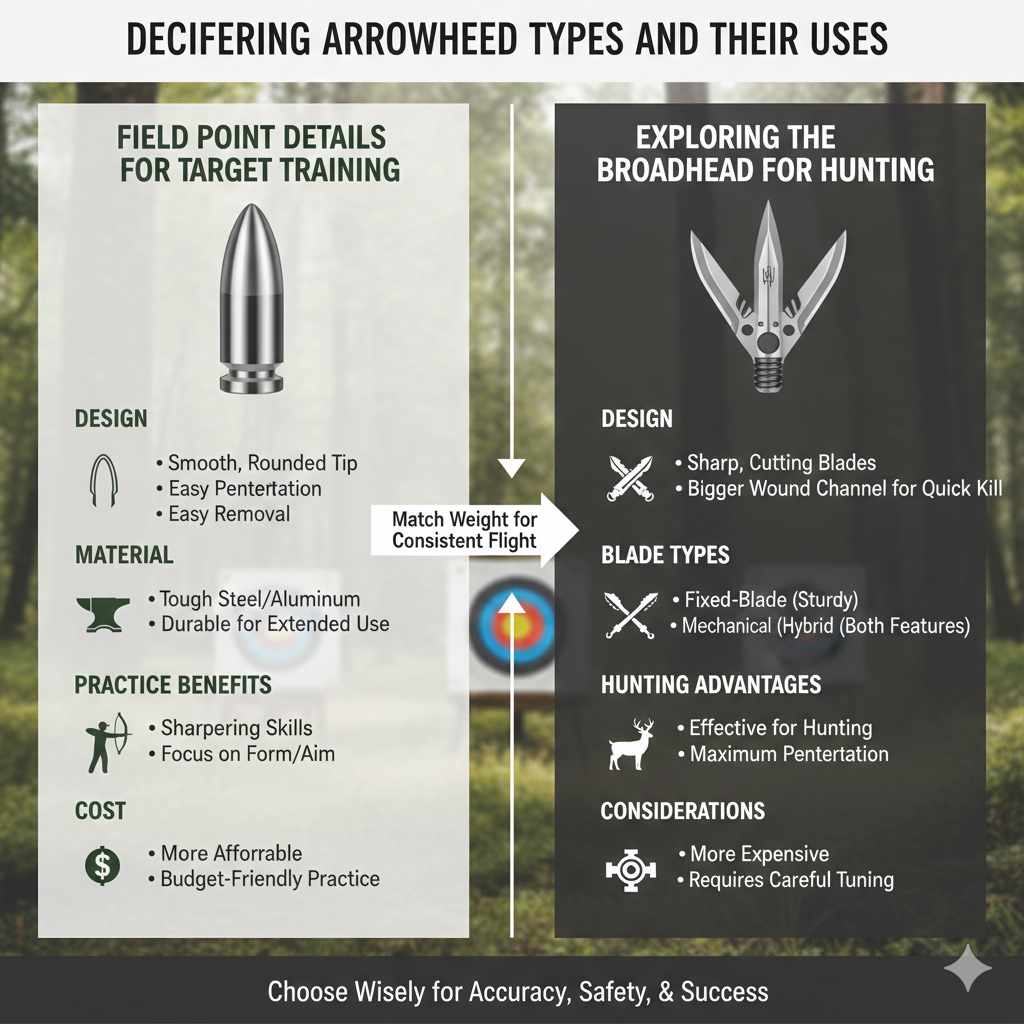
Field Point Details for Target Training
Field points are the go-to choice for target practice, which you’ll notice at the archery range. Their design is simple, with a bullet-shaped tip and a similar weight to the broadheads used for hunting. This similarity is super helpful because it allows archers to practice with arrows that fly much like their hunting arrows. This helps with the development of consistent shooting form and accuracy. Field points are made of durable materials like steel or aluminum, and they are inexpensive and easy to find.
- Design: Field points have a smooth, rounded tip. This shape is made to penetrate targets easily without causing excessive damage. They also allow for easier removal from the target.
- Material: Usually, field points are made from tough metals like steel or aluminum. This durability makes them great for extended use during practice sessions, resisting the wear and tear from repeated impacts.
- Practice Benefits: Because field points are designed for practice, they’re perfect for sharpening your shooting skills. They make it easier to focus on your stance, aiming, and releasing techniques.
- Cost: Field points are generally more affordable than broadheads. This makes them a great option if you are on a budget, and helps you keep practicing without spending too much money.
Exploring the Broadhead for Hunting
Broadheads are designed differently from field points. They feature sharp blades that are made for cutting. This allows for a quick and humane harvest during a hunt. They are crafted for maximum penetration and tissue damage. Broadheads come in various styles: fixed-blade, mechanical (expandable), and hybrid. The choice depends on personal preference, the type of game being hunted, and the archer’s setup. Proper broadhead selection is important for a successful and ethical hunting experience.
- Design: Broadheads have sharp, cutting blades. This design creates a bigger wound channel when it hits the target. This ensures a quick and effective kill when hunting.
- Blade Types: You can find both fixed-blade and mechanical (expandable) broadheads. Fixed-blade broadheads have blades that don’t move. Mechanical broadheads open upon impact. Hybrid broadheads are a mix of both types.
- Hunting Advantages: The cutting blades of broadheads make them very effective for hunting. They create significant damage to ensure the quick take-down of the animal. This makes broadheads an essential tool for hunters.
- Considerations: Broadheads are more expensive than field points. They often require more careful tuning of your bow to ensure the arrows fly accurately. Practice is also important to become comfortable with the different impact point.
Comparing Broadhead vs Field Point for Target Practice: Key Differences
The differences between broadheads and field points go beyond just their designs and uses. There are several other areas where the two types of arrowheads differ, including their impact on arrows’ flight characteristics, target impact, and overall safety concerns. Understanding these differences helps archers decide which arrowhead is best suited for their particular needs. It also highlights the importance of matching the arrowhead to the intended activity.
Flight Characteristics and Accuracy
The shape and weight of an arrowhead directly influence how the arrow flies. Field points, with their streamlined design, typically offer more predictable flight characteristics, especially at longer ranges. This is because they cause less drag and are less affected by wind. Broadheads, due to their blades, might experience more drag and wind interference. This can influence accuracy, so it is important to test your arrows to ensure proper flight characteristics. Archers often need to tune their bows differently when switching between field points and broadheads.
- Drag: Field points have a smooth shape, which minimizes drag. This leads to a straighter, more consistent trajectory, especially at longer distances. Broadheads, with their blades, encounter more resistance, which can make them more susceptible to wind.
- Wind Effects: Wind can greatly impact arrow flight. Field points are generally less affected, making them more accurate in windy conditions. Broadheads are influenced more, which can result in more corrections needed when aiming.
- Tuning: Tuning your bow means making sure the arrow flies straight and hits the target. You may need to adjust your bow setup or arrow spine to ensure perfect flight when switching between field points and broadheads.
- Practice: Regular practice with both types of arrowheads is good. This builds proficiency in anticipating and compensating for differences in arrow flight. This improves overall archery skills.
Target Impact and Damage
The way each arrowhead interacts with the target is different. Field points penetrate cleanly, minimizing damage to the target material and making the arrows easy to remove. Broadheads, designed for cutting, create larger entry wounds and can cause more damage, both to the target and to the arrow itself. This difference affects the lifespan of the arrow and the target, as well as the ease of retrieval. It is important to match the arrowhead type to the target material to reduce wear and tear.
- Penetration: Field points provide smooth penetration. This design does not cause much damage to the target. This results in easier arrow removal and extends the lifespan of the target.
- Target Damage: Broadheads create bigger holes in the target. This leads to quicker target degradation, especially with foam targets. Archers may need to replace targets more frequently when using broadheads.
- Arrow Retrieval: Extracting arrows is usually simple with field points. Broadheads are more difficult, and may require more effort and care to avoid damaging the arrow or target.
- Arrow Durability: Repeated impacts with broadheads can sometimes damage or dull the blades, requiring more frequent blade replacement or arrow inspections.
Safety Considerations and Best Practices
Safety should always come first in archery, and the choice of arrowhead influences the safety of archers and others. Field points are generally safer for target practice because they are less likely to cause injuries if they hit something other than the target. Broadheads require much more caution. Their sharp blades can cause serious harm. Proper handling, storage, and awareness of the surroundings are key for safe archery practices. Following all safety guidelines for using arrows is a must.
- Handling: Always handle broadheads with care. Store them safely when not in use. This protects you and others from accidental cuts. Keep them covered when transporting them.
- Target Selection: Using the correct target material is very important. Targets for broadheads must be designed to stop and contain the blades effectively. This reduces the risk of arrow pass-throughs.
- Range Safety: Follow all archery range rules and guidelines. Always know what is beyond your target. Make sure the area is clear of people and objects.
- Practice Safety: Practice archery in a safe, controlled environment. Avoid shooting arrows at hard surfaces or animals. Always inspect your equipment to make sure everything is in good condition.
Choosing the Right Arrowhead for the Task
Selecting between broadheads and field points involves knowing your needs and what you will be shooting at. If your focus is target practice, field points are the best option. They provide consistent flight, minimize target damage, and are cost-effective. For hunting, the choice is clear; broadheads are required for their design and effectiveness. Always consider your target, the conditions, and your personal skill level when making a decision. Having the right tools for the job is essential.
Matching Arrowheads to Your Activities
The choice between field points and broadheads depends on your main archery activity. Target practice emphasizes accuracy, form, and repetition. Hunting prioritizes the ability to harvest an animal ethically and effectively. Each type of arrowhead is made for a different purpose. Using the correct arrowhead type guarantees a safe and productive archery experience.
- Target Practice: For target practice, use field points. They help develop skills in a safe way. The smooth design reduces target damage, and the arrow is easy to retrieve.
- 3D Archery: 3D archery is a combination of target practice and hunting simulation. Field points are acceptable, but many archers choose broadheads. This depends on the specific rules of the 3D course and target material.
- Hunting: Broadheads are essential for hunting. Their design is made to cut and kill quickly. This ensures a humane take-down.
- Practice with Hunting Setup: To prepare for hunting, use field points that have the same weight and size as your hunting broadheads. This helps you get used to your bow setup.
Factors for Deciding
When choosing between broadheads and field points, think about the impact of several factors. These factors include your skill level, the type of bow you are using, the terrain and weather conditions, and personal comfort. These factors influence how accurately and effectively you can use each type of arrowhead. Properly considering these aspects will help ensure that you make the proper choice for your next archery session.
- Skill Level: Beginners will benefit from field points because they are easier to handle and offer a more forgiving flight. Experienced archers can handle the tuning and challenges that broadheads can bring.
- Bow Type: Different bows may work better with specific arrowheads. Compound bows often benefit from the precision offered by field points. Recurve bows can be effectively used with both field points and broadheads, depending on the archer’s skills.
- Shooting Conditions: Consider the conditions of the terrain and weather. If it is windy, field points can provide better accuracy. If hunting, consider the environment where you will be hunting and the range of shots.
- Personal Preference: Personal preference plays a big part in selecting the correct arrowhead. Try both to see which feels better and performs the best for your style and the activity.
Examples and Scenarios
To better understand when to use field points and broadheads, let’s explore some scenarios. These scenarios show how the right arrowhead ensures the best results. Each case illustrates the importance of selecting the proper tool for the task.
- Scenario 1: You are starting archery for the first time. Your goal is to improve your shooting form and accuracy. Your practice area has a standard target bale. Use field points. They are safe, easy to handle, and focus on your form.
- Scenario 2: You are preparing for a deer hunt. Your bow is already tuned. You must have maximum penetration and cutting power. You will need to use broadheads. Make sure they are the correct weight and are properly tuned to your arrow shafts for accurate flight.
- Scenario 3: You’re participating in a 3D archery event with foam animal targets. The rules allow for field points or broadheads. Because you are new to the activity, field points might be better. This will protect your arrows and targets.
- Scenario 4: You want to practice with your hunting setup to ensure consistent performance. Use broadheads. Ensure proper bow tuning. Your arrow shafts must be compatible with your setup.
Frequently Asked Questions
Question: Can I use broadheads for target practice?
Answer: It’s generally not recommended to use broadheads for target practice unless you are specifically training for a hunting situation. They can damage targets quickly and may be harder to retrieve.
Question: Are field points and broadheads the same weight?
Answer: Field points and broadheads often come in various weights. Hunters will use field points with the same weight as their broadheads. This lets them ensure their arrows will fly the same way.
Question: Do broadheads need to be sharpened?
Answer: Yes, broadheads should always be sharp. Dull broadheads are less effective and can lead to a less humane kill. Inspect and sharpen your broadheads before each hunting trip.
Question: Can I reuse broadheads after shooting them at a target?
Answer: It is not recommended to reuse broadheads that have been shot into a target. Shooting into a target can damage or dull the blades.
Question: Where can I buy field points and broadheads?
Answer: You can find field points and broadheads at most sporting goods stores, archery shops, and online retailers.
Final Thoughts
Choosing between Broadhead vs Field Point for Target Practice really comes down to what you’re doing. Field points are perfect when you’re focusing on practice. They fly straight, are easier on your targets, and let you hone your archery skills. Broadheads are the go-to choice when hunting, designed for those clean, quick harvests. Remember to consider your experience level and goals to select the best arrowhead. Now you’re ready to pick the correct arrowhead and get out there and start practicing. Have fun and be safe!