Can You See Rainbows at Night? Yes: Moonbows Explained
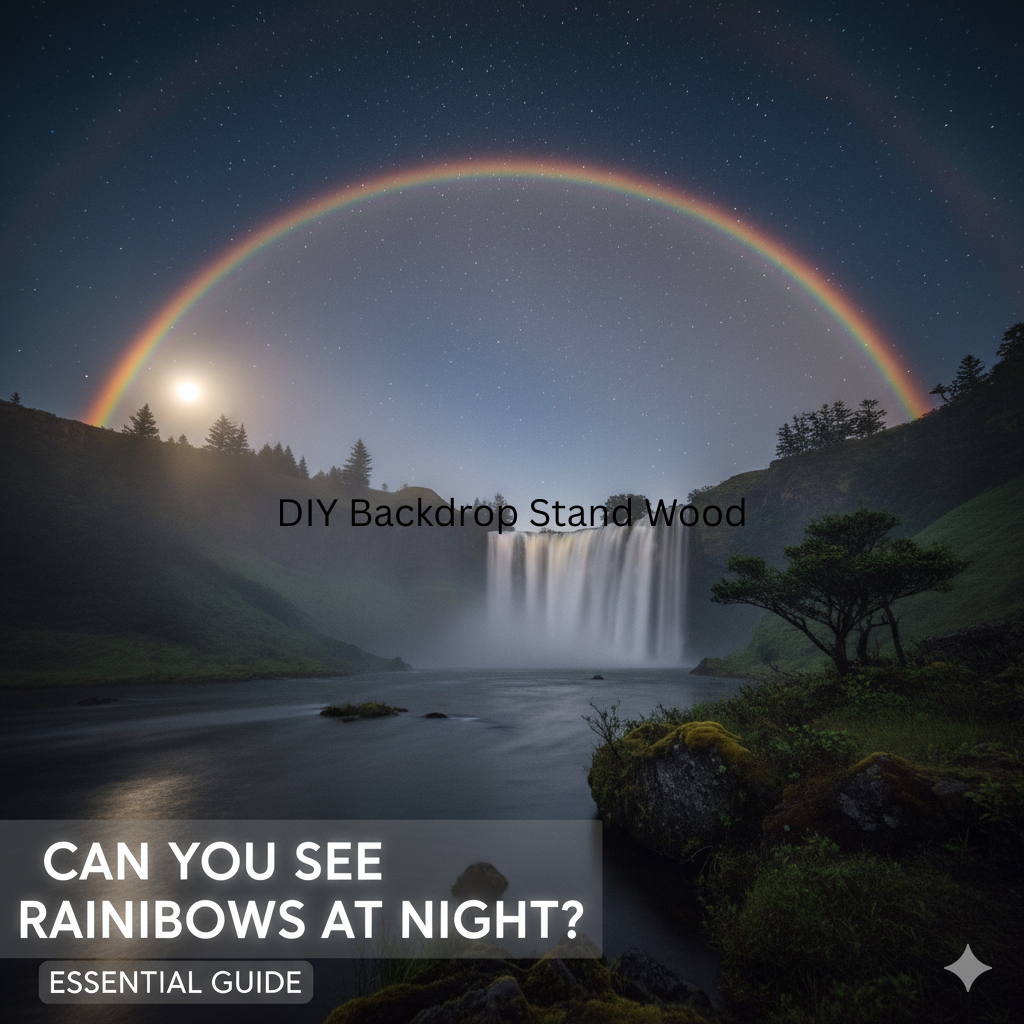
Rainbows need sunlight, so a true rainbow cannot appear after dark, but a moonbow, a faint lunar rainbow visible near a full moon, is the real exception. Moonbows form best at waterfalls like Niagara Falls, Yosemite, and Cumberland Falls, where mist keeps water droplets in the air all night. This guide covers how moonbows form, why they look colorless to the naked eye, and the exact conditions for spotting one. For more on this, see our guide on Do Electric Fields Point Make Circles Around Positive Charges.

Foxiny
Foxiny Sexy Chain Sheer Mesh Ruched Bodycon…
- Number of Pieces:Dress Thong 2 Piece
- Fabric:Slight Stretch
- Sheer:Yes
As an Amazon Associate I earn from qualifying purchases.
What is a Rainbow? A Quick Refresher
Before we dive into nighttime rainbows, let’s quickly recap how rainbows form in the first place. A rainbow is an optical illusion and a meteorological phenomenon caused by reflection, refraction, and dispersion of light in water droplets, resulting in a spectrum of light appearing in the sky. It takes the form of a multicolored luminous arc, and it’s just one of several different kinds of rainbows that show up under specific conditions.
Here’s the breakdown:
- Light Source: You need a bright light source. For daytime rainbows, this is the sun.
- Water Droplets: There must be water droplets in the air. These can be from rain, mist, fog, or even spray from a waterfall.
- Angle: The observer must be between the light source and the water droplets, with the light source behind them.
When sunlight enters a raindrop, it bends (refracts), bounces off the back of the drop (reflects), and then bends again as it exits. Different colors of light bend at slightly different angles, separating the white sunlight into its component colors: red, orange, yellow, green, blue, indigo, and violet. This is why we see the beautiful arc of colors.

So, Can You See Rainbows At Night?
For the most part, no, you cannot see traditional, bright, colorful rainbows at night. The reason is simple: the sun isn’t shining. Rainbows are a direct result of sunlight interacting with water droplets. When the sun sets, its powerful, direct light is gone, and without it, the atmospheric conditions needed to create a vibrant rainbow disappear.
However, nature loves to surprise us! There is a way to interpret the question “Can you see rainbows at night?” with a qualified “yes.” This is where the magical phenomenon of a moonbow comes into play.
Introducing the Moonbow: Nature’s Nighttime Spectacle
A moonbow, also known as a lunar rainbow, is essentially the same phenomenon as a daytime rainbow, but instead of sunlight, it’s produced by moonlight. It’s formed when light from the Moon is refracted and reflected by water droplets suspended in the atmosphere.
While it sounds similar, there are critical differences:
The Key Differences Between Rainbows and Moonbows
The primary distinction lies in the light source. The Moon is a reflector of sunlight, not a producer of its own light. Therefore, the light it provides is much fainter than direct sunlight. This leads to several observable differences:
- Brightness: Moonbows are significantly dimmer than rainbows.
- Color: Because the light is so faint, the colors in a moonbow are often not visible to the human eye. We tend to see them as pale, grayish-white arcs. Our eyes’ color receptors (cones) don’t work as well in low light; our more sensitive rod cells perceive the light but struggle with color differentiation. It’s a similar low-light limit to the one behind the question of whether dogs can see rainbows at all. However, long-exposure photography can reveal subtle colors.
- Size: Moonbows can sometimes appear larger than daytime rainbows because the light source (the Moon) is smaller and further away, but this isn’t always the case.
Seeing a moonbow is a rare and special event, requiring a specific alignment of celestial bodies and atmospheric conditions.
What You Need to See a Moonbow: Essential Conditions
Witnessing a moonbow is like hitting a celestial jackpot. You need a perfect storm of elements to align. Here’s what you’ll need:
- A Bright Moon: The moon needs to be bright enough to generate a rainbow. This means a full moon or a nearly full moon (within a few days of full) is ideal. The brighter the moon, the more likely you are to see a moonbow.
- Water Droplets: Just like with a daytime rainbow, you need water droplets in the air. This typically means mist, fog, or spray.
- Dark Skies: This might seem counterintuitive, but you need very dark skies for a moonbow to be visible. Any light pollution will wash out the faint glow of the lunar rainbow. This means away from city lights is crucial.
- The Right Angle: The Moon must be low in the sky (less than 42 degrees above the horizon) and behind you, with the mist or spray in front of you.
The combination of these factors makes moonbows relatively rare. For example, persistent mist or spray at night with a bright moon is not an everyday occurrence.
Where Can You See Moonbows? Prime Locations
Certain locations around the world are famous for their moonbows due to their consistent atmospheric conditions. If you’re hoping to catch this elusive sight, consider visiting one of these places:
- Waterfalls: The spray from large waterfalls is a consistent source of water droplets. Yosemite National Park in the USA, Victoria Falls on the border of Zambia and Zimbabwe, and Cherrapunji in India are renowned for their moonbows in specific conditions. The constant mist created by these powerful cascades is perfect for refracting moonlight.
- Coastal Areas: Coastal regions with frequent sea spray, especially on clear nights with a bright moon, can sometimes produce moonbows.
- Misty Valleys: Valleys prone to fog or mist, particularly at certain times of the year, can also be a good spot.
It’s important to remember that even in these prime locations, seeing a moonbow is not guaranteed. It requires patience and luck!
How to Spot a Moonbow: A Step-by-Step Guide
Spotting a moonbow requires a bit of planning and understanding. Here’s how you can increase your chances:
Step 1: Check the Moon Phase
You’ll need a moon that’s at least 50% illuminated, with a full moon being the best bet. Check a lunar calendar or weather app for the moon phase on your chosen night.
Step 2: Look for Moonlight
Ensure the Moon is visible and not obscured by clouds. Even if it’s bright, thick clouds will block its light from reaching the water droplets.
Step 3: Find a Source of Water Droplets
As mentioned, waterfalls are ideal. Other options include:
- Mist from sprinklers.
- Fog or mist banks.
- Rain showers occurring when the moon is out.
For the best chance, head to a location known for mist or spray at night, like the base of a waterfall.
Step 4: Position Yourself Correctly
Stand with your back to the bright Moon, facing the mist or spray. The moonbow will appear in the mist opposite the Moon.
Step 5: Give Your Eyes Time to Adjust
This is crucial. Your eyes need at least 20-30 minutes in complete darkness to adapt and become sensitive enough to perceive the faint light of a moonbow. Avoid looking at bright lights, including your phone screen, during this adjustment period. Consider using a red-light headlamp if you need illumination, as red light affects night vision the least.
You might initially see a faint, whitish arc. If you look carefully and patiently, you might be able to discern subtle hints of color, especially at the edges.
Step 6: Be Patient and Observe
Moonbows are not static displays. They can appear and disappear as mist density or moonlight intensity changes. Don’t give up if you don’t see it immediately. Sometimes, it takes a while for your eyes to pick up on it.
Can You See Rainbows in Fog at Night?
Yes, you can see moonbows in fog at night, provided the fog is dense enough and the Moon is bright and positioned correctly. Fog is essentially a cloud at ground level, composed of tiny water droplets. When the Moon is full or nearly full and positioned behind you, its light can refract and reflect off these fog droplets to create a moonbow. This conditions are the same as for seeing them near waterfalls, just with a different source of water.
Can You See Rainbows in Other Lighting Conditions at Night?
While the moon is the most common light source for nighttime rainbows, other artificial light sources can theoretically create similar optical effects, though they are far less common and often referred to by different names. These are not true rainbows as they don’t involve natural astronomical light, but they share the principle of light interacting with water or other refractive elements.
For instance, a strong, concentrated artificial light source (like powerful stadium lights or a spotlight) shone through mist or spray could produce a faint, colored arc. However, these are rarely observed naturally and would be more akin to a spotlight effect than a natural phenomenon. The term “moonbow” specifically refers to phenomena caused by moonlight.
For accurate science on light and atmospheric optics, the UK Met Office offers further insights into how different atmospheric conditions create optical phenomena.
Comparing Rainbow Conditions
To better understand the requirements, let’s compare the conditions for daytime rainbows and moonbows:
| Feature | Daytime Rainbow | Moonbow (Nighttime Rainbow) |
|---|---|---|
| Light Source | Sun | Moon (reflected sunlight) |
| Brightness of Light | Very bright | Faint |
| Moon Phase Required | N/A (Sun is constant during day) | Full or nearly full moon (essential for brightness) |
| Color Perception | Vivid, distinct colors | Primarily pale white/gray; colors often invisible to the naked eye, revealed by photography |
| Best Viewing Time | Daytime, especially when sun is low and rain is falling opposite the sun. | Night, when moon is high and bright, and mist/rain is present opposite the moon. |
| Location Requirements | Anywhere with sun and rain/mist. | Areas with persistent mist/spray (waterfalls, coasts) and away from light pollution. |
| Observer Position | Sun behind observer, rain in front. | Moon behind observer, mist/spray in front. |
Note that the angle for viewing both is theoretically the same (around 42 degrees from the antisolar point). However, the Moon’s position in the sky at night, combined with the need for darkness and mist, makes observing moonbows a much rarer experience.
What You Can (and Can’t) See with Your Naked Eye
It’s important to manage expectations when searching for a moonbow. Your naked eyes are amazing, but they have limitations, especially in low light:
- What you CAN see: A faint, often ghostly, whitish arc. It might appear as a subtle shimmer in the mist. You’ll likely notice an arc shape, but identifying distinct bands of color will be very difficult.
- What you CAN’T easily see: The vibrant, distinct colors (red, orange, yellow, green, blue, indigo, violet) that characterize daytime rainbows. Your cones, the photoreceptor cells responsible for color vision, require more light to function effectively than your rods, which are responsible for vision in low light.
Photographers, however, can capture much more. By using long exposure times, cameras can gather enough light to reveal the subtle hues present in a moonbow. If you’re serious about seeing the colors, bring your camera! The same faint-color problem is why so many people ask whether all rainbows are double — the second arc is often too dim to notice without looking closely.
Beyond the Moonbow: Other Nighttime Optical Illusions
While moonbows are the closest natural phenomenon to a nighttime rainbow, other optical illusions can occur at night. These are not rainbows but share the principle of light interacting with atmospheric particles:
- Halos: These are rings of light that appear around the sun or moon. They are caused by refraction and reflection of light by ice crystals in high-altitude clouds. They are more common and often brighter than moonbows.
- Light Pillars: These are vertical shafts of light that appear to extend upward or downward from a light source. They are caused by light reflecting off reflective ice crystals suspended in the atmosphere.
- Aurora Borealis/Australis (Northern/Southern Lights): These spectacular displays of light in the sky are caused by charged particles from the sun interacting with gases in Earth’s atmosphere, not by light refraction through water.
These phenomena highlight how our atmosphere can create stunning visual displays in various conditions, not just on a sunny afternoon. On the daytime side of the spectrum, fire rainbows are a real ice-crystal phenomenon, essentially the polar opposite of a moonbow.

Measuring the Arc: The Science Behind the Angle
The angle of a rainbow, whether from the sun or the moon, is consistently about 42 degrees. This specific angle is determined by the physics of light refraction and reflection within water droplets. When light enters a spherical water droplet, it refracts, reflects off the back, and refracts again on the way out. The angle at which the light is scattered back most intensely is about 42 degrees from the incoming light path.
For a rainbow, this means the arc appears centered on the ‘antisolar point’ – the point directly opposite the sun from your perspective. If the sun is on your horizon, the rainbow arc can be a full semicircle. If the sun is higher, only the top portion is visible above the horizon.
The same principle applies to moonbows. The moonbow’s arc is centered on the ‘antisolar point’ relative to the moon. So, if the moon is low in the sky and behind you, the moonbow will appear as an arc in the mist or rain in front of you, at that 42-degree angle. Understanding this angle helps you position yourself correctly to maximize your viewing chances.
For more detailed physics on light and optics, explore resources from institutions like Concordia University’s Vision and Virtual Reality Laboratory, which offers foundational knowledge on optics.
Frequently Asked Questions (FAQ)
Q1: Can I see a rainbow every time it rains at night?
No, absolutely not. Even if it rains at night, you won’t see a traditional rainbow unless there is still sunlight present, which usually only happens briefly during twilight while it’s raining. For a moonbow, you need a bright moon, specific positioning, and water droplets, which is a much rarer combination.
Q2: What’s the best moon phase to see a moonbow?
The best moon phase for viewing a moonbow is a full moon or a nearly full moon (within a few days of it). This phase provides the brightest moonlight, which is essential for creating a visible lunar rainbow.
Q3: If I see a moonbow, will it be in color?
Typically, no. The moonlight is too faint for the color receptors in your eyes to detect colors effectively. Moonbows usually appear white or pale gray to the naked eye. Long-exposure photography is often needed to capture the subtle colors.
Q4: How close do I need to be to a waterfall to see a moonbow?
You don’t need to be right next to the waterfall, but you do need to be in a position where you can see the mist or spray illuminated by the Moon. Being on the ‘spray side’ of the waterfall with the Moon behind you is key. The density of the mist required can vary, so experiment with your position.
Related pick: Check today's price on Amazon