How Do 3D Archery Tournaments Work? Essential Guide
3D archery tournaments involve shooting at life-sized animal targets on a course. Archers walk through woods or fields, engaging targets at varying distances and angles, aiming for scoring rings. It’s a fun way to test skills and enjoy the outdoors. Master the basics and you’ll be ready for your first 3D event! For more on this, see our guide on Do Fletched Arrows Come With Points Easton Tribute.
Have you ever seen pictures or heard about 3D archery tournaments and wondered what all the buzz is about? Maybe you’re a beginner archer, just starting your journey with a bow and arrow, and these events seem a little intimidating. You might be picturing seasoned pros hitting bullseyes from impossible distances. It’s completely normal to feel curious, and perhaps a little unsure, about how these exciting competitions actually work. Don’t worry, because it’s not as complicated as it seems! Think of it as an adventure where your archery skills are put to the test in a natural setting. This guide is here to break down exactly how 3D archery tournaments function, making them feel much more approachable. We’ll walk through everything from the setup to scoring, so you can understand the flow and get excited about participating yourself. Ready to learn the ropes?
Navigating the Field: What Happens at a 3D Archery Tournament?
At its heart, a 3D archery tournament is an outdoor archery competition designed to simulate hunting scenarios. Instead of traditional paper targets, you’ll be shooting at realistic, three-dimensional animal targets made of durable foam. These targets are placed at various distances, often hidden among trees, bushes, or natural terrain features. Archers typically move through a designated course, shooting at a series of these targets. It’s a fantastic way to practice your shooting skills in a challenging and realistic environment, far removed from a controlled indoor range.
The Course Layout: A Natural Challenge
The “course” is where the magic happens. Unlike a static range, a 3D archery course is a journey. Tournament organizers set up a series of “stakes” or shooting stations for each target. Archers move from one target to the next in a group, following a set path.
- Target Placement: Targets are strategically placed to mimic real-world shooting angles and distances. You might find a target uphill, downhill, partially obscured by trees, or at known distances that need estimating.
- Shooting Stakes: For each target, there are usually multiple shooting stakes. These stakes indicate the maximum allowable distance for a particular class or division. Archers choose which stake to shoot from based on their equipment and the rules for their division.
- Walking the Course: You’ll be walking through woods, fields, or other natural landscapes. This means you need to be aware of your surroundings, watch out for uneven terrain, and respect the environment.
- Scoring Zones: Each 3D target has specific scoring rings. Imagine the animal shape having painted zones – a bullseye in the vital organ area, a secondary ring, and an outer ring.
Equipment Classes: Finding Your Place
One of the great things about 3D archery is that it accommodates a wide range of equipment. To keep competitions fair, archers are typically grouped into different classes based on the type of bow and arrow they use. This ensures that everyone is competing against others with similar gear.
Here are some common classes you might encounter:
| Class Name | Typical Bow Type | Arrow Type | Key Features/Restrictions |
|---|---|---|---|
| Open/Unlimited | High-performance compound bow | Any legal arrow | Few restrictions; emphasis on maximum speed and technology. Often includes sights, stabilizers, release aids. |
| Bowhunter | Compound bow | Arrows with fixed-blade broadheads (blunt for paper targets, but simulation often accepted) or field points. | Designed to simulate traditional bowhunting setups. May have restrictions on stabilizer length, sight pins, and other accessories. |
| Recurve Hunter | Recurve bow | Arrows with fixed-blade broadheads (or simulated) or field points. | Focuses on traditional recurve bows. String walking and face walking may be permitted depending on the specific rules. |
| Trad/Longbow | Traditional longbow or recurve bow | Arrows with fixed-blade broadheads (or simulated) or field points. Wood arrows are often traditional for this class. | Strictly traditional equipment. No sights, stabilizers, or release aids. String walking and face walking are usually allowed. |
| Young Adult/Youth | Various bow types suitable for younger archers | Any legal arrow | Age-specific classes with equipment that matches the archer’s skill and strength. |
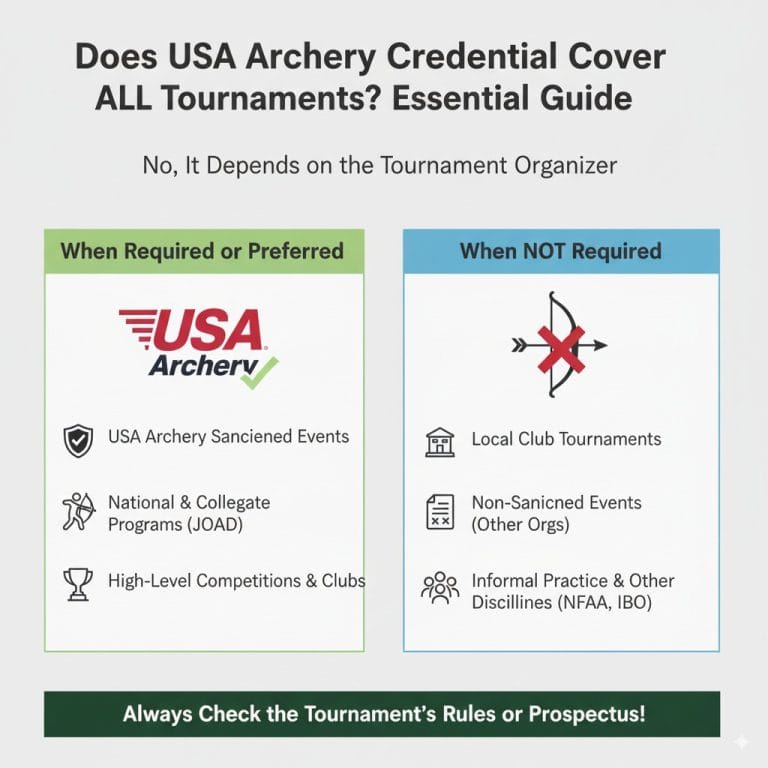
It’s crucial to check the specific rules for the tournament or organizing body you plan to compete with, as class definitions can vary slightly. For example, the Archery Shooters Association (ASA) and the USA Archery have distinct class structures.
The Shoot Day: From Registration to the Last Arrow
A typical 3D archery tournament day follows a structured flow, much like any organized event. Arriving early is always a good idea!
- Registration: Upon arrival, you’ll check in, confirm your registration, and perhaps receive a scorecard and course map. This is also a good time to pay any outstanding fees.
- Equipment Check: Some tournaments may have a brief equipment check to ensure your gear complies with the class rules you’ve entered.
- Rules Briefing: Before the shooting starts, tournament officials usually hold a brief meeting to outline the day’s rules, scoring procedures, and safety guidelines. Pay close attention – this is vital info!
- Forming Groups: Archers are often grouped into fours (or threes) and assigned a starting target. You’ll shoot the course with these individuals.
- Shooting the Course: This is the main event! You’ll proceed through the course, target by target. At each target, your group will wait for the group ahead to finish before proceeding to the shooting station.
- Making Your Shot: Within your group, you’ll decide order. One archer shoots, their score is recorded, and then the next archer takes their turn. It’s important to be patient and respectful of others’ shots.
- Scoring: After each shot, your group will identify the scoring ring the arrow hit. A designated scorekeeper (often one member of the group rotating) will record the score on your scorecard.
- Finishing the Course: Once you’ve shot at all the targets, you’ll hand in your scorecard to tournament officials.
- Awards (Optional): Some tournaments conclude with an awards ceremony for the top finishers in each class.

Understanding the Score: How It Works
Scoring in 3D archery is designed to reward accuracy, particularly in the vital zones of the animal targets. While specific ring placements and point values can vary slightly between organizations (like ASA or IBO), the general principle is consistent.
Most 3D targets have three main scoring rings:
- The Vital Ring (Bullseye): This is the highest scoring area, typically representing the heart and lungs of the animal. Hitting this zone yields the most points.
- The Secondary Ring: This is the next inner ring, offering a good score but fewer points than the vital.
- The Outer Ring: This is the largest scoring ring, offering a basic score for hitting the body of the animal.
- Misses: An arrow that misses the scoring rings or the target entirely scores zero points.
The exact point values are crucial. For instance, a common scoring system might look like this:
| Scoring Zone | Points | Description |
|---|---|---|
| Bullseye (Vital) | 11 points | Innermost ring, representing the primary vital organs. |
| Inside the Circle (Secondary) | 10 points | The next ring surrounding the vital zone. |
| Outside the Circle (Outer) | 8 points | The largest scoring ring on the animal’s body silhouette. |
Important Note: Some tournaments use a unique scoring system involving a smaller “kill” bonus within the vital ring, often called the “inner 10” or “bug C” (for critters), which can award an additional point or an 11-point score. Always refer to the specific tournament rules.
Distance Measurement: A key element in 3D archery is that the distances to the targets are generally not revealed. Archers must estimate these distances themselves. This is where practice and experience come into play! Some classes might allow rangefinders, while others (like traditional classes) strictly prohibit them, relying solely on the archer’s estimation skills. Knowing your bow’s limitations and how far your arrow travels is essential.
Judging Your Score: Who Decides?
The scoring largely relies on the integrity of the archers and their group. When an arrow hits a scoring zone, the group collectively agrees on the points. If there’s a dispute, a designated range official or scorekeeper can be called over to make a final decision. It’s all generally done with good sportsmanship and a spirit of friendly competition.
Safety First: Essential Rules of the Range
Archery, especially in a tournament setting, demands strict adherence to safety protocols. These rules are not suggestions; they are mandatory to protect everyone involved.
- Always Treat Your Bow as if it Were Loaded: Never point an nocked arrow at anything you do not intend to shoot.
- Keep Your Arrow Pointed Downrange: When drawing your bow, ensure the arrow is aimed safely towards the target.
- Never Draw a Bow Without an Arrow: Dry-firing (drawing and releasing a bow without an arrow) can damage your bow and is extremely dangerous.
- Know Your Target and What is Beyond It: Always be aware of your surroundings. Ensure there are no people or animals in the path of your arrow or beyond the target.
- Unload Your Bow When Not Shooting: Once you have shot, un-nock your arrow and safely lower your bow.
- Arrow Retrieval: Only retrieve your arrows after everyone in your group has finished shooting and all bows are safely un-nocked.
- Follow Range Official Commands: Listen to and obey any instructions from tournament officials.
- Stay on Designated Paths: Do not wander off the marked course.
A great resource for archery safety standards is the USA Archery Safety Code. Familiarizing yourself with these rules before attending any event is highly recommended.
Preparing for Your First 3D Tournament
Feeling ready to give it a try? Excellent! Here’s how to prepare:
Practice Makes Perfect
Your regular practice sessions are your best preparation. Focus on:
- Consistency: Can you shoot the same arrows to a similar spot repeatedly?
- Distance Estimation: Practice shooting at targets of varying, unknown distances. Walk the course and try guessing the yardage before measuring.
- Varying Angles: Shoot from uphill and downhill positions if possible.
- Endurance: Shooting multiple arrows at different targets over several hours requires some physical stamina.
Know Your Gear
Make sure your bow is tuned and sighted in for the distances you anticipate shooting. If you’re using a rangefinder, practice using it quickly and accurately. Ensure your arrows are straight and your fletching is in good condition.
Mentally Prepare
Go into the tournament with a positive attitude. Remember, it’s a learning experience. Don’t focus too much on winning; focus on shooting your best, enjoying the outdoors, and learning from others.
What to Bring
Besides your bow and arrows, consider:
- Scorecard and Pencil: Usually provided, but a backup can be handy.
- Rangefinder (if allowed in your class).
- Binoculars: To help spot targets and judge distances.
- Shooting Accessories: Armguard, finger tab or release aid, quiver.
- Water and Snacks: To keep your energy up.
- Appropriate Clothing: Comfortable, weather-appropriate attire for walking outdoors.
- Bug Spray: Essential for outdoor events!
- Sunscreen and Hat: For sunny days
- First-Aid Kit: For minor scrapes or blisters.

Frequently Asked Questions (FAQs)
Q1: How many targets are typically in a 3D archery tournament?
Most 3D archery tournaments feature courses with 20 to 40 targets. The exact number can vary depending on the event organizer and the venue.
Q2: Do I need to be an expert archer to compete?
Absolutely not! 3D archery tournaments welcome archers of all skill levels. There are usually different classes for beginners, experienced archers, and various equipment types, ensuring fair competition.
Q3: Are hunting broadheads required for 3D archery?
Generally, no. For safety and to protect the foam targets, most 3D tournaments require archers to use field points or specially designed blunt tips. You’ll want to check the specific rules for the event you’re attending.
Q4: Can I use a rangefinder in a 3D archery tournament?
It depends entirely on the class you enter. Some classes, particularly those aiming to simulate hunting conditions with advanced gear, permit rangefinders. However, traditional classes often have strict prohibitions against them, forcing archers to estimate distances.
Q5: What happens if my arrow hits a tree or misses the target?
If your arrow hits an obstruction (like a tree branch) before reaching the target, it’s still a live arrow, and you shoot from where it lands or is retrieved. A complete miss of the target or scoring zones results in zero points for that shot. There’s no penalty beyond losing the points.
Q6: How long does a 3D archery tournament typically take?
The duration can vary based on the number of targets and the size of the event. A typical tournament often takes between 3 to 5 hours to complete, including registration, the course walk, and scoring.
Q7: Do I need to be a member of a club to participate?
While many archers are members of clubs like the International Bowhunters Organization (IBO) or local associations, most public 3D shoots are open to anyone. Some events might offer discounts for members, but membership is usually not a requirement to simply participate.
Conclusion: Your Next Archery Adventure Awaits!
So, now you know how do 3D archery tournaments work! They’re not just about competition; they’re about experiencing archery in a dynamic, outdoor setting that truly tests your skills. From understanding the course layout and equipment classes to the scoring nuances and essential safety rules, you’ve got a solid foundation to get started. Remember, the archery community is generally very welcoming, and most people are happy to offer friendly advice. Your first tournament is a fantastic opportunity to learn, improve your shooting, meet fellow enthusiasts, and most importantly, have a great time in nature with your bow. Don’t let the idea of competition hold you back. Take what you’ve learned, practice diligently, embrace the adventure, and go out there to shoot your best. Happy shooting!