Can You Trade Arrows With Villagers? Yes, 16 Per Emerald
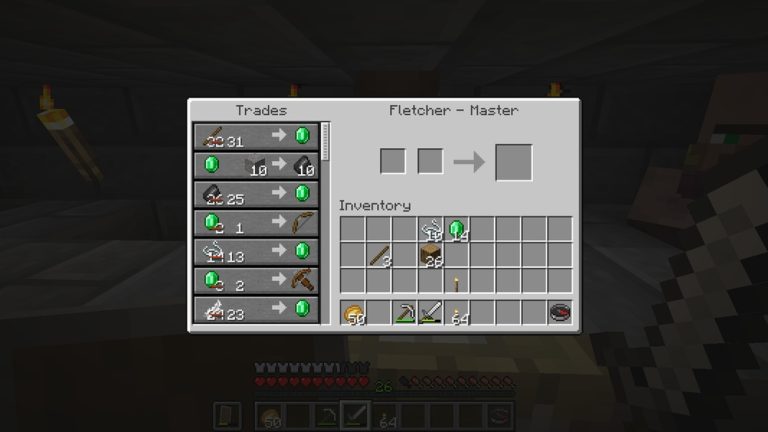
Yes, but only in one direction: a fletcher villager sells 16 arrows for 1 emerald at the novice trading tier, not the reverse, and not 64 arrows as some guides claim. That same fletcher also buys 32 sticks for 1 emerald, an easy way to fund the trade if you run a sapling or bamboo farm. This guide covers how to find a fletcher, level them up for better trades, and set up a steady arrow supply. For more on this, see our guide on Do Sparrows Migrate for the Winter? Surprising Facts Revealed. For more on this, see our guide on Do Dog Wood Trees Help With Standing Water.
Understanding Villager Trading in Minecraft
Villager trading is a core mechanic in Minecraft that allows players to exchange different items with villagers for others, often for valuable resources. Each villager profession comes with a unique set of trades. For arrows specifically, you’ll be looking for a particular type of villager. The system is designed to encourage exploration, specialization, and smart resource management.
When a villager levels up, they unlock more trades. Younger villagers, with no profession, won’t trade at all. To get the best arrow deals, you’ll want to interact with villagers who have reached higher trade tiers. Emeralds are the primary currency in villager trading, meaning you’ll need to gather plenty of them.
Discovering the Right Villager Profession for Arrows
The primary profession that offers arrows for trade is the Fletcher. You can identify a Fletcher by their workstation, which is a Fletching Table. If you see a villager standing near a Fletching Table, they are either a jobless villager waiting to claim that profession or a full-fledged Fletcher.
Fletchers are archers’ best friends in Minecraft. Their trades revolve around arrows, bows, crossbows, and related crafting materials. Learning to spot and utilize Fletchers efficiently will drastically improve your late-game capabilities, especially if you’re planning on engaging in a lot of ranged combat.
How to Identify a Fletcher
- Look for the Fletching Table: The most direct way is to find a villager interacting with or standing near a Fletching Table.
- Check their Outfit: While not always a definitive visual cue, some Fletchers might have a simpler, more practical attire compared to other professions. However, the workstation is the most reliable indicator.
- Interact with Jobless Villagers: If you spot a villager without a profession and a Fletching Table nearby, you can place the table to assign them the Fletcher profession.
The Arrows Trade Explained
Once you’ve found a Fletcher, you can start trading. Their first-level trade is usually the most accessible and the one you’ll rely on initially.
First Trade Level: Arrows for Emeralds
At their first trade tier, Fletchers will typically offer to buy sticks from you for emeralds. This might seem counterintuitive if you want to buy arrows, but this is how you establish the relationship and potentially unlock better trades later. More importantly for buying arrows, they will offer to sell you arrows.
The standard first trade for arrows is: buy 16 Arrows for 1 Emerald.
This is an amazing deal. Emeralds can be found in ore veins, but they are much more commonly obtained through trading with other villagers, particularly by selling them items they need, like coal, iron, or crops.
How to Make the Trade Happen
- Right-click: Approach the Fletcher villager and right-click on them. This will open their trading interface.
- Select the Arrow Trade: In the interface, you’ll see their available trades. Find the trade that offers arrows.
- Input Emeralds: If you have emeralds in your inventory, click on the emerald slot to put them in.
- Take Arrows: The arrows will appear in the output slot. Click on them to take them into your inventory.

Leveling Up Your Fletcher for Better Trades
Like all villagers, Fletchers gain experience and level up as you trade with them. Each level unlocks new trades, and some of these later-level trades can be even more beneficial.
Villager Profession Tiers and Trades
Villagers progress through five tiers: Novice, Apprentice, Journeyman, Expert, and Master.
Novice: This is their starting level. For Fletchers, this is where you’ll find the 16 arrows for 1 emerald trade. They might also buy sticks from you for emeralds.
Apprentice: For Fletchers, this level might unlock trades for bows or crossbows at reasonable prices.
Journeyman: You might start seeing more specialized trades, potentially including enchanted bows or even tipped arrows.
Expert: At this level, Fletchers can offer potent items like enchanted crossbows or even flame-enchanted bows.
Master: The highest tier might offer unique items or highly discounted prices on previously available goods.
To level up a villager, you simply need to trade with them repeatedly. Each trade grants them experience. You can see their experience bar in their trading GUI. Once it’s full, they’ll level up the next time you interact with them.
A visual representation of a villager gaining experience after trades.
Setting Up a Dedicated Trading Village and Fletcher Farm
For players who rely heavily on ranged combat or simply want an endless supply of ammunition, setting up a dedicated trading village or a Fletcher “farm” can be incredibly efficient.
Establishing a Trading Hub
1. Secure an Area: Find a safe, flat area, preferably near your base or a convenient teleporter.
2. Transport Villagers: This is often the trickiest part. You can:
Minecart them from nearby villages.
Boat them along waterways.
Cure them if you have a zombie village nearby.
Breed villagers in a controlled environment. For breeding, you need at least two villagers, beds for them, and ample food (bread, carrots, potatoes are good).
3. Assign Professions: Once villagers are in your area, place Fletching Tables near jobless villagers to turn them into Fletchers. Ensure each villager has a unique Fletching Table if you’re setting up multiple farms.
4. Provide Beds: Villagers need beds to work and breed. Make sure there are enough beds for all your villagers.
5. Defend Your Village: Protect your trading hub from hostile mobs, especially during nights or thunderstorms. Walls, lighting, and well-placed defenses are crucial.
Optimizing Fletcher Trades
Trade Reset: Villager trades can sometimes become temporarily unavailable if you make too many of the same trade. They typically restock twice a day, usually around dawn and dusk. You can force a restock by breaking and replacing their Fletching Table, but this only works if they haven’t already reached their restock time.
Locking Trades: Once you make a trade with a villager, especially if you’ve leveled them up and want to preserve a specific trade, that trade becomes locked. This means they will no longer offer that trade if you break and replace their workstation. For the arrow trade (16 arrows for 1 emerald), you generally want to keep trading it, so you don’t need to worry about locking it prematurely. However, if you were aiming for a specific enchanted bow trade, you’d want to lock that in.
Emerald Generation: To buy lots of arrows, you’ll need lots of emeralds. Consider setting up farms for items that other villagers will buy for emeralds. For instance:
Farmer Villagers: Sell wheat, carrots, potatoes, beetroot for emeralds.
Librarian Villagers: Sell paper (made from sugarcane cultivated via a sugar cane farm) for emeralds.
Butcher Villagers: Sell raw chicken or porkchops for emeralds.
Toolsmith/Weaponsmith/Armorer: Sell iron ingots for emeralds.
A well-oiled trading system often involves multiple villager professions feeding into each other, ensuring a steady flow of emeralds to your Fletchers.
Essential Tools and Resources for Arrow Trading
While trading itself requires minimal tools, setting up and maintaining your Fletcher operation can benefit from a few key items.
Tools to Consider
Pickaxe: For mining ores to trade for emeralds or for breaking and placing Fletching Tables efficiently. Diamond or Netherite pickaxes are ideal for speed.
Shovel: Useful for clearing and flattening land for your trading hub.
Axe: For gathering wood to craft Fletching Tables and other building materials.
Water Bucket: Essential for transporting villagers via canals or for quickly putting out fires.
Minecart and Rails: For longer-distance villager transportation from natural villages.
Building Blocks: Any type of block to construct shelters, walls, and pathways.
Resources for Emeralds
Iron Ore/Ingots: Trade with Toolsmiths, Weaponsmiths, or Armorers. Iron farms are one of the most efficient ways to generate large quantities of iron.
Coal: Trade with some villagers for emeralds. Coal can be mined or easily farmed through various mob drops and crafting.
Paper: Craft from sugarcane. Sugarcane farms are simple to set up and maintain, making paper a reliable emerald source. You can find instructions on efficient sugarcane farming from resources like the official Minecraft Wiki.
Crops (Wheat, Carrots, Potatoes, Beetroot): These are excellent trade goods for Farmer villagers. Automating crop farms can provide a nearly endless supply.
Wool: From sheep farms, can be traded with Librarians or Shepherd villagers.
Tips for Efficient Arrow Acquisition
Always Check Prices: While 16 arrows for 1 emerald is standard, if playing with friends or on a server, community mods or game rules might alter baseline prices. However, in vanilla Minecraft, this is highly consistent.
Have Emeralds Ready: Always keep a good stack of emeralds on hand when visiting your Fletchers. This saves time and ensures you can make trades whenever the opportunity arises.
Consider Auto-Farms: For mass arrow acquisition, research and build automatic farms for resources that trade well for emeralds (e.g., iron farms, sugar cane farms, crop farms). This is a mid-to-late game strategy but incredibly rewarding.
Be Patient with Restocks: Trades can run out. If a Fletcher’s trade slot is empty, simply wait for them to restock, which usually happens twice per Minecraft day.
Protect Your Villagers: Villagers are vulnerable to hostile mobs and can even die from fall damage or other environmental hazards. Ensure your trading area is well-lit, enclosed, and safe.
Alternative Methods for Obtaining Arrows (When Trading isn’t an Option)
While trading with Fletchers is the most sustainable method, there are other ways to get arrows, especially in the early game or if you haven’t found a Fletcher yet.
1. Mob Drops:
Skeletons: The most common source. Skeletons drop arrows when killed. The amount is usually small (0–2), but they spawn frequently in dark areas and caves. Using a sword with a Looting enchantment will increase the number of arrows dropped.
Strays: Arctic variants of skeletons, also drop arrows.
2. Crafting:
You can craft arrows using Flint, Sticks, and Feathers. Each craft yields 4 arrows.
Flint: Obtained by mining Gravel. There’s a chance to get Flint when a Gravel block is broken.
Sticks: Crafted from Wooden Planks.
Feathers: Dropped by Chickens. You can kill them or find them in their nests.
This method requires gathering three different resources, making it less efficient for large quantities compared to trading.
3. Loot Chests:
Arrows can occasionally be found in chests in various generated structures like dungeons, desert temples, plains villages, and shipwrecks. The quantity is usually small.
4. Enchanted Bows:
If you have a bow, as opposed to a crossbow, with the Infinity enchantment, you only need one arrow in your inventory to shoot an unlimited number of arrows. This is an endgame solution but incredibly effective for conservation. The Infinity enchantment itself can sometimes be found on enchanted books obtained from fishing, trading with Librarians, or in loot chests. Keep in mind a bow also takes durability damage with use, so it pays to know how to repair a bow in Minecraft before it breaks mid-fight.
External Resource: For detailed information on villager mechanics and trading, the official Minecraft Wiki is an excellent resource: https://minecraft.wiki/w/Villager
Table: Arrow Acquisition Comparison
| Method | Pros | Cons | Best For |
|---|---|---|---|
| Fletcher Trade | Infinite supply, cheap (1 emerald/16) | Requires finding a Fletcher, needs emeralds | Mid to Late Game, consistent supply |
| Skeleton Drops | Readily available early-game, no emeralds | Low quantity per drop, relies on mob spawns | Early game, natural progression |
| Crafting | Always possible with resources, controlled quantity | Requires gathering 3 types of materials, less efficient | Early game when no trade/mobs |
| Loot Chests | Free, potentially enchanted items | Random, unreliable, low quantity | Opportunistic finds |
Troubleshooting Common Trading Issues
Even with a guide, you might run into a few snags. Here are some common problems and their solutions:
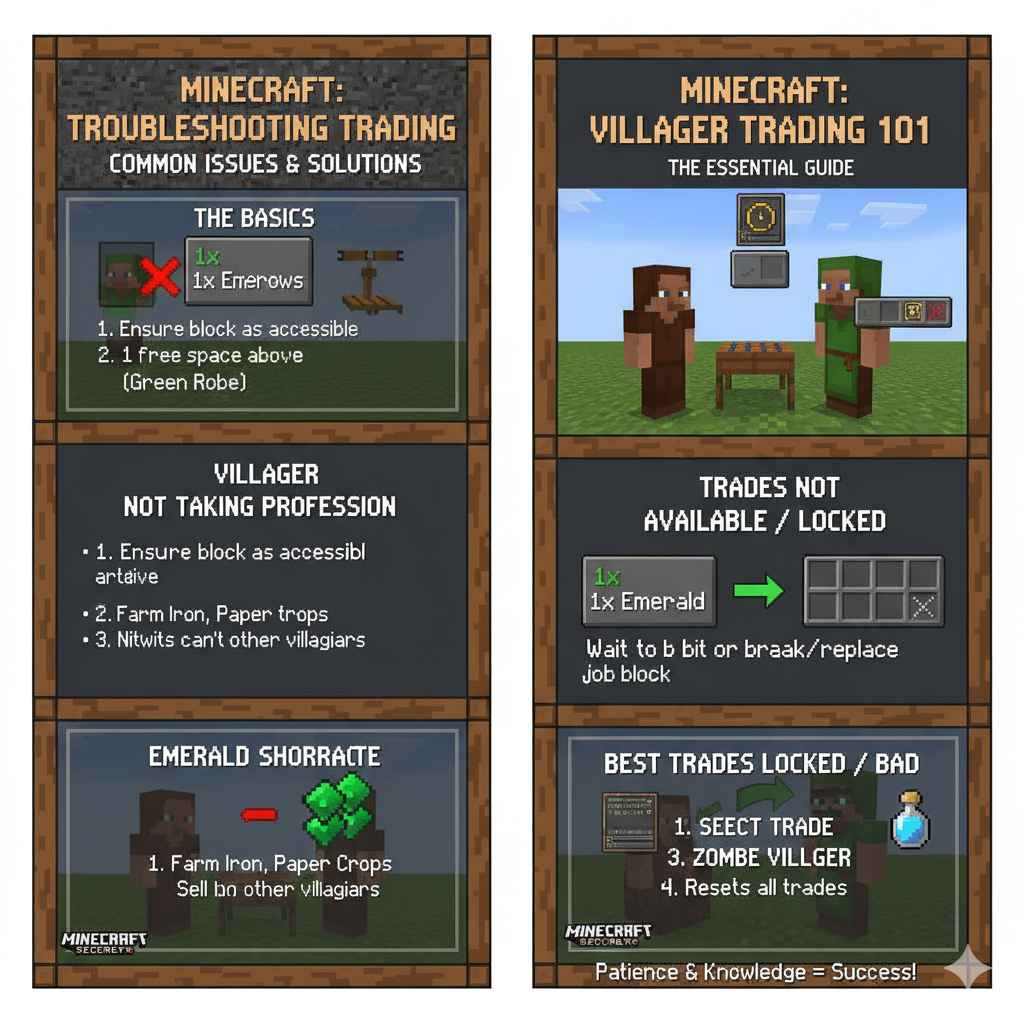
Villager Not Taking Profession: Ensure the Job Site Block (Fletching Table) is accessible and has at least one block of free space above it. Also, make sure the villager isn’t “nitwit” (wearing a green robe) as they cannot take professions.
Trades Not Available: Villagers need to restock. Wait a bit, or try breaking and replacing their Fletching Table to force a restock (but this can sometimes break locked trades if you forget which ones you have). If a specific trade is locked and you want to change it, you must cure a zombie villager and re-trade with them, or find a new villager.
Villager Won’t Trade (Trade Locked): If you’ve traded the same item many times recently and it’s locked, you simply need to wait for the villager to restock. If you’ve made a trade that you don’t want to be permanent and it’s locked, you’d have to cure a zombie villager that’s already had that profession to reset their trades.
Emerald Shortage: Focus on efficient emerald-generating farms. Selling items like iron ingots, paper, or crops to their respective villagers is generally the most profitable.
Villager Spawned as a Nitwit: Nitwits are characters that cannot pick up a profession. If you find one wearing a green robe, they are unusable for trading. You’ll need to find another villager or breed new ones.
Setting up reliable trades is all about understanding the game’s mechanics and a little bit of patience. Don’t get discouraged if your first attempt doesn’t go perfectly!
Frequently Asked Questions About Trading Arrows with Villagers
Q1: Can any villager trade arrows?
A1: No, only Villagers with the Fletcher profession can trade arrows. You can identify them by their Fletching Table workstation.
Q2: How do I get a villager to become a Fletcher?
A2: If you find a jobless villager, place a Fletching Table within their proximity (2-3 blocks). If they are eligible, they will claim it and become a Fletcher.
Q3: What is the best price for arrows from a villager?
A3: The best and most common price is 1 Emerald for 16 Arrows. This is usually available at the Novice (first) trading tier for Fletchers.
Q4: My Fletcher villager is out of arrows to trade. What do I do?
A4: Villager trades restock twice per Minecraft day, typically around dawn and dusk. Simply wait for them to restock, or ensure they have access to their Fletching Table and a bed, and that they haven’t been blocked by other villagers.
Q5: How do I get emeralds to trade for arrows?
A5: Emeralds are primarily obtained through trading. You can sell items like iron ingots, coal, paper, or crops to other villagers (Toolsmiths, Librarians, Farmers) in exchange for emeralds. Mining emerald ore is also an option, but trading is generally more efficient.
Q6: Is it worth it to trade for arrows?
A6: Absolutely! For any player who uses a bow or crossbow regularly, trading is the most sustainable and cost-effective way to ensure a consistent supply of arrows, far surpassing reliance on mob drops or crafting for large quantities.