Can You Use Elbows in Boxing? Essential Rules
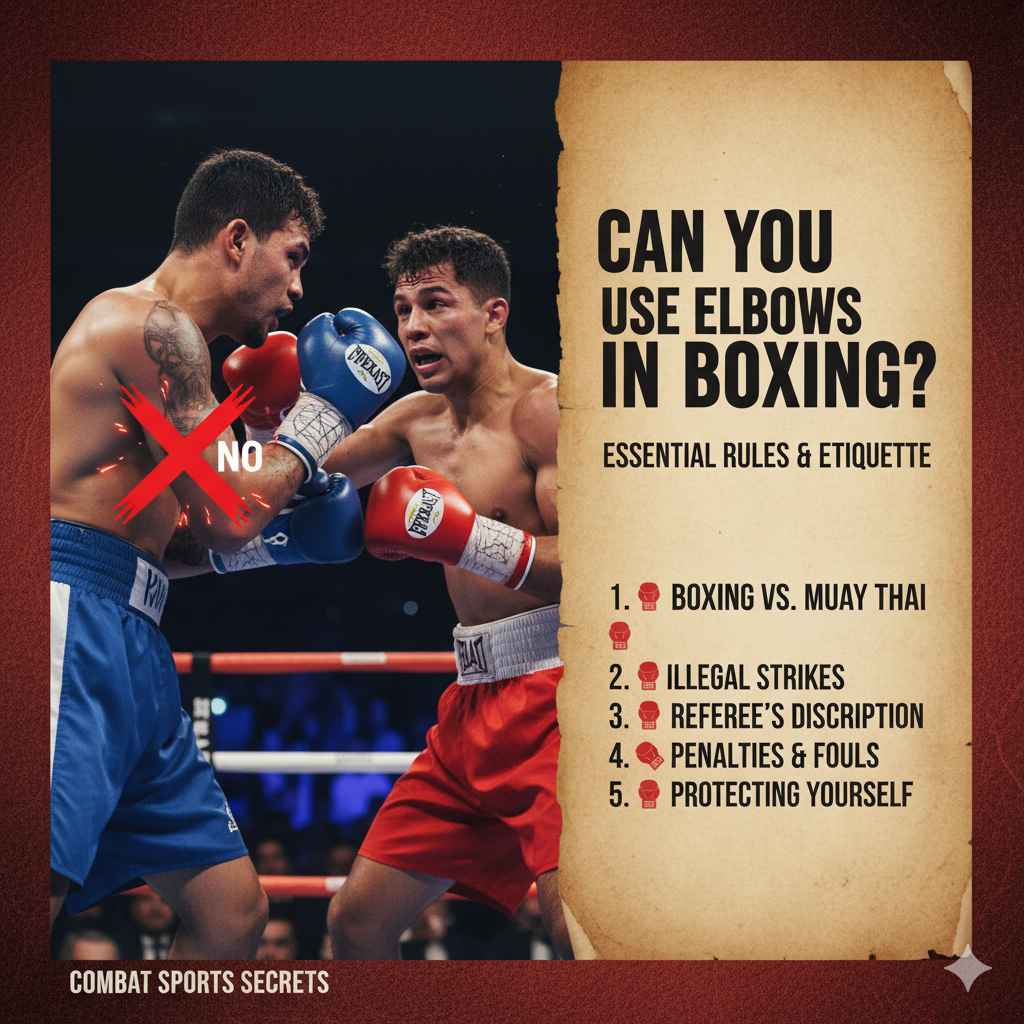
In boxing, using elbows is strictly forbidden. A boxer will be immediately penalized or disqualified for intentionally striking an opponent with their elbow. This rule protects fighters and maintains the sport’s integrity.
Welcome to the world of boxing! If you’re just starting out, you’ve probably got tons of questions buzzing around your head. One common point of confusion for newcomers is what exactly is allowed and what isn’t. When you watch a fight, you see punches flying everywhere – jabs, hooks, uppercuts – but what about other body parts? Specifically, can you use your elbows? It’s a fair question, and understanding these rules is super important for anyone stepping into the ring, even just for sparring. Getting this wrong could lead to trouble, and we want you to be confident and safe. Let’s clear up the confusion about using elbows in boxing so you can focus on learning the right techniques.
As a beginner (or even a seasoned hobbyist!), the most crucial rule to understand regarding elbows in boxing is this: No, you absolutely cannot use your elbows to strike an opponent. Boxing is a combat sport focused solely on punches thrown with closed fists. The use of any other body part for striking, especially elbows, is a serious foul and will result in penalties.
Think of boxing like a very specific dance or a game with very precise rules. The goal is to outscore your opponent with skillful punches (defined as hits from the front of the fist) or to incapacitate them with legal strikes. Elbows, knees, kicks, headbutts – these are all outside the boundaries of what’s permitted. This strict limitation ensures that the sport remains relatively controlled and aims to minimize unnecessary, potentially devastating injuries that go beyond the defined risks of punching.
Why Elbows Are Forbidden in Boxing
The prohibition against using elbows in boxing stems from several key reasons, all centered around fighter safety and the fundamental nature of the sport. These aren’t arbitrary rules; they have practical and ethical underpinnings.
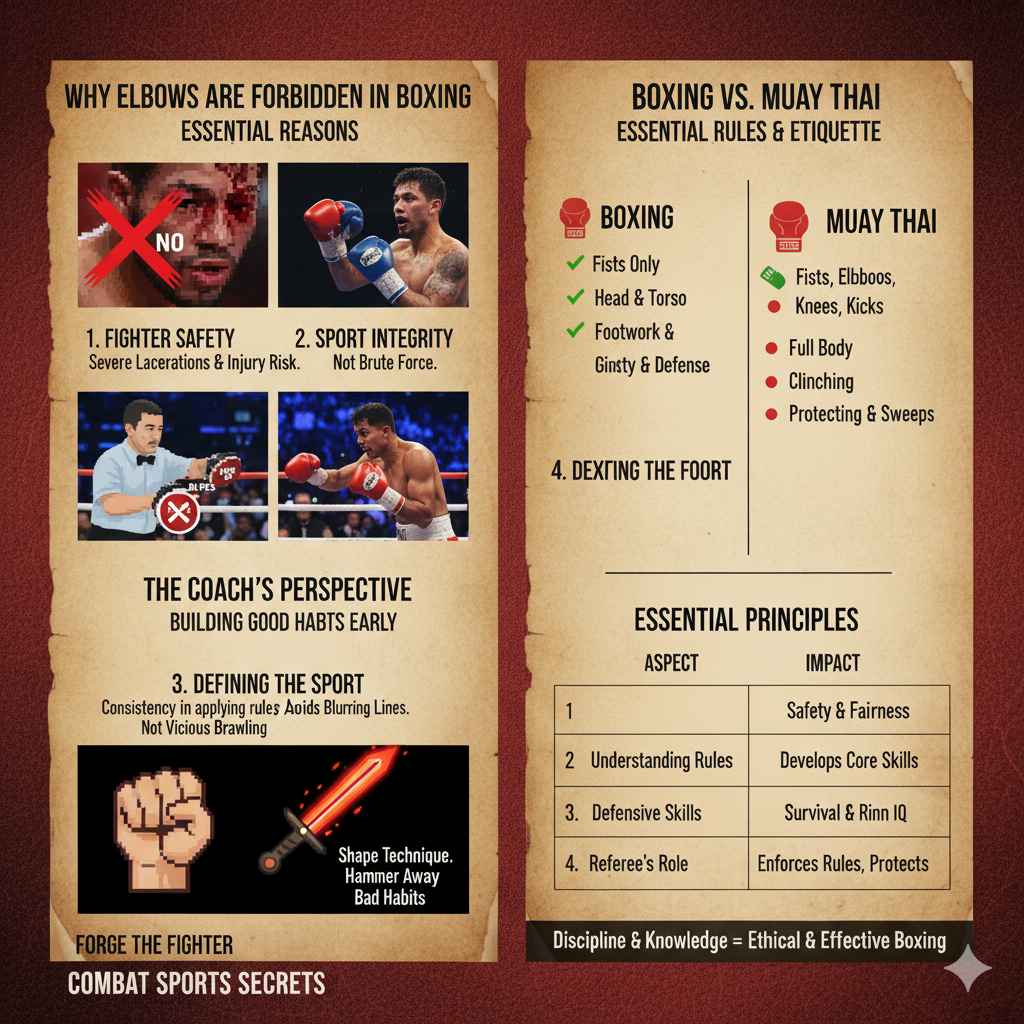
- Fighter Safety: Elbows are incredibly hard and sharp. A direct hit from an elbow, especially to the head or face, can cause severe lacerations, broken bones, and concussions far more easily and unpredictably than a punch. Boxing already carries significant risks, and adding elbow strikes would escalate these dangers dramatically. The sport’s governing bodies prioritize reducing avoidable, extreme trauma.
- Sport Integrity and Skill Focus: Boxing is designed to test a specific set of skills: punching technique, footwork, defense, timing, and endurance. If elbows were allowed, the sport would transform. Fighters would rely on brute force and potentially less skillful, more damaging maneuvers, undermining the emphasis on the art of boxing and the strategic, technical aspects that define it. It would become less about finesse and more about blunt force.
- Defining the Sport: Boxing is defined by punches from closed fists. This is its core identity. Allowing elbows would blur the lines between boxing and other combat sports like Muay Thai, where elbow strikes are a fundamental part of the arsenal. To maintain boxing’s unique place in the martial arts world, its rules remain focused on hand strikes.
- Preventing Brutality: While boxing is inherently combative, it aims to channel aggression into a structured contest. Elbow strikes are often perceived as more vicious and less controlled than punches. Their inclusion could lead to fights that are seen as excessively brutal, potentially alienating audiences and participants alike.
What Constitutes an Elbow Foul?
A foul involving an elbow occurs when a boxer intentionally uses their elbow to strike their opponent. This can happen in various ways:
- Direct Elbow Strike: This is the most obvious. A boxer swings their elbow directly at their opponent’s head, body, or limbs.
- “Rubbing” or “Glancing” Blows: Even if it’s not a full-force swing, using the elbow to intentionally push, scrape, or rub against an opponent’s face or body can be considered a foul, especially if it causes irritation or injury.
- Using the Elbow in a Clinch: While clinching (holding an opponent) is sometimes part of boxing, using the elbow during a clinch to gain an advantage or cause pain is a foul.
Referees are trained to spot these infractions. The severity of the penalty will depend on whether the foul was intentional, how many times it has occurred, and the impact it had on the opponent.
Penalties for Using Elbows
In boxing, penalties for fouls are graded, meaning they increase in severity if the foul is repeated or particularly egregious. Here’s a general breakdown of what can happen if a boxer uses their elbows:
| Infraction Type | Referee’s Action | Potential Consequences |
|---|---|---|
| First Offense (Minor/Unintentional) | Verbal warning from the referee. | “Watch the elbow!” A stern caution. No point deduction usually. |
| Repeated Minor Offenses or Single Intentional Foul | Point deduction. | The referee might take one point from the offending boxer’s score. For a fight judged on points, this can significantly impact the outcome. |
| Egregious or Intentional Foul Causing Injury | Disqualification. | The fight is immediately stopped, and the boxer who committed the foul loses the match. This is common if an elbow strike causes a serious cut that medical staff cannot allow the opponent to continue from. |
| Fouls Throughout the Fight (Persistent Rule Breaking) | Disqualification. | Even if not particularly severe, a consistent pattern of elbowing despite warnings will lead to disqualification. |
It’s essential to remember that referees have discretion. They judge intent, severity, and the overall context of the fight when deciding on a penalty. For an amateur boxing match, the rules can be even stricter, with less tolerance for fouls.
Distinguishing Elbow Fouls from Legal Actions
Sometimes, in the heat of a close fight, actions might look similar but have different implications. It’s important to understand how referees differentiate:
- Defensive Posturing: A boxer might bring their arm up to protect their face, and their elbow might be in the general vicinity. This is legal. The foul only occurs if the elbow is used as a weapon.
- Body Shots vs. Elbows: Legal punches to the body can involve the fist connecting with the side or front of the torso. An elbow strike is a distinct, harder object and a different type of impact.
- Accidental Contact: In a messy clinch or during a flurry of punches, accidental contact with an elbow might occur. Referees will usually give the benefit of the doubt if it appears genuinely unintentional and doesn’t cause harm. However, frequent “accidents” can still lead to warnings.
The key differentiator is always the intent and the delivery. Was the elbow moved with the intention to strike, or was it part of a natural defensive or offensive boxing motion using the fist?
Boxing vs. Other Combat Sports: The Elbow Rule Variation
It’s really interesting to see how different combat sports handle elbow strikes. What’s a foul in boxing is a cornerstone technique in others. Understanding these differences helps appreciate why boxing has its specific rules.
Boxing: Absolutely no elbow strikes allowed. Focus is solely on punches from closed fists.
Muay Thai (Thai Boxing): Elbow strikes are a primary weapon. Fighters use elbows in various ways – horizontal, upward, or downward – for both offense and defense. They can cause significant damage and are a key part of Muay Thai strategy. You can learn more about the principles of striking in various martial arts at reputable educational resources like American Kickboxing Academy’s article on kickboxing history, which touches upon the evolution and styles of striking arts.
Mixed Martial Arts (MMA): Rules vary significantly depending on the promotion (e.g., UFC, Bellator). In most major MMA promotions, elbow strikes are legal and a significant part of offensive strategy. However, there are typically restrictions on striking a downed opponent with an elbow. For instance, in the UFC, strikes to the back of the head with an elbow are illegal.
Kickboxing: Rules can vary greatly between different kickboxing organizations. Some allow elbow strikes (similar to Muay Thai), while others strictly prohibit them, focusing only on punches and kicks. Savate, a French kickboxing style, typically does not allow elbow strikes.
This comparison highlights that the prohibition of elbows in boxing is a deliberate choice to define the sport and its skill set, rather than a universal principle across all combat disciplines.
Training Safely: Emphasizing Legal Techniques
For beginners, the most important takeaway is to focus exclusively on legal boxing techniques. This means:
- Mastering the Punch: Spend your training time perfecting your jab, cross, hook, and uppercut. Focus on proper form, power generation from your hips and shoulders, and crisp, clean execution.
- Defensive Drills: Practice blocking, parrying, slipping, and rolling. These are your primary tools for avoiding damage, not illegal strikes.
- Footwork and Movement: Learn to move effectively around your opponent, creating angles and distance. Good footwork can help you avoid dangerous situations where elbows might tempt you.
- Sparring Etiquette: When you start sparring, communicate clearly with your partner. Let them know you’re a beginner and emphasize that you want to practice legal techniques. A good sparring partner will help you learn by not exploiting rule breaks.
Reputable boxing gyms will have coaches who will rigorously enforce these rules. They are there to guide you and ensure you develop good habits from day one. If you’re training independently, focus on drills that reinforce proper punching and defense. Resources like USA Boxing’s official rules provide comprehensive guidelines for amateur boxing, which can offer a solid foundation for understanding what’s legal.
What If You’re Hit by an Elbow?
If you are on the receiving end of an illegal elbow strike, here’s what you should do:
- Alert the Referee: Immediately signal to the referee that you have been fouled. You can raise your hand or verbally inform them (if the referee is close enough and the noise level allows).
- Point Out the Foul: Try to indicate that the foul was an elbow strike.
- Follow Referee’s Instructions: The referee will assess the situation. They might give the offending boxer a warning, deduct a point, or examine you to see if you can continue.
- If Injured, Communicate: If the elbow caused a cut or you feel disoriented, tell the referee and your corner that you cannot continue.
It’s crucial not to retaliate with an illegal strike. This will only lead to you being penalized as well.
The Coach’s Perspective: Building Good Habits Early
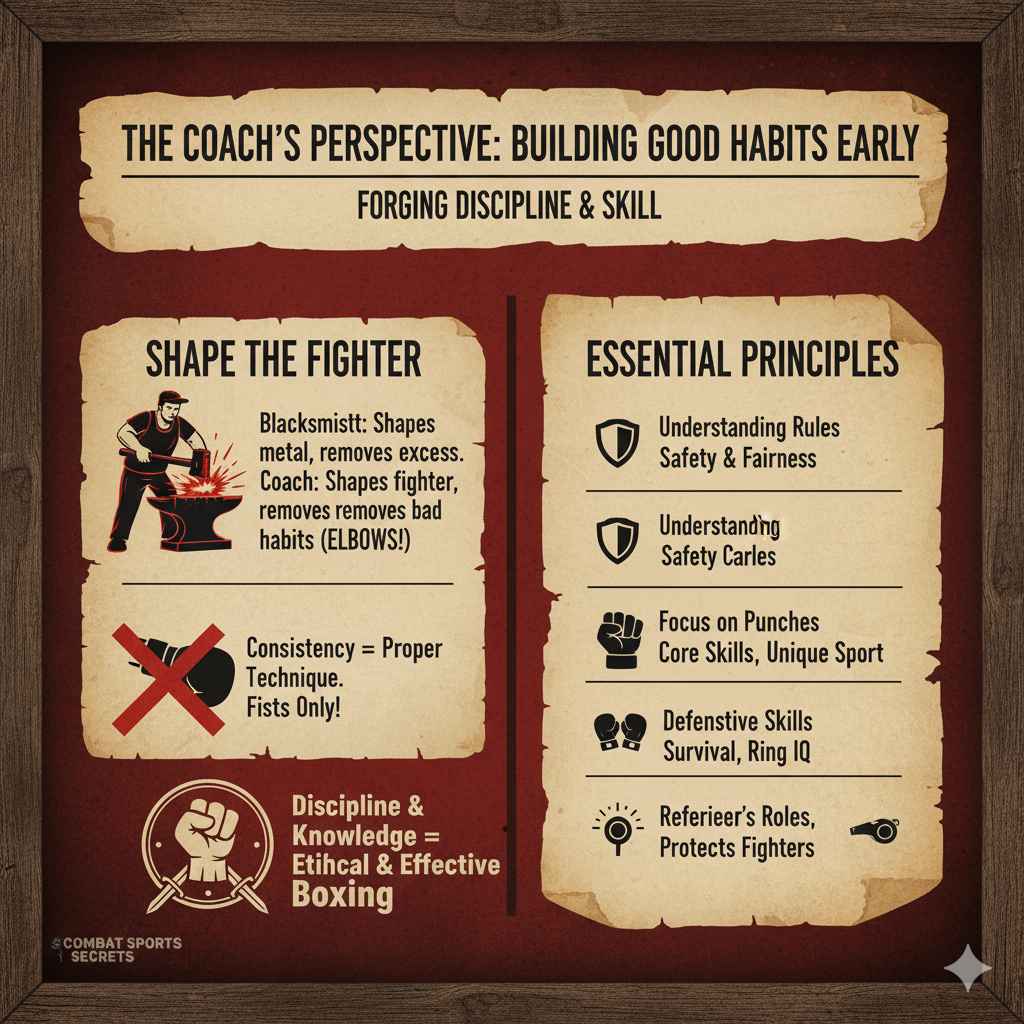
As someone who guides beginners, it’s vital to stress that consistency in applying the rules creates a better learning environment and a safer sport. When coaches consistently enforce the “no elbows” rule, beginners learn to rely on their fists and develop the proper boxing repertoire. This prevents them from developing bad habits that are hard to break later on.
Imagine a blacksmith forging a sword. They start with raw material and carefully shape it, removing anything that doesn’t belong. In boxing, coaches are like blacksmiths, shaping a fighter’s technique. Elbows are the excess metal that needs to be hammered away from the start.
This meticulous approach ensures that our fighters are not only skilled but also disciplined. Discipline is as important as a strong punch in boxing. It’s about understanding the game, respecting your opponent, and using your abilities within the established framework.
| Aspect | Importance for Beginners | How it Impacts the Sport |
|---|---|---|
| Understanding Rules | Essential for safety and avoiding penalties. | Maintains fairness and prevents the sport from descending into uncontrolled brawling. |
| Focus on Punches | Develops core boxing skills & technique. | Differentiates boxing from other martial arts, emphasizing hand-based striking. |
| Defensive Skills | Crucial for survival and ring IQ. | Promotes smarter fighting, not just brute force. |
| Referee’s Role | Upholds the rules and ensures fair play. | Provides a structure for competition and fighter protection. |
By adhering to these fundamental principles, beginners can build a strong foundation in boxing that is both effective and ethical.
Frequently Asked Questions (FAQ)
Q1: Can I use my elbow to block a punch?
A1: While your arms and elbows will naturally come up in a defensive posture, you cannot deliberately use your elbow as a weapon to strike or push an opponent’s incoming punch. An accidental brush is usually okay, but intentional blocking with the elbow is a foul.
Q2: What if my opponent elbows me accidentally?
A2: If it’s a clear accident and doesn’t cause significant harm, the referee will likely just tell both fighters to keep it clean. If it happens repeatedly, even if accidental, it can still lead to a warning or point deduction for the offender.
Q3: Are elbows allowed in sparring for training?
A3: In most supervised boxing training sessions and sparring, elbows are strictly forbidden. Coaches want you to practice legal techniques. If you’re training in a gym that allows elbows, it’s likely a different combat sport altogether, or an extremely unsafe training environment.
Q4: What about close-range fighting (the clinch)? Can I use my elbow then?
A4: No. While some clinching is allowed to momentarily pause action or create space, using your elbow to strike or deliberately push an opponent during a clinch is a foul.
Q5: What’s the difference between a legal body punch and an elbow strike?
A5: A legal body punch is delivered with the knuckle-covered part of your closed fist to the front or sides of your opponent’s torso. An elbow strike is a hit with the hard, bony point of your elbow. The impact and the tool used are very different and clearly defined.
Q6: If I get cut by an elbow, what happens?
A6: If an illegal elbow causes a cut that the ringside doctor deems too severe for you to continue safely, the boxer who threw the elbow will typically be disqualified.
Q7: How do refs tell if an elbow was intentional or accidental?
A7: Referees observe the boxer’s body language, the movement of the arm, the force of the contact, and the context of the fight. A sudden, jarring movement with the elbow aimed at the opponent is usually seen as intentional. A slight, incidental brush during a scramble is often viewed as accidental.
Conclusion
Navigating the rules of any sport can feel like a lot at first, but understanding the fundamentals ensures you’re practicing safely and correctly. In boxing, the rule about elbows is crystal clear: they are not permitted. This isn’t just an arbitrary restriction; it’s a core principle that protects fighters, maintains the integrity of the sport, and keeps the focus squarely on the art of punching and defensive maneuvering. As you continue your boxing journey, whether in a gym or just learning the basics, remember to keep your elbows tucked and your fists flying legally. Embrace the challenge of mastering the permitted techniques, and you’ll build a strong, safe, and respected boxing foundation. Keep training, stay safe, and enjoy the process of becoming a skilled boxer!