Can You Use Elbows in UFC? Rules After the 2024 Change
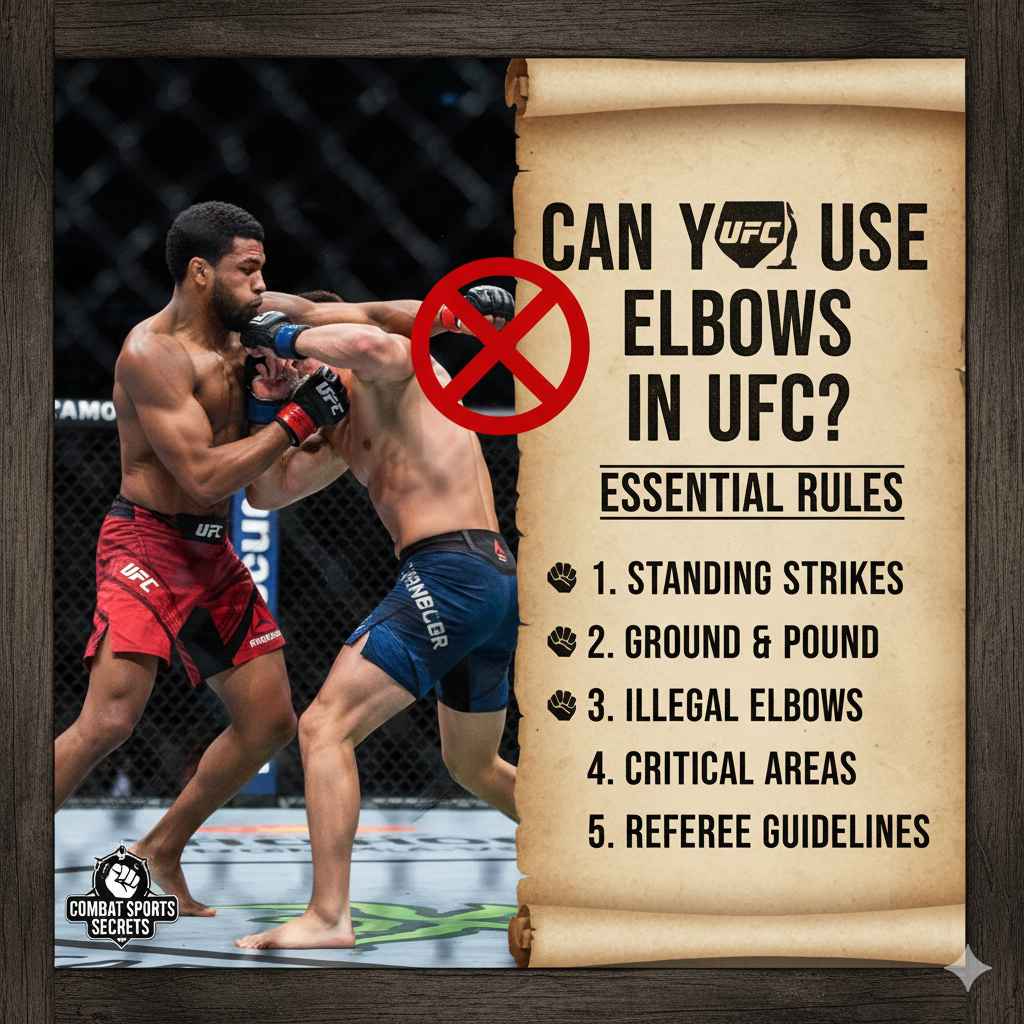
Yes, elbows are legal in UFC, including downward 12-to-6 elbows, which were fully legalized in November 2024 after being banned since 2001. Elbows to the back of the head, the spine, and the throat remain illegal regardless of the strike’s angle. This guide breaks down what’s allowed, what’s still banned, and how the 2024 rule change works. For more on this, see our guide on Do Electric Fields Point Towards Negative Charges.
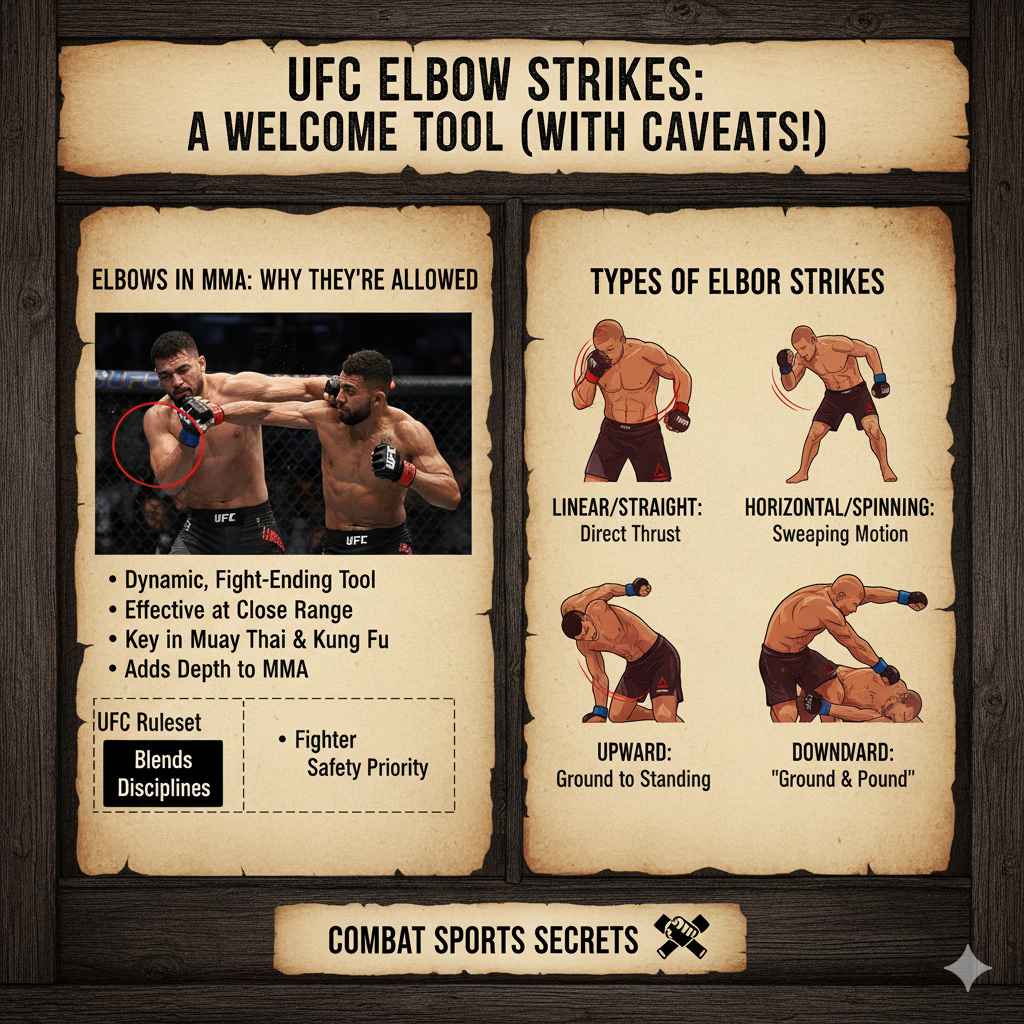
The Elbow in UFC: A Welcome Tool (with Caveats!)
Elbow strikes are a dynamic and often fight-ending part of mixed martial arts. When used effectively, they can cause significant damage, leading to knockouts or crucial openings for submissions. Unlike some other combat sports where certain striking methods are banned outright, the UFC generally permits a wide array of techniques, including those involving the elbow. However, this freedom comes with a responsible set of rules designed to protect the athletes.
The primary reason elbows are allowed is their effectiveness within a mixed martial arts context. They offer a different striking angle and power compared to punches and kicks. MMA, by its nature, blends various martial arts disciplines, and striking with the elbow is a prominent technique in disciplines like Muay Thai and Kung Fu, which have heavily influenced MMA.
What Exactly Constitutes an Elbow Strike?
In the UFC, an elbow strike is a blow delivered with the pointy, hard part of the elbow. Fighters can throw elbows in various ways:
Linear/Straight Elbows: A direct thrust forward with the point of the elbow.
Horizontal/Spinning Elbows: A sweeping motion with the elbow, often used when turning or spinning.
Upward Elbows: An elbow thrown from a low position upwards, often to an opponent on the ground.
Downward Elbows: An elbow driven from a high position downwards, also typically against an opponent on the ground.
The power and precision of an elbow strike can be devastating. They are often employed at close range, where longer weapons like kicks become less effective. Because of their concussive force, governing bodies and the UFC itself have implemented specific regulations to govern their use.
The Essential Rules of Elbow Usage in UFC
While elbows are allowed, they are not a free-for-all. The Unified Rules of Mixed Martial Arts, which the UFC largely follows, clearly define what is and is not legal. These rules are in place to foster a safer and more strategic sport.
Legal Elbow Strikes
The general rule is that you can strike with the point of your elbow. This means the hard, bony protrusion.
Striking with the Point: This is the most common and accepted way to use an elbow. It’s the sharp, bony tip that carries the most force.
Used in Offense and Defense: Elbows can be used to damage an opponent, create space, or even as a defensive tool to block incoming strikes.
Ground and Pound: One of the most common scenarios for elbow strikes is during ground fighting, where a fighter on top can rain down elbows on their opponent.
Illegal Elbow Strikes
The crucial distinction lies in what part of the elbow is used and the specific technique. Here’s what is not allowed:
Striking with the “Point or Tip” (when referring to sharp, bladed edges): This is a nuanced rule. While you strike with the point of the elbow, striking at the spine or back of the head with the sharpest, most protruding part of the elbow can be considered illegal. The intent here is to prevent “stabbing” or “cutting” motions with the extreme tip, especially towards vulnerable areas.
Banned Target Areas: Elbows cannot be used against the back of the head or the spine. This is a critical safety provision.
Elbows to a Groaning Opponent: If an opponent is downed and on the ground, and is clearly in a defensive posture and groaning as if in extreme pain, strikes might be deemed illegal if they are seen as gratuitous or overly brutal. This is a referee’s judgment call.
Elbows to the Back of the Head/Neck: Absolutely forbidden. This area is highly vulnerable.
Elbows on a Recovering Opponent: If an opponent is knocked down and clearly dazed or unable to defend themselves (e.g., “on the ropes” without actively fighting back), continuing to strike with elbows can be seen as unsportsmanlike and may lead to a warning or disqualification.
Key Factors Referee’s Consider
Referees play a vital role in enforcing these rules. They assess several factors when an elbow strike occurs:
Intent: Did the fighter intend to strike illegally, or was it a consequence of the flow of combat?
Impact Area: Where exactly did the elbow land? While the point of the elbow is legal for striking, the specific target area is crucial.
Opponent’s State: Is the opponent in a position where strikes are deemed dangerous or gratuitous?
Force and Technique: Was the strike a clean, legal one, or did it involve a “stabbing” motion towards a prohibited area?
The referee’s interpretation is final in the moment, and their primary role is to ensure fighter safety.
When Are Elbows Most Effectively Used in UFC?
Elbow strikes are versatile and can be deployed in different scenarios within a UFC fight:
Standing Engagements
In a striking battle on their feet, fighters will often use elbows when an opponent closes the distance. This is where the close-range power of elbows can be a decisive advantage. A well-timed elbow can cut an opponent, stun them, or set up a takedown.
Clinch Work: When fighters clinch, elbows are a staple. Fighters might deliver short, powerful elbows to the head or body while controlling their opponent.
Counter Striking: An opponent might throw a punch, and a fighter could counter with a sharp elbow.
Opening Stance: Sometimes, a fighter might use an elbow to create space or disrupt an opponent’s rhythm.
Ground and Pound
This is arguably where elbows are most prevalent and dangerous. When one fighter has another on the ground, typically in a dominant position like side control or full mount, they can deliver a barrage of strikes.
Dominant Positions: Elbows become a primary weapon when a fighter can pin their opponent and strike freely.
Finishing Fights: Many fights have been stopped due to relentless ground and pound, with referees stepping in to protect the downed fighter.
Opening Submissions: Even if not directly causing a knockout, elbows on the ground can weaken an opponent, making them more susceptible to submission attempts.
Defensive Application
While less common, elbows can be used defensively.
Blocking: A fighter might use their elbow to try and block an incoming strike, though this is risky.
Creating Space: A quick elbow can sometimes push an opponent away, allowing a fighter to regain distance.
The Nuances of Elbow Power and Danger
Elbows are considered dangerous weapons in MMA for several reasons:
Hard Surface: The elbow joint is a hard, bony structure. This means strikes delivered with it can cause significant blunt force trauma.
Cutting Power: The sharp point of the elbow, when it connects with the skin, can easily cause deep cuts. These cuts can bleed profusely and impair a fighter’s vision, potentially leading to a TKO (Technical Knockout) if deemed too severe by the ringside doctor.
Bone vs. Bone: Unlike punches where fists are wrapped and padded, the elbow is bone directly impacting flesh. This increases the potential for damage.
Because of this inherent danger, the rules are specifically designed to prevent intentional damage to vulnerable areas or unnecessary brutality.
Understanding “The Point” vs. “The Point or Tip” Rule
This is where confusion often arises. The rule is often phrased as you can strike with the “point of the elbow” but not use “the point or tip” in certain situations. This usually refers to:
The Angle of Attack: Striking primarily with the bony protrusion of the elbow is legal. However, if a fighter is raking or slashing with the absolute sharpest edge of the elbow point, especially against the head or neck, it can be deemed illegal. Think of it as a precision jab with the bony bit versus a scraping or cutting motion.
Specific Areas: The rule is most strictly applied to strikes directed at the back of the head or the cervical spine.
A helpful way to conceptualize this is that the elbow as a striking surface is legal, but using it like a sharp blade to specifically target vulnerable or prohibited areas can lead to penalties.
Common Fouls Involving Elbows
Even within the scope of legal elbow usage, fighters can commit fouls. These include:
Striking the back of the head: As mentioned, this is a major foul.
Using the point of the elbow to “stab” or gouge: Especially towards the spine or head.
Excessive force on a downed, groaning opponent: This is a fighter safety rule. A referee will assess if the opponent is truly fighting back or is incapacitated.
Consequences of Fouls:
Fouls can result in:
Verbal Warnings: The referee stops the action and warns the fighter.
Point Deductions: If a foul is serious or repeated, the referee can deduct a point from the fighter’s score.
Disqualification: In extreme cases of intentional or reckless fouls, a fighter can be disqualified.
How Officials Ensure Fair Play with Elbows
The UFC uses a team of officials to manage fights and enforce rules:
The Referee: The most immediate enforcer. They are cageside, making split-second decisions on the legality of strikes. They can issue warnings, deduct points, or stop the fight.
The Judges: These officials score the fight round by round based on criteria like effective striking, grappling, aggression, and control time. They will not score illegal strikes.
The Referees’ Association: Organizations like the Association of Boxing Commissions (ABC) help standardize rules across different jurisdictions, ensuring consistency in how fouls and techniques are interpreted. You can find the Unified Rules of MMA, maintained by the ABC, which are the foundation for most professional MMA organizations, including the UFC here: https://www.abcboxing.com/wp-content/uploads/2023/09/Unified_MMA_Rules_2023.pdf
The Role of Fighter Safety
The rules surrounding elbows, and indeed all strikes in the UFC, are primarily about fighter safety. While the sport is inherently dangerous, the goal is to mitigate unnecessary risks. The focus is on an athletic contest of skill and strategy, not on inflicting injury beyond what is reasonably incurred in fair competition.
Fighters train extensively to employ techniques legally and effectively. They learn how to use their elbows for power and precision while avoiding illegal strikes. This training emphasizes control and strategic application.
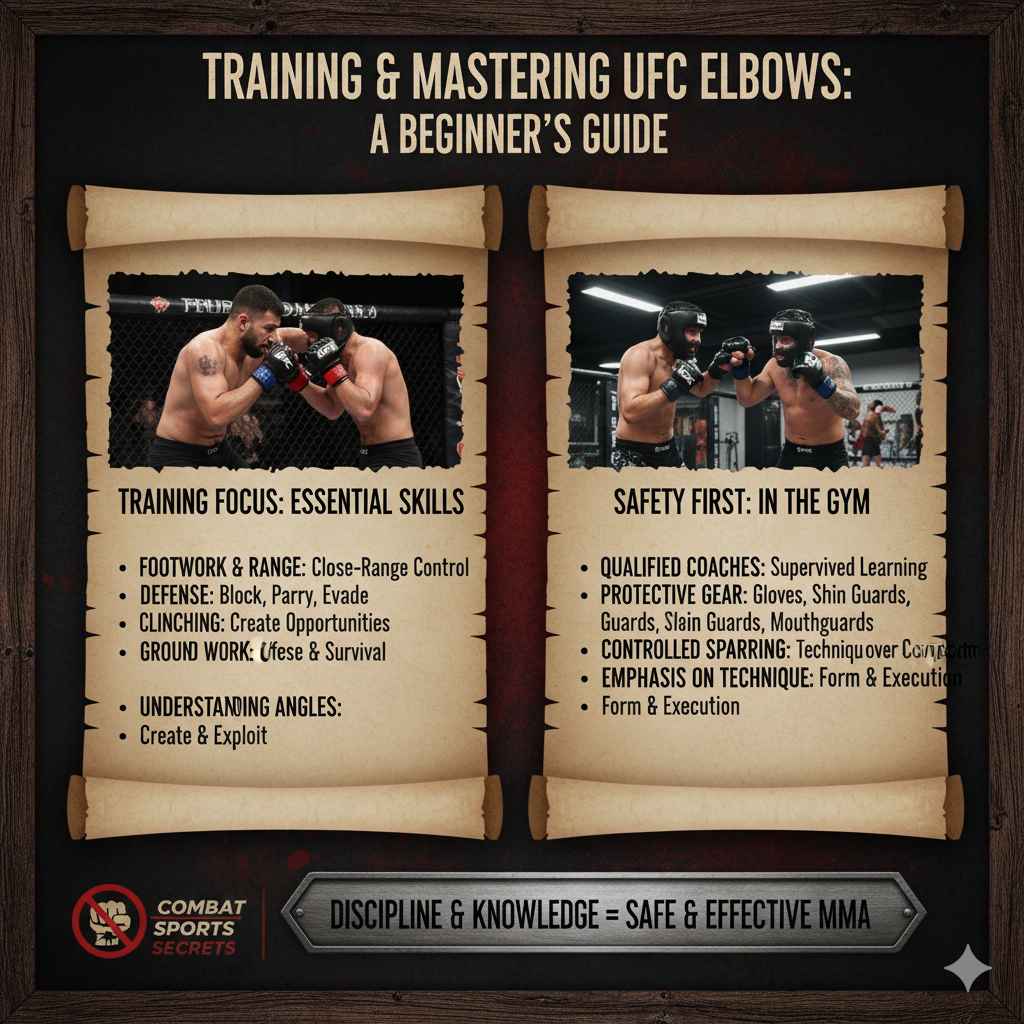
Training and Mastering Elbow Techniques: A Beginner’s Perspective
For aspiring MMA practitioners, understanding elbow rules is just the first step. Learning to use them effectively and safely is a skill that develops over time with proper coaching.
What to Focus on in Training:
Footwork and Range Control: Maintaining the right distance is crucial. Elbows are most effective up close, so fighters need to learn how to get into that range without receiving damaging strikes.
Defense against Elbows: Learning to block, parry, or evade incoming elbows is as important as learning to throw them.
Clinching Techniques: Developing strong clinching skills opens up opportunities for elbow strikes.
Ground Survival and Offense: Mastering defensive positions on the ground and learning how to strike effectively when on top are key areas.
Understanding Angles: Different elbow strikes work best from different angles. Training helps fighters understand how to create and exploit these angles.
Safety First in Practice
All training should be conducted under the supervision of qualified coaches in sanctioned gyms. Sparring sessions are designed to simulate fight conditions to a degree, but with a strong emphasis on safety.
Protective Gear: When learning, fighters often use larger gloves, shin guards, and mouthguards to minimize the risk of injury.
Controlled Sparring: Coaches guide sparring to focus on specific techniques and skill development rather than outright competition, especially for beginners.
Emphasis on Technique: The focus is on correct form and execution, minimizing the risk of accidental fouls or injuries.
Many martial arts gyms offer MMA classes that will cover striking techniques, including how to safely and legally use elbows. Seeking out a reputable gym and an experienced coach is the best way to learn.
Comparing Elbows to Other Strikes: Why They’re Unique
Elbows offer a different type of impact compared to punches and kicks.
| Strike Type | Primary Impact Zone | Power Source | Range | Common Use | Potential for Cuts |
| :———- | :—————— | :———– | :—- | :——— | :—————– |
| Elbow | Point of elbow | Bone, leverage | Close | Stand-up, Clinch, Ground | High |
| Punch | Fist | Flexed arm, shoulder, torso rotation | Mid to Close | Stand-up, Ground | Moderate |
| Kick | Foot, Shin | Leg, hip, torso rotation | Long to Mid | Stand-up | Low |
As you can see, elbows are blunt instruments of power that excel at very close range and have a high propensity for causing cuts due to their bony structure. This makes them particularly effective and also why rules are in place to govern their use.
FAQ: Your Burning Questions About UFC Elbows Answered
Here are some common questions beginners have about using elbows in UFC:
Q1: Can you throw elbows if your opponent is on their back?
Yes, you can throw elbows at an opponent who is on their back, provided they are not considered defenseless or in a groaning state of extreme pain, and you are not striking the back of their head or spine. This is very common in ground-and-pound situations.
Q2: Are spinning or flying elbow strikes legal in UFC?
Yes, spinning and flying elbow strikes are legal as long as they adhere to the general rules regarding striking with the point of the elbow and avoiding prohibited areas like the back of the head or spine. They are advanced techniques that require great skill and precision.
Q3: What happens if a fighter intentionally throws an illegal elbow?
If a fighter intentionally throws an illegal elbow, the referee can issue a warning, deduct a point, or even disqualify the fighter depending on the severity and intent of the foul. Such an action jeopardizes the fighter’s chance of winning and the integrity of the fight.
Q4: Can you use the forearm or the side of your elbow, not just the tip?
While the most effective and common use is with the point of the elbow, striking with the forearm or the harder parts of the elbow can also be considered legal as long as they are not used in a striking motion that constitutes a foul, such as raking or slashing the sharpest edge of the point. The emphasis is always on the bony protrusion of the elbow joint itself as the striking surface.
Q5: What if an elbow causes a cut? Is that an automatic foul?
No, an elbow causing a cut is not an automatic foul. Cuts are a common outcome in MMA. However, if the cut is deemed excessive by the ringside doctor, or if it was caused by an illegal strike, the fight may be stopped. If it’s from a legal strike, it typically results in a TKO (Technical Knockout).
Q6: How do referees decide if an elbow strike is illegal on the ground?
Referees assess several factors: the opponent’s position and ability to defend, whether the strikes are directed at prohibited areas (back of head/spine), and if the strikes are gratuitous or showboat rather than effective offense. The key is whether the opponent is still capable of intelligently defending themselves. If they are purely groaning and incapacitated, continued brutal strikes can be penalized.
Conclusion
So, to circle back to our initial question: yes, you can absolutely use elbows in UFC! They are a vital and often spectacular part of the sport. However, like any powerful tool in combat sports, their use is guided by a clear set of rules centered on fighter safety and fair competition. You can strike with the point of your elbow, but aiming for the back of the head or spine, or using the sharpest edge in a slashing manner, is prohibited. When watching a fight, pay attention to the referee’s signals and the context of the engagement. Understanding these nuances enriches your appreciation for the skill, strategy, and controlled aggression that defines professional MMA. Keep watching, keep learning, and you’ll soon be an expert on what makes the UFC so thrilling!