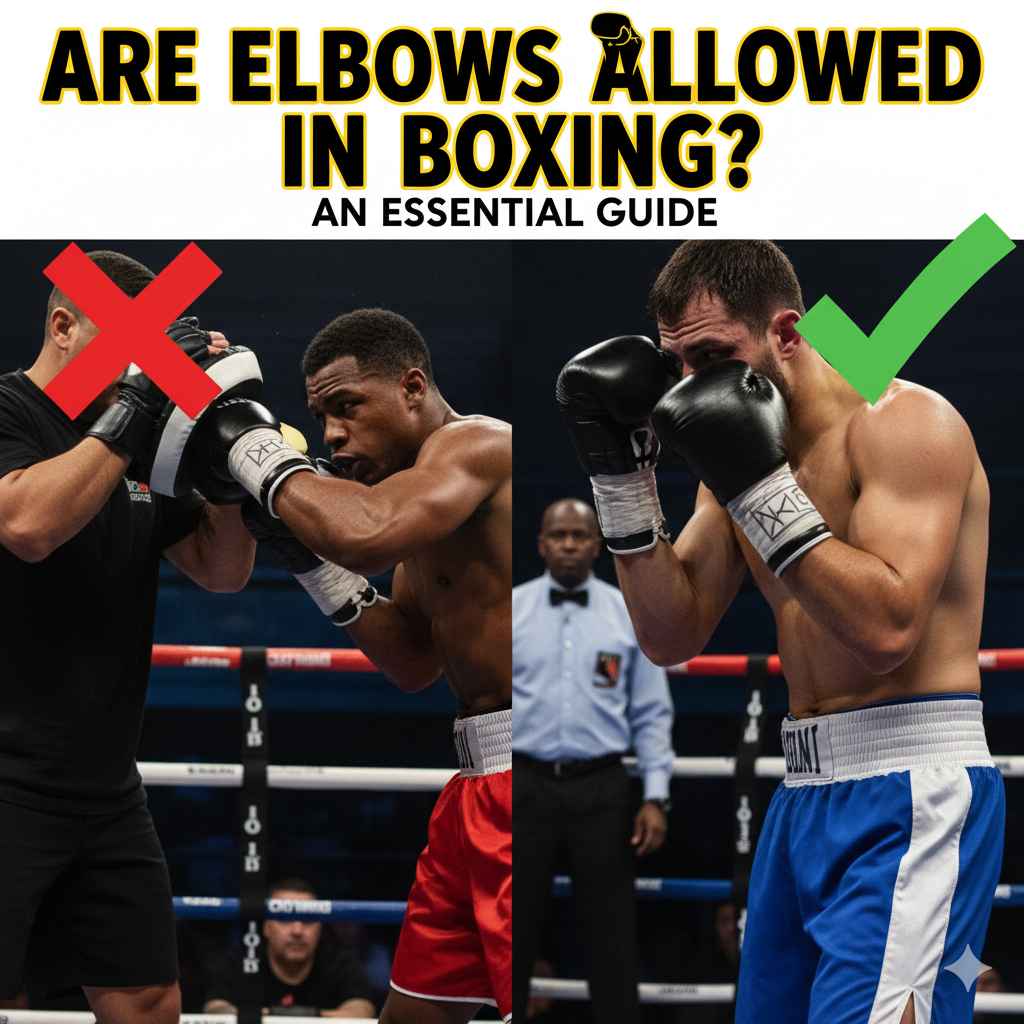
Are Elbows Allowed in Boxing? An Essential Guide
No, elbows are strictly forbidden and illegal in the sport of boxing. Using an elbow results in fouls, point deductions, or even disqualification to protect fighters and maintain the integrity of the sport. This guide explains why and what is permitted. For more on this, see our guide on Is Bower Vine Poisonous to Horses? Essential Safety Facts. For more on this, see our guide on Don’T Stand under a Tree When It Rains.

Title Boxing
TITLE Boxing Elbows-in Boxing Trainer, Red/Black, Regular
- Put an end to the constant reminder to “keep your elbows-in” with this revolutionary training tool
- Improves your technique, form and ultimately your punching power because you will be throwing every punch accurately
- Easily slips on and off with rep-designed arm loops
As an Amazon Associate I earn from qualifying purchases.
Stepping into the world of boxing can be exciting, but it also comes with a lot of rules to learn. One question that often pops up for newcomers is about using their elbows. It might seem like a natural extension of a punch, but is it actually allowed? You’ve seen fighters spar and compete, and maybe you’re wondering if those sharp-looking elbows are part of the game.
Don’t worry, this is a common point of confusion for many beginners, and understanding it is key to staying safe and boxing correctly. We’ll break down exactly what the rules say about elbows in boxing, so you can step into the ring with confidence. Let’s clear up this common boxing question and explore what makes boxing unique!
The Naked Truth: Elbows Are A Foul in Boxing
Let’s get straight to the point: elbows are absolutely not allowed in the sport of boxing. This is one of the most fundamental rules you’ll encounter. Boxing, at its core, is a sport that focuses on striking with the closed fist. The entire discipline is built around the punches—jabs, crosses, hooks, and uppercuts.
Why this strict prohibition? It boils down to safety and the nature of the sport. Elbow strikes can cause severe damage, far beyond what punches are designed to inflict. The bone of the elbow is incredibly hard and sharp, and a direct hit can lead to serious cuts, fractures, and concussions that could end a boxer’s career. Boxing’s governing bodies and commissions prioritize fighter safety above all else, which is why any intentional or reckless use of an elbow is met with immediate penalties.
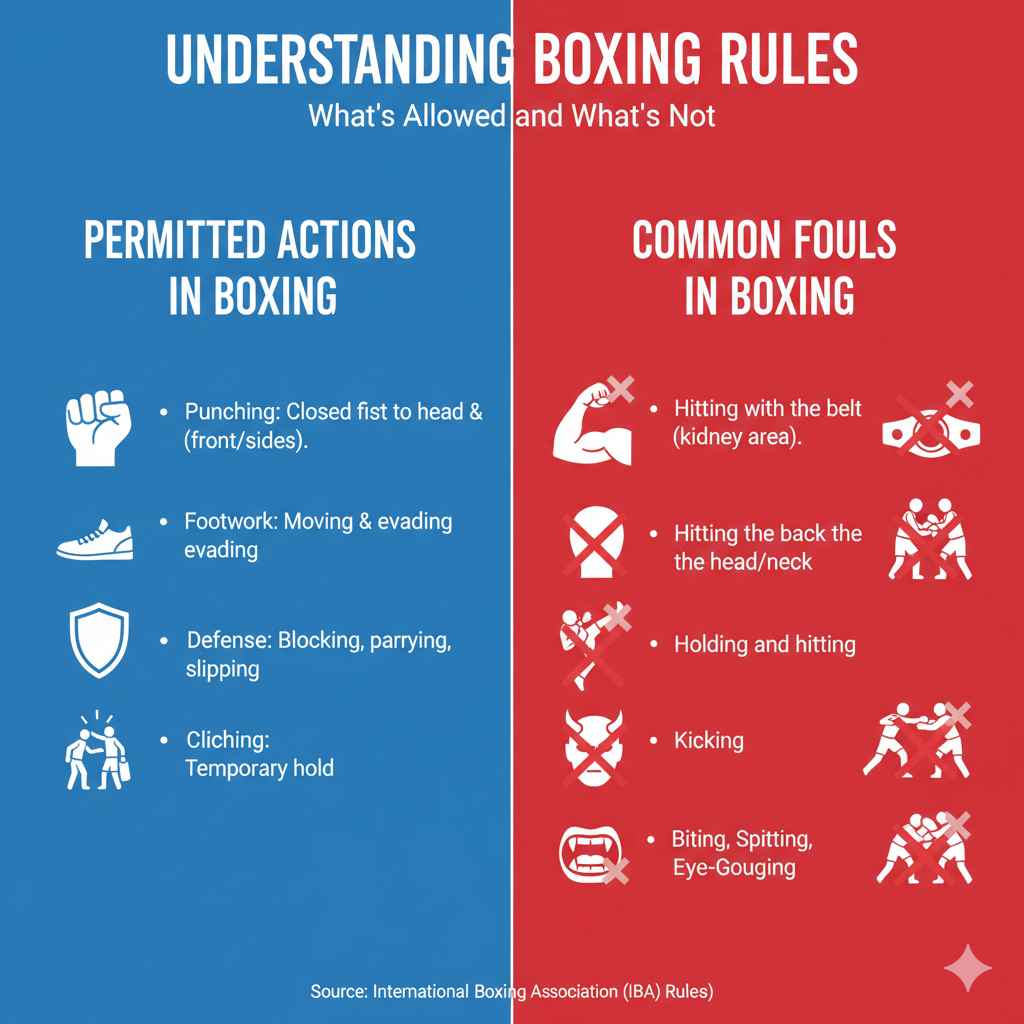
Understanding Boxing Rules: What’s Allowed and What’s Not
Boxing rules are designed to create a fair, safe, and skilled contest. The primary offensive tools are punches delivered with a closed fist. The protective gear, like gloves, is also designed to cushion these blows, preventing excessive damage to both the striker’s hand and the opponent’s head and body. Introducing elbows would fundamentally change the nature and the risk profile of the sport.
Here’s a look at what is generally permitted and what constitutes a foul:
Permitted Actions in Boxing:
- Punching: The legal use of the closed fist to strike the opponent’s front or sides of the head and body.
- Footwork: Moving around the ring to gain advantageous positions or evade attacks.
- Defense: Blocking, parrying, and slipping punches.
- Clinching: Temporarily holding an opponent to stop their attack or create space, but this is regulated and cannot be prolonged.
Common Fouls in Boxing (Including Elbows):
- Hitting with the elbow: Any strike delivered with the elbow, intentionally or not.
- Hitting below the belt: Strikes to the kidney area or below the opponent’s waistline.
- Hitting the back of the head or neck: Also known as a rabbit punch.
- Holding and hitting: Punching while holding onto the opponent.
- Headbutting: Deliberately using the head to strike.
- Kicking: Absolutely forbidden, unlike in some other combat sports.
- Biting, spitting, or eye-gouging: Unsportsmanlike conduct.
- Wrestling or throwing: Techniques not part of boxing.
The International Boxing Association (IBA) rules, for example, clearly define what constitutes a foul and the penalties associated with it. Athletes and trainers meticulously study these rules to ensure fair play and competitive integrity.
Why the Strict Ban on Elbows? A Deeper Dive
The prohibition of elbows in boxing isn’t arbitrary; it’s rooted in very practical and safety-conscious reasons. If you’ve ever bumped your funny bone, you know how sensitive and painful elbows can be. Imagine that force directed intentionally from a trained fighter.
Here’s why elbows are a no-go:
- Extreme Harm Potential: As mentioned, elbows are bone. A sharp, well-placed elbow can easily cut through skin and cartilage, causing deep lacerations that require immediate medical attention. They can also cause severe facial damage and potentially skull fractures.
- Lack of Control: Unlike punches, which are delivered with a gloved fist over a certain distance, elbow strikes are often short, sharp, and can be difficult to control precisely. This increases the risk of accidental but devastating blows.
- Sport Differentiation: Boxing is distinct from other combat sports like Muay Thai (Thai boxing) or MMA (Mixed Martial Arts), where elbow strikes are often legal and integral techniques. Boxing’s identity is defined by its fist-striking rules.
- Referee and Judge Clarity: The rules provide a clear framework for officials. Allowing elbows would introduce a huge grey area for referees to judge intent and impact, making officiating much more complex and potentially unfair.
The World Boxing Council (WBC) and other major sanctioning bodies have very explicit rules against the use of elbows to maintain the sport’s integrity and the well-being of its athletes. You can find detailed rulebooks on their official websites, offering comprehensive insights into bout conduct.
What Happens If an Elbow is Thrown in Boxing?
When an elbow is used in a boxing match, it’s considered a foul. The consequences depend on several factors, including whether the foul was intentional, accidental, and the severity of the impact. The referee’s judgment is paramount in these situations.
Here’s a typical progression of penalties for fouls:
- Warning: For a first-time or accidental foul, the referee will usually issue a verbal warning to the offending boxer.
- Point Deduction: If the foul is repeated, intentional, or causes significant disruption, the referee can deduct points from the offender’s score. This is a serious penalty that can significantly impact the fight’s outcome.
- Disqualification (DQ): In cases of severe, intentional, or repeated fouls that endanger the opponent, the referee has the authority to disqualify the boxer immediately. This results in an automatic loss.
It’s important to note that if a boxer is injured by an accidental foul (including a rogue elbow!), the rules vary depending on the round. If the fight cannot continue and it’s early in the bout, it might be declared a “no contest.” If it happens later, the fight might go to the scorecards for a technical decision.
Elbow Techniques in Other Combat Sports
It’s easy to get confused because elbow strikes are very common and effective weapons in other martial arts and combat sports. Understanding these differences helps clarify why boxing has such a strict stance.
Here’s a quick comparison:
| Sport | Elbows Allowed? | Typical Use |
|---|---|---|
| Boxing | No | N/A (Illegal) |
| Muay Thai (Thai Boxing) | Yes | Close-range strikes, cutting opponents, breaking guards, powerful finishing blows. |
| MMA (Mixed Martial Arts) | Yes (with some limitations in some rule sets) | Strikes from various distances, ground and pound, clinch fighting. |
| Karate (some styles) | Yes (often in specific forms or sparring) | Close-range strikes, defensive counters. |
As you can see, sports like Muay Thai and MMA embrace elbow strikes as part of their diverse arsenal. Boxing, however, maintains its purity by focusing solely on punches. This distinction is crucial for anyone interested in competitive combat sports.
The Art of Defense: How Boxers Avoid Elbows
While boxers aren’t throwing elbows, they still need to be aware of them when sparring with practitioners of other disciplines or when facing an opponent who might unthinkingly try one. The principles of defense in boxing are sophisticated, and they are designed to keep a fighter safe from various types of strikes.
Defensive skills crucial for avoiding all kinds of illegal or dangerous strikes include:
- Head Movement: Slipping, bobbing, and weaving allow a boxer to move their head out of the line of fire. This is effective against both punches and potential elbow strikes.
- Footwork: Moving out of range or changing angles with your feet is a primary defensive tool.
- Blocking and Parrying: Using your arms and gloves to deflect or stop incoming strikes. While not always designed for elbows, learned reactions can help deflect them.
- Awareness: A constantly aware boxer will be more likely to see a potential elbow coming and react accordingly.
Trainers emphasize these defensive fundamentals from day one. These skills not only protect against legal blows but also help boxers react to the rare instance of an illegal strike.
Boxing vs. Other Striking Arts: A Quick Comparison of Rules
The ruleset dictates the techniques used in any combat sport. Boxing’s rule set is one of the most restrictive in terms of legal strikes, and this is what defines it.
- Boxing: Only punches with a closed fist.
- Kickboxing (e.g., American Kickboxing): Allows punches and kicks, but often restricts knees and elbows, and sometimes clinching.
- Muay Thai: Known as the “Art of Eight Limbs,” it permits punches, kicks, knees, and elbow strikes, along with extensive clinching.
- MMA: The most varied, allowing punches (often with open or closed fists depending on the promotion), kicks, knees, elbows, wrestling, grappling, and submissions, albeit with specific rules regarding prohibited techniques (like certain strikes to the back of the head or groin).
The governing bodies for each sport, such as the Association of Boxing Commissions (ABC) in the United States, set these standards to ensure consistency and safety within their respective disciplines. You can often find detailed rulebooks from these organizations online, which are invaluable for understanding the nuances.
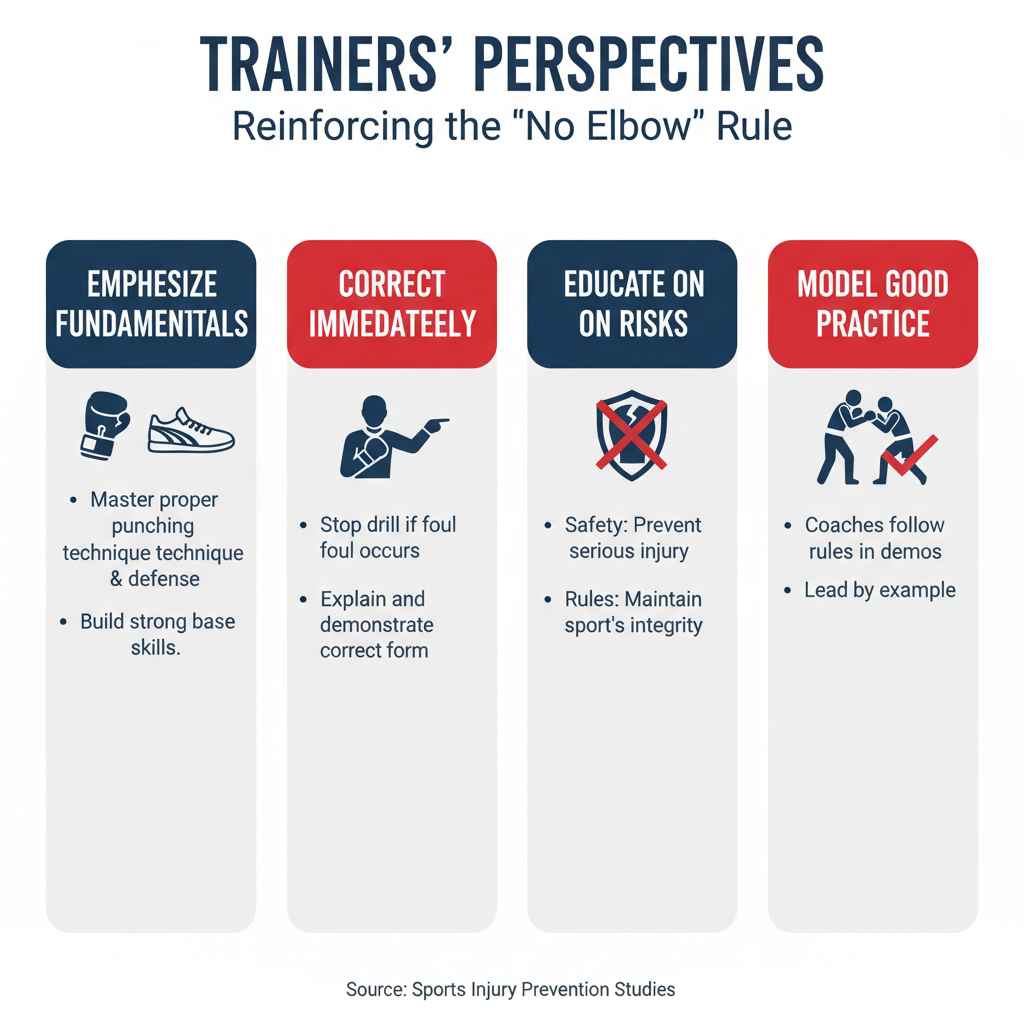
Trainers’ Perspectives: Reinforcing the ‘No Elbow’ Rule
Experienced boxing coaches are constantly drilling the fundamentals into their students, and the rule against elbows is a non-negotiable aspect of training. A good coach will:
- Emphasize Fundamentals: They’ll ensure you master proper punching technique and defense before even considering other factors.
- Correct Immediately: If you throw an elbow during sparring, even accidentally, your coach will stop the drill and point out the error.
- Educate on Risks: They’ll explain exactly why elbows are forbidden, focusing on safety and the rules of the sport.
- Model Good Practice: Coaches themselves adhere strictly to boxing rules in their own demonstrations and discussions.
For example, a coach at a reputable gym like the one described by a study on sports injury prevention would focus on making sure every movement and technique taught aligns with the sport’s specific regulations to ensure the safety and development of their athletes.
Conclusion: Stick to the Fists for a Fair Fight
So, to wrap it all up, when you’re in the boxing ring, your hands—specifically, your closed fists—are your only legal weapons. Elbows are a definite no-go, and for very good reasons centered on fighter safety and the integrity of the sport. Understanding and adhering to this rule is fundamental for any aspiring boxer.
By focusing on mastering your punches, developing strong defensive skills, and respecting the rules, you’ll not only become a better boxer but also ensure you’re always competing safely and fairly. Keep those fists sharp, your footwork fluid, and your knowledge of the rules solid, and you’ll be well on your way to enjoying the incredible sport of boxing.
Frequently Asked Questions (FAQ)
1. Can a boxer ever use their elbow legally in a boxing match?
Absolutely not. Elbow strikes are always considered a foul in professional and amateur boxing rulesets overseen by organizations like the WBC or the IBA.
2. What happens if a boxer accidentally hits with their elbow?
If an elbow strike is accidental, the referee will typically issue a warning to the boxer. If it causes an injury that prevents the opponent from continuing, the outcome may depend on when in the fight it occurred, potentially leading to a technical decision or a no-contest, but the boxer who threw the elbow will still have committed a foul.
3. Are elbow pads allowed in boxing?
Elbow pads themselves are not worn by boxers during a fight. The focus is on striking with the gloved fist, and there is no protective or offensive gear designed for the elbow in boxing.
4. Why are elbows so dangerous in boxing compared to other combat sports?
While dangerous in any sport, boxing’s emphasis is on the effectiveness and controlled impact of punches delivered with padded gloves. Elbows are bone with no padding and can inflict severe lacerations and trauma. Boxing rules are designed to limit the types of damage inflicted, and elbows fall outside this scope.
5. What should I do if I see an elbow being used in a boxing match?
If you are spectating, the referee is responsible for enforcing the rules. If you are training and accidentally use an elbow, your coach will stop you and explain why it’s a foul and not allowed in boxing.
6. Are there any exceptions to the no-elbow rule in any form of boxing?
No, universally, in the sport of boxing, elbows are forbidden. Variations in rules exist between different combat sports, but within the discipline of boxing itself, this rule is absolute.
7. How do referees manage potential elbow fouls?
Referees observe the bout closely. If an elbow is thrown, they will immediately assess the situation. They will warn the boxer, deduct points, or disqualify them based on the intent, severity, and repetition of the foul.
Related pick: Check today's price on Amazon