Are Elbows Allowed in UFC? Essential Guide
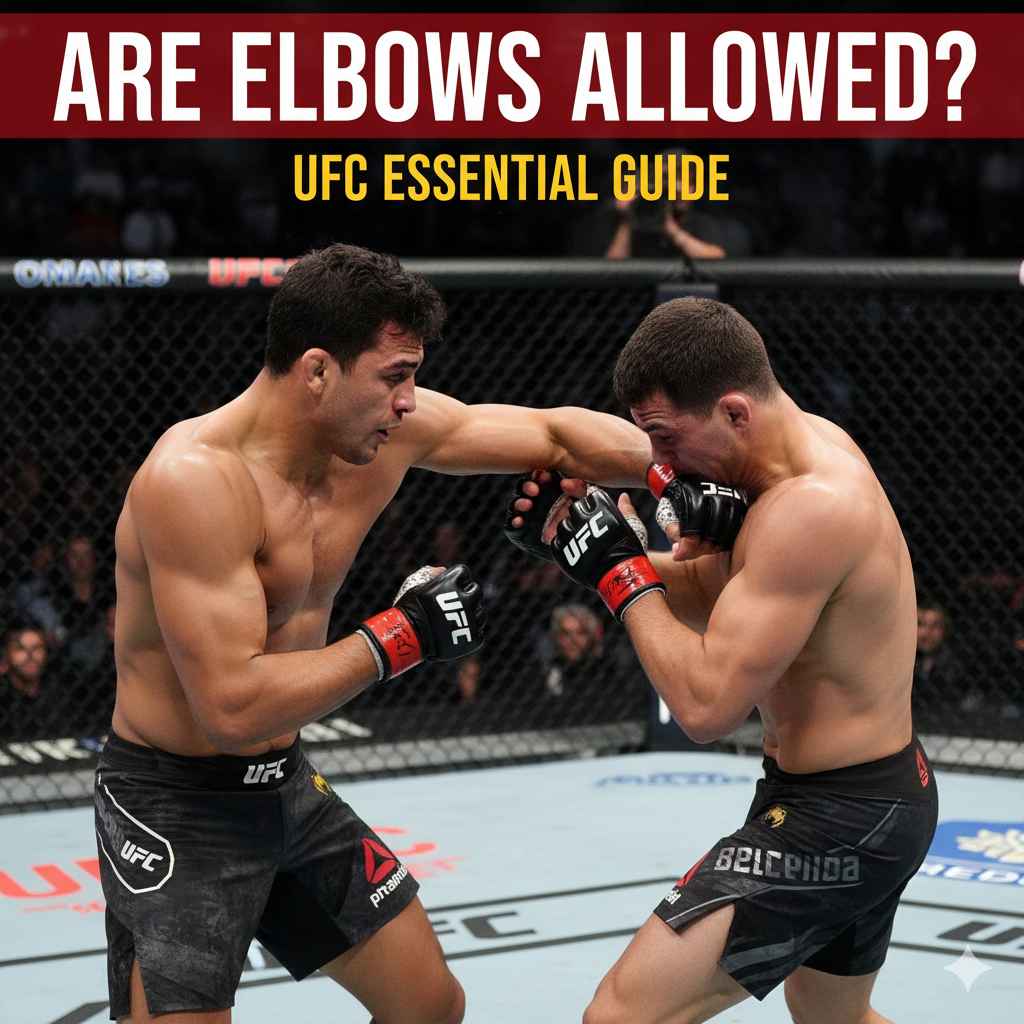
Yes, elbows are definitely allowed in UFC! In fact, they are a key offensive weapon for striking exchanges, adding a significant layer of danger and excitement to fights. Understanding the rules and how to use them safely and effectively is crucial for any aspiring fighter. For more on this, see our guide on Is Artemis Bow Good for Eldio Lion Hunt? Expert Analysis. For more on this, see our guide on Are Wraps Allowed on 27 Diameter Arrows in Vegas? Rules Explained.
Have you ever watched a UFC fight and seen a fighter unleash a sharp elbow strike, making you wonder if it’s legal? It’s a common question, especially for those new to mixed martial arts. The answer is a resounding yes, elbows are a fundamental and exciting part of UFC combat.
They can end a fight quickly, but like any powerful tool, they come with specific rules and techniques to master. Don’t worry if it seems a bit complex at first; we’ll break down exactly when and how elbows are used, what the rules are, and how fighters train to use them effectively. Get ready to understand this crucial aspect of MMA!
The Elbow in UFC: A Powerful Tool
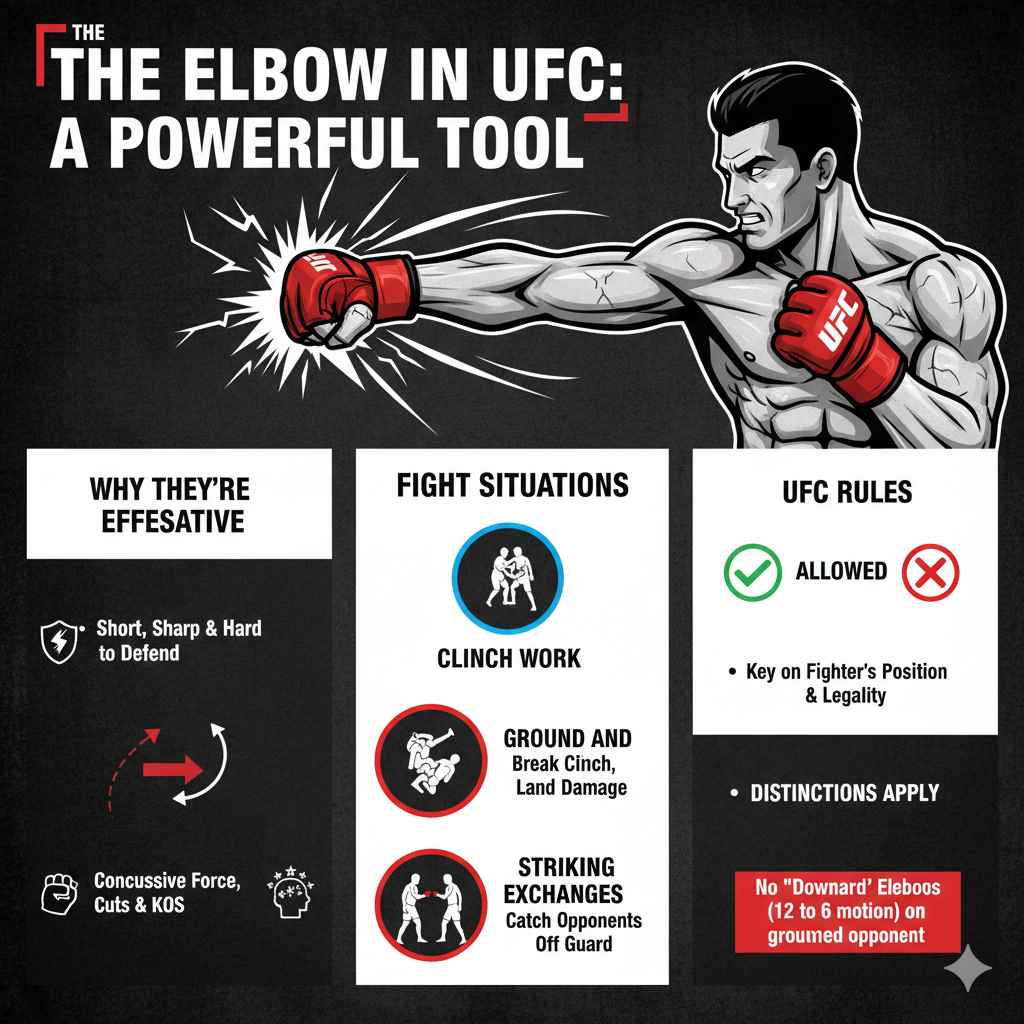
Elbow strikes in the UFC are incredibly effective for several reasons. Their short, sharp nature makes them difficult to defend against when thrown at close range, and they possess enough concussive force to cause significant damage, including cuts and knockouts. Unlike punches, which have a longer-range arc, elbows can be delivered with surprising speed and power in tight exchanges.
Fighters use elbows in various situations:
- Clinch Work: When two fighters are locked up, elbows become a primary weapon. A fighter can use them to create space, break the clinch, or land damaging blows.
- Ground and Pound: Once a fighter has their opponent on the ground, elbows are devastating for “ground and pound” – striking an opponent who is unable to fully defend themselves.
- Striking Exchanges: Even in open striking, well-timed elbows can catch an opponent off guard and inflict critical damage.
The UFC rules allow for elbow strikes, but with important distinctions depending on the fighter’s position. This distinction is key to understanding their legality and application.
UFC Rules Regarding Elbows: What Beginners Need to Know
Understanding the rules surrounding elbow strikes is paramount for both safety and strategic adherence to the sport. While elbows are generally legal, their application is heavily influenced by the fighter’s position and the referee’s discretion. The primary distinction is between striking on the feet and striking when one or both fighters are on the ground.
Elbows on the Feet
When both fighters are standing, all forms of elbow strikes are legal. This includes:
- Horizontal Elbows: Similar to a chopping motion, these are often thrown from the side.
- Vertical Elbows (Upward/Downward): These can be thrown with significant force, especially when an opponent is bent over or in a vulnerable position.
- Spinning Elbows: A dynamic and advanced technique where a fighter spins and drives their elbow forward.
The danger here is the potential for cuts, which referees are very quick to assess. If an elbow causes a cut that is deemed too severe, the referee may stop the fight.
Elbows on the Ground
This is where the rules become more nuanced and are often the subject of debate. When a fighter is on the ground, the legality of elbow strikes depends on whether any part of the opponent’s body is in contact with the canvas. The key rule here is what’s often referred to as the “12-to-6 rule,” though its interpretation has evolved.
Historically, downward elbow strikes – described as striking in a “12-to-6” motion (straight up and down) – were considered illegal. The reasoning was that this specific type of strike, delivered with full force from above, was deemed unnecessarily dangerous and could cause severe spinal injury or fracture. However, the modern interpretation by the Association of Boxing Commissions (ABC) Unified Rules states: “12-to-6 elbows are illegal.” This means striking directly down is prohibited. Strikes that are diagonal or horizontal while on the ground are considered legal.
What this means for fighters:
- A fighter can land an elbow from the side, diagonally down, or horizontally while on the ground.
- If a fighter is in a dominant position (e.g., mount, side control) and their opponent is on their back or stomach, they can throw elbows that are not directly in a 12-to-6 motion.
- If the referee deems the strike to be a direct 12-to-6, they can penalize the fighter, potentially with a point deduction or even disqualification if it’s a repeated offense or particularly egregious.
For beginners, it’s essential to understand that while elbows in general are allowed, the direction and context of the strike are critically important, especially when on the ground. This is why fighters and coaches spend a lot of time drilling these techniques within the legal framework.
Techniques for Using Elbows Effectively
Mastering elbow strikes requires precision, timing, and an understanding of how to create opportunities. While they are powerful weapons, they also carry risk. Here are some fundamental techniques that beginners can start to understand and practice (under safe supervision, of course!):
1. The Uppercut Elbow
This strike is excellent for close-range fighting and when you have an opponent’s head or neck exposed. Imagine throwing a short, upward punch with your elbow.
How to perform:
- Get close to your opponent.
- Lift your elbow in a sharp, upward motion towards their chin or face.
- Keep your movement compact and explosive.
This is particularly effective when breaking an opponent’s clinch or as a surprise attack from a tight boxing range.
2. The Horizontal Elbow (Spear Elbow)
This is a straight, horizontal strike, often thrown from the side. It’s akin to chopping with your elbow.
How to perform:
- Position yourself to the side of your opponent.
- Swing your elbow in a straight line, connecting with your opponent’s head or body.
- Use your body weight to generate power.
This can be very damaging and is often used when an opponent is turned or on all fours on the ground (provided it’s not a direct 12-to-6 motion).
3. The Downward Diagonal Elbow
This is one of the most common and effective elbows used on the ground when in a dominant position like side control or mount. It’s a strike that moves downwards but with an angle.
How to perform:
- Assume a dominant ground position (e.g., mount, side control).
- Angle your elbow downwards towards your opponent’s head or face but not in a straight vertical line.
- Drive through the strike, using your body weight.
This strike is legal under the UFC rules as it’s not a pure 12-to-6. It’s crucial for effective ground and pound.
4. Setting Up Elbow Opportunities
Elbows are rarely thrown in a vacuum. They are best used when an opponent is:
- Tied up in a clinch.
- Trying to escape a position.
- Off-balanced.
- Turning or presenting a vulnerable angle.
Fighters often use punches or feints to draw a reaction, then quickly transition to an elbow. For example, a jab followed by a quick elbow can be very effective.
Safety and Training Considerations
Elbows are sharp and can cause serious injuries, especially cuts. This is why safe and responsible training is essential for anyone looking to incorporate them into their skillset. Always train under the supervision of qualified coaches.
Key safety points:
- Proper Padding: Use appropriate training pads (like focus mitts and Thai pads) that can absorb the impact.
- Controlled Sparring: When sparring, communicate with your partner about the intensity and intention. Beginners should focus on technique and control, not power.
- Understanding Distance: Elbows are most effective at very close range. Misjudging distance can lead to you being countered or failing to land effectively.
- Protecting Yourself: Always maintain a defensive posture. When throwing an elbow, ensure your other hand is protecting your head.
The training process often involves:
- Shadow Boxing: Practicing elbow motions in the air to refine technique and form.
- Bag Work: Using heavy bags to develop power and timing.
- Pad Work: Working with a coach or partner to drill specific elbow combinations and reactions.
- Drilling during Sparring: Applying techniques in controlled sparring sessions, focusing on creating and exploiting openings for elbows legally.
Many MMA gyms offer specialized striking classes where these techniques are taught methodically. The UFC Performance Institute extensively researches athlete performance and injury prevention, including the mechanics of strikes like elbows.
Pros and Cons of Using Elbows in UFC
Like any technique in mixed martial arts, elbows come with their own set of advantages and disadvantages. Understanding these can help you appreciate their role in a fight and how fighters strategically employ them.
Pros of Elbow Strikes:
- Devastating Power: Elbows are incredibly dense and create sharp, focused impact points, leading to significant damage.
- Stopping Power: They can easily cause cuts and knockouts, often ending fights.
- Effective at Close Range: Ideal for clinch fighting and in tight exchanges where punches might not have enough space.
- Difficult to Defend: Because of their speed and trajectory, they can be hard for opponents to see and block effectively, especially when thrown from unexpected angles.
- Ground and Pound Dominance: Essential for inflicting damage on a grounded opponent.
Cons of Elbow Strikes:
- High Risk of Cuts: The nature of elbows makes them prone to opening up cuts on opponents, which can lead to a fight being stopped by the referee.
- Requires Close Range: Less effective at a distance compared to kicks or punches.
- Risk of Self-Injury: Missing an elbow, especially a powerful one, can leave a fighter off-balance or open to counter-attacks.
- Rule Nuances: The specific legality of ’12-to-6′ elbows on the ground means fighters must be precise and aware of the rules.
- Energy Expenditure: Powerful elbow strikes can be tiring if not used efficiently.
Elbows vs. Punches: A Comparison
While both punches and elbows are striking tools in the UFC, they serve different purposes and have distinct characteristics. Understanding these differences helps explain why fighters choose one over the other in various situations.
| Feature | Elbows | Punches |
|---|---|---|
| Range | Very Close Range | Close to Medium Range |
| Impact Point | Sharp, focused (bone) | Broader (fist, knuckles) |
| Primary Damage | Cuts, concussive force, fractures | Bruising, knockouts, internal damage |
| Speed/Delivery | Often explosive, quick snaps | Can be fast, but often with more linear motion |
| Risk of Injury (to self) | Higher if missed (open guard) | Can be high if blocked or countered |
| Defensive Options (opponent) | Harder to see/block due to angle/speed | More traditional blocking/parrying |
| Legality Nuances | Specific rules for ground strikes (12-to-6) | Generally more straightforward legality |
In essence, punches are your bread and butter for volume striking, setting up combinations, and maintaining distance. Elbows are specialist tools used to inflict maximum damage in tight spaces, break opponents down, and end fights decisively. A well-rounded MMA fighter utilizes both effectively.
Famous UFC Fights Featuring Spectacular Elbows
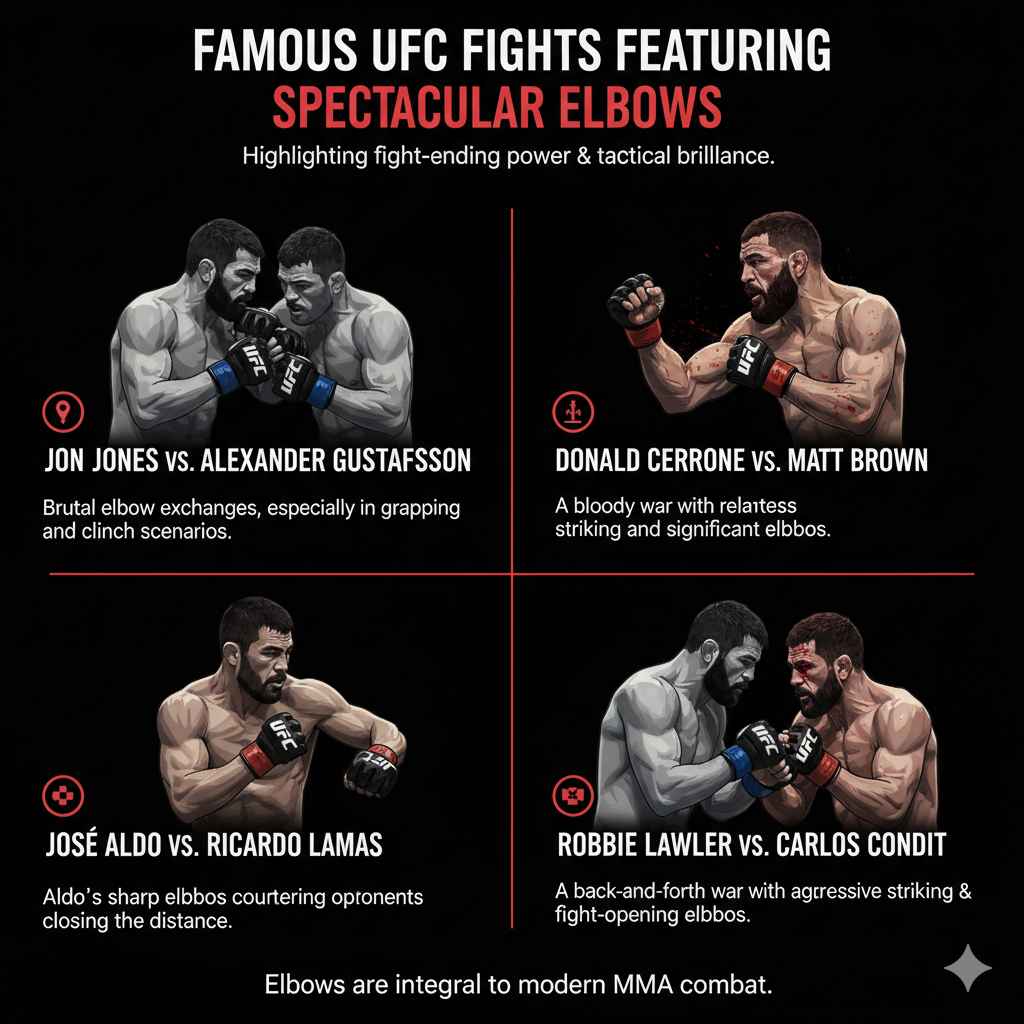
History is littered with unforgettable moments where elbows stole the show. These fights showcase the fight-ending power and tactical brilliance of this strike.
- Jon Jones vs. Alexander Gustafsson: While Jones is known for many weapons, their second fight featured brutal elbow exchanges, particularly in the grappling and clinch scenarios.
- Donald Cerrone vs. Matt Brown: This bloody war was a showcase for relentless striking, with both fighters landing significant elbows that contributed to the fight’s intensity and eventual stopping.
- José Aldo vs. Ricardo Lamas: Aldo, renowned for his striking, has landed numerous elbows throughout his career, often using them to counter opponents trying to close the distance.
- Robbie Lawler vs. Carlos Condit: This fight of the year contender was a back-and-forth war with both fighters employing aggressive striking, including sharp elbows that opened up cuts and showcased incredible resilience.
These fights, and many others, highlight how crucial elbows are to the high-level strategy and excitement of the UFC. They are not just occasional weapons; they are integral to the fabric of modern MMA combat.
Frequently Asked Questions (FAQ)
Q1: Are all elbow strikes legal in the UFC?
A1: Most elbow strikes are legal, but there’s a specific rule against “12-to-6” downward elbow strikes when fighting on the ground. Strikes that are diagonal or horizontal while on the ground are legal.
Q2: Can you throw elbows when you’re standing up?
A2: Yes, absolutely. All types of elbow strikes—horizontal, vertical, and spinning—are legal when both fighters are standing.
Q3: What is the “12-to-6” elbow rule?
A3: It refers to a downward elbow strike delivered in a straight vertical line, as if striking from the 12 o’clock position to the 6 o’clock position. This is illegal on the ground.
Q4: What happens if a fighter throws an illegal elbow?
A4: The referee might warn the fighter, deduct a point, or even disqualify them, depending on the severity and intent of the foul.
Q5: How does the referee determine if an elbow is legal on the ground?
A5: Referees look at the trajectory of the strike. If it’s directly down, it’s illegal. If it’s at an angle or horizontal, it’s generally considered legal.
Q6: Are elbows more powerful than punches?
A6: Elbows can deliver very focused, sharp power, often leading to cuts. Punches can generate broader power and are more effective for volume. They are different tools for different situations.
Q7: Should beginners try to use elbows right away?
A7: It’s recommended to learn the basics of striking and defense first. When introducing elbows, it should be under qualified coaching and with controlled practice to ensure safety and correct technique.
Conclusion
So, to circle back to our main question: are elbows allowed in UFC? The answer is a definitive and enthusiastic yes! From the intense clinch battles to the ground-and-pound dominance, elbows are a fundamental and exhilarating part of mixed martial arts. Understanding the nuances of the rules, particularly the distinction between standing and grounded techniques, is key to appreciating their strategic application.
For beginners, the journey into using elbows should be one of careful learning, focusing on technique, safety, and understanding your training partner and coach. They are powerful tools that, when mastered correctly and within the rules, can significantly elevate a fighter’s skillset. Keep practicing, stay safe, and enjoy exploring this dynamic aspect of MMA!