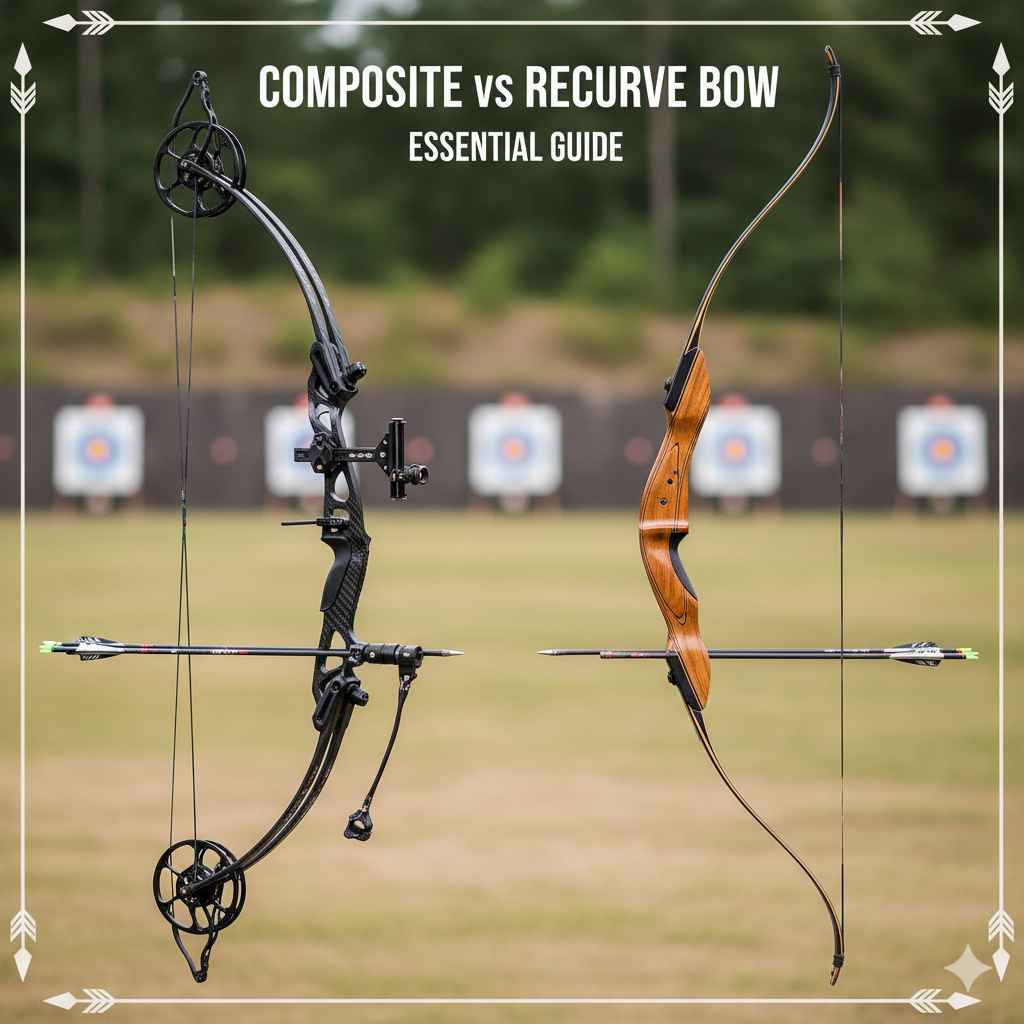
Choosing your first bow can feel a bit overwhelming! Both composite and recurve bows are fantastic for beginners, but they have key differences. This guide will break down what makes them unique, helping you pick the perfect bow for your archery journey. We’ll cover their features, pros, cons, and what to consider so you can confidently step onto the shooting line.
What’s the Big Difference? Composite vs. Recurve Bow Basics
When you’re starting in archery, you’ll quickly hear about two popular types of bows: the recurve bow and the composite bow. They look and feel different, and understanding these differences is the first step to finding the bow that’s right for you. Let’s get to know them better!
Essentially, the main difference lies in their design and how they store energy. A recurve bow has limbs that curve away from the archer at the tips. A composite bow, often called a compound bow, uses a system of pulleys and cables to make it easier to draw and hold the bowstring.
Recurve Bows: The Traditional Choice
Recurve bows are what most people imagine when they think of archery. Think of ancient archers or the Olympics! They are elegant, relatively simple, and have a long history. Their limbs, the long flexible parts of the bow, curve outwards at the top and bottom.
This outward curve is clever! It means the limbs store more energy when you draw the bowstring back, which then translates into a faster arrow speed. They are often lighter and simpler in construction compared to their composite cousins.
Key Features of Recurve Bows:
- Simple Design: Fewer moving parts, making them easier to understand and maintain.
- Limb Shape: The tips curve away from the archer when unstrung.
- Versatility: Can be used for traditional archery, target shooting, and even hunting.
- Draw Weight: Generally lighter draw weights are available, making them great for beginners.
- Feel: Offers a more direct, raw archery experience with a cleaner release.
Pros of Recurve Bows for Beginners:
- Easier to Learn Basic Form: Their simplicity helps new archers focus on fundamental techniques like stance, grip, and aiming.
- Affordability: Recurve bows are often more budget-friendly, especially entry-level models.
- Lightweight and Portable: Easy to carry around to different shooting locations.
- Quiet Operation: Generally quieter than compound bows.
- Great for Core Strength: Drawing a recurve engages your back and shoulder muscles effectively.
Cons of Recurve Bows for Beginners:
- Requires More Strength: Holding the bow at full draw can be challenging as your muscles fatigue.
- Slower Arrow Speed: Compared to compound bows of similar draw weight.
- Less Aiming Assistance: Often have fewer accessories like advanced sights or stabilizers available, requiring better instinctive aiming skills.
Composite (Compound) Bows: The Modern Powerhouse
Composite bows, more commonly known as compound bows, are the high-tech marvels of the archery world. They use a system of cams, pulleys, and cables to make drawing and holding the bowstring much easier. This system is designed to let off some of the holding weight once you reach full draw.
This “let-off” is a game-changer. It means you can hold the bow at full draw for a longer period without as much physical strain compared to a recurve. This often leads to more stable aiming and potentially greater accuracy, especially for less experienced archers.
Key Features of Composite Bows:
- Cam/Pulley System: These are the heart of the compound bow, reducing draw weight at full draw.
- Let-Off: The percentage of draw weight that is reduced when the bow is fully drawn.
- High Speed: Generally shoot arrows faster than recurve bows.
- Stability: Often heavier, which can help with stability during aiming.
- Customization: Can be fitted with various accessories like sights, stabilizers, and release aids.
Pros of Composite Bows for Beginners:
- Easier to Hold at Full Draw: The let-off feature is incredibly beneficial, reducing fatigue and allowing for steadier aim.
- Higher Arrow Speeds: Can lead to flatter arrow trajectories and hitting targets more consistently.
- More Aiming Support: Often come with advanced sights that help beginners aim more accurately.
- Less Strength Required to Hold: While drawing still requires strength, holding is significantly easier.
- Forgiving: The added stability and aiming aids can make them more forgiving for minor aiming errors.
Cons of Composite Bows for Beginners:
- Higher Cost: Compound bows and their accessories are generally more expensive.
- More Complex Maintenance: The pulley and cable system requires more specialized knowledge for maintenance and tuning.
- Heavier Weight: Can be more difficult to carry for extended periods.
- Can Be Noisier: The mechanical parts can produce more noise than a recurve.
- Steeper Learning Curve for Mechanics: Understanding how to adjust and maintain the cams, cables, and other components can be daunting for newcomers.

Composite vs. Recurve Bow: A Direct Comparison
To make things crystal clear, let’s compare these two bow types side-by-side. This table highlights the main differences that will influence your decision.
| Feature | Recurve Bow | Composite (Compound) Bow |
|---|---|---|
| Design | Simple, limbs curve away from archer. | Complex, uses cams, pulleys, and cables. |
| Draw Weight at Full Draw | Full draw weight must be held. | Significantly reduced draw weight at full draw (let-off). |
| Ease of Holding | More difficult, requires more muscle strength and endurance. | Much easier, less strain due to let-off. |
| Arrow Speed | Moderate. | High. |
| Complexity | Simple. | Complex. |
| Cost (Beginner Models) | More affordable. | More expensive. |
| Maintenance | Simple, minimal. | More involved, may require professional help. |
| Learning Curve | Focuses on core archery form. | Involves understanding mechanics and accessories. |
| Portability | Lightweight and easy to carry. | Heavier, can be bulky. |
| Noise Level | Quieter. | Can be noisier due to mechanical parts. |
Which Bow is Right for YOU? Factors to Consider
Now that you know the basics, let’s talk about how to choose. Think about your personal goals, physical abilities, and budget. There’s no single “best” bow; it’s about finding the best bow for you.
1. Your Archery Goals
What do you want to do with your bow? This is the most important question.
- Target Shooting (Recreational): Both are great! A recurve offers a pure challenge, while a compound might be more forgiving. For Olympic-style target shooting, a recurve is the standard.
- Hunting: Compound bows are the dominant choice for hunting due to their speed, accuracy, and the ability to hold longer on waiting shots. However, traditional bowhunting with recurves is also very rewarding for those seeking a greater challenge. Always check your local hunting regulations on bow types.
- 3D Archery (Simulated Hunting): Compound bows with advanced sights are usually preferred for their speed and accuracy over longer distances.
- Traditional Archery: If you want to experience archery as it was done centuries ago, a traditional recurve (or longbow) is your path.
2. Physical Strength and Stamina
Be honest about your physical condition. Archery is a physically demanding sport, but the equipment can be matched to your strength.
- New to Archery / Less Upper Body Strength: A recurve with a lighter draw weight (e.g., 20-25 lbs) is an excellent starting point. A compound bow with significant cam let-off is also a good option because you won’t need to hold as much weight at full draw.
- Good Upper Body Strength: You can handle a wider range of draw weights in either bow type. However, even with strength, the let-off of a compound bow can still offer an advantage for holding steady.
- Endurance: If you plan to shoot for long periods or hunt where you might need to hold for a while, the let-off on a compound bow can be a major benefit.
3. Budget
Archery can be an investment, but there are options for every wallet.
- Entry-Level Recurve Bows: You can find decent beginner recurve bows, often in kits, for $100-$300.
- Entry-Level Compound Bows: Beginner compound bows and packages typically start around $300-$600 and can go up significantly from there.
- Accessories: Don’t forget to factor in the cost of arrows, a quiver, a target, armguard, finger tab or release aid, and potentially a bow case.
Remember, it’s often better to start with a more affordable, suitable bow and upgrade later as your skills and needs evolve.
4. Simplicity vs. Technology
Do you prefer a straightforward, classic experience or a more technologically advanced one?
- For Simplicity: The recurve bow offers fewer moving parts, making it easier to understand and maintain. It’s about mastering the natural mechanics of drawing and aiming.
- For Technology: The compound bow is a marvel of engineering. If you enjoy gadgets and precision mechanics, the compound bow’s system of cams, cables, and tunable adjustments might appeal to you.
Getting Started: What You Need
Regardless of whether you choose a recurve or a composite bow, there are a few essential pieces of gear that will make your archery experience safer and more enjoyable.
Essential Archery Gear Checklist:
- Bow: Your chosen recurve or compound bow.
- Arrows: Make sure they are the correct spine (stiffness) and length for your bow. A local pro shop can help with this.
- Bowstringer: Absolutely essential for safely stringing and unstringing a recurve bow. Using your bare hands or improper methods can damage the bow or cause injury. For compound bows, specific stringing devices are often needed, and it’s usually best to have a pro shop handle string changes.
- Quiver: To hold your arrows. They can be hip quivers, back quivers, or bow-mounted quivers (common for compound bows).
- Armguard: Protects your forearm from string slap, which can be painful!
- Finger Protection: For recurve bows, you’ll need either a finger tab or a shooting glove to protect your drawing fingers.
- Release Aid (for Compound Bows): Most compound archers use a mechanical release aid to draw and hold the string, which helps with consistent accuracy.
- Target: A safe and appropriate target to shoot at.
- Safety Glasses: Always protect your eyes!
For compound bows, you might also consider:
- Arrow Rest: A device that holds the arrow against the bow riser.
- Sight: Magnified sights with pins to aid in aiming.
- Stabilizer: A rod that attaches to the bow to reduce vibration and improve balance.
- Peep Sight: Installed on the bowstring, it aligns with the bow sight for precise aiming.
A great resource for understanding archery equipment is the Archery GB Equipment Guide.
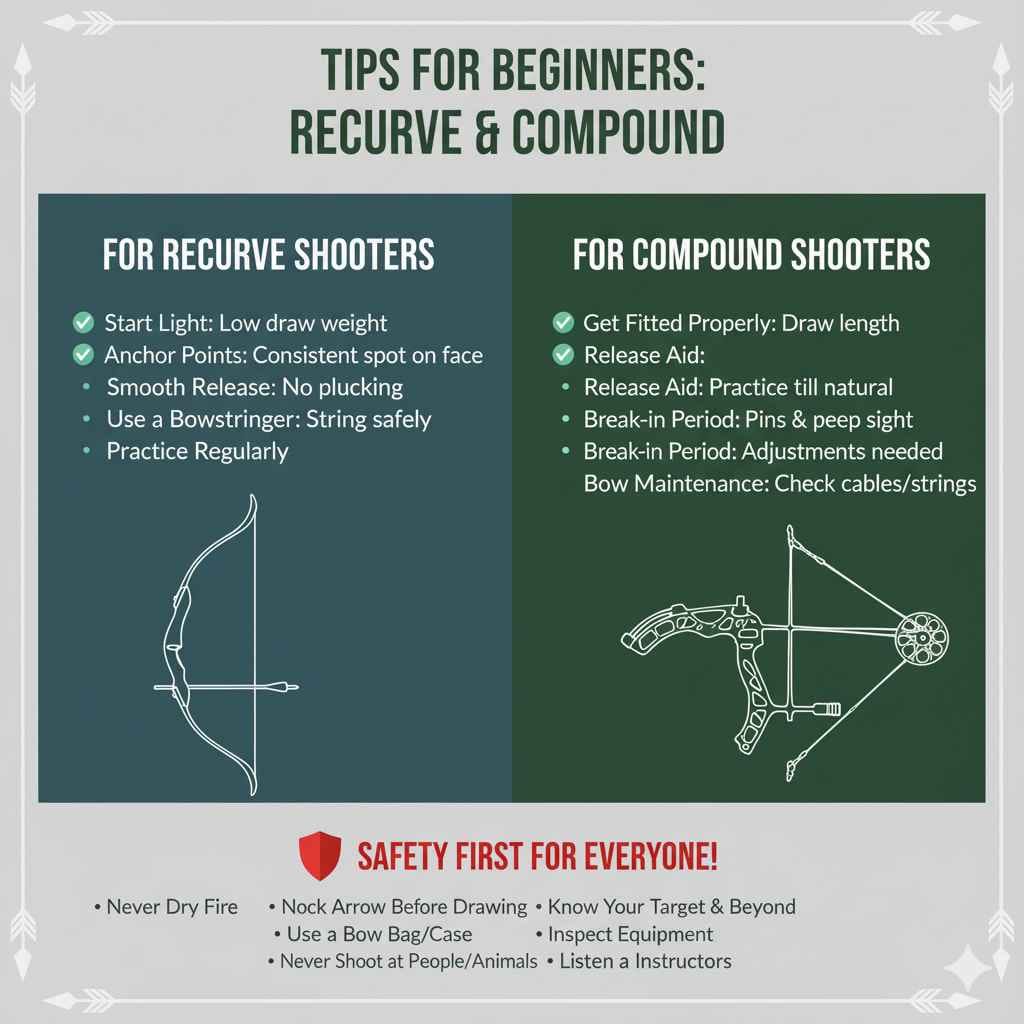
Tips for Beginners: Recurve and Compound
No matter which bow you choose, focusing on fundamentals and safety will set you up for success.
For Recurve Shooters:
- Start Light: Choose a recurve with a low draw weight. This allows you to focus on form without struggling to pull the string back.
- Focus on Anchor Points: Find a consistent spot on your face where you draw the string back to – this is your anchor point.
- Smooth Release: Practice a smooth, clean release of the string. Avoid “plucking” it.
- Use a Bowstringer: Always use a bowstringer to string your bow safely.
- Practice Regularly: Even short, consistent practice sessions are better than infrequent long ones.
For Compound Shooters:
- Get Fitted Properly: Ensure your draw length is correctly set. This is crucial for accuracy and comfort. A pro shop can measure this for you.
- Understand Your Release Aid: Practice with your release aid until it feels natural and consistent.
- Learn Sight Picture: Get comfortable with how your sight pins work and how to aim through the peep sight.
- Break-in Period: New strings and cables on a compound bow might stretch slightly. Be aware that minor adjustments might be needed after the first few shooting sessions.
- Bow Maintenance: Keep an eye on your cables and strings for fraying or wear.
Safety First for Everyone:
- Never Dry Fire: Never draw and release the bowstring without an arrow nocked. This can severely damage the bow and cause injury.
- Always Nock an Arrow Before Drawing: Except when specifically practicing release without an arrow as part of a diagnostic process with an instructor.
- Know Your Target and Beyond: Be absolutely sure of what is behind your target. Stray arrows can travel a long way.
- Use a Bow Bag/Case: Transport your bow safely and protected.
- Inspect Your Equipment: Before each shooting session, check your bow, strings, and arrows for any signs of damage.
- Never Shoot at People or Animals Unintentionally: Archery is a sport, not a weapon.
- Listen to Instructors: If you’re taking lessons, they are your best guide for safe and effective shooting.
FAQ: Your Burning Questions Answered
Here are some common questions beginners have about choosing between composite and recurve bows.
Q1: Can a beginner really start with a recurve bow?
A: Absolutely! In fact, many archery instructors recommend starting with a recurve bow. Its simplicity helps you build a strong foundation in core archery techniques, like proper stance, draw, and release, without getting bogged down by complex mechanics. You’ll develop fundamental muscle memory that will benefit you no matter what type of bow you shoot later.
Q2: Is a compound bow too complicated for beginners?
A: Not necessarily! While compound bows have more parts, the “let-off” mechanism makes them easier to hold at full draw, which many beginners find less intimidating. Many compound bows come as “package deals” with essential accessories pre-installed. The key is to learn from an experienced archer or instructor who can guide you through the basics and proper setup.
Q3: Which type of bow is faster, recurve or compound?
A: Compound bows are generally significantly faster than recurve bows, especially when comparing bows of similar draw weights. The pulley system on a compound bow allows it to store and release energy more efficiently, resulting in higher arrow speeds.
Q4: Can I hunt with a recurve bow?
A: Yes, you can definitely hunt with a recurve bow! It’s a very traditional and rewarding way to hunt. However, it requires more skill, practice, and often closer shot distances compared to hunting with a compound bow.