
I’ll never forget my first time shooting a recurve bow—it was like trying to tame a wild horse! The string snapped, the arrow flew wonky, and I laughed so hard I nearly fell over. Whether you’re a kid picking up a bow for fun or an adult chasing that bullseye, shooting a recurve bow is a blast. This article shares the different ways to shoot a recurve bow, with easy tips and tricks to make you feel like a pro. From picking the right stance to aiming without sights, I’ll walk you through each method with simple steps, personal stories, and beginner-friendly advice. Let’s get started!
What Is a Recurve Bow and Why Shoot It?
A recurve bow is a simple bow with curved tips that store energy when you pull the string. It’s the classic bow you see in movies like The Hunger Games. Unlike compound bows with fancy pulleys, recurves are lightweight and fun to shoot. They’re great for target practice, hunting, or just feeling like a medieval archer!
Shooting a recurve bow builds focus, strength, and patience. It’s a sport anyone can try—no big muscles needed. Plus, it’s affordable! You can start with a basic bow for under $100. But it takes practice to hit the target, so let’s explore the different ways to shoot one.
Getting Started: Basic Setup and Safety
Before you shoot, you need the right gear and a safe setup. Here’s what you’ll need:
- Recurve Bow: Pick one with a draw weight of 20-30 pounds for beginners. This is the force needed to pull the string back.
- Arrows: Match arrows to your bow’s draw length (how far you pull the string). Ask at a local archery shop for help.
- Armguard and Finger Tab: These protect your arm from the string and your fingers from blisters.
- Target: Use a foam target or hay bales for backyard practice.
Safety Tips:
- Never point a loaded bow at anyone.
- Check arrows for cracks before shooting.
- Shoot in a clear area with a safe backstop.
I once forgot my armguard and got a nasty string slap—ouch! Trust me, gear up properly.

Different Ways to Shoot a Recurve Bow
There are several ways to shoot a recurve bow, each with its own vibe. Let’s break them down with easy steps and tips.
Instinctive Shooting: Trust Your Gut
Instinctive shooting is like throwing a ball—you just look at the target and let the arrow fly. It’s how ancient archers shot, and it feels super natural. I love this method for its simplicity, but it takes practice to get consistent.
How to Shoot Instinctively:
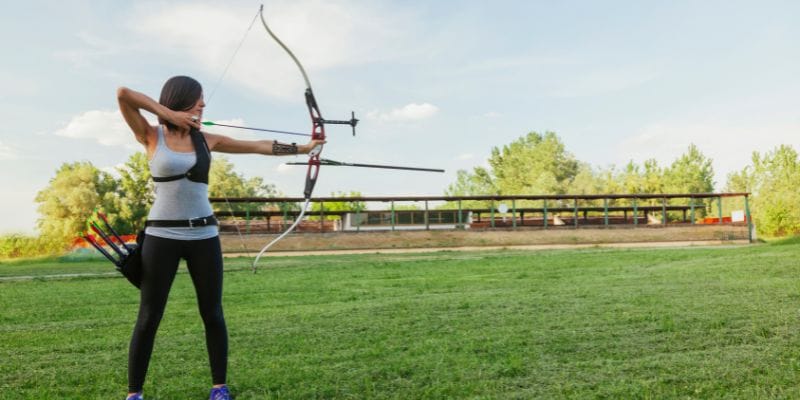
- Stand with feet shoulder-width apart, facing sideways to the target.
- Hold the bow gently, like you’re shaking hands.
- Nock the arrow (clip it to the string).
- Look at the target, not the arrow, and pull the string to your cheek.
- Release smoothly, keeping your eyes on the target.
Pros and Cons:
| Aspect | Pros | Cons |
|---|---|---|
| Ease | Feels natural, no tools needed | Hard to be consistent at first |
| Speed | Quick for hunting or fun | Less accurate at long distances |
| Fun Factor | Super fun and free-spirited | Takes lots of practice |
Tip: Start at 10 yards. Shoot groups of three arrows and try to hit the same spot. My first tries were all over the place, but after a week, my arrows started clustering together!
Gap Shooting: Use the Arrow Tip
Gap shooting uses the arrow tip as a guide. You look at the target and notice the “gap” between the arrow tip and where you want to hit. It’s like using a built-in sight, and it’s great for beginners who want more accuracy.
How to Gap Shoot:
- Stand the same as instinctive shooting.
- Pull the string to your anchor point (like the corner of your mouth).
- Look at the target and see where the arrow tip sits.
- Adjust your aim up or down based on the gap (this takes trial and error).
- Release smoothly without moving the bow.
Gap Shooting Distances:
| Distance | Arrow Tip Position | Notes |
|---|---|---|
| 10 yards | Slightly below target | Easiest for beginners |
| 20 yards | On target or slightly above | Needs practice |
| 30 yards | Above target | Tricky but doable |
Tip: Mark your gaps on a notebook for each distance. I found my 20-yard gap was about an inch above the bullseye. It’s like learning a secret code!
String Walking: Move Your Fingers
String walking is a cool method where you move your fingers down the string to adjust for distance. It’s precise but takes time to master. I tried this at an archery club, and it felt like solving a puzzle.
How to String Walk:
- Set up your stance and grip.
- Nock the arrow and place your fingers below the nock (not on it).
- For closer targets, place fingers lower on the string; for farther, higher.
- Pull to your anchor point and aim the arrow tip at the target.
- Release gently, keeping the bow steady.
Finger Placement Guide:
| Distance | Finger Position | Accuracy |
|---|---|---|
| 10 yards | 1 inch below nock | High |
| 20 yards | 0.5 inch below nock | Medium |
| 30 yards | At nock | Medium |
Tip: Practice at one distance until you’re consistent. I spent a month on 15 yards before moving farther. Patience is key!
Using a Sight: Precision for Pros
If you want pinpoint accuracy, use a sight. It’s a small device on the bow that helps you aim like a laser. This is common in Olympic archery but less “traditional.” I tried a sight once, and it felt like cheating—but it worked!
How to Shoot with a Sight:
- Attach a sight to your bow (most have screw holes).
- Stand and grip as usual.
- Pull the string to your anchor point.
- Line up the sight’s pin with the target.
- Release smoothly, keeping the pin steady.
Pros and Cons of Sights:
| Aspect | Pros | Cons |
|---|---|---|
| Accuracy | Super precise | Slow for hunting |
| Ease | Easy to learn | Adds gear to carry |
| Cost | Affordable ($20-50) | Not “traditional” |
Tip: Start with a cheap sight to test it out. I got one for $25, and it boosted my accuracy big time.
Common Mistakes to Avoid
Beginners make some classic goofs (I sure did!). Here’s how to dodge them:
- Gripping Too Tight: Hold the bow like a relaxed handshake. A tight grip shakes your aim.
- Dropping the Bow Arm: Keep your arm up until the arrow hits. I dropped mine once and missed by a mile!
- Rushing the Shot: Take a breath, aim, then release. Rushing makes arrows fly wild.
Personal Tips from My Archery Journey
After years of shooting, here’s what I’ve learned:
- Practice 10 minutes a day—it’s better than one long session.
- Join a local archery club for tips and friends. I met my best shooting buddy at one!
- Watch YouTube videos from pros like Clay Hayes for form tips.
Visual Ideas for Better Understanding
To make learning easier, imagine these visuals (not included here):
- Diagram of Stance: A side view showing feet shoulder-width apart, body turned sideways.
- Arrow Tip Gap Chart: A simple drawing of how the arrow tip aligns with the target at different distances.
- Finger Placement Guide: A close-up of fingers on the string for string walking.
Frequently Asked Questions
What’s the Easiest Way to Shoot a Recurve Bow?
Instinctive shooting is the easiest because it’s like throwing a ball—you just look and shoot. Start at 10 yards and practice hitting the same spot. It’s fun and builds confidence fast.
Can Kids Shoot a Recurve Bow?
Yes! Kids can use lightweight bows (15-20 pounds). Always supervise them and use an armguard. My nephew started at 10 and loved it!
How Do I Choose the Right Draw Weight?
Beginners should start with 20-30 pounds. It’s easy to pull and helps you focus on form. Test bows at a shop to find what feels comfy.
What’s the Difference Between Instinctive and Gap Shooting?
Instinctive shooting relies on your gut, like throwing a dart. Gap shooting uses the arrow tip to aim, adjusting for distance. Gap is more precise but needs practice.
Do I Need a Sight for Accurae Bow?
Beginners can hit targets at 10-20 yards. With practice, you can shoot 30-50 yards accurately. Pros hit 70 meters in Olympic archery!
What’s the Best Practice Tip for Beginners?
Shoot three arrows at a time, aiming for the same spot. Fetch them, repeat, and stay patient. Consistency comes with daily practice.
Conclusion
Shooting a recurve bow is like learning to ride a bike—wobbly at first, but so fun once you get it! You can try instinctive shooting for a natural feel, gap shooting for better aim, string walking for precision, or a sight for pro-level accuracy. Start with a simple setup, practice daily, and avoid common mistakes like gripping too tight. Grab a bow, hit the range, and have a blast! Share your first bullseye story with friends or try a local archery club. For more tips, check out World Archery or Bear Archery. Happy shooting