
If you’re new to archery, you might be asking yourself, Do Recurve Bows Need an Arrow Rest? It’s a common question, and getting a clear answer is important for your accuracy and enjoyment of the sport. Don’t worry, it’s not as tricky as it seems! This post will walk you through everything you need to know in a simple, step-by-step way, explaining the different options and how they impact your shooting. We’ll explore the basics, so you’ll be well-prepared to improve your archery skills.
What Is an Arrow Rest and Why Does It Matter?
An arrow rest is a small component on a bow that supports the arrow as it’s drawn and released. It’s located just above the bow’s handle, acting as a shelf or cradle for the arrow. Its purpose is to hold the arrow in place, improving shot consistency and accuracy. Without an arrow rest, the arrow would simply rest on your hand or the bow itself, making consistent aiming difficult. There are several types of arrow rests, each with its advantages and disadvantages, catering to different archery styles and preferences. This variety allows archers to select the rest that best suits their needs and shooting style.
The Different Kinds of Arrow Rests
Several types of arrow rests are used in archery. Each offers unique features and caters to different shooting styles. Deciding which type of arrow rest is right for you can seem difficult, but we will explore each option and consider its advantages and disadvantages to help you make an informed decision.
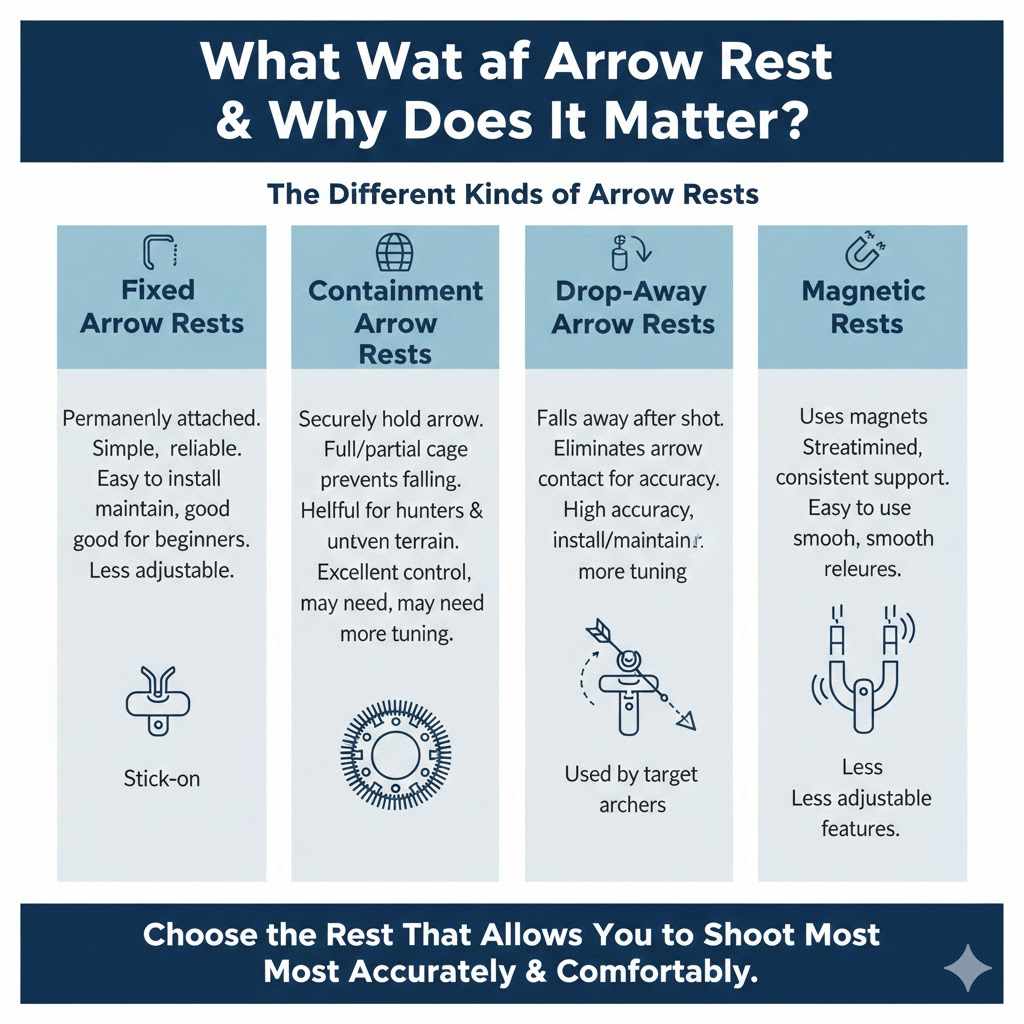
- Fixed Arrow Rests: These rests are permanently attached to the bow. They offer simplicity and reliability. They come in various designs, including the simple stick-on rests and more complex models that offer adjustments for arrow height and center shot. They are easy to install and maintain, making them a good option for beginners. However, they may not offer as much adjustment as other types, potentially limiting fine-tuning for advanced archers.
- Containment Arrow Rests: These are designed to hold the arrow securely, even when the bow is drawn or tilted. They feature a full or partial cage that surrounds the arrow. This helps prevent the arrow from falling off the rest, which is very helpful for hunters and archers who might be shooting in uneven terrain or at various angles. Containment rests offer excellent arrow control. However, some may require more tuning and adjustment.
- Drop-Away Arrow Rests: Drop-away rests are designed to fall away from the arrow’s path after the shot. This helps eliminate arrow contact with the rest during the critical moment of release, which is excellent for accuracy. These rests often provide the highest level of accuracy, minimizing interference with the arrow’s flight. They can be more complex to install and require more maintenance than fixed rests. They are commonly used by target archers seeking the highest levels of accuracy.
- Magnetic Arrow Rests: Using magnets to hold and guide the arrow, magnetic arrow rests are sometimes used. These rests offer a streamlined and consistent arrow support system. They are known for their ease of use and often offer smooth arrow release. They don’t typically have as many adjustable features as other types.
Choosing the right arrow rest depends on individual needs and shooting style. Each type has its benefits, and the best choice is the one that allows you to shoot most accurately and comfortably.
Recurve Bows and Arrow Rest Compatibility
Recurve bows, with their curved limbs, are designed for both target archery and field archery. It’s good to consider the specific features that make them unique when selecting an arrow rest. Understanding how the arrow rest integrates with the bow’s design is key to maximizing performance. We will explore what arrow rests work best with recurve bows, the advantages, and the considerations to make the most of your shooting.
Selecting the Right Arrow Rest for Your Recurve Bow
The type of arrow rest used on a recurve bow is important. The choices you make will affect your accuracy and overall archery experience. Here are some of the popular choices:
- Plunger Rests: These are typically used in target archery. They allow for fine-tuning the arrow’s flight, optimizing accuracy and are very helpful for adjusting the arrow’s horizontal position. This is key for achieving the most accurate shot possible.
- Stick-On Rests: Stick-on rests are simple and cost-effective. They’re easy to install and good for beginners. These rests are a good option for those starting out, as they provide basic support without requiring complex setups.
- Wrap-Around Rests: These rests fully or partially wrap around the arrow. They offer good support and are often preferred for field archery because they keep the arrow secure. This is essential when moving around or shooting at different angles in the field.
- Magnetic Rests: Magnetic rests can offer smooth arrow release and are often easy to use. These rests can provide good arrow support and are simple to set up. However, make sure to consider their suitability for your specific recurve bow setup.
Selecting the right rest can significantly improve your archery. When picking an arrow rest, think about your style of archery, level of experience, and the kind of bow you have. Proper setup is important. Carefully follow the instructions to mount and adjust the rest. This will guarantee that your arrows fly correctly, enhancing your shooting performance.
Impact of Arrow Rest on Recurve Bow Accuracy
The choice of arrow rest is closely related to accuracy in recurve bows. The rest directly impacts the way the arrow leaves the bow. Here is a look at how arrow rests affect shooting accuracy:
- Consistency of Arrow Flight: A well-chosen and correctly adjusted arrow rest ensures that the arrow consistently leaves the bow in the same way with each shot. This consistency is essential for accuracy, as it minimizes the variability in arrow trajectory.
- Minimizing Arrow Contact: Some arrow rests, like drop-away rests, are designed to reduce or eliminate contact with the arrow during the shot. This reduces the chance of any side forces or inconsistencies that can affect accuracy. The goal is to let the arrow fly as cleanly as possible.
- Adjustment and Tuning: Adjustable arrow rests offer the opportunity to fine-tune the bow setup. This includes the position of the arrow relative to the bow and the arrow’s center shot, which significantly impacts accuracy. Tuning the rest to match the bow and the archer’s shooting style is key.
- Stability and Support: The arrow rest provides stability to the arrow. This support is especially important as the archer aims and draws the bow. Stability is essential for ensuring that the arrow is properly aligned for a clean release.
For best results, choose an arrow rest that matches your archery style and experience level. Properly installing and tuning the rest is equally important, allowing the bow and the archer to achieve maximum accuracy.
Choosing a Rest: When and How to Get Started
Deciding when and how to get an arrow rest is essential for any archer, from beginner to advanced. Whether you’re just starting or looking to enhance your existing setup, knowing the steps involved ensures a great archery experience. This section will guide you through the process, covering the best times to start using an arrow rest and how to select the right one for your needs.
Starting Your Arrow Rest Search
Starting your search for an arrow rest can seem hard. It’s easier when you understand the key considerations. This is what you should focus on:
- Assess Your Archery Goals: What type of archery do you plan to practice? Target archery, field archery, or bowhunting? Different types of archery may need different kinds of arrow rests.
- Understand Your Bow Type: Do you have a recurve bow? This will affect the type of arrow rest you can use. Recurve bows often use plunger rests or stick-on rests, while compound bows may use drop-away or containment rests.
- Consider Your Skill Level: Beginners might find simple stick-on rests easy. Experienced archers can use adjustable rests for fine-tuning. A beginner might want something easy to set up and use. More experienced archers can benefit from adjustable rests to enhance their accuracy.
- Set a Budget: Arrow rests come in a range of prices. Decide how much you are willing to spend. Balance the price with the features. Remember that higher-priced rests often offer better features and durability.
Consider these points before you start looking for an arrow rest. When you know what you need, you can better select the rest that fits your needs.
How to Install and Set Up Your Arrow Rest
Setting up your arrow rest is an essential step. It guarantees that the arrow flies straight and that the bow performs at its best. Below are the steps you’ll need to install and set up the rest.
- Read the Instructions: Start by reading the manufacturer’s instructions for the specific arrow rest you have. Each model has unique features. The instructions give guidance on the installation and setup.
- Prepare Your Bow: Clean the area where you will attach the arrow rest. Make sure the bow surface is free of dirt, oil, and any old adhesive.
- Mount the Rest: Attach the rest to the bow. Most rests use adhesive tape or screws. Follow the directions to secure the rest. Ensure that the rest is positioned correctly.
- Adjust the Rest: After installing the rest, you’ll need to adjust it to the bow. Use the adjustments to set the height and center shot. For plunger rests, this means setting the plunger tension and arrow position.
- Test and Tune: Shoot arrows to check how the rest is performing. Make small adjustments as necessary. You may need to adjust the rest to get the arrow flying straight.
Proper installation and setup make the difference between successful shots and frustration. Take your time, follow the instructions, and make sure that you are confident with your setup.
Advanced Techniques and Troubleshooting
Once you are comfortable with the basics, exploring advanced techniques can enhance your archery skills. These include fine-tuning your arrow rest and addressing common issues. Learning how to optimize your setup, and knowing what to do when problems arise, will improve your performance.
Fine-Tuning Your Arrow Rest for Optimal Performance
Fine-tuning is essential for getting the most out of your arrow rest and improving accuracy. This involves making small changes to your setup to get the best arrow flight possible. Here is a look at fine-tuning your arrow rest:
- Paper Tuning: This method involves shooting arrows through a sheet of paper to analyze arrow flight. The tear in the paper shows how the arrow is flying. It gives information on how the arrow is coming off the bow. Adjust the rest to correct any problems found in the tear, such as a nock high or low tear.
- Walk-Back Tuning: This technique helps you adjust your center shot. You start at close range and gradually increase the distance. As the distance increases, any lateral deviations of the arrows will show the need for adjustments. You’ll make small adjustments to your arrow rest to correct the point of impact.
- Arrow Spine Selection: Correct arrow spine is important for accurate shooting. If your arrow spine is too stiff or too weak, your arrow flight will be off. Fine-tuning often involves adjusting the arrow rest’s position to get the best arrow flight with your chosen arrow spine.
- String and Nock Placement: Make sure your arrow is nocked correctly on the bowstring. This helps the arrow fly correctly off the bow. The nocking point is usually set with a nock set or tied-on nock point.
Fine-tuning requires patience, but it is one of the best things you can do to enhance accuracy. By making careful adjustments, you can get the best performance from your bow and arrows.
Troubleshooting Common Arrow Rest Issues
Even with careful setup and use, you might encounter issues with your arrow rest. It is essential to be able to identify and fix these problems to ensure that you are able to keep shooting. Here are some of the things you might encounter:
- Arrow Fletching Contact: One common issue is fletching contact with the arrow rest. This can cause erratic arrow flight. This means that the fletchings are hitting parts of the rest as they leave the bow. Check for contact and try adjusting the rest or the arrow to eliminate the issue. You can apply a tiny amount of lipstick on the fletchings and then shoot an arrow through a piece of paper.
- Arrow Dropping off the Rest: If your arrow drops off the rest during the draw or release, your rest may not be properly adjusted, or it might be damaged. Adjust the rest or change the rest if needed. This is especially problematic with containment rests.
- Inconsistent Arrow Flight: If your arrows are not flying straight, it’s essential to tune your bow. Use paper tuning and walk-back tuning to identify and correct any issues. Make sure the arrow rest is properly aligned.
- Wear and Tear: Arrow rests wear out with use. Regularly check for wear and tear, and replace parts as needed. Check for damage. Inspect for any cracks, breaks, or excessive wear, which can affect performance.
Knowing what to do when you encounter issues helps to keep your bow functioning. Addressing the problems promptly will keep you shooting with a higher level of accuracy.

Frequently Asked Questions
Question: Do I really need an arrow rest on my recurve bow?
Answer: Yes, you usually do. While you technically could shoot off your hand, an arrow rest significantly improves accuracy and consistency by providing a stable and consistent launch platform for the arrow.
Question: What’s the best arrow rest for a beginner with a recurve bow?
Answer: A simple stick-on arrow rest is often best for beginners. They’re easy to install and provide sufficient support, allowing you to focus on the fundamentals of shooting without the added complexity of more advanced rests.
Question: How do I know if my arrow rest is set up correctly?
Answer: You can check your arrow flight by paper tuning or by observing your arrow groups at the target. Ideally, the arrows should fly straight and group tightly. If they’re showing erratic flight, some adjustment may be needed.
Question: Can I use any arrow rest with any recurve bow?
Answer: Not always. You need to pick an arrow rest that is designed to work with recurve bows, like stick-on rests or plunger rests. Make sure the rest will fit your bow and offers the features you need.
Question: How often should I replace my arrow rest?
Answer:
Final Thoughts
In summary, Do Recurve Bows Need an Arrow Rest? is an important question. The answer is generally yes, but the specific type of rest depends on your needs. Arrow rests are a core component for a reason. They support the arrow, allowing for consistent and accurate shots. From fixed rests for simplicity to adjustable options for precision tuning, understanding your options is essential. Whether you’re a beginner or a seasoned archer, selecting and properly setting up the right arrow rest can greatly improve your shooting experience. This knowledge will assist you on your journey. By taking the time to learn and experiment, you’ll be well on your way to enjoying the sport.