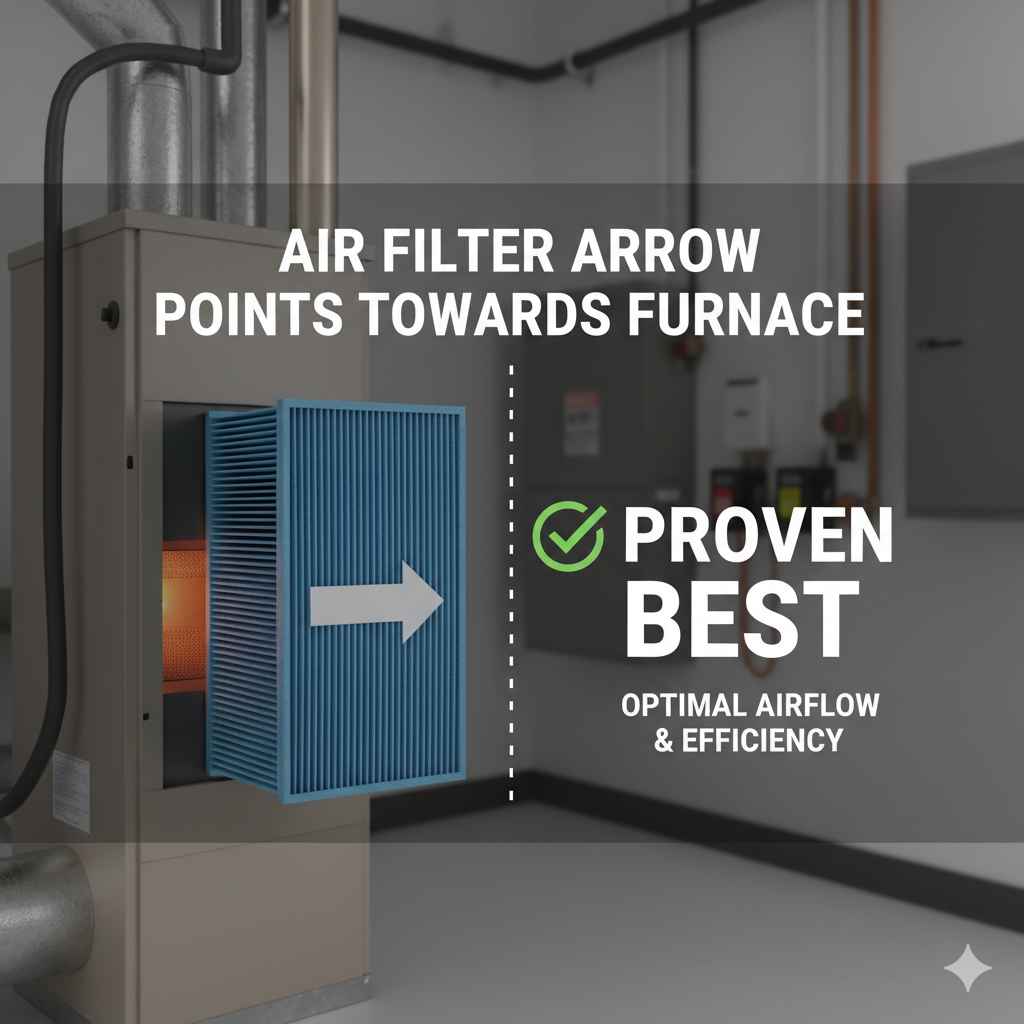
Does Air Filter Arrow Point Towards Furnace Proven Best
Yes, the arrow on your air filter must always point towards the furnace or air handler. This arrow shows the correct direction of airflow. Installing it properly ensures the filter works efficiently, protects your HVAC system from damage, and helps keep your energy costs down. This is the proven best method for a healthy system and home.
Have you ever stood in front of your furnace, new air filter in hand, and felt a little confused? You see a small arrow printed on the side and wonder which way it should go. It’s a common moment of doubt for many homeowners. Getting it right seems important, but the reason why isn’t always clear.
Don’t worry, you’re not alone! This simple arrow is one of the most important parts of changing your filter correctly. In this guide, we will walk you through exactly what that arrow means, why it needs to point toward your furnace, and what happens if you put it in backward. We will make this process simple, clear, and easy to remember.
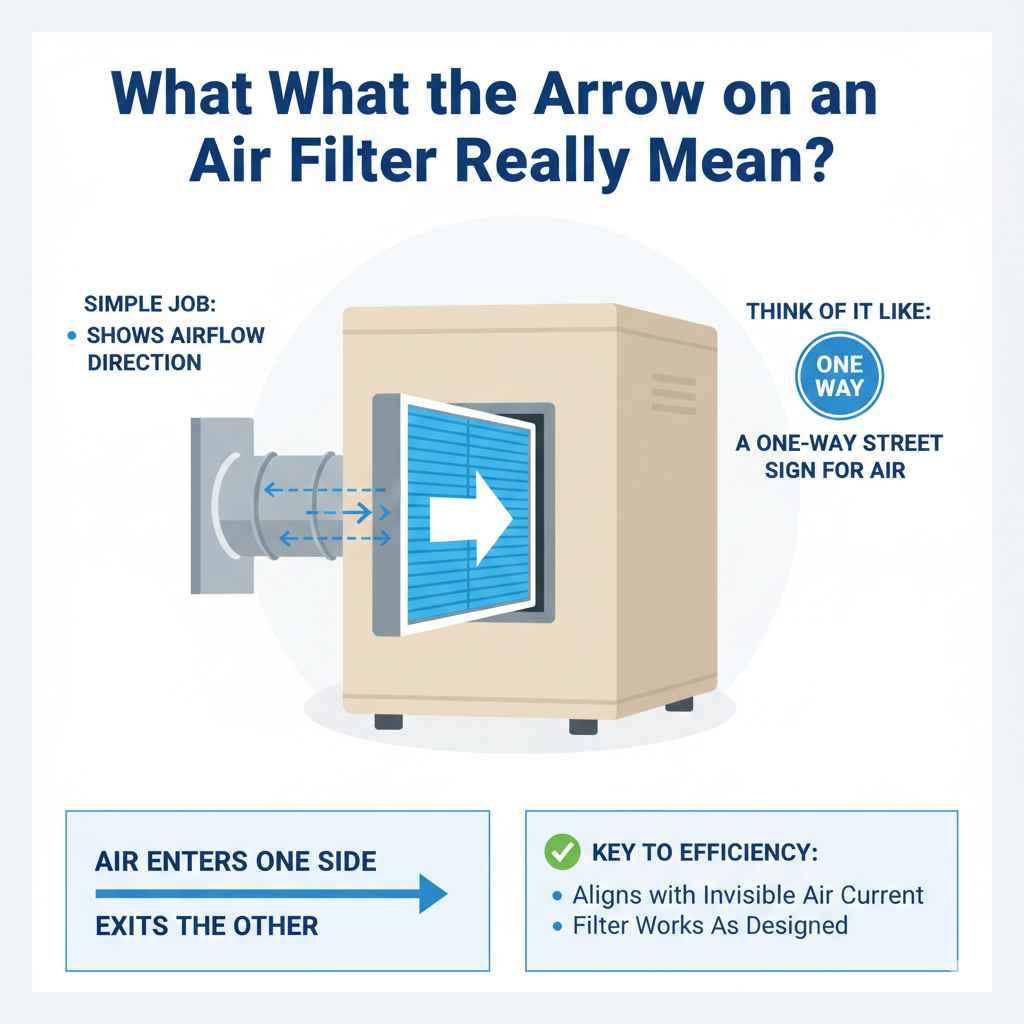
What Does the Arrow on an Air Filter Really Mean?
That little arrow on the edge of your air filter frame is your most important instruction. It has one simple job: to show you the direction the air needs to flow through the filter. It’s not pointing up or down, left or right. It’s pointing the way the air travels in your HVAC system.
Think of it like a one-way street sign for air. For the filter to do its job correctly, air must enter one side and exit the other. The arrow ensures you line it up perfectly with this invisible current of air moving through your ducts and into your furnace. Following this arrow is the key to making sure your filter works as it was designed to.
Understanding Airflow in Your HVAC System: The “Why” Behind the Arrow
To understand why the arrow is so important, it helps to know the basic path air takes in your home. Your heating and cooling system is constantly circulating air. It pulls air in, cleans it, heats or cools it, and then sends it back out.
The Return Duct: Where the Air Comes From
Your system pulls air from your rooms through large vents called return air ducts. This is the “unfiltered” air that contains dust, pet dander, lint, and other particles. This air travels through your ductwork on its way back to the main HVAC unit.
The Air Handler or Furnace: The Heart of the System
Before this air can enter the main unit (your furnace or air handler), it must pass through the air filter. The filter’s job is to clean the air to protect the sensitive and expensive parts inside your furnace, like the blower motor and coils. After passing through the filter, the now-clean air is heated or cooled and then blown back into your home through the supply vents.
So, the path is simple: Air from house -> Return Duct -> Air Filter -> Furnace/Air Handler -> Back to house.
The arrow on the filter must follow this path. It should point away from the return duct and towards the main furnace unit. This ensures it catches debris before it can do any damage.
Why Pointing the Arrow Towards the Furnace is “Proven Best”
You might think an air filter is just a simple screen, the same on both sides. But most modern filters are cleverly designed with two different sides to trap particles more effectively. This is why installing it in the right direction is not just a suggestion—it’s essential for it to work properly.
The Upstream Side (Facing Away from the Furnace)
This is the side the air hits first. It’s designed to be more open and porous. Its job is to catch the big stuff first.
- Catches large particles like lint, dust bunnies, and pet hair.
- Prevents the filter from clogging up too quickly.
- Acts as the first line of defense for your air quality.
The Downstream Side (Facing the Furnace)
This is the exit side of the filter. It is much denser and often has a wire mesh or cardboard reinforcement. This side has two critical jobs.
- It has a tighter weave to trap smaller particles that got through the first layer, like pollen, mold spores, and fine dust.
- The reinforcement provides strength, preventing the filter from bending or collapsing under the pressure of the system’s fan.
By pointing the arrow toward the furnace, you ensure this two-stage filtration system works exactly as intended. The big particles are caught first, allowing the denser layer to focus on the smaller, more harmful ones.
What Happens If You Install an Air Filter Backward?
Putting an air filter in backward is a common mistake, but it can lead to several problems, from poor performance to potential damage. The filter’s smart design only works one way, and reversing it causes a chain reaction of issues.
- Reduced Efficiency: When air hits the dense, reinforced side first, large particles clog it up almost immediately. The filter can’t breathe, and its ability to trap smaller particles is severely limited.
- Increased Strain on Your HVAC System: A clogged filter forces your system’s fan motor to work much harder to pull air through. According to the U.S. Department of Energy, a clogged filter can significantly increase energy consumption. This extra strain can lead to overheating and premature failure of the motor, which is an expensive repair.
- Higher Energy Bills: When your HVAC system has to work harder, it uses more electricity or gas. A backward filter can lead to a noticeable jump in your monthly utility bills.
- Poor Indoor Air Quality: Since the filter isn’t working correctly, more dust, pollen, and other allergens can circulate back into your home. This can make allergies and asthma symptoms worse.
- Potential Filter Collapse: The reinforcement on the back of the filter is there for a reason. Without it facing the fan, the suction can cause the filter to bend, buckle, or even get sucked into the HVAC unit, potentially damaging the fan blades.
Here is a simple table showing the difference between correct and incorrect installation:
| Feature | Correct Installation (Arrow to Furnace) | Incorrect Installation (Arrow Away from Furnace) |
|---|---|---|
| Air Filtration | Excellent. Catches both large and small particles effectively. | Poor. Clogs quickly with large particles and lets small ones through. |
| System Strain | Minimal. Air flows easily, protecting the blower motor. | High. The motor works harder, risking overheating and damage. |
| Energy Use | Normal and efficient. | Higher than normal, leading to increased utility bills. |
| Filter Lifespan | Lasts for its full recommended duration (e.g., 90 days). | Becomes clogged and ineffective in a fraction of the time. |
| Risk of Damage | Low. The filter stays intact and protects the system. | High. The filter can bend or collapse, risking fan damage. |
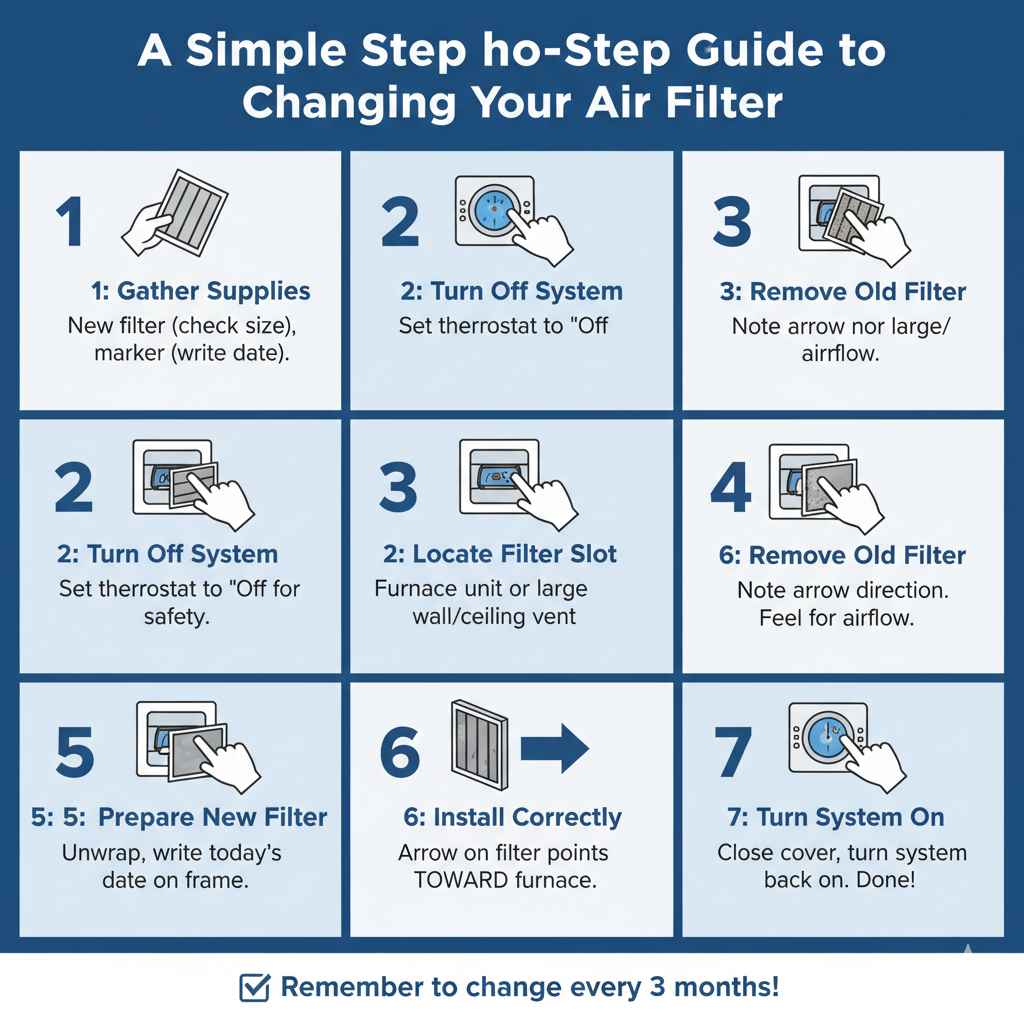
A Simple Step-by-Step Guide to Changing Your Air Filter
Changing your air filter is a simple task that anyone can do in just a few minutes. Follow these steps to get it right every time.
Step 1: Gather Your Supplies
All you need is your new air filter. Make sure it’s the correct size for your system. The size is printed on the side of your old filter (e.g., 16x25x1). It’s also helpful to have a marker to write the date on the new filter.
Step 2: Turn Off Your HVAC System
For safety, always turn your system off at the thermostat before you change the filter. Set it to the “Off” position. This prevents the fan from kicking on while you are working.
Step 3: Locate Your Air Filter Slot
The filter is usually located in one of two places:
- In the furnace/air handler: Look for a slot or cover on the unit where the large return air duct enters.
- In a return air vent: Some systems have the filter located in a large return vent in a wall or ceiling. These vents often have clips or tabs to open them.
Step 4: Remove the Old Filter
Slide the cover off or open the vent grille. Carefully pull the old filter out. Before you discard it, look for the arrow and confirm which way it was pointing. This helps you be 100% sure about the airflow direction. If you’re unsure, feel for the airflow with your hand; you will feel the suction pulling air toward the furnace.
Step 5: Prepare the New Filter
Unwrap your new filter. Take a marker and write today’s date on the cardboard frame. This is a great way to remember when you last changed it.
Step 6: Install the New Filter Correctly
Find the arrow on the frame of the new filter. Point that arrow toward the furnace or air handler (in the direction the air is flowing). Slide the new filter all the way into the slot. It should fit snugly without being forced.
Step 7: Close Up and Turn the System On
Replace the cover for the filter slot or close the vent grille. Now you can go to your thermostat and turn your system back on. You’re all done!
Choosing the Right Filter: A Quick Look at MERV Ratings
Not all filters are the same. Their performance is measured by a MERV rating, which stands for Minimum Efficiency Reporting Value. The scale typically runs from 1 to 16 for residential filters. A higher MERV rating means the filter is better at trapping smaller particles.
The U.S. Environmental Protection Agency (EPA) explains that filters with higher MERV ratings can be more effective at removing airborne particles. However, a very high MERV rating can also restrict airflow, so it’s important to choose one that is compatible with your system. For most homes, a filter in the MERV 8 to 13 range is a great choice.
| MERV Rating | What It Traps | Best For |
|---|---|---|
| 1-4 | Pollen, dust mites, carpet fibers, large dust particles. | Basic protection for your furnace, not for air quality. |
| 5-8 | Everything above, plus mold spores, pet dander, and hair spray. | Good for standard homes and families without specific health concerns. |
| 9-12 | Everything above, plus car fumes, lead dust, and legionella. | Excellent for families with pets, allergies, or asthma. A very popular choice. |
| 13-16 | Everything above, plus bacteria, tobacco smoke, and sneeze particles. | Superior filtration for those with severe allergies or respiratory issues. |
Frequently Asked Questions (FAQ)
1. Does the air filter arrow point up or down?
The arrow does not point up or down based on gravity. It points in the direction of the airflow. In a vertical furnace unit, this might be up or down. In a horizontal unit, it will be sideways. Always point the arrow toward the main body of the furnace/air handler, away from the return duct.
2. What happens if I use the wrong size filter?
Using the wrong size is a serious problem. A filter that is too small will allow air (and dust) to go around it, leaving your system unprotected. A filter that is too large won’t fit at all. Always use the exact size recommended for your system.
3. Can I clean and reuse my disposable air filter?
No, you should never wash or vacuum a disposable fiberglass or pleated paper filter. They are designed for one-time use. Attempting to clean them damages the filter material, making it ineffective and potentially releasing trapped particles back into the air.
4. Why is my house so dusty even with a new filter?
If you still have a lot of dust, you might need a filter with a higher MERV rating to capture finer particles. You could also have leaky air ducts that are pulling in dust from an attic or crawlspace. It’s also important to change your filter regularly—a clogged filter can’t do its job.
5. Is a more expensive filter always better?
Not necessarily. A more expensive filter usually has a higher MERV rating, which means it traps more particles. However, some HVAC systems are not powerful enough to handle the restricted airflow from a very high-MERV filter. A filter in the MERV 8-13 range offers a great balance of filtration and airflow for most homes.
6. Where is my furnace filter located?
The most common location is inside the furnace or air handler, in a slot between the return air duct and the blower fan. It can also be inside a large return air grille on a wall or ceiling somewhere in your home.
7. Does the brand of the air filter matter?
While brand can be an indicator of quality, the most important factors are the size and the MERV rating. As long as you get the correct size and a MERV rating that suits your needs, most reputable brands will perform well.
Conclusion: Your Simple Checklist for Success
That little arrow on your air filter is more than just a suggestion—it’s the key to protecting your HVAC system, improving your home’s air quality, and keeping your energy bills in check. Remembering this one simple rule can save you from frustration and costly repairs down the road.
So, the next time you change your filter, you can feel completely confident. Just remember: the arrow always points toward the furnace. It points in the direction that the air is flowing. By following this proven best practice, you are taking an easy but powerful step in maintaining a healthy, efficient, and comfortable home.