Does the Air Filter Arrow Point Toward the Furnace?
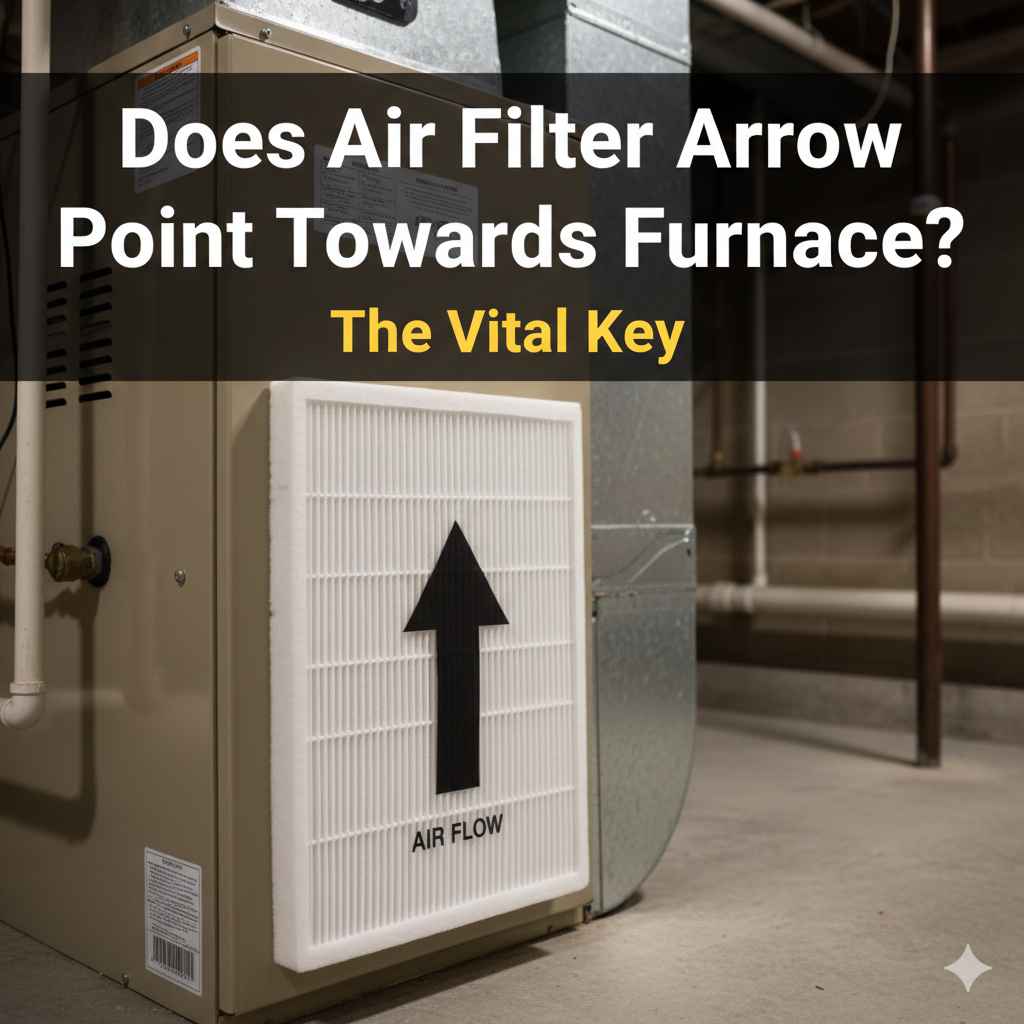
Yes, the arrow on your air filter should always point towards the furnace or air handler. This arrow indicates the direction of airflow, and the filter is designed to catch dust and debris as air flows through it and into your HVAC unit. Pointing the arrow toward the furnace ensures your system works correctly.
Welcome to your home’s command center! You might not think of it that way, but your HVAC system (Heating, Ventilation, and Air Conditioning) is the heart of your home’s comfort. And like any important piece of equipment, it needs a little care. One of the simplest yet most confusing tasks is changing the air filter.
You’ve got the new filter, you’ve found the slot, but then you see it: a tiny arrow printed on the side. Suddenly, a simple task feels like a puzzle. Does the air filter arrow point towards the furnace? Away from it? Does it even matter? It’s a common question, and getting it wrong can cause real problems.
Don’t worry. We are going to solve this puzzle together. This guide will walk you through everything, step-by-step, in plain and simple language. By the end, you’ll be able to change your air filter with total confidence, knowing you’re doing it right every time.
Why That Little Arrow is a Very Big Deal
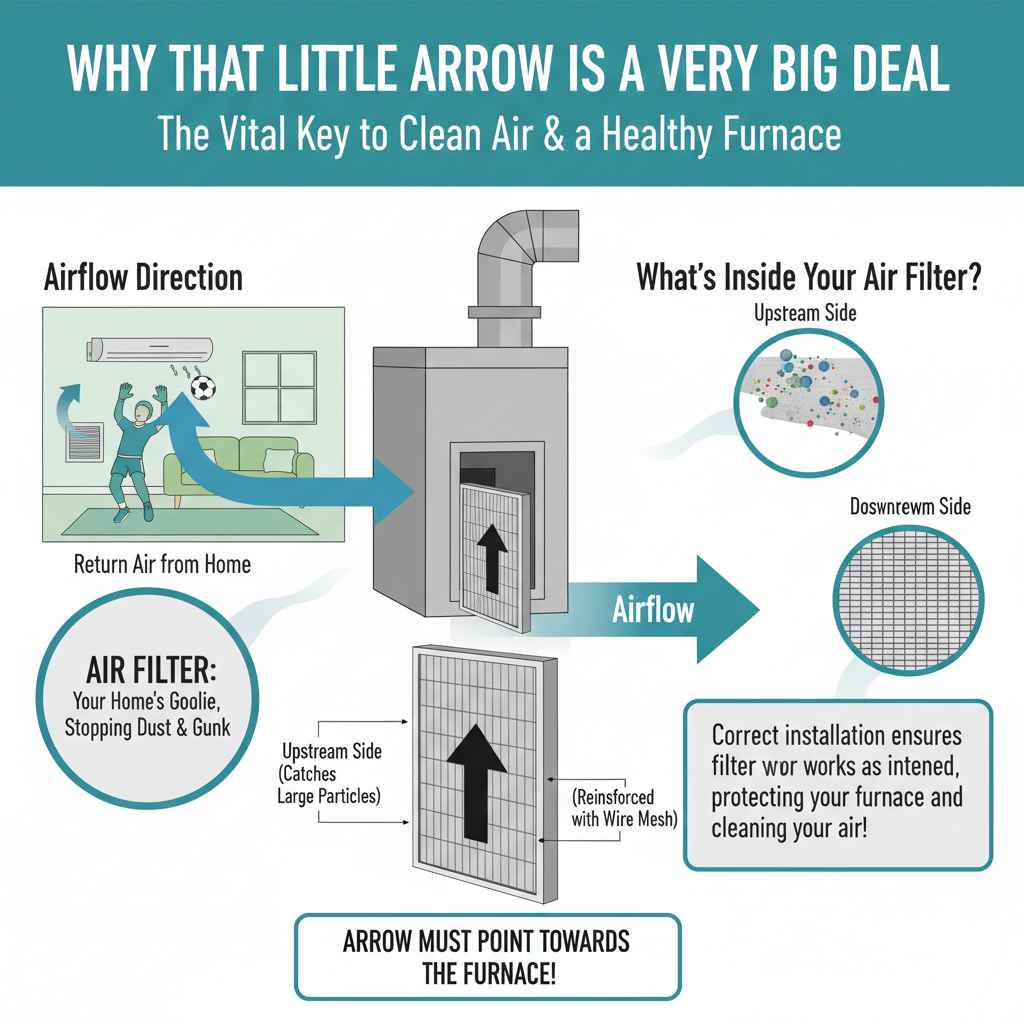
Think of your air filter like a goalie in a soccer match. Its job is to stop all the bad stuff—dust, pollen, pet dander, and other gunk—from getting into your furnace and then into the air you breathe. The arrow on the side is the game plan. It tells you which way the “ball,” or in this case, the air, is flying.
Your HVAC system works by pulling air from your rooms, through ducts, and into the furnace or air handler to be heated or cooled. This is called “return air.” After the air is treated, it’s pushed back out into your home. The filter’s job is to clean the air before it reaches the sensitive machinery of your furnace.
So, the air is always flowing from your home’s living spaces and towards the furnace. That’s why the arrow must point towards the furnace. It aligns the filter perfectly with the direction of the airflow.
What’s Inside Your Air Filter?
Air filters look simple, but they are cleverly designed. They usually have two main sides:
- The Upstream Side: This is the side that faces the incoming, dirty air. It’s more open and is designed to catch the big particles first.
- The Downstream Side: This side faces the furnace. It’s often reinforced with a wire mesh or a cardboard frame. This structure prevents the filter from collapsing or getting sucked into the fan motor under the pressure of the airflow.
When you install the filter with the arrow pointing the right way, you’re letting it do its job as intended. The dirty air hits the capturing side first, and the strong, reinforced side holds firm against the fan’s pull.
Finding Your Air Filter: A Homeowner’s Treasure Map
Before you can change the filter, you have to find it! Most homes have their air filter in one of three common places. You’re looking for a slot or cover that is about 1 to 4 inches wide and can be easily opened by hand or with a simple screwdriver.
Here are the most likely spots to check:
- Inside the Furnace or Air Handler: Often, the filter slides into a slot right on the side or bottom of the furnace unit itself. This is the most common location. Look for a small metal door that you can easily remove.
- In the Main Return Duct: Sometimes, the filter is housed in the ductwork right before it connects to the furnace. This spot is usually close to the main unit.
- In a Wall or Ceiling Return Grille: In some homes, especially those without a basement, the filter is placed behind a large return air vent. These are the big grilles in a hallway or central room that pull air in. You’ll usually see clips or screws to open the grille.
If you’re having trouble, try this: turn on your HVAC system’s fan and listen. The sound of the air being pulled into the system will be loudest near the filter location.
Common Air Filter Locations at a Glance
| Location | What to Look For | Common Home Type |
|---|---|---|
| Furnace Compartment | A thin metal cover or door on the side, top, or bottom of the furnace unit. | Homes with basements or dedicated utility closets. |
| Return Air Duct | A slot built into the large metal ductwork leading into the furnace. | Common in many system types, especially horizontal units in attics. |
| Wall/Ceiling Grille | A large, grated vent in a central wall or ceiling with latches to open it. | Apartments, condos, and homes built on a slab foundation. |
Your Step-by-Step Guide to a Perfect Filter Change
Ready to get this done? It only takes a few minutes. Following these simple steps will ensure you do it right, keeping your air clean and your system happy.
- Turn Off Your HVAC System. This is the most important safety step. Go to your thermostat and turn the system completely off. This prevents the fan from kicking on while you’re working and stops dust from being sucked into the unit.
- Locate the Filter Compartment. Use your treasure map from the section above to find where your filter lives.
- Open the Cover. Most covers slide off or have a simple latch. Open it up to reveal the old air filter.
- Look Before You Remove! Pay close attention to the old filter before you pull it out. Which way is the arrow pointing? This is your best clue. If you’re unsure, take a quick photo with your phone for reference. You should see the arrow pointing at the main furnace unit.
- Slide Out the Old Filter. Gently pull the old, dirty filter out of its slot. Keep it level to avoid spilling dust everywhere. It’s a good idea to have a trash bag handy.
- Check Your New Filter. Unwrap your brand-new filter. Take a moment to find the size printed on the side and the airflow arrow. Make sure the size matches the old filter.
- Insert the New Filter Correctly. This is the key moment! Slide the new filter into the empty slot, making sure the arrow points towards the furnace/air handler and away from the return duct where the air is coming from. The arrow follows the path of the air.
- Close the Cover. Secure the cover or door back in place. Make sure it’s snug and there are no gaps.
- Turn Your System Back On. Head back to your thermostat and turn your system back on to its normal setting (heat, cool, or auto).
- Mark the Date. With a marker, write the date you changed the filter on the new filter’s frame. This makes it easy to remember when it’s time to change it again.
That’s it! You’ve successfully changed your air filter. Your furnace and your lungs will thank you.
The “Oops” Moment: What Happens if You Put the Filter in Backward?
Everyone makes mistakes. What if you realize you installed the filter with the arrow pointing the wrong way? While it’s not a catastrophe if you catch it quickly, leaving it that way can lead to problems. The filter is not designed to work against the flow of air.
Here’s what happens when the arrow is facing the wrong direction:
- Reduced Airflow: The filter becomes clogged much faster because the dense, supportive side is trying to do the job of the open, capturing side. This restricts airflow, making your furnace work harder to pull air through.
- Higher Energy Bills: When your furnace has to work harder, it uses more energy. According to the U.S. Department of Energy, a clogged or incorrectly installed filter can increase your energy consumption significantly.
- Poor Air Quality: An improperly installed filter doesn’t trap particles as effectively. More dust, pollen, and other allergens can get through and be circulated around your home.
- Potential System Damage: The force of the air can cause a backward filter to bend, collapse, or even get sucked into the fan motor. This can lead to expensive repairs.
Correct vs. Incorrect Installation: A Quick Comparison
| Feature | Correct Installation (Arrow Towards Furnace) | Incorrect Installation (Arrow Away from Furnace) |
|---|---|---|
| Airflow | Strong and steady. | Restricted and strained. |
| Filtration | Excellent. Catches particles effectively. | Poor. Allows more dust and allergens to pass through. |
| Energy Use | Efficient. Keeps energy bills in check. | Inefficient. Can raise energy bills. |
| HVAC System Health | Protects internal components from dust. | Puts strain on the fan motor and can lead to damage. |
| Filter Lifespan | Lasts for its intended duration. | Clogs quickly and needs to be replaced sooner. |
If you realize your filter is in backward, simply turn off the system, flip the filter around, and you’ll be good to go.
Choosing Your Filter: A Simple Guide to MERV Ratings
When you shop for a filter, you’ll see a “MERV” rating. MERV stands for Minimum Efficiency Reporting Value. It’s a simple scale from 1 to 20 that tells you how well the filter captures airborne particles. A higher MERV rating means the filter can trap smaller particles.
But higher isn’t always better for every system. A very high MERV filter can be so dense that it restricts airflow in older or less powerful HVAC units. It’s important to find the right balance.
Decoding MERV Ratings
- MERV 1-4: These are basic, disposable filters. They catch large particles like dust, carpet fibers, and pollen. They protect your furnace but do little for air quality.
- MERV 5-8: This is the sweet spot for most homes. These filters are great at capturing smaller particles like mold spores, pet dander, and dust mites. They offer a good balance of filtration and airflow.
- MERV 9-12: A great choice for families with allergies or asthma. These “superior” filters can trap even smaller particles like lead dust and auto emissions.
- MERV 13-16: These are high-efficiency filters that can capture bacteria, smoke, and even some virus-carrying particles. However, they can severely restrict airflow. Always check your HVAC system’s manual before using a filter with a MERV rating this high.
For most households, a filter with a MERV rating between 6 and 10 provides excellent air quality without putting too much strain on the system.
How Often Should You Change Your Filter? A Simple Schedule
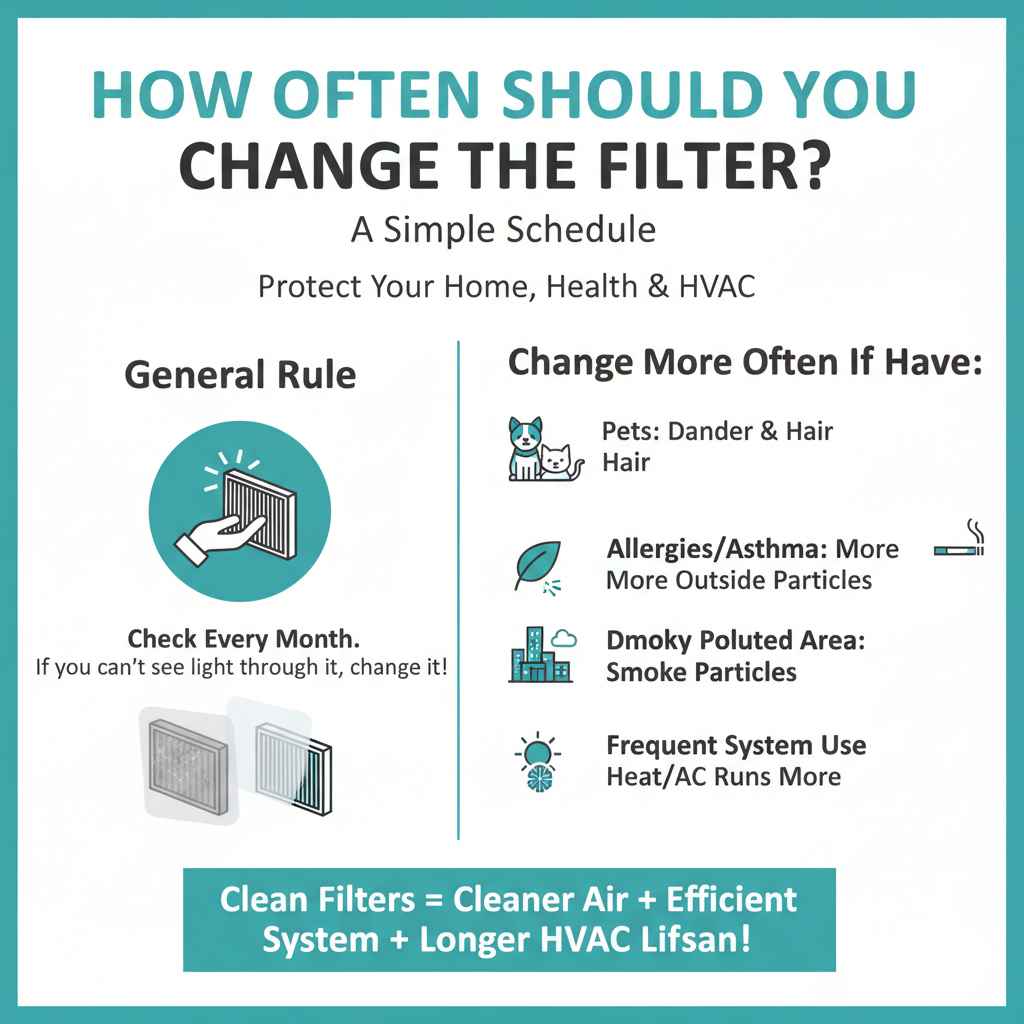
There is no single answer for how often to change your filter. It depends on your home, lifestyle, and the type of filter you use. The general rule is to check your filter every month. Hold it up to a light. If you can’t see light through it, it’s time for a change.
Here are some factors that mean you should change your filter more often:
- You have pets: Pet dander and hair clog filters quickly.
- Someone has allergies or asthma: Clean filters are crucial for trapping allergens.
- You live in a dusty or polluted area: More particles in the outside air mean more work for your filter.
- You have a smoker in the house: Smoke particles will clog a filter fast.
- You use your system frequently: The more your heat or AC runs, the faster the filter gets dirty.
General Replacement Guidelines
This chart provides a good starting point. Adjust it based on your home’s specific needs.
| Home Environment | Recommended Change Frequency (for standard 1-inch filters) |
|---|---|
| Average suburban home, no pets | Every 90 days |
| Home with one cat or dog | Every 60 days |
| Home with multiple pets or moderate allergies | Every 30-45 days |
| Home with smokers or severe allergies | Every 20-30 days |
Remember that thicker filters (4-5 inches) generally last much longer, often between 6 to 12 months.
Frequently Asked Questions (FAQ)
What if my air filter has no arrow?
This is rare with modern filters, but it can happen. If there’s no arrow, look for a wire mesh reinforcement on one side. This wire side is the “downstream” side and should face the furnace. The softer, more fibrous side should face the incoming air from the return duct.
Can I wash and reuse my furnace filter?
Only if it is specifically labeled as “washable” or “reusable.” Most standard filters are disposable and made of paper or fiberglass that will be destroyed by water. Attempting to wash a disposable filter will ruin its ability to trap particles and can lead to mold growth.
I put the filter in backward for a few days. Do I need a new one?
Probably not. If it has only been a short time, the filter is likely fine. Just turn off the system, take the filter out, inspect it for any bending or damage, and reinstall it in the correct direction. If it looks visibly dirty or misshapen, it’s best to replace it.
Does a more expensive filter mean it’s better for my system?
Not necessarily. A more expensive filter usually has a higher MERV rating, meaning it traps more particles. While this improves air quality, it also makes it harder for air to pass through. Using a filter that is too restrictive for your specific HVAC unit can cause more harm than good. Stick with the MERV range recommended in your system’s manual.
How do I know what size air filter I need?
The size is almost always printed on the side of your current air filter frame. It will look something like “16x25x1.” If you can’t read it, you can measure the old filter’s length, width, and depth (thickness). It’s crucial to get the exact size for a proper fit.
Can running the furnace without a filter cause damage?
Absolutely. Running your system without a filter is one of the worst things you can do. It allows dust, hair, and debris to get sucked directly into the sensitive inner workings of your furnace, including the fan motor and evaporator coils. This can lead to costly breakdowns, reduced efficiency, and a much shorter lifespan for your HVAC system.
Conclusion: Your First Step to Cleaner Air and a Happier Home
That little arrow on your air filter might seem small, but it plays a vital role in the health of your home and your HVAC system. By remembering this one simple rule—the arrow always points towards the furnace—you are taking a powerful step toward cleaner air, lower energy bills, and a longer-lasting heating and cooling system.
You no longer have to feel confused or uncertain when it’s time for a filter change. You now have the knowledge and confidence to handle this simple but essential task like a pro. It’s a small bit of maintenance that delivers a big reward in comfort and peace of mind. So go ahead, breathe easier, and enjoy your comfortable home.