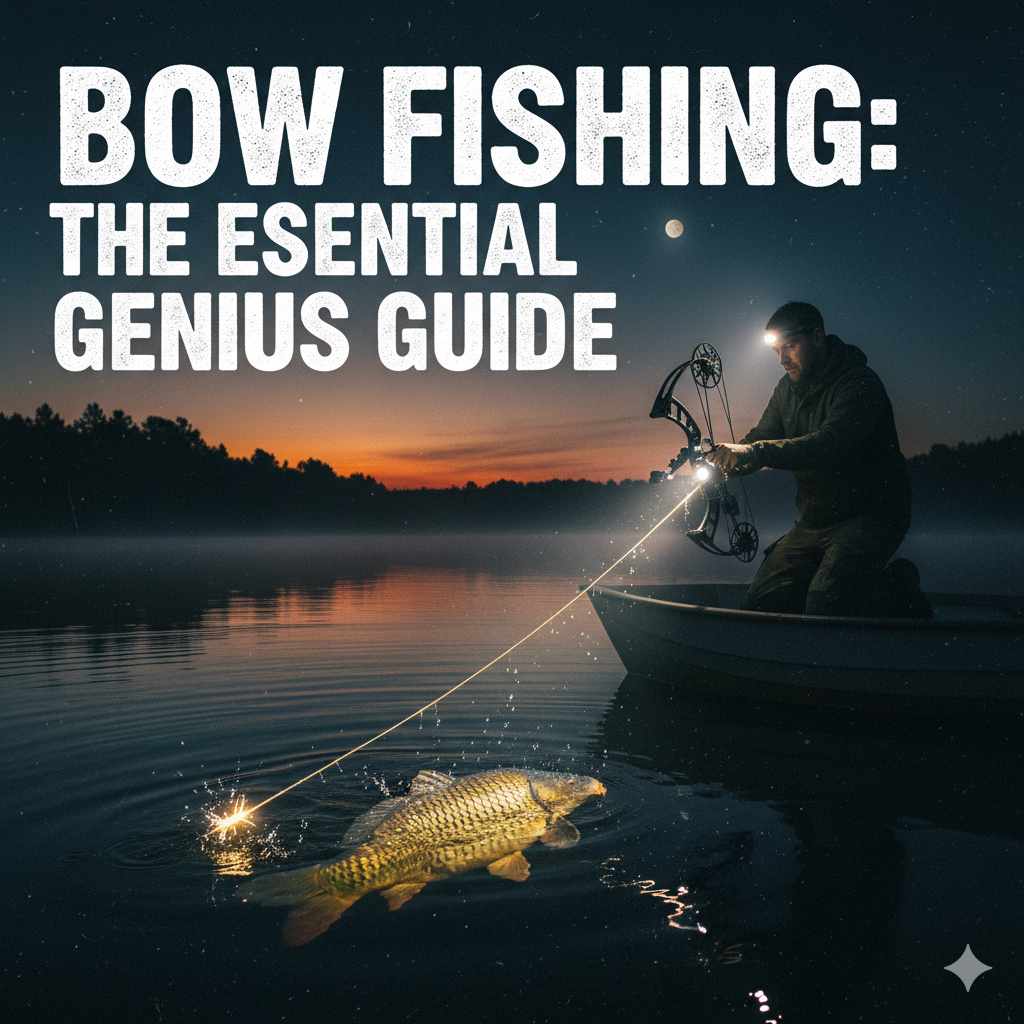
To bow fish, you use a bow equipped with a special reel and a barbed arrow tied to a strong line. Spot a fish in shallow water, aim lower than you think to correct for light refraction, and shoot. After a successful hit, you simply reel in your line to retrieve the fish.
Hello there! I’m Salman Arfeen, and I’m here to guide you into the exciting world of bowfishing. Have you ever seen someone on the water with a bow and wondered what they were doing? Combining the thrill of archery with the patience of fishing, bowfishing is an incredible sport. But it can look a little confusing at first.
Don’t worry. It’s much simpler than it appears. Many beginners feel overwhelmed by the gear and the technique, especially the part about aiming. I’m here to break it all down for you. This guide will walk you through everything, from the basic equipment to your very first shot. Let’s get you ready to hit the water with confidence!
What Exactly Is Bowfishing?
Think of bowfishing as hunting on the water. Instead of using a traditional rod and reel with bait, you actively hunt for fish with a bow and arrow. The arrow is specially designed for the water. It’s heavier than a normal arrow and has a barbed point to hold the fish. It’s also attached to a line and reel on your bow, so you can retrieve both your arrow and your catch.
This sport is fast-paced and visual. You have to see the fish to shoot it, making it a thrilling challenge. Most bowfishing targets “rough fish” species like carp, gar, and buffalo. These fish are often invasive or overpopulated, so bowfishing can actually help maintain a healthy balance in local waterways. It’s a fun sport that also contributes to conservation.

Getting Started: Your Essential Bowfishing Gear
The right gear makes all the difference, but you don’t need the most expensive setup to get started. Let’s look at the essential pieces you’ll need to build your first bowfishing rig.
1. The Bow
You can’t bowfish without a bow, but which one is right for you? You have a few great options, each with its own feel.
- Recurve Bows: These are classic, simple, and reliable. They don’t have the pulleys (cams) of a compound bow, making them lightweight and easy to maintain. Many bowfishers love recurves for their instinctive shooting style. They are great for quick, close-range shots.
- Compound Bows: These are the most popular choice for bowfishing. The cam system makes them easier to hold at full draw, giving you more time to aim. Look for a compound bow with a lower draw weight (around 30-50 pounds). You don’t need the high power used for deer hunting.
- Specialized Bowfishing Bows: Brands like AMS Bowfishing and Cajun Archery make bows specifically for the sport. These are often built to withstand wet conditions and have features tailored for bowfishing, like a constant draw weight.
My advice for beginners? Start with a simple, affordable compound or recurve bow. You don’t need anything fancy. The key is comfort and reliability.
2. The Reel
The reel holds your line and is mounted to the bow. It’s what you use to bring in the fish. There are three main types:
- Spincast Reel: This is just like a standard fishing reel. You press a button to release the line before you shoot. They are easy to use and very popular with beginners.
- Retriever Reel: These are designed specifically for bowfishing. The line is stored in a bottle or canister and has zero drag when you shoot. This makes them extremely safe and reliable, as there’s no button to remember to push. They are a fantastic choice for any skill level.
- Hand-Wind Reel: This is the simplest option—a basic drum you wrap the line around by hand. It’s durable and has no moving parts to break, but it’s much slower to retrieve your arrow. It’s a good, budget-friendly starting point.
3. Arrows and Points
Bowfishing arrows are different from regular arrows. They are heavier to punch through the water and are usually made of fiberglass or a carbon composite for durability.
The most important part is the point, or tip. Bowfishing points have barbs that hold the fish on the arrow after you shoot it. The barbs can be twisted or released to easily remove the arrow from the fish. Look for a simple, sturdy point to start with.
4. The Line
You need a strong, abrasion-resistant line. Most bowfishing lines are made of braided Dacron or Spectra and are rated between 80 and 400-pound test. A 200-pound test line is a great all-around choice. It’s strong enough for big fish but thin enough to not affect your arrow’s flight.
5. Essential Accessories
- Arrow Rest: A simple roller rest or a “capture” style rest like the Whisker Biscuit works great. It needs to be durable and allow the line to pass through without snagging.
- Polarized Sunglasses: These are a must-have! They cut the glare on the water’s surface, allowing you to see the fish much more clearly. You can’t shoot what you can’t see.
- Gloves: A good pair of gloves will protect your hands from the line, fish fins, and scales.
- Lights for Night Fishing: If you plan to go out after dark, you’ll need a lighting system. Many bowfishers mount powerful LED lights on their boats to illuminate the water.
Setting Up Your First Bowfishing Rig: A Simple Guide
Got your gear? Great! Now let’s put it all together. This part is easy, I promise.
- Mount the Reel: Your bow will have a pre-drilled hole in the riser (the handle part) for accessories. This is where you’ll screw in your reel. Make sure it’s tight and secure.
- Install the Arrow Rest: Attach the arrow rest to the designated spot on the riser. Follow the instructions that came with your rest. Ensure it’s centered and doesn’t interfere with the reel.
- Spool Your Line: If you have a spincast or retriever reel, you’ll need to load the line onto it. Follow the reel’s manual. Make sure the line is wound tightly and evenly.
- Attach the Line to Your Arrow: This is the most important safety step. Bowfishing arrows use a safety slide. This is a small plastic or metal ring that slides along the arrow shaft. Tie your line to the safety slide, NOT to the back of the arrow. This prevents the line from tangling with your bowstring, which can cause the arrow to snap back at you.
Before you ever go near the water, double-check your setup. Pull out a few feet of line and make sure the safety slide moves freely. Your equipment should be simple, secure, and safe.
The Golden Rule of Bowfishing: You Must Aim Low
This is the single most important skill to learn in bowfishing, and it’s the one that trips up most beginners. Because of how light refracts, or bends, in water, a fish is never where it appears to be. It is always deeper than it looks.
Think about a straw in a glass of water. It looks bent at the surface, right? The same principle applies to fish. The deeper the fish is, and the further away it is, the more this effect is magnified.
So, how low do you aim? This is the million-dollar question, and it comes down to practice. But here’s a rule of thumb to get you started:
“The 10-4 Rule”
For a fish that appears to be 10 feet away and 1 foot deep, you should aim about 4 inches below it. This isn’t a perfect science, but it’s a great starting point. As fish get deeper or further, you have to aim even lower.
| Apparent Fish Depth | Distance from You | General Aiming Point |
|---|---|---|
| 1 foot deep | 10 feet away | Aim 3-4 inches below the fish |
| 2 feet deep | 10 feet away | Aim 6-8 inches below the fish |
| 3 feet deep | 10 feet away | Aim 10-12 inches below the fish |
The best way to learn is to practice. Before your first trip, find a safe spot with shallow water and throw in a submersible target, like a water bottle or a piece of fruit. Practice shooting it at different depths and distances. This will train your brain to automatically correct for the refraction. You’ll miss a lot at first—we all did! But each miss teaches you something. Soon, aiming low will become second nature.
Your First Bowfishing Adventure: A Step-by-Step Walkthrough
You’re geared up, you’ve practiced your aim, and you’re ready to hit the water. Here’s how to approach your first real trip.
Step 1: Check Your Local Regulations
This is non-negotiable. Every state has different laws for bowfishing. These rules cover which species you can target, what times of year are open, and whether you need a specific fishing license. You can find this information on your state’s Department of Fish and Wildlife website. A great place to start for national resources is the U.S. Fish & Wildlife Service page on fishing licenses.
Step 2: Find a Good Spot
You don’t need a fancy boat to start. Many great bowfishing opportunities are available by wading in shallow rivers, creeks, or along the edges of a lake. Look for:
- Shallow Water: One to four feet deep is perfect.
- Clear Water: You need to be able to see the fish.
- Slow-Moving Current: It’s easier to walk and spot fish in calm water.
- Structure: Look for weeds, rocks, or fallen trees where fish like to hide.
The best times are often in the spring when many rough fish species, like carp, move into the shallows to spawn. They are more active and easier to find.
Step 3: Move Slowly and Scan the Water
Patience is key. Walk slowly and quietly. Keep your eyes peeled for any sign of a fish. Look for shadows, movements, or the flick of a tail. Your polarized sunglasses are your best friend here. Keep your bow ready but pointed in a safe direction.
Step 4: Spot a Fish and Take the Shot
Okay, you see one! Your heart is pounding. Take a deep breath. Now remember your practice.
- Draw your bow smoothly.
- Pick a spot on the fish—usually the thickest part of the body, right behind the head.
- Adjust your aim low. Remember the refraction! For a carp swimming one foot deep, you might aim for the gravel right underneath its belly.
- Release the arrow smoothly.
Whether you hit or miss, be ready for the next opportunity. Don’t get discouraged by a miss. It happens to everyone.
Step 5: Retrieve Your Catch
You did it! You connected! Now, reel it in. Keep steady pressure on the line, but don’t horse it in too fast. Let the barbs on your arrow point do their job. Once you have the fish in hand, be careful. Many fish have sharp fins. Use your gloves to handle it.
Step 6: Safely Remove the Arrow
To get your arrow back, you’ll need to disengage the barbs. Most modern points allow you to twist the tip a quarter-turn, which folds the barbs in. You can then slide the arrow out of the fish easily. Reset the point, and you’re ready for the next shot.
Common Bowfishing Species
What can you actually shoot? It varies by location, but here are some of the most common targets across North America.
| Fish Species | Habitat | Beginner Tips |
|---|---|---|
| Common Carp | Shallow, slow-moving rivers and lakes. Often “muddy” the water. | Very common and a great target for beginners. Look for them feeding in shallow flats, especially in the spring. |
| Longnose Gar | Rivers and backwaters. Often seen “sunning” near the surface. | Their scales are like armor. You need a sharp point and good penetration. They are long, thin targets. |
| Bowfin (Dogfish) | Swampy, vegetated backwaters. | These are aggressive fighters! Be ready for a battle when you connect with one. |
| Tilapia (Invasive) | Warm water lakes and canals, especially in southern states. | Often found in large schools. They are excellent to eat, so they are a popular target. |
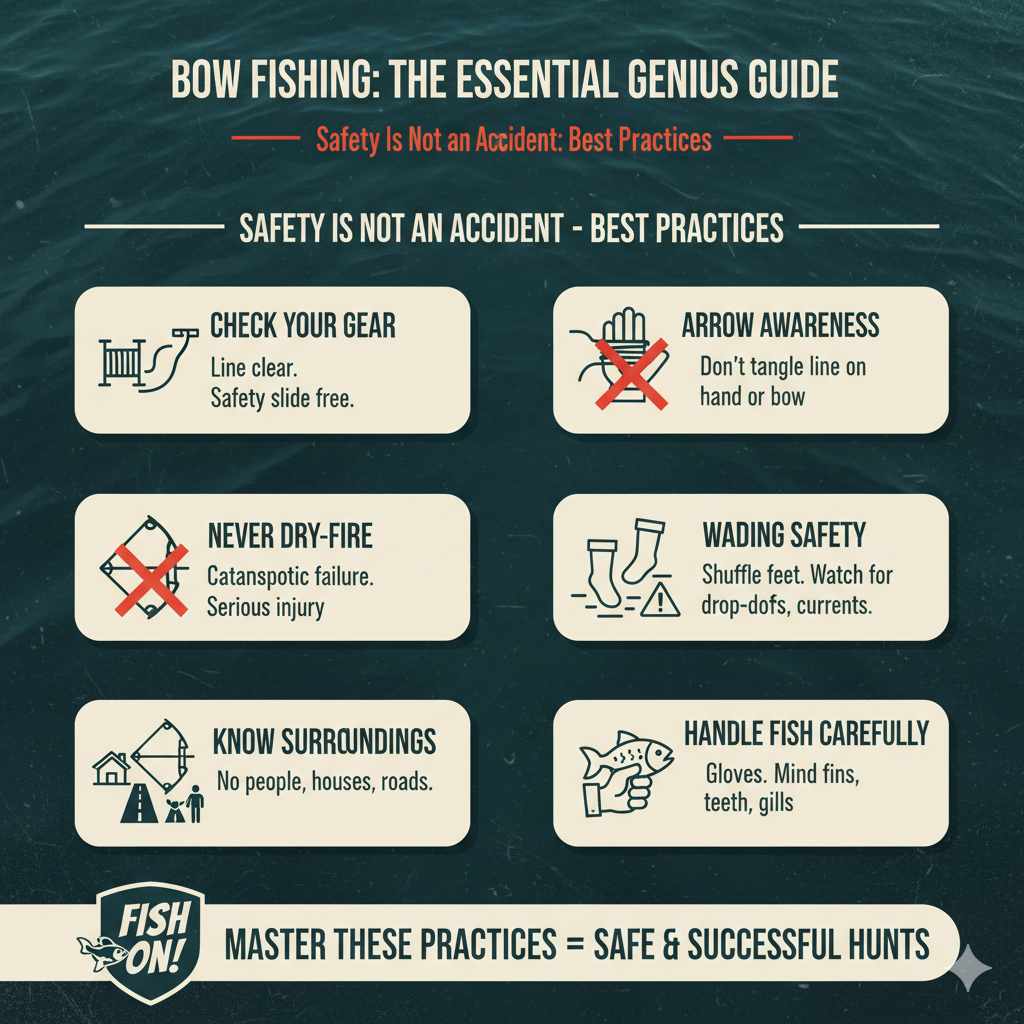
Safety Is Not an Accident: Bowfishing Best Practices
Bowfishing is incredibly fun, but it’s still a form of archery, and safety must always come first.
- Check Your Gear: Before every shot, make sure your line is not tangled and your safety slide can move freely.
- Never Dry-Fire Your Bow: Shooting a bow without an arrow can cause it to catastrophically fail, leading to serious injury.
- Know Your Surroundings: Always be aware of who and what is around you. Never shoot towards people, houses, or roads.
- Arrow Awareness: Your arrow is tied to your bow. Be careful not to let the line wrap around your hand, your bow, or any obstacles when shooting.
- Wading Safety: If you’re wading, be aware of sudden drop-offs, slippery rocks, and strong currents. Shuffle your feet instead of taking big steps.
- Handle Fish Carefully: Use gloves and be mindful of sharp fins, teeth, and gills.
Frequently Asked Questions (FAQ)
What kind of bow do I need for bowfishing?
You can use a recurve or a compound bow. A compound bow with a low draw weight (30-50 lbs) is often the most popular choice for beginners because it’s easier to hold at full draw while aiming.
Is bowfishing legal?
Yes, bowfishing is legal in many places, but it is highly regulated. You must have the proper fishing license and only target specific species during approved seasons. Always check your local state’s fish and wildlife regulations before you go.
Can you eat the fish you catch bowfishing?
Absolutely! While some species like Common Carp have a strong flavor, others like Tilapia and Gar are considered excellent table fare. It depends on the species and the water quality. Proper cleaning and preparation are key.
Do you need a fishing license for bowfishing?
Yes, in almost all cases, you will need a valid state fishing license to bowfish. Some states may require an additional permit, so be sure to check the specific rules for your area.
What’s the hardest part about bowfishing for a beginner?
The hardest part is learning to aim low to compensate for light refraction. Fish are always deeper than they appear. It takes practice to train your brain to aim correctly, but once you get the hang of it, it becomes intuitive.
Can you bowfish at night?
Yes, and it’s one of the most popular and effective ways to bowfish! Many fish species move into the shallows to feed after dark. You will need a good lighting system, either mounted on a boat or worn as a headlamp if you are wading.
Does bowfishing hurt the fish population?
When done responsibly, bowfishing is a sustainable sport. It primarily targets invasive or overabundant “rough fish” that can harm game fish populations by competing for resources or destroying habitat. By removing these species, bowfishers can actually help improve the health of a waterway.
Your Adventure Awaits
Bowfishing is more than just a sport; it’s an adventure. It connects you with the outdoors in a unique, hands-on way. It will challenge you, humble you, and reward you with unforgettable moments on the water. That first time you see a fish, draw your bow, and make a perfect shot is a feeling you’ll never forget.
Remember to start simple, focus on safety, and practice your aim. Don’t be afraid to miss—every shot is a lesson. Embrace the learning process, respect the water and the wildlife, and most importantly, have fun. Welcome to the amazing world of bowfishing. I’ll see you out there!