

Understanding how points in Archery Target are calculated is crucial for both beginners and seasoned archers who want to improve their performance without unnecessary effort. Archery, at its core, is a sport of precision, control, and consistency, and the scoring system is designed to reward those qualities. By gaining clarity on the point system, you can focus your practice more effectively, set realistic goals, and ultimately enhance your overall score with less frustration.
In this article, we will delve into the details of archery scoring, explain the significance of each zone on the target, and provide actionable tips on how to maximize your score effortlessly.
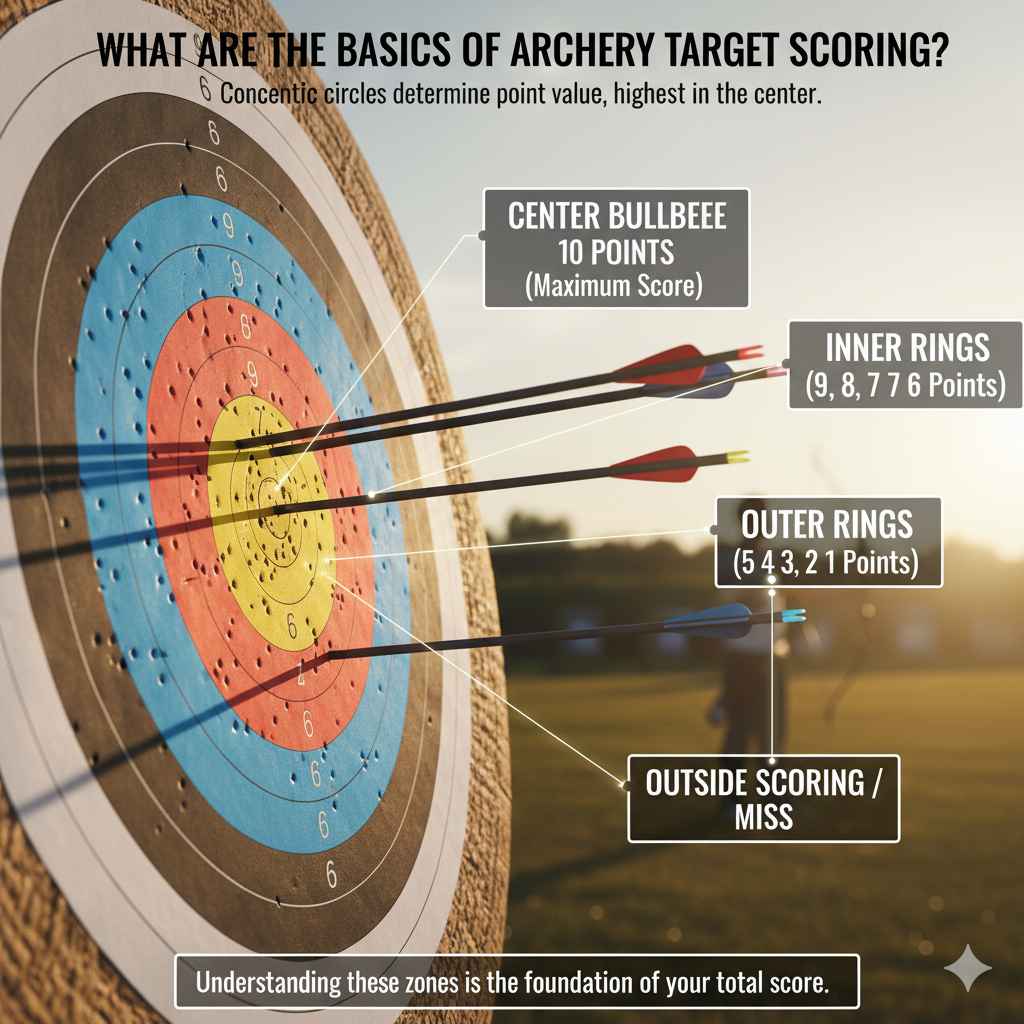
What Are the Basics of Archery Target Scoring?
The standard archery target consists of concentric circles, each assigned a specific point value. Typically, the target features ten rings, with the innermost circle representing the highest score.
– Center Bullseye: This tiny circle at the very center usually carries the maximum point value, often 10 points.
– Inner Rings: Surrounding the bullseye, each adjacent ring decreases by one point, with values going from 9 down to 1.
– Outer Rings and White Ring: The outermost rings generally score fewer points, and arrows landing outside the scoring rings or missing the target score zero.
Understanding these zones is the foundation of knowing how points in Archery Target translate into your total score.
How Points in Archery Target Impact Your Strategy
Knowing how the scoring works allows archers to change their approach. Instead of blindly trying to hit the target, a strategic focus on landing arrows closer to the bullseye can dramatically increase scores with less wasted effort.
– Precision Over Power: Some might think shooting harder earns more points, but accuracy is key. The points awarded depend solely on where the arrow lands, not on how fast or hard you shoot.
– Consistency Is King: Repeatedly hitting the middle rings delivers steady point gains rather than infrequent bullseyes mixed with misses.
– Mental Focus: Concentrating on hitting the high-value rings heightens awareness, making each shot count.
The Importance of Understanding Scoring Zones in Practice
When practicing, knowing how points in Archery Target are distributed changes your perspective on progress. For example:
– Landing several 7 or 8-point shots consistently is a sign you are improving, even if you haven’t reached the bullseye.
– Tracking your arrow placements allows you to identify whether you tend to miss high, low, left, or right. This helps in adjusting your stance, aim, or release.
By comprehending scoring zones, archery practice becomes less random and more result-oriented.
Tips to Effortlessly Improve Your Archery Score
1. Aim Small, Miss Small: Focus your attention on a smaller target zone, such as the 9 or 10-point rings. This mental shift encourages tighter grouping of shots.
2. Consistent Form: Develop a repeatable shooting routine. Stand in the same position, draw the bow the same way, and release consistently to enhance point gains.
3. Use Visual Markers: Position your sights or focus on reference marks aligned with the higher scoring rings.
4. Practice Breath Control: Breathing impacts steadiness. Master controlled breathing to improve shot accuracy and stay within prime scoring zones.
5. Record Your Scores: Keep a log of where your arrows land and total points scored. Monitoring provides motivation and a clear sense of improvement.

How Competition Rules Affect Scoring
In formal competitions, scoring often follows precise rules with judges present to measure the point values carefully. Sometimes, an arrow touching the boundary line between two scoring rings scores the higher point value — a concept called “line cutters.” Understanding these nuances clarifies how your score accumulates during matches and can heighten your focus on precision.
Conclusion: Your Best Score Is Within Reach
At the heart of successful archery is a deep understanding of how points in Archery Target are allocated. When you grasp this system, you can channel your efforts toward high-value zones and improve your performance more efficiently. By emphasizing accuracy, consistency, and targeted practice strategies, increasing your score becomes more effortless and enjoyable.
Remember, archery isn’t just about strength — it’s the art of precision. And with the knowledge of how the scoring works, unlocking your best results is well within your aim.