
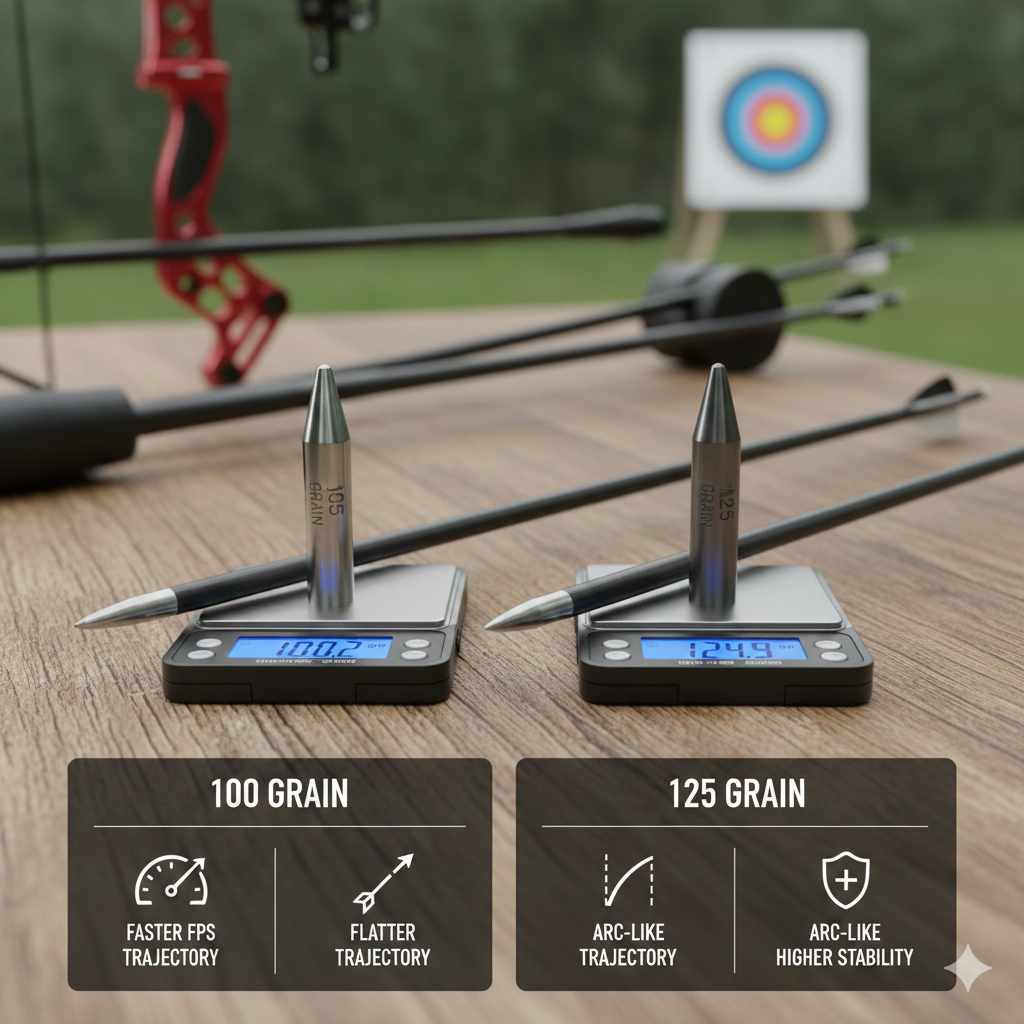
Choosing between 100 Grain vs 125 Grain Field Points: Which to Use? is a common question for anyone getting started with archery. It can seem confusing at first, especially with all the technical terms. Don’t worry, it’s simpler than you might think! This guide will break down the differences and help you pick the best field point for your needs. We’ll start by looking at what field points are and how they affect your arrows, then explore the pros and cons of each weight. Ready to learn more?
What Are Field Points and Why Do They Matter?
Field points, also known as target points, are the tips of your arrows. They screw into the arrow shaft and are crucial for practice, target shooting, and even some types of hunting. The main job of a field point is to mimic the weight and shape of a broadhead (the sharp tip used for hunting) so that your arrows fly the same way when you’re practicing. This way, you can hone your skills without risking damage to your expensive broadheads.
Field points come in different weights, measured in grains. A grain is a very small unit of weight, about 1/7000th of a pound. The weight of the field point impacts the overall weight of your arrow, which then affects its trajectory, or how it flies. Heavier arrows generally fly straighter and retain more energy, but they may also drop faster over distance. Lighter arrows fly faster, but are more susceptible to wind drift and lose energy quicker. Picking the right field point weight is important for accuracy and achieving the desired arrow flight characteristics.
Field Point Materials and Design
Field points are usually made from steel, which is strong and durable. They are designed with a blunt, rounded tip to prevent damage to the target and to allow for easy removal from the target material. The shape of the field point is important as well; it’s designed to slice through the target cleanly, leaving a minimal hole. This makes it easier to pull the arrow from the target without causing excessive wear and tear on the target or the arrow shaft itself.
- Steel Construction: The use of steel ensures the field points can withstand repeated impacts with targets, maintaining their shape and weight.
- Blunt Tip Design: The rounded tip helps the arrow penetrate the target smoothly, and is less likely to damage the target material or the arrow itself.
- Screw-In Attachment: Field points screw into the arrow shafts, offering a secure connection, and allowing for easy changes depending on the needs of the archer.
- Variety of Weights: Available in various weights, archers can fine-tune their arrow setup to achieve their desired flight characteristics.
The Importance of Matching Field Point Weight
Selecting the right field point weight is essential for accurate shooting. If you plan to use broadheads for hunting, it’s important to choose field points that have the same weight. This allows you to practice with the field points and have your arrows hit the same spot as your broadheads. Differences in weight can significantly affect the arrow’s point of impact, and its trajectory, potentially leading to inaccurate shots in a hunting situation.
For example, imagine you are practicing with 100-grain field points but plan to hunt with 125-grain broadheads. Your arrows will likely hit higher or lower than where you aim. This inconsistency can lead to missed shots. To ensure consistency, always match the weight of your field points to the weight of your broadheads. This will give you confidence in your setup and help you shoot accurately when it counts.

100 Grain Field Points: Pros and Cons
100-grain field points are a popular choice for archers, offering a good balance of speed and trajectory. They are often favored by target shooters who are aiming for flatter trajectories and faster arrow speeds. This allows for a more forgiving sight picture at longer distances. However, it’s important to consider both the benefits and drawbacks of this weight before making your choice.
Many shooters find that the lighter weight of a 100-grain field point can increase arrow speed. This can be beneficial for shooting at longer ranges. The flatter trajectory helps archers to compensate less for drop over distance. 100 grain arrows can also be more forgiving to wind compared to super-light arrows. However, lighter arrows are likely to lose speed at longer ranges.
Advantages of 100 Grain Field Points
The main benefit of using 100-grain field points is their speed. Faster arrows mean a flatter trajectory, which translates to fewer adjustments needed for elevation at different distances. This can be a real advantage in target shooting, where accuracy is key. Also, they are sometimes better with a higher FPS (feet per second) bow setup.
- Flatter Trajectory: Lighter arrows have a flatter trajectory, making aiming easier at varying distances.
- Increased Arrow Speed: 100-grain points contribute to higher arrow velocities, which is helpful to get to the target faster.
- Good for Longer Ranges: The flatter trajectory is beneficial when shooting at longer distances because less adjustment is needed.
- Easier to Tune: Due to the lighter weight and faster speeds, it can be easier to get an arrow setup that shoots well.
Disadvantages of 100 Grain Field Points
While 100-grain field points offer several advantages, there are some downsides to consider. Heavier arrows retain more energy. Also, lighter arrows can be more affected by wind, which can cause them to drift off course. This is something to consider especially in windy conditions or at longer distances. In addition, the light weight might not be sufficient for some bows, as it can be out of the optimal spine range for the arrow.
The energy in your arrow is the force it delivers on impact. A lighter arrow may lose speed faster, which means less energy on impact at the target. Consider what is more important to you. Are you using these arrows for target shooting, or are you hunting? Each use case has different requirements.
125 Grain Field Points: Benefits and Drawbacks
125-grain field points are another very popular choice, particularly for hunters and archers who prefer a more forgiving arrow flight. The added weight provides more momentum, which can be advantageous in certain situations. The decision between 100 Grain vs 125 Grain Field Points: Which to Use? often comes down to your priorities and intended use.
The extra weight of 125-grain field points provides several advantages. They typically have better penetration. This is especially important for hunting, where the arrow needs to pass through the hide, muscle, and bone of an animal. These arrows can also be more resistant to wind deflection. The heavier arrow carries more energy downrange compared to a lighter arrow, maintaining momentum even as distance increases. This makes them a great choice for archers who prefer to shoot at longer distances.
Benefits of 125 Grain Field Points
One of the main benefits of 125-grain field points is their increased momentum. This added weight helps the arrow retain energy and travel straighter over longer distances. They also tend to have better penetration, which is critical in hunting scenarios.
- Greater Momentum: Heavier arrows retain more momentum, which helps them fly straighter and farther.
- Improved Penetration: The increased weight aids in penetration, especially when hunting larger animals.
- Less Affected by Wind: Heavier arrows are less susceptible to wind drift, ensuring more accurate shots.
- More Forgiving: The added weight can make the arrow flight more stable, and more forgiving to small shooting errors.
Downsides of 125 Grain Field Points
While 125-grain field points offer several benefits, there are also a few drawbacks to be aware of. The added weight results in a slightly slower arrow speed. This can lead to a slightly arched trajectory, which requires greater adjustment for elevation at varying distances. The arrow may also drop faster at longer ranges, which could affect accuracy.
Here are some of the other downsides you may want to consider. Heavier arrows can require more power from your bow. This can reduce the bow’s draw weight and can lead to a less optimal performance. If you are not careful, this can also increase the wear on your bow. Remember to check your arrows’ spine before using them. Ensure your arrow’s spine is matched to your bow’s draw weight.
Comparing 100 Grain vs 125 Grain Field Points
To help you better understand the differences, let’s compare 100-grain and 125-grain field points side by side. This comparison will help you decide which is better suited for your style of archery and your specific needs.
| Feature | 100 Grain Field Points | 125 Grain Field Points |
|---|---|---|
| Arrow Speed | Generally Faster | Generally Slower |
| Trajectory | Flatter | Slightly Arched |
| Energy Retention | Lower | Higher |
| Wind Resistance | Lower | Higher |
| Penetration | Potentially Less | Potentially More |
| Target Use | Good for Target Shooting, 3D | Hunting and Target Shooting |
This table offers a clear overview, helping you see the strengths of each field point weight. For archers who prioritize speed and a flatter trajectory, 100-grain field points may be the better choice. If, however, you value energy and penetration, 125-grain field points will likely suit your needs better.
Real-Life Examples and Scenarios
To see how these differences play out, here are a few examples of how each field point weight might be used in different scenarios. These examples illustrate the strengths of each weight and help you understand how they perform in the field.
- Target Shooting: A target archer is shooting at a 50-meter range and wants to minimize wind drift. They are leaning toward the 125-grain points for the added wind resistance. They practice with these field points. Because these have the same weight, they can practice with these for a more accurate practice session.
- Hunting: A hunter is after big game and wants to ensure deep penetration. The hunter chooses 125-grain field points, as this extra weight is needed to gain the penetration needed for a successful hunt. They practice with these to get the arrow where they want it to go.
- 3D Archery: A 3D archer shoots at targets of different distances. Their goal is to maximize their arrow’s speed and flatten the trajectory to hit their target. They may choose 100-grain field points. This allows for a more versatile shooting style, because the lighter points allow the arrow to fly faster.
These examples illustrate the practical implications of your choices. Each weight has its strengths, and the best choice depends on what you’re trying to achieve. Understanding your goals is key to picking the right field point.
How to Choose the Right Field Point Weight
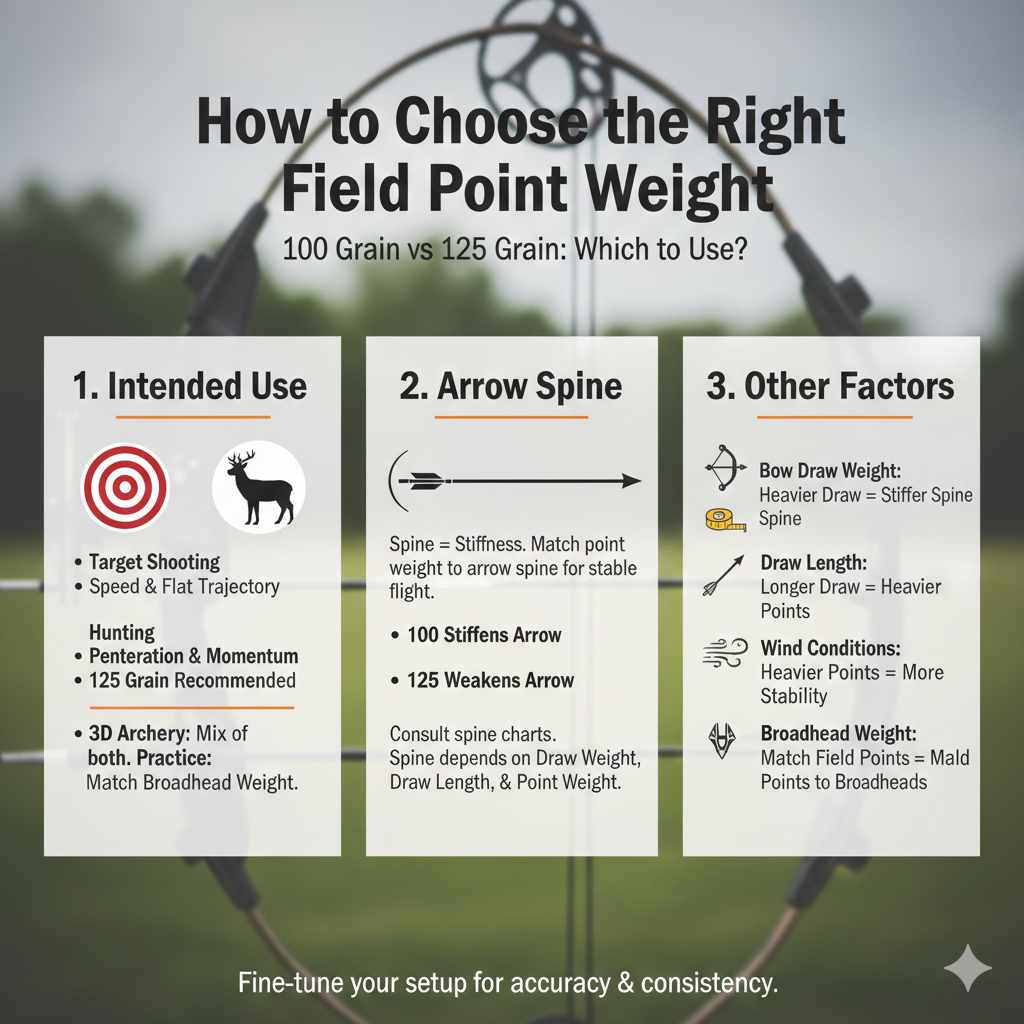
Now, let’s explore the factors to consider when deciding between 100 Grain vs 125 Grain Field Points: Which to Use? Here’s a breakdown of what to keep in mind, covering your intended use, arrow spine, and other factors that will affect your choice.
Consider Your Intended Use
The primary factor in your decision is how you plan to use your arrows. Are you primarily target shooting, or will you be hunting? This will heavily influence your choice of field point weight. Your choice may also depend on the type of target you are shooting at or the game you are hunting.
- Target Shooting: If your focus is target shooting, speed and flatter trajectory are often preferred. In this scenario, 100-grain field points may be the better option. This allows for increased arrow speed and a more accurate shot at longer distances.
- Hunting: When hunting, penetration and momentum are more critical. You might choose 125-grain field points for their greater ability to penetrate game animals.
- 3D Archery: This type of shooting is a mix. This requires both accuracy and power, therefore, you will have to choose a weight that allows you to fulfill both requirements.
- Practice: This should be your main reason for using your field points. Ensure that your field points match the weight of your broadheads.
The Importance of Arrow Spine
Arrow spine refers to the stiffness of the arrow shaft. It’s important to match your field point weight to your arrow spine. If your field point is too heavy or too light for your arrow’s spine, the arrow may not fly straight. A correctly spined arrow bends properly upon release, which results in a more stable and accurate flight. Incorrect spine can cause the arrow to wobble in flight or impact the target at an angle.
The ideal spine weight depends on your bow’s draw weight, draw length, and the weight of your field points or broadheads. Most arrow manufacturers provide charts to help you determine the correct spine for your setup. It is critical to consult these charts to ensure your arrows are properly matched. If you are unsure, consider getting your arrows professionally matched to your bow.
Other Factors to Consider
Several other factors can influence your choice. All of these contribute to the arrow’s performance and accuracy. Understanding these elements can help you make an informed decision and get the best results.
- Bow Draw Weight: Heavier draw weights often require a stiffer spine, which can influence your field point choice.
- Draw Length: Archers with longer draw lengths may benefit from heavier field points.
- Arrow Length: Longer arrows can generally handle heavier field points better.
- Wind Conditions: In windy conditions, heavier field points may provide better stability.
- Broadhead Weight: If you plan to hunt, match your field point weight to your broadhead weight.
Considering these points will help ensure that your arrows fly accurately and consistently. Always take the time to set up your equipment to get the best possible results.
Frequently Asked Questions
Question: Is there a big difference between 100 grain and 125 grain field points?
Answer: Yes, the 25-grain difference can impact your arrow’s trajectory, speed, and penetration, especially at longer distances. The choice depends on your needs.
Question: Can I use 100-grain field points for hunting?
Answer: Yes, you can. However, 125-grain field points might be better for hunting because they provide better penetration and energy for taking down game.
Question: Do I need to re-sight my bow when changing field point weights?
Answer: Yes, if you change field point weights, you will likely need to adjust your bow sights to compensate for the different arrow flight characteristics.
Question: Should I always match my field point weight to my broadhead weight?
Answer: Absolutely, matching field point weight to broadhead weight is very important. This ensures your arrows hit the target in the same spot, whether you are practicing or hunting.
Question: How do I know what field point weight is right for me?
Answer: Consider your intended use, bow setup, and arrow spine. Experimenting with different weights can help you find what works best.
Final Thoughts
Deciding between 100 Grain vs 125 Grain Field Points: Which to Use? is a critical step in archery. There is no one-size-fits-all answer. Both weights have their advantages, and the “best” choice really depends on your specific needs and shooting style. Heavier field points offer greater momentum and penetration, which makes them ideal for hunting. On the other hand, lighter field points provide faster arrow speeds and a flatter trajectory, perfect for target shooting. Also, you may want to take into account the wind. Remember to consider your bow’s draw weight, arrow spine, and how you plan to use your arrows to get the most out of your shooting experience.
The key is to experiment and find what works best for you. Practice with both weights to see which one provides the most accurate and consistent results. When selecting the proper arrow weight for your practice, be sure to use the same weight as your hunting broadheads. This step will help increase your chances for success in the field and on the range. Happy shooting!