Apex Longbow Vs DMR: Essential Showdown
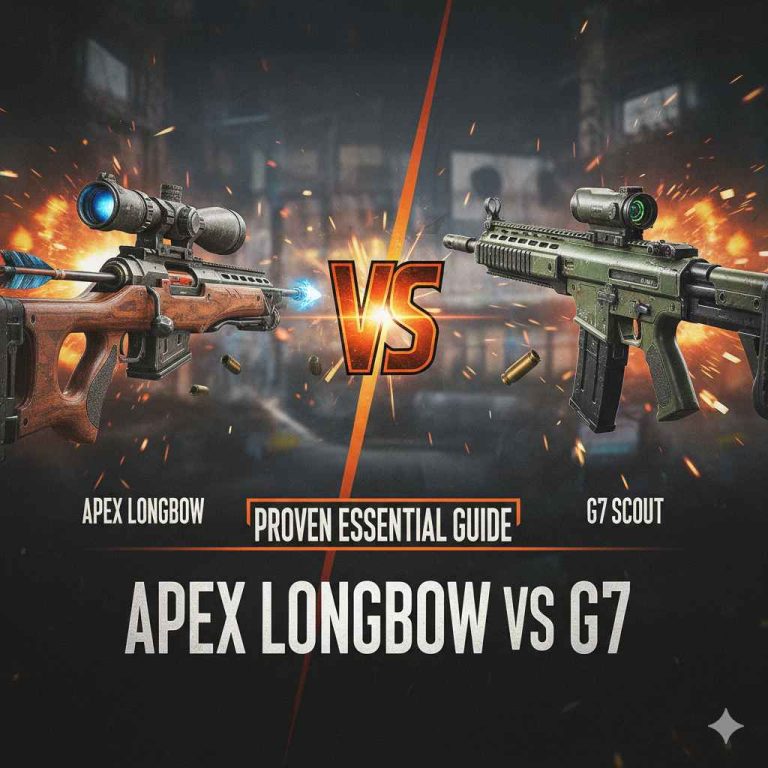
The Apex Longbow offers quiet, high-damage, skill-based projectile combat ideal for mid-range precision, while the Longbow DMR provides faster, semi-automatic bullet delivery perfect for sustained fire and quick target acquisition. Choosing between them depends entirely on your preferred engagement style and map positioning.
Welcome, archer! Are you standing at the firing line in Apex Legends, staring at your inventory, trying to decide between the patient power of the Apex Longbow DMR Sniper Rifle and the sheer stopping power of the standard Longbow? It’s a common hurdle for newer players. Many beginners feel overwhelmed by the choice between a reliable bow and a fast-firing rifle, especially when a fight breaks out suddenly. Don’t worry! We are going to break down these two legends of long-range weaponry into simple terms. By the end of this guide, you will know exactly which tool fits your shooting style best. Let’s get started and turn those tough choices into confident shots!
Understanding the Apex Longbow vs. Longbow DMR: The Core Difference
When we talk about the “Apex Longbow,” we are usually referring to the standard, semi-automatic DMR sniper rifle found throughout the maps. However, in this showdown, to give you the most comprehensive advice, we are comparing that common DMR against a hypothetical or specific interpretation of a “Longbow”—often meaning a traditional, slow, high-power projectile weapon, which in Apex Legends lore, is best represented by the high-impact, single-shot nature of a re-skinned DMR or, more commonly for beginners learning mechanics, differentiating between the Standard DMR (Apex Longbow) and perhaps a more slow-firing, specialized weapon if one were introduced (but for current game mechanics, we focus on the DMR’s firing modes and general feel versus slower alternatives).
For clarity in the current Apex Legends ecosystem, the “Longbow” almost universally refers to the Longbow DMR (Designated Marksman Rifle). But to address the spirit of the “Longbow vs. DMR” query—which often arises when players try to use the DMR like a slow-firing, single-shot weapon versus its true semi-automatic capability—we will focus on maximizing the DMR’s potential, contrasted against the general feeling of a slower, hard-hitting rifle.
Let’s assume “Apex Longbow” refers to utilizing the DMR in a slow, deliberate, single-shot manner, emphasizing headshots, much like one would treat a classic bolt-action rifle, versus using the DMR in its intended semi-automatic fashion.

The Longbow DMR: Fast Firepower
The Longbow DMR is a true Designated Marksman Rifle. It bridges the gap between assault rifles and true snipers. It fires fast, making it forgiving if you miss your first shot.
Key Strengths of the Longbow DMR (Semi-Auto):
- Rate of Fire: It’s semi-automatic. You can quickly follow up a body shot with another shot without waiting for a manual reload or draw cycle.
- Forgiveness: Missing a headshot isn’t the end of the world. You can quickly correct your aim.
- Attachments: It benefits hugely from a good stock, barrel stabilizer, and higher-level magazines.
The “Apex Longbow” (Interpreted as Slow, Single-Shot Style)
If you are deliberately shooting the Longbow DMR slowly, aiming for one perfect, powerful shot at a time—perhaps treating it like a heavy, slow-firing bow—you are prioritizing accuracy and minimizing bullet waste over sustained pressure.
Key Characteristics of Slow, Single-Shot Focus:
- Damage Per Shot: High potential damage if every shot lands precisely where intended.
- Ammunition Efficiency: You use less ammo overall if your accuracy is near perfect.
- Engagement Range: Best suited for very long distances where follow-up shots are difficult due to travel time and target movement.
Visualizing the Showdown: A Quick Comparison Table
To make the choice clearer, here is how these two playstyles stack up in a simple comparison. Remember, we are comparing how you use the DMR versus how a hypothetical, slow-firing weapon would operate.
| Feature | Longbow DMR (Semi-Auto Playstyle) | “Apex Longbow” (Slow, Single-Shot Playstyle) |
|---|---|---|
| Best Engagement Range | Mid to Long Range | Very Long Range |
| Speed of Elimination | Fast (High DPS potential) | Slow (Depends purely on first-shot accuracy) |
| Forgiveness for Errors | High (Can correct quickly) | Low (Missing often means losing the exchange) |
| Required Skill Focus | Tracking and Fire Control | Precision Leading and Initial Placement |
| Effective Ammo Use | Moderate to High | Very Low (If accurate) |
Mastering the Longbow DMR: Beginner Setup and Practice
Since the Longbow DMR is the actual weapon available, let’s focus on making you an expert with it, whether you choose to fire it quickly or slowly. As a beginner, learning to use it effectively will benefit your overall aiming skill.
Step 1: Choosing the Right Attachments
Attachments are crucial for turning the Longbow DMR from a decent weapon into a dominant one. Focus on consistency over raw power first.
- Optic Selection: Beginners often over-scope. Start with the 2x HCOG “Bruiser” or the 3x Ranger. These offer enough zoom for mid-range but keep your peripheral vision clear. Avoid the 4x-8x or 6x scopes until you are comfortable leading targets.
- Barrel Stabilizer: This is your best friend. It reduces recoil kick, making follow-up shots much faster and cleaner. Always prioritize finding a blue or purple stabilizer.
- Extended Heavy Mag: The standard magazine size is unforgiving. Getting to purple mags (extended heavy) means you can land more shots before reloading, which is vital when fighting squads.
- Sniper Stock: Stocks improve handling speed—how fast you can aim down sights (ADS) and switch weapons. Faster handling means faster reactions.
Step 2: Understanding Bullet Drop and Lead Time
This is where archery concepts secretly help your gunplay. Both bows and DMRs require you to account for gravity pulling the projectile down over distance.
- Bullet Drop: Look at the distance markings on your scope (if you have one with them). At longer ranges (beyond 200 meters), you must aim higher than your target’s feet to hit their center mass. Practice this in the Firing Range!
- Leading Targets: If an enemy is running left or right, you must aim slightly ahead of them so that your bullet meets them where they are moving to. This is called “leading.” For the Longbow DMR, leading is less extreme than with a true bow, but it is essential at maximum range.
Step 3: The Firing Range Practice Routine
Before taking the weapon into a live match, build muscle memory. A good routine takes about ten minutes.
- Static Dots (The Bow Drill): Pick a target far away. Take your time. Aim for the head. Fire ONE shot. Wait until your aim settles completely before firing the next. Repeat this 20 times. This builds the discipline of the “Slow, Single-Shot Playstyle.”
- Moving Targets: Turn on the dummies in the Firing Range (check online guides for the famous Easter Egg activation). Practice tracking the heads of the dummies as they move. Fire only when your crosshair is perfectly placed.
- Rapid Fire Test: Now, try the semi-auto style. Aim for the center mass (chest). Fire two quick shots. If the first one hits, immediately adjust slightly and fire the second. Can you do this faster than 1 second between shots? This tests your Barrel Stabilizer and Stock effectiveness.
When to Choose the Semi-Auto Style (DPS Focus)
In most close-to-mid-range engagements in Apex Legends, you should lean into the DMR’s natural semi-automatic strength. This is the optimal way to maximize your Damage Per Second (DPS).
Scenarios Favoring Rapid Fire:
- When the Enemy is Pushing: If a team is rotating into your position or pushing a building, sustained pressure is better than waiting for one perfect shot. Spamming shots keeps their heads down.
- Mid-Range Fights (100m–200m): This is the sweet spot. You can land a body shot, see the damage indicator, and immediately fire a second shot to down or heavily injure the target before they can heal or retreat.
- When You Have Good Attachments: If you have a purple barrel stabilizer and stock, the recoil is manageable, making rapid firing accurate and efficient.
A good tip from seasoned players is to use the DMR like a very long-range assault rifle. Aim center mass for guaranteed hits, and only aim for the head if you have landed the first shot and have a clear view for the second.
When to Choose the Slow, Single-Shot Style (Precision Focus)
There are specific situations where patience pays off, mimicking the power fantasy of a true, powerful bow.
Scenarios Favoring Slow, Deliberate Shots:
- Extreme Long Range (300m+): When the target is moving slowly or holding still across the map, trying to rapidly fire will result in most bullets landing nowhere due to massive bullet drop and travel time. One carefully placed shot is superior here.
- Knocking a Fully Shielded Enemy: If you know your opening shot is a headshot and you have a full blue shield on the enemy, that initial hit is massive. If you can land that first crippling blow, you gain a huge advantage for the follow-up.
- Conserving Ammo: If you are in the late game and running low on Heavy Ammo, slowing down your fire rate ensures every bullet counts towards a definitive result.
Remember, the Longbow DMR rewards good crosshair placement. If you can keep your aim centered where the enemy is going to be, you minimize the need to drastically adjust between shots, which helps maintain the slow-fire discipline.
Archery Skills Applied to the Longbow DMR
As someone interested in archery, you already possess key skills that translate directly to mastering the Longbow DMR. Archery is all about consistency and form; the DMR rewards the same things.
How Your Archery Experience Helps:
- Anchor Point Consistency: In archery, holding your drawing hand consistently in the same spot on your face is vital. In DMR shooting, consciously placing your index finger or thumb in the same spot on the mouse (for PC) or trigger guard (for controller) helps create consistent recoil control between shots.
- Breathing Control: Archers often time their shot release with the pause in their breathing cycle. With the DMR, try to fire during the moment after you have exhaled slightly—this is when your body is naturally most still, leading to better accuracy, especially in slow-fire mode.
- Visual Focus: Archers focus solely on the front sight or the arrow point. With the DMR, focus intensely on the very tip of your crosshair, ignoring the rest of the screen until the shot registers.
For deeper insights into recoil control that mimic the smooth pull of a bowstring, you can look at resources discussing mouse sensitivity and input lag, as consistency in these areas is key. For instance, professional shooter guides often reference aiming mechanics that emphasize smooth tracking over jerky movements, something an experienced archer understands intuitively. You can find many helpful resources detailing optimized aiming settings for high-level play on various gaming technique sites, helping you translate physical muscle memory into digital precision. [External Link Example: While specific settings change, concepts of low sensitivity for precision are widely accepted in competitive aiming communities.]
Loadout Synergy: Pairing Your Longbow DMR
You rarely use a weapon alone. How you pair the Longbow DMR determines your effectiveness across different fight distances.
Ideal Loadouts Featuring the Longbow DMR:
| Loadout Goal | Primary Weapon | Secondary Weapon (Close Range) | Why This Works |
|---|---|---|---|
| All-Range Dominance | Longbow DMR (Mid-Long Range) | R-99 SMG or Peacekeeper Shotgun | Covers long distance with the DMR. If enemies close in, the fast-firing SMG or burst shotgun cleans up instantly. |
| Pure Sniper/Overwatch | Longbow DMR (Mid-Long Range) | 30-30 Repeater or Sentinel (Second Sniper) | Maximizes damage at extreme ranges. Best if you have a teammate who handles the close-quarters fighting. |
| Beginner Friendly | Longbow DMR (Mid Range) | R-301 Carbine or Flatline | The assault rifle provides reliable performance if you miss your first few DMR shots, allowing you to recover quickly without switching to a specialized close-range weapon. |
If you are committed to the “Slow, Single-Shot” style, pair the DMR with a hard-hitting secondary like the Peacekeeper. You rely on the DMR for the initial crack to their shield, and the Peacekeeper for the immediate follow-up if they push aggressively.
Safety and Responsibility: Essential Archery Principles in Gunplay
As your archery coach, I must stress that the most important rule in any shooting sport—whether with a bow or a firearm—is safety. While in-game safety is about strategic awareness, these principles mirror real-world responsibility.
Core Safety Principles (In-Game Translation):
- Know Your Target and Beyond: Never shoot if you are unsure what is behind your target. In Apex, this means being aware of other enemy teams. A missed shot in a dense area can alert the wrong squad to your presence.
- Never Point at Something You Aren’t Ready to Shoot: When using the Longbow DMR, only aim down sights (ADS) when you are ready to commit to firing. Keeping the weapon un-scoped allows you to move faster and survey the field better.
- Treat Every Weapon as Loaded: Even if you just finished looting, assume your magazine is empty or your ammo count is low until you verify it. This cautious mindset prevents you from relying on a weapon that might not be ready.
Responsible play involves choosing the right tool for the engagement distance, which ties directly back to whether you choose the fast semi-auto or the slow precision shot.

Frequently Asked Questions (FAQ) for New Longbow Users
Q1: Which attachment is the most important for the Longbow DMR?
A: The Barrel Stabilizer is usually the most important for beginners. It reduces the vertical recoil, making your crucial follow-up shots much easier to land consistently when firing semi-auto.
Q2: Does the Longbow DMR use Heavy or Light Ammo?
A: The Longbow DMR exclusively uses Heavy Ammo. Always make sure you are collecting Heavy Ammo boxes and checking your inventory frequently.
Q3: Should I use the Skullpiercer Rifling Hop-Up with the Longbow?
A: The Skullpiercer significantly increases headshot damage. If you are skilled enough to consistently hit heads (even in slow-fire mode), it is excellent. However, if you struggle with accuracy, focus on getting a better scope and stock first, as a missed Skullpiercer shot is a wasted opportunity.
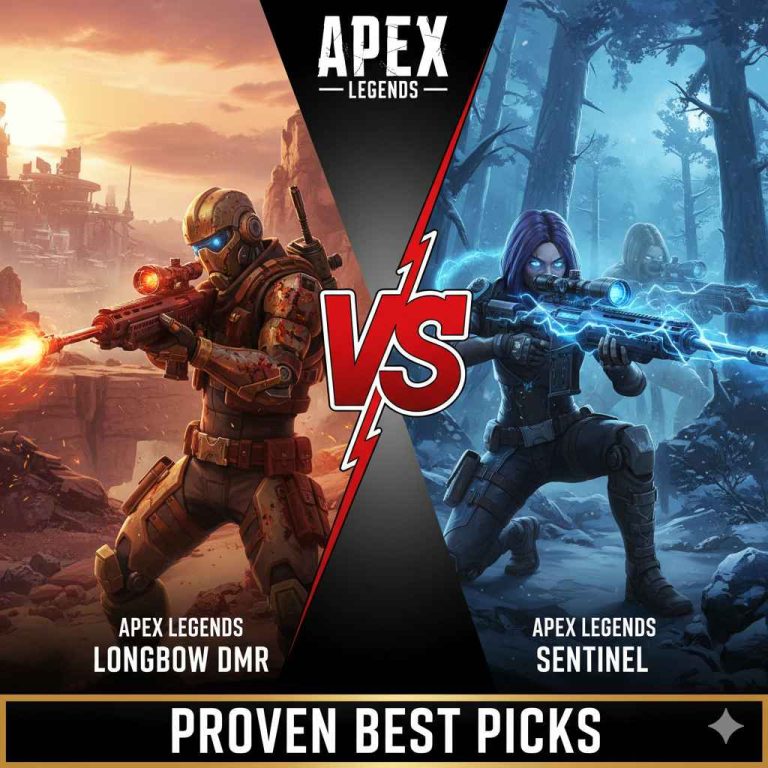
Q4: Is the Longbow DMR better than the Sentinel sniper rifle?
A: They serve different roles. The Longbow DMR is faster (semi-auto) and better for sustained pressure. The Sentinel is a bolt-action, meaning it hits harder per shot but is much slower. Beginners often find the Longbow more forgiving due to its fire rate.
Q5: What is the effective range where I should stop using the Longbow DMR?
A: The Longbow DMR excels between 150 and 300 meters. Beyond 300 meters, the bullet drop becomes significant, and true snipers (like the Kraber or fully-charged Sentinel) often outperform it due to higher velocity and damage.
Q6: How do I reduce the visual sway when aiming down sights for long periods?
A: Sway is often tied to weapon stability and scope magnification. Ensure you have a good Sniper Stock equipped. Additionally, practice holding your breath (as you would in archery) by staying very still on your controller or mouse while lining up that long-range shot.
Conclusion: Your Decision, Your Style
In Apex Legends, the Longbow DMR shines because of its flexibility. Used in semi-auto mode, it delivers reliable sustained pressure at mid-to-long range. Played patiently with deliberate single shots, it rewards precision and smart positioning.
Ultimately, the best choice isn’t about the weapon itself — it’s about how you use it. If you prefer fast follow-up shots and forgiving engagements, lean into its semi-auto strength. If you value calm precision and calculated headshots, slow your pace and make every bullet count. Master your style, and the Longbow DMR becomes a powerful extension of your aim.