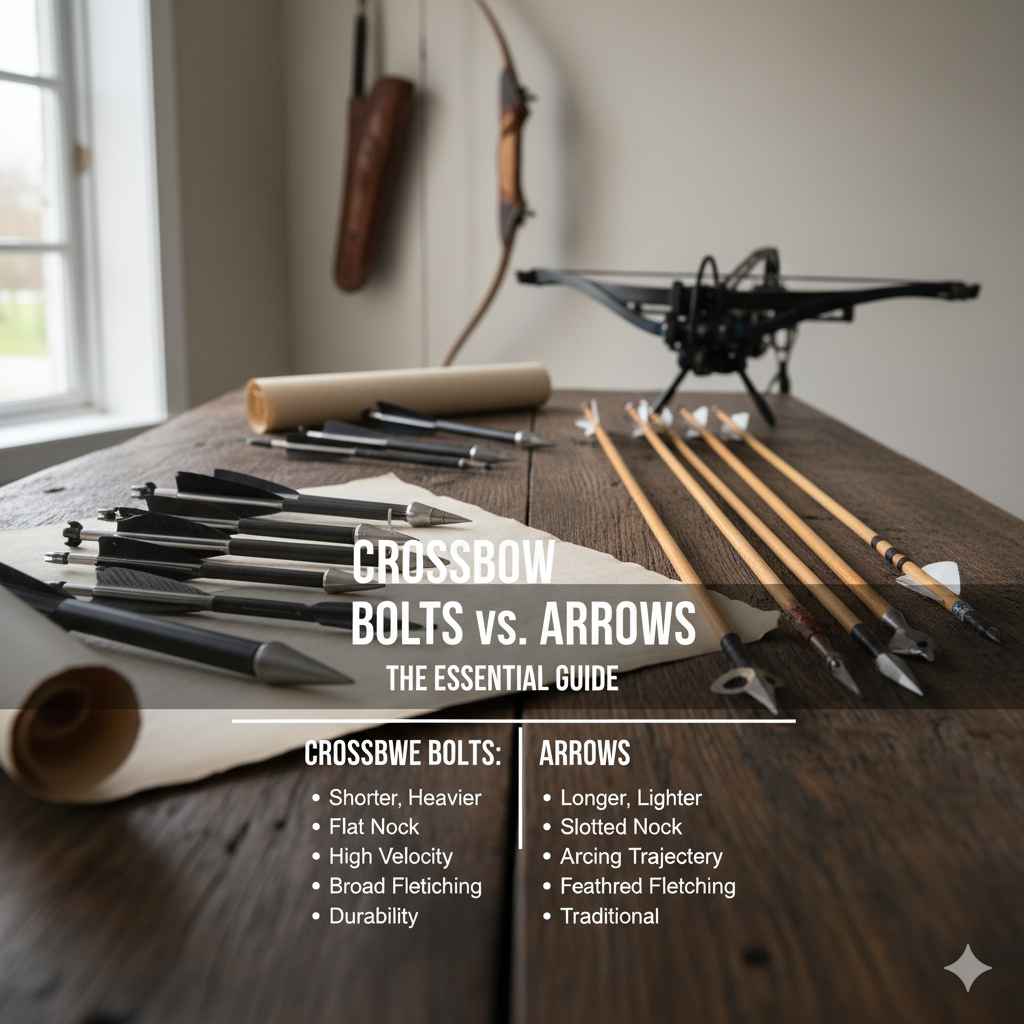
The key difference between crossbow bolts and arrows is length and stiffness. Arrows are longer and more flexible, designed for recurve or compound bows. Bolts are shorter, stiffer projectiles designed specifically for the high speed and power generated by crossbows. Choosing the right one is crucial for safety and accuracy.**
Welcome to the range! It is easy to get confused when you first step into the world of archery. You see long sticks flying through the air, and maybe some shorter, chunkier ones too. Are they all just “arrows”? Not quite! Knowing the difference between crossbow bolts and arrows is crucial for safety, accuracy, and making sure your equipment lasts a long time. It is a common sticking point for new archers, but don’t worry. By the end of this guide, you will know exactly what to look for, how to use them safely, and why they are built differently. Let’s simplify this so you can focus on hitting that target!
Why Proper Identification Matters: Safety First on the Range
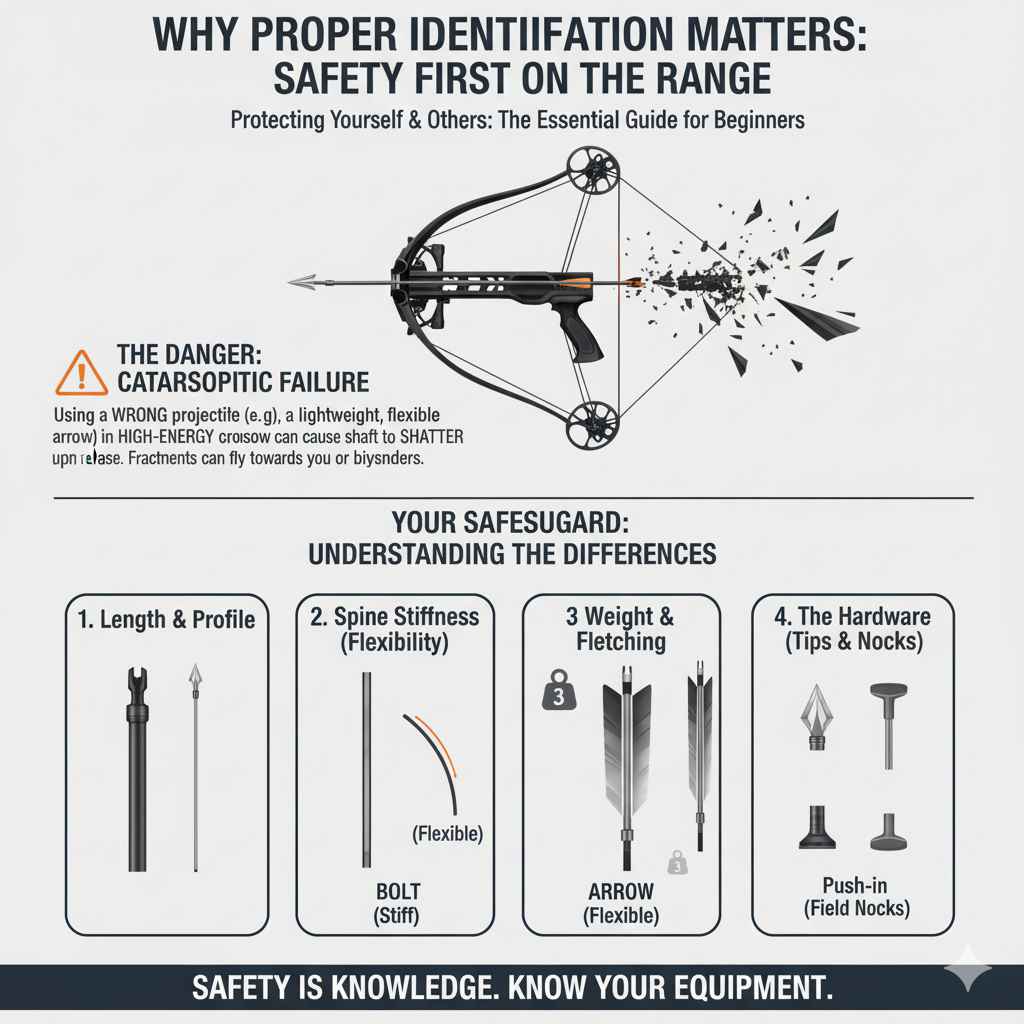
Before we dive into the technical details, we need to talk about safety. Using the wrong projectile in the wrong bow is more than just inaccurate—it can be genuinely dangerous. A modern crossbow stores a massive amount of energy. If you try to shoot a lightweight, flexible arrow from a powerful crossbow, the stress on the arrow shaft can cause it to shatter upon release. This is called catastrophic failure, and the broken pieces can fly toward you or bystanders. That is why understanding the structural differences between bolts and arrows is the first, most important step for every beginner.
Here are the core differences we will explore:
- Length and Profile
- Spine Stiffness (Flexibility)
- Weight and Fletching
- The Hardware (Tips and Nocks)
Understanding Arrows: The Traditional Projectile
Arrows are the classic projectile you see used with traditional recurve bows and modern compound bows. They are designed to work with the physics of a bow that relies on the limbs flexing and the archer’s draw weight.
Arrow Anatomy and Design
An arrow is generally a longer, lighter projectile. Its performance is heavily dependent on its “spine,” which is a measure of its stiffness.
1. Length and Draw Length
The length of an arrow is directly related to the archer’s draw length—how far they pull the string back. A standard adult arrow usually ranges from 28 to 32 inches long.
- Shorter Arrows: Used by archers with shorter arms or draw lengths.
- Longer Arrows: Used by archers with longer draws.
The critical point is that the arrow must be long enough to safely clear the riser (the center part of the bow) when drawn.
2. Arrow Spine (Flexibility)
This is perhaps the most important characteristic of an arrow. Spine refers to how much the shaft bends under a standard weight (usually 2 pounds) when supported in the center. The stiffer the spine, the higher the number (e.g., 500 spine is stiffer than 800 spine).
Why does this matter? When an arrow leaves the bow, it initially flexes around the arrow rest. If the spine is too weak (too flexible) for the bow’s draw weight, the arrow will flex too much, leading to terrible accuracy, or worse, it could break upon release.
Generally, arrows shot from lower poundage bows (like beginner recurves, 25–35 lbs) use softer spines (higher numbers). Arrows shot from high-poundage compound bows (50–70+ lbs) require very stiff spines (lower numbers).
3. Materials
Arrows today are typically made from:
- Aluminum: Durable and consistent, often favored by competitive target shooters.
- Carbon: Very popular due to being lightweight, fast, and highly durable.
- Wood: Used mainly by traditional archers for a classic feel, though less consistent.
For compound and recurve bows, the goal is always a projectile that provides consistent flight path, which requires a specific, standardized stiffness matched to the bow’s power.
Decoding Crossbow Bolts: Built for Power
Crossbow bolts (often just called “bolts”) are fundamentally different because crossbows operate on a different mechanical principle. Crossbows use stored energy in the limbs to launch a projectile much faster and with immense force in a very short distance.
The Necessity of Shorter, Stiffer Projectiles
Because crossbows have short draw lengths (the string only travels a few inches) and exceptionally high draw weights (often 150 lbs to over 400 lbs), the projectile must be incredibly robust.
1. Length: Short and Mighty
Bolts are significantly shorter than traditional arrows. A typical crossbow bolt ranges from 16 inches to 22 inches. This short length is necessary because the bolt sits on a rail or groove built into the crossbow stock, and the bow’s power stroke is very limited.
If you tried to put a 30-inch arrow into a crossbow, it would extend far past the firing point and likely snag or fail dramatically when released.
2. Spine and Stiffness: Unyielding Strength
This is the biggest difference. Bolts are manufactured to be much, much stiffer than arrows. They have a much lower spine rating, meaning they resist bending significantly more than arrows designed for the same draw weight.
Why the extreme stiffness? Because crossbows release their energy almost instantly, the projectile must be rigid enough not to flex excessively under that massive initial force. A bolt that is too flexible will invariably break when fired from a modern crossbow.
3. Weight and Momentum
Bolts are often heavier than comparably sized arrows. This added mass helps stabilize the projectile during the very high initial velocity produced by the crossbow, which improves kinetic energy transfer on impact. They prioritize pushing power over the finesse needed for long-distance arrow flight.
Crossbow Hardware: The Nock and Fletching
The back end of the projectile—the part that connects to the string—is also vastly different.
The Nock
Arrows use a small slot called a nock that fits onto the bowstring. Crossbow bolts use a unique shape, often flat or slightly cupped, designed to sit perfectly in the crossbow’s firing groove or rail. This design ensures a clean release directly down the rail.
Fletching
While both use vanes (fletching) to stabilize flight, crossbow fletching is often smaller and more swept back. Since the bolt is moving so fast over a very short distance, it relies more on its inherent rigidity and less on large fletching surfaces for stabilization compared to a long, slower arrow.
Side-by-Side Comparison: Arrows vs. Bolts
To make things perfectly clear, let’s look at the core components side-by-side. This table summarizes the essential difference between crossbow bolts and arrows regarding their construction and use.
| Feature | Traditional Arrow (Recurve/Compound) | Crossbow Bolt |
|---|---|---|
| Typical Length | 28 to 32+ inches | 16 to 22 inches |
| Spine (Stiffness) | More flexible (Higher spine number, e.g., 400–800) | Extremely stiff (Lower spine number, e.g., 300–450) |
| Primary Use | Recurve and Compound Bows | Crossbows only |
| Nock Type | Crescent-shaped slot for string | Flat or cup shape for rail seating |
| Weight | Generally lighter for speed and trajectory | Generally heavier for kinetic energy |
The Crucial Role of Spine Match: Why You Cannot Interchange Them
As your friendly archery guide, I must emphasize the spine again. This is the non-negotiable rule for safe archery practice.
Matching Spine to Bow Power
The relationship between your bow’s draw weight (how hard it is to pull back) and the projectile’s stiffness is called spine matching. Getting this right ensures the projectile flies true and safely.
For Arrows (Compound/Recurve):
- Determine your bow’s draw weight (e.g., 55 lbs).
- Measure your draw length accurately (usually where your anchor point is).
- Consult the arrow manufacturer’s spine chart. A heavier draw weight requires a stiffer arrow (lower spine number) to prevent the arrow from excessively bending around the bow handle.
For Bolts (Crossbows):
Crossbow manufacturers handle most of this work for you. They specify exactly what weight and stiffness of bolt is required for their specific model. Because crossbows deliver energy so violently, using an arrow that is too weak (too flexible/soft spine) is almost guaranteed to result in the bolt shattering.
Rule of Thumb: If a crossbow manual recommends a minimum weight of 400 grains, you must use a bolt that meets or exceeds that weight. Never use a traditional arrow in a crossbow.
Fletching and Aerodynamics: Making the Projectile Fly Straight
Fletching, the feathers or plastic vanes at the back of the projectile, is vital for stability. Think of it like the fins on a rocket—they keep it pointed in the right direction.
Arrow Fletching
Traditional arrows often use larger fletchings, sometimes made of real feathers (for traditional bows) or larger plastic vanes. These provide more drag and correction over longer flight paths as the arrow weaves slightly around the bow’s center shot upon release.
Bolt Fletching
Crossbow bolts usually feature smaller, often shallower vanes. Since the bolt travels down a rail, it has less initial sideways instability compared to an arrow clearing an arrow rest. The speed is so high that smaller vanes are sufficient to keep it stable over the relatively short distances crossbows typically shoot.
Tips for Beginners: Choosing Your First Set
If you are just starting, you are likely using a recurve or a low-poundage compound bow, or perhaps considering a beginner crossbow. Here is how to pick the right item for your chosen weapon.
If You Are Shooting a Recurve or Compound Bow: Buy Arrows
- Check Your Draw Weight: Note the exact poundage on your bow.
- Measure Draw Length: Have an experienced person measure your draw length from the string to the deepest part of your anchor point (usually the corner of your mouth).
- Consult a Chart: Look up the arrow manufacturer’s chart (Easton, Gold Tip, etc.) for the recommended spine based on your weight and length.
- Start with Safety Gear: For beginners, carbon arrows are generally recommended because they are durable and handle beginner mistakes better than aluminum.
If You Are Shooting a Crossbow: Buy Bolts
- Check the Manual: Your crossbow manual is your best friend. It will specify the required bolt length (e.g., 20 inches) and minimum weight (e.g., 425 grains).
- Stick to Manufacturer Specs: Always buy bolts explicitly marketed for crossbow use, preferably from the same brand as your crossbow for guaranteed compatibility.
- Avoid Lightweight Arrows: Never be tempted to use a lightweight aluminum arrow just because it fits. It will not handle the stress.
Remember, the arrow (or bolt) is the part that translates the bow’s power into impact. If the projectile is wrong, your practice time is wasted, and safety is compromised. Always prioritize the specifications provided by the bow manufacturer.
Maintenance and Safety Checks: Keeping Projectiles Safe
Whether you are using arrows or bolts, regular inspection is mandatory. Damage that is invisible to the naked eye can lead to failure downrange. Safety is paramount, as the U.S. Consumer Product Safety Commission advises safe use of all sporting equipment.
Inspecting Arrows (Recurve/Compound)
After every shooting session, especially if you shoot a target face with hard ground behind it, check every arrow:
- Sight Inspection: Look closely along the entire shaft for any hairline cracks, dents, or deep scratches, especially near the nock and the point insert.
- The Bend Test: Gently bend the arrow away from you, listening for any sound. If you hear a “tink” or a faint crackle, discard it immediately.
- Fletching Condition: Ensure the vanes are firmly attached. Poorly attached vanes cause spiraling flight.
Inspecting Bolts (Crossbows)
Because crossbow bolts handle much greater forces, the inspection needs to be more rigorous:
- Check the Nock Seating: Ensure the back end is perfectly flat and not chipped, as this is where the string contacts the bolt.
- Shaft Integrity: Inspect the entire length for any distortion, as this can happen if the bolt bounces inside the rail mechanism.
- Point Security: Because of the massive kinetic energy, ensure the tip (field point or broadhead) is screwed in tightly before every shot. A loose point can fly off upon impact.
Weight vs. Speed Trade-offs: Understanding Ballistics
The decision between a heavier or lighter projectile (within the safe range recommended by the manufacturer) involves a classic archery trade-off: speed versus energy retention.
Arrows: Prioritizing Trajectory Over Pure Power
For archers shooting traditional or compound bows, maximizing arrow speed often leads to a flatter trajectory, meaning you have less need to adjust for drop over distance. However, very light arrows lose energy quickly over long distances.
Most target archers balance speed and weight to achieve a good compromise for their specific shooting distances (e.g., 30 to 60 yards).
Bolts: Prioritizing Kinetic Energy
Crossbows are inherently fast—often launching bolts well over 350 feet per second (fps). Because the engagement distance is usually much shorter (20 to 100 yards), the priority shifts heavily toward kinetic energy (KE) retained at impact. Heavier bolts (higher grain weight) carry more momentum, leading to better penetration when hunting or target striking.
For example, a 425-grain bolt at 380 fps will maintain its velocity and energy much better than a 350-grain bolt at the same speed, making the heavier bolt the superior choice for the crossbow platform.
A Quick Look at Point Types
The tip you use also influences the projectile type you choose, though many tips are interchangeable within their respective categories (arrow vs. bolt).
Arrow Points (Field Points and Broadheads)
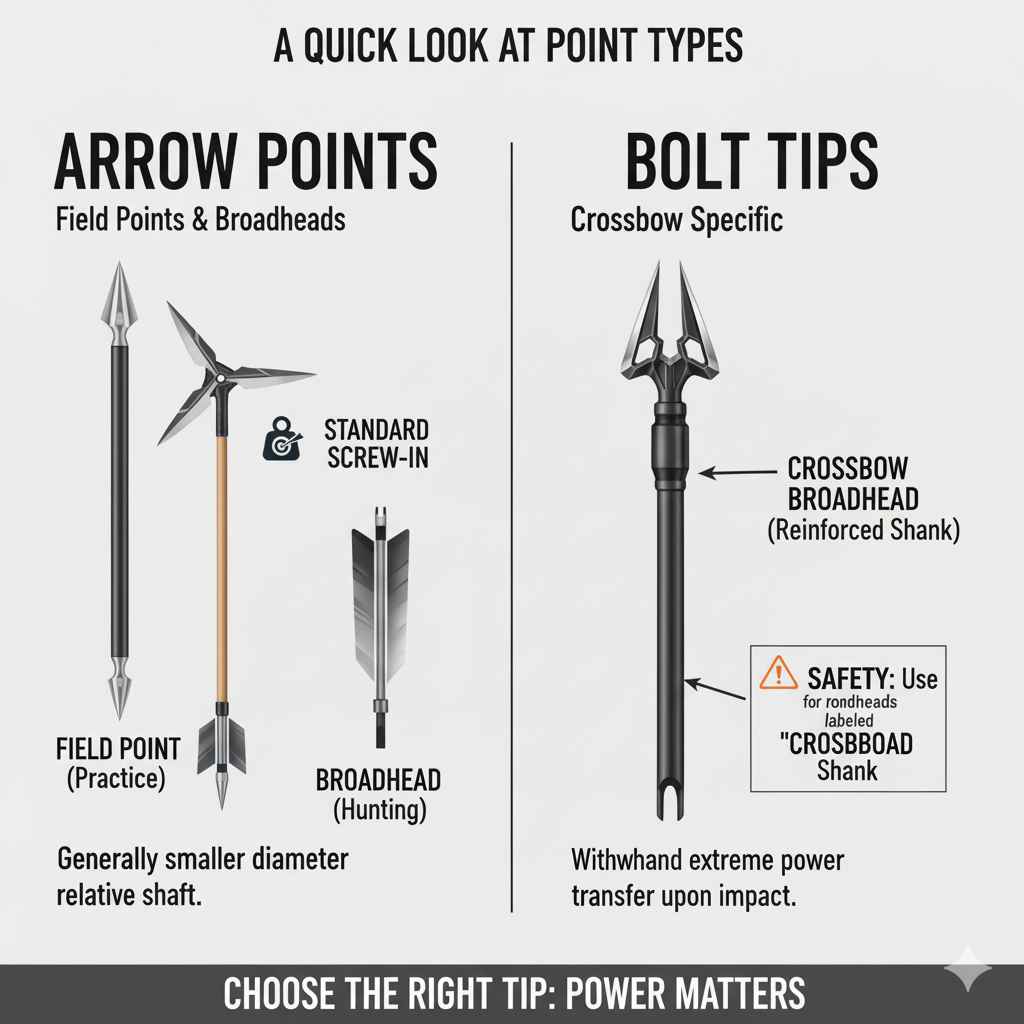
Arrows use standard screw-in field points for practice or broadheads for hunting. These tips are generally smaller in diameter relative to the shaft.
Bolt Tips (Crossbow Specific)
Because crossbows deliver immense force, the connection point where the tip screws into the bolt must be reinforced. Broadheads designed for crossbows often have a slightly different threading or shank structure to withstand the sheer power transfer upon impact, ensuring the head does not break off the shaft.
Always use broadheads labeled specifically as “Crossbow Broadheads” if hunting with a crossbow, even if the grain weight matches an arrow.
Frequently Asked Questions for Beginners
Q1: Can I shoot a crossbow bolt from a compound bow?
A: No, absolutely not. Crossbow bolts are too short and too stiff (low spine) for a compound bow. This combination will almost certainly cause the bolt to shatter upon release, which is extremely dangerous.
Q2: What is the main difference in stiffness between arrows and bolts?
The main difference is spine stiffness. Crossbow bolts are built with a much stiffer spine because crossbows release energy extremely quickly and with very high force. This stiffness prevents the shaft from bending or breaking under that sudden pressure. Arrows used with recurve or compound bows are more flexible, allowing them to bend slightly as they pass the bow rest and stabilize during flight.
Q3: Can arrows and bolts use the same tips?
Sometimes, but not always. Many field points and broadheads use the same screw-in threading system, so they may physically fit both arrows and bolts if the grain weight and insert size match. However, crossbows often generate much more energy, so broadheads specifically designed for crossbows are recommended to ensure durability and safe performance.
Q4: Are crossbow bolts more accurate than arrows?
Not necessarily. Accuracy depends more on the bow, the shooter, and proper setup than the projectile type. Crossbows can feel easier for beginners because they allow you to aim like a rifle, which may make them seem more accurate at first. However, well-matched arrows shot from a properly tuned compound or recurve bow can be extremely accurate at longer distances.
Q5: Why are crossbow bolts shorter than arrows?
Crossbow bolts are shorter because crossbows have a shorter power stroke (the distance the string travels before releasing the projectile). Since the bolt rides along a rail or groove on the crossbow, it does not need the extra length required for traditional bows where the arrow must clear the riser and arrow rest. This design keeps bolts compact while still allowing them to handle high speeds.
Conclusion
Understanding the difference between crossbow bolts and arrows is essential for anyone entering the world of archery. While they may look similar at first glance, they are designed for very different shooting systems.
Arrows are longer, lighter, and more flexible, making them suitable for recurve and compound bows where the arrow must bend slightly during release and stabilize over longer flight paths.
Crossbow bolts, on the other hand, are shorter, heavier, and much stiffer, built to handle the powerful and rapid energy release of crossbows. Their design ensures durability, safety, and stable flight when fired from a crossbow’s rail system.
The most important rule is simple: always use the projectile designed for your specific bow type. Using arrows in a crossbow—or bolts in a traditional bow—can lead to poor accuracy, equipment damage, or even serious injury.
By choosing the correct projectile and maintaining it properly, you will improve both safety and shooting performance, allowing you to focus on the real goal of archery—consistent shots and hitting your target with confidence.