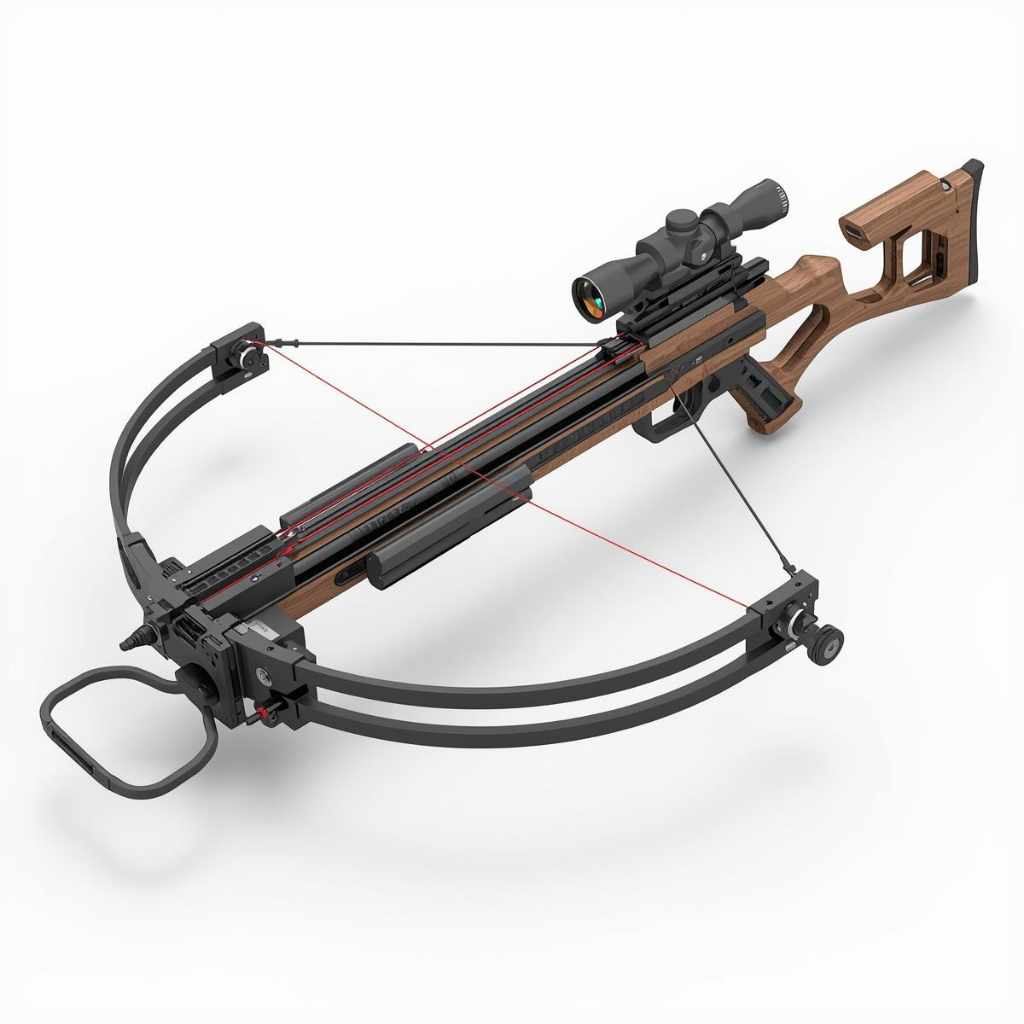
Learn the different parts of a crossbow with this beginner-friendly anatomy guide. From the stock to the string, understand each component’s role for safe shooting and better accuracy in archery.
Hey there, fellow archery enthusiast! If you’re new to crossbows, figuring out all the parts can feel a bit overwhelming at first. Maybe you’ve just picked up your first crossbow and you’re staring at it, wondering what everything does. Don’t worry – that’s a common starting point for many beginners. The good news is that once you break it down, it’s straightforward and exciting.
In this guide, I’ll walk you through the essential parts step by step, using simple terms so you can feel confident right away. We’ll cover everything from the basics to how they work together, helping you shoot safely and have fun. Stick with me, and by the end, you’ll know your crossbow like the back of your hand. Let’s dive into the basics first!
What Is a Crossbow and Why Know Its Parts?
A crossbow is a type of bow mounted on a stock, like a mix between a bow and a rifle. It shoots bolts instead of arrows, and it’s great for beginners because it’s easier to aim and hold steady.
Knowing the different parts helps you use it safely. For example, understanding the trigger and safety prevents accidents. It also makes maintenance simple, so your crossbow lasts longer. Plus, when you know what each part does, you can fix small issues yourself and enjoy shooting more.
There are two main types: recurve and compound. Recurve crossbows have simple curved limbs, while compound ones use pulleys for more power with less effort. Both have similar core parts, but compounds add cams and cables.
According to educational resources from Hunter Ed, learning these parts is key for any bowhunter.Hunter Ed This knowledge builds your skills step by step.
The Core Structure: Stock and Rail
Let’s start with the foundation. The stock is the main body of the crossbow, like the handle on a tool. It’s where you rest it against your shoulder and hold on tight.
The stock houses the trigger and often has spots for attachments like scopes. It’s usually made of wood, plastic, or composite materials for comfort and durability. A good stock feels balanced in your hands, making aiming easier.
Attached to the stock is the rail. This is the long groove where the bolt sits and slides forward when you shoot. Think of it as the “runway” for your bolt. It’s often metal to handle the speed and force.
The rail has a split in the middle for the bolt’s fletching to pass through smoothly. Without a proper rail, your shots could go off course. Always check it for dirt or damage before shooting.
- Stock: Provides stability and holds internal mechanisms.
- Rail: Guides the bolt straight to the target.
For more on basic parts, check out this guide from Bowhunter Ed.Bowhunter Ed
Power Source: Limbs and Riser
The limbs are the “arms” of the crossbow that bend and store energy. They’re attached to the riser, which connects them to the stock.
In recurve crossbows, limbs curve away from you, giving a traditional look and feel. Compound limbs are shorter and use cams for extra power. Limbs are made from flexible materials like fiberglass or carbon to withstand high draw weights, often 100 to 200 pounds.
The riser is sturdy, usually aluminum, and holds the limbs securely. It creates space for the bolt to fly through without hitting anything.
Understanding these helps you choose the right crossbow. Stronger limbs mean faster bolts, but they might need more effort to cock unless it’s a compound model.
- Inspect limbs for cracks before each use.
- Ensure the riser is tightly bolted to avoid wobbles.
Detailed breakdowns like this are available on sites like the Complete Guide to Archery.Complete Guide to Archery
The String System: Bowstring, Serving, and Cams
The bowstring is what launches the bolt. It’s connected to the limbs and pulled back to store energy.
Made from strong synthetic fibers like Dacron or Kevlar, it’s designed to handle huge forces. The serving is a protective wrapping around the center where the bolt nocks on, preventing wear.
In compound crossbows, cams are pulleys that make drawing easier. They reduce the effort needed by up to 75%. Cables connect the cams, syncing everything for a smooth release.
Always wax your string to keep it flexible. A worn string can snap, which is dangerous.
| Part | Function | Material |
|---|---|---|
| Bowstring | Transfers energy to bolt | Synthetic fibers |
| Serving | Protects string center | Resin-coated thread |
| Cams | Reduce draw effort | Metal or composite |
This table shows how these parts work together for power and ease.
Release Mechanisms: Trigger and Latch
The trigger is what you pull to shoot, just like on a gun. It’s connected to the latch, which holds the string back until you’re ready.
The latch, sometimes called a nut, grabs the string securely. When you pull the trigger, it releases, sending the bolt flying.
Safety is built in – most have a safety switch near the trigger to prevent accidental shots. Always engage it when loading.
For beginners, practice dry-firing (without a bolt) to get the feel, but never do it for real as it can damage the crossbow.
- Trigger: Releases the latch.
- Latch: Holds string in place.
- Safety: Prevents mishaps.
Resources from 60X Custom Strings explain these mechanics well.60X Custom Strings
Support Features: Foregrip and Stirrup
The foregrip is under the rail, where your front hand holds for stability. It helps you aim steadily without tiring.
The stirrup is a loop at the front. You put your foot in it to hold the crossbow down while cocking the string. It’s essential for high-draw models.
Some stirrups fold away when not in use. Always use it properly to avoid slipping.
These parts make handling safe and easy, especially for hobbyists.
Holding the Bolt: Arrow Retention Spring and Bolt Rest
The arrow retention spring presses the bolt down into the rail groove so it doesn’t fall out, even if you tilt the crossbow.
The bolt rest is part of the rail that supports the bolt’s front. Together, they ensure accurate shots.
Check the spring for bends – a weak one can cause misfires.
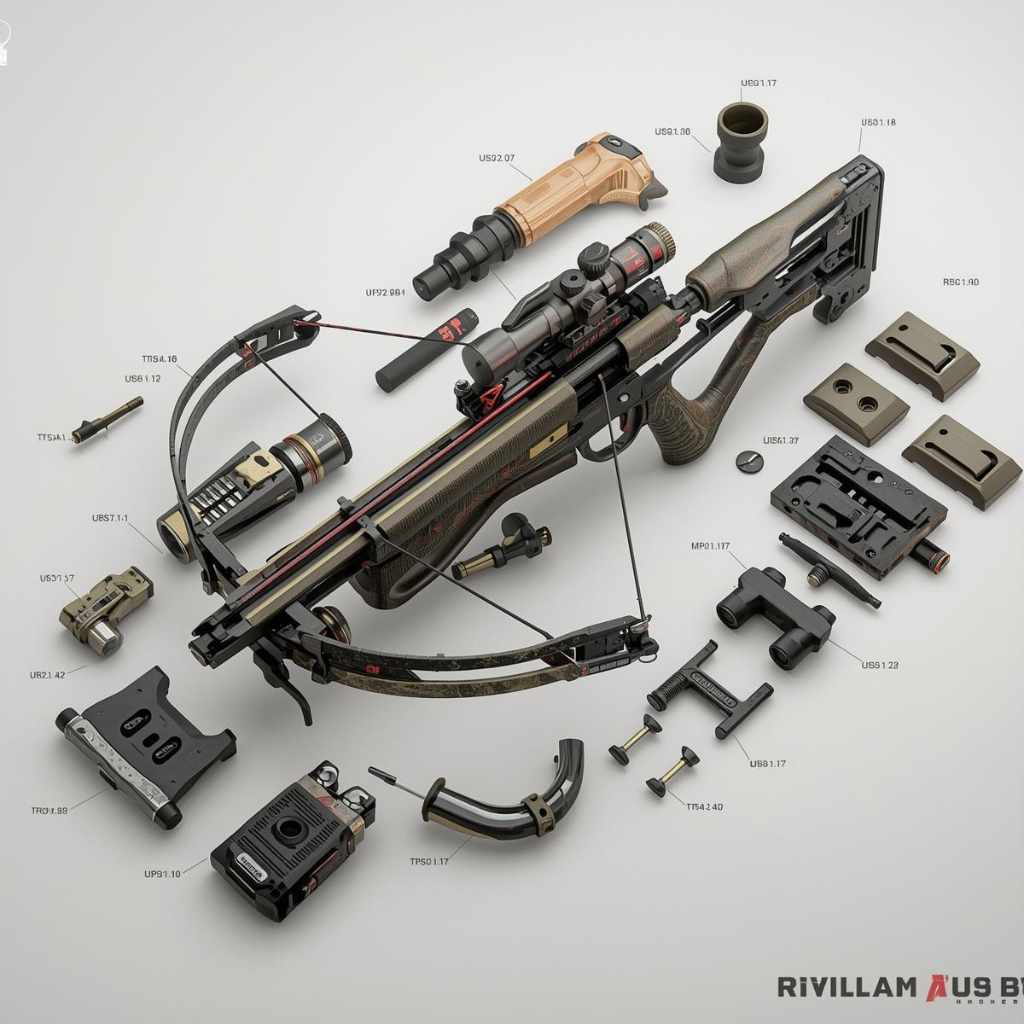
Visualizing It All: Crossbow Anatomy Diagram
To make this clearer, here’s a labeled diagram of a typical crossbow.
Parts of a Crossbow
This image from Bowhunter Ed shows the parts in action.Bowhunter Ed Diagram
For another view, check this detailed label.
Parts of a Crossbow, Names, Functions & Diagram

The Bolt: Not Just an Arrow
While not part of the crossbow itself, the bolt is crucial. It’s shorter than arrows, about 16-22 inches.
Parts include the shaft (body), point (tip), fletching (vanes for stability), and nock (end that fits the string).
Bolts are stiffer to handle crossbow speeds. Use the right length for your model.
| Bolt Part | Purpose | Tip for Beginners |
|---|---|---|
| Shaft | Main body | Choose carbon for durability |
| Point | Penetrates target | Start with field tips for practice |
| Fletching | Stabilizes flight | Three vanes are standard |
| Nock | Connects to string | Flat or half-moon for crossbows |
This table breaks down bolt anatomy simply.
Cocking Devices: Making It Easier
Cocking pulls the string back. Manual cocking uses hands or a rope aid. Cranks are mechanical for less strain.
For beginners, a rope cocker halves the effort. Always cock evenly to avoid twisting limbs.
- Rope cocker: Affordable and portable.
- Crank: Ideal for higher draw weights.
Sites like Outdoor Canada discuss these aids.Outdoor Canada
Accessories That Enhance: Sights and Quivers
Many crossbows have a sight bridge for mounting scopes or red dots. This improves accuracy over iron sights.
A quiver holds extra bolts, attaching to the stock or side. It’s handy for quick reloads.
Start with a basic scope – it makes hitting targets fun and rewarding.
Maintenance Tips for Each Part
Keep your crossbow in top shape with regular checks.
- Wipe the rail after use to remove residue.
- Inspect strings for fraying.
- Lubricate moving parts like triggers.
- Store in a dry case.
Simple habits like these prevent issues and ensure safety.
Common Mistakes Beginners Make with Parts
One big error is ignoring the safety – always treat it like it’s loaded.
Another is mismatched bolts, which can damage the rail or limbs.
Forget to wax strings? That leads to early wear. Learn from these to shoot better.
Choosing a Crossbow Based on Parts
Look for adjustable stocks for comfort. Compound models with cams suit beginners for ease.
Check draw weight – start low, around 100 pounds, to build strength.
Reputable sources like Steambow offer beginner advice.Steambow
Recurve vs. Compound: Parts Comparison
| Feature | Recurve | Compound |
|---|---|---|
| Limbs | Curved, simple | Short, with cams |
| Draw Effort | Higher | Lower with let-off |
| Maintenance | Easier | More parts to check |
| Speed | Good | Faster |
Use this table to decide which type fits your needs.
Safety First: Key Parts to Watch
The safety switch, anti-dry-fire mechanism, and finger guards are vital.
Anti-dry-fire stops shooting without a bolt, protecting limbs.
Always point downrange and keep fingers below the rail.
Educational sites emphasize this for safe fun.Bowhunter Ed Safety

FAQ
What is the most important part of a crossbow for beginners?
The stock and trigger are key because they affect comfort and control. Get familiar with them first for safe handling.
How do the limbs work in a crossbow?
Limbs bend when you cock the string, storing energy. When released, they snap forward to launch the bolt quickly.
What’s the difference between a bowstring and serving?
The bowstring is the main cord; serving is the protective wrap in the middle where the bolt touches.
Do all crossbows have cams?
No, only compound crossbows have cams for easier drawing. Recurve ones are simpler without them.
Why use a stirrup when cocking?
It holds the crossbow steady with your foot, making it safer and easier to pull the string back evenly.
What should I check on the rail before shooting?
Look for cleanliness and no obstructions. A smooth rail ensures accurate bolt flight.
Can I replace crossbow parts myself?
Simple ones like strings yes, but for limbs or triggers, consult a pro to avoid damage.
Wrapping It Up: Your Crossbow Journey Starts Here
We’ve covered the different parts of a crossbow from top to bottom, and I hope this breakdown has made it all click for you. Remember, knowing your equipment is the first step to becoming a confident archer. Start slow, practice safely, and enjoy the thrill of hitting that target.
As you get comfortable, experiment with accessories and maintenance. Archery is about patience and fun – you’ve got this! If you have questions, hit the range or check reliable resources. Keep shooting straight, and see you out there.