Does Burping Release Aids? A Dangerous, Proven Myth
No, you should never “burp” a release aid by manually closing its jaws before drawing. This is a dangerous myth that dramatically increases the risk of a misfire, which can damage your bow, break your arrow, or cause serious injury. A release aid is designed to close securely under the tension of drawing the bow.
Welcome, fellow archers! It’s Salman Arfeen here, your guide to making archery safe, simple, and fun. When you’re new to the sport, you hear all sorts of tips and tricks. Some are great, but some are just plain dangerous. Today, we’re going to tackle a big one: the myth of “burping” your release aid.
You might have heard someone at the range mention it. You might have even seen someone do it. The idea sounds simple, but it’s one of the riskiest habits a new archer can pick up. It’s my job to help you build a strong, safe foundation for a lifetime of enjoyment in archery.
Don’t worry if this is new to you or if you’ve tried it before. We’re going to break down exactly what “burping” is, why it’s so dangerous, and show you the correct, safe way to use your release aid every single time. Let’s get you shooting with confidence!
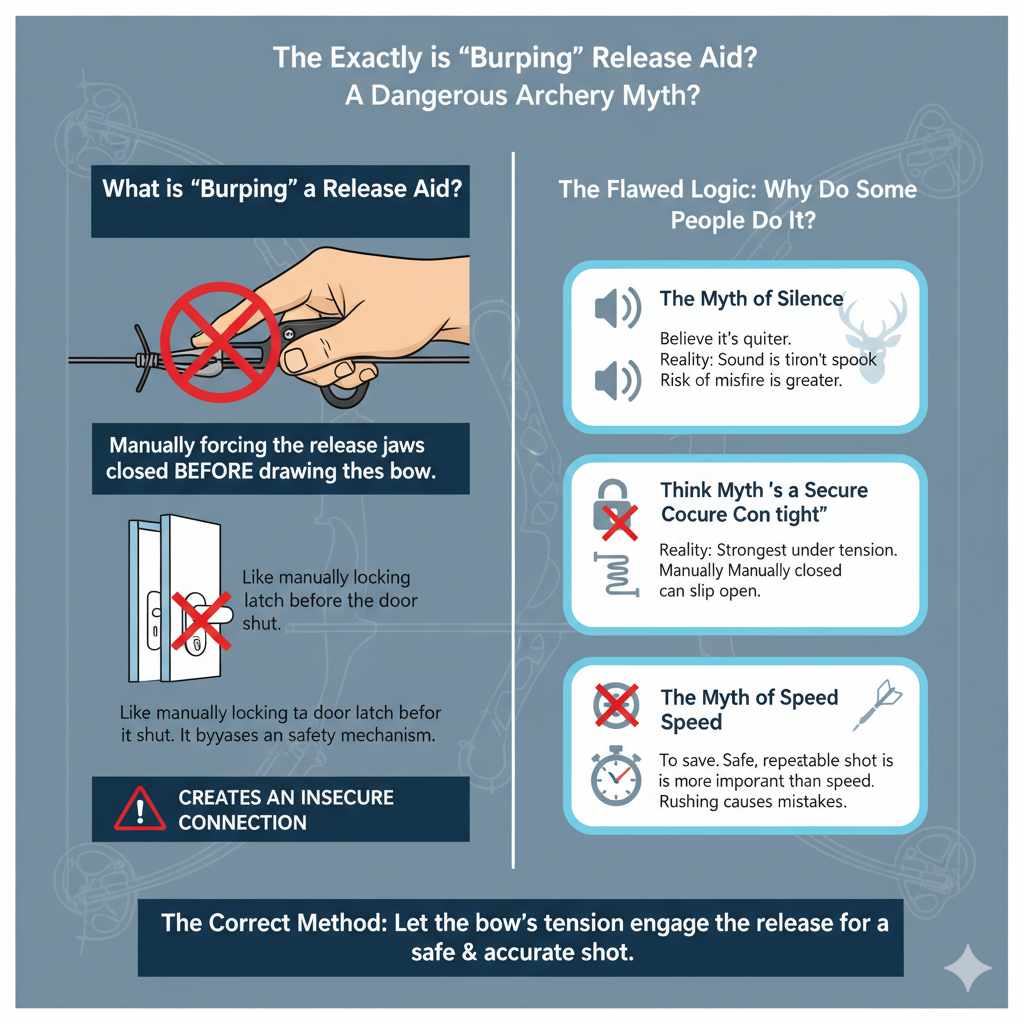
What Exactly is “Burping” a Release Aid?
Let’s clear this up right away. “Burping” a release aid is the act of manually forcing the jaws of a caliper-style release to close onto your D-loop before you start to draw your bow. Instead of just hooking the release on and letting the bow’s tension do the work, the archer pre-closes the mechanism.
Think of it like this: a door latch is designed to click shut when you push the door closed. “Burping” is like trying to manually flip the latch into the locked position before the door is even shut. It’s not how the mechanism is designed to work, and it creates an insecure connection.
This bad habit is almost exclusively seen with caliper releases—the kind most beginners use where you pull a trigger with your index finger. The jaws, or “hooks,” on these releases are meant to lock into place automatically and safely as you pull back on the bowstring. By forcing them shut, you bypass this crucial safety feature.
The Flawed Logic: Why Do Some People Do It?
If it’s so dangerous, why would anyone start doing it? The reasons are usually based on misunderstandings about how the equipment works. People who “burp” their release often believe it provides a benefit, but these are all myths.
- The Myth of Silence: Some archers think that pre-closing the jaws makes their setup quieter. They want to avoid the small “click” sound the release makes when it properly engages with the D-loop, especially for hunting. In reality, the sound is tiny and won’t spook an animal. The risk of a misfire is a much bigger threat to a successful hunt.
- The Myth of a Secure Connection: Others feel that by manually closing it, they are “making sure” it’s locked on tight. This is completely backward. The locking mechanism is strongest when it engages under tension, as it was designed to. A manually closed jaw is often not fully locked and can slip open under pressure.
- The Myth of Speed: A few archers might think it saves a fraction of a second. But a safe, repeatable shot routine is always more important than speed. Rushing leads to mistakes, and in archery, mistakes can be very costly.
These perceived benefits are an illusion. The correct method is not only safer but also leads to more consistent and accurate shooting in the long run.
The Dangers: Why You Should Never Burp Your Release
Now we get to the most important part of our discussion. This isn’t just about good or bad form; it’s about safety for you, your equipment, and everyone around you. Burping a release aid introduces serious, unnecessary risks into your shot process.
1. Extreme Risk of Misfire or Dry Fire
This is the number one danger. When the jaws of the release are not properly locked, they can slip off the D-loop as you begin to draw the bow. If this happens without an arrow nocked, you get a “dry fire.” A dry fire unleashes all the bow’s stored energy back into its own limbs, cams, and riser. This can cause the bow to literally explode in your hands.
If an arrow is nocked, it can be sent flying in an uncontrolled direction—a “misfire.” It could go up, down, or sideways. This is incredibly dangerous at a public range or in the field. According to safety guidelines from organizations like the Archery Trade Association, maintaining control of your equipment at all times is fundamental to preventing accidents.
2. Damage to Your Expensive Equipment
Even if you avoid a catastrophic dry fire, the habit of burping your release can cause significant wear and tear on your gear. Here’s how:
- D-Loop Damage: Forcing the jaws shut can fray and weaken your D-loop material. A worn D-loop can snap during your draw, which has the same effect as a dry fire.
- Serving Wear: It can also put undue stress on the serving underneath your D-loop, causing it to separate and unravel over time.
- Release Aid Mechanism: You’re using the release in a way it wasn’t designed for. Over time, this can damage the internal locking parts, making the release less reliable and more prone to failure.
3. Inconsistent and Inaccurate Shots
Good archery is all about consistency. You want every shot to feel and look the same. Burping your release introduces a massive variable right at the start of your shot.
By focusing on manually closing the jaws, you create a bad habit that interferes with a smooth, repeatable shot sequence. It takes your focus away from proper form, a stable anchor point, and a surprise release. This inconsistency will show up on the target, leaving you frustrated and wondering why your arrow groups aren’t getting tighter.
The table below clearly shows the difference between the two methods.
| Feature | The Myth: “Burping” Release | The Correct & Safe Method |
|---|---|---|
| Safety | Extremely high risk of misfire, dry fire, and injury. | Extremely low risk. The release works as designed. |
| Reliability | Unreliable. Jaws may not be fully locked. | Highly reliable. You hear and feel the “click” of a secure lock. |
| Consistency | Promotes bad habits and inconsistent shot setup. | Builds a repeatable, solid foundation for every shot. |
| Equipment Health | Causes premature wear on D-loop, serving, and the release itself. | Protects your equipment and extends its life. |
The Correct and Safe Way to Attach Your Release Aid
So, we know what not to do. Let’s build the right habit from the ground up. Attaching your release aid correctly is simple, fast, and becomes second nature with a little practice. Here is your new step-by-step routine.
- Get into Your Stance: Plant your feet and get into your shooting stance before you do anything else. Your bow should be pointing downrange in a safe direction.
- Nock Your Arrow: Securely nock your arrow onto the bowstring. You should hear a faint “click” as it snaps into place.
- Hook the Release: Bring your release aid up to the D-loop. Simply hook the open jaw of the release onto the D-loop. Don’t try to close it.
- Begin Your Draw: As you begin to pull back on the string, the tension will automatically cause the second jaw to close and lock around the D-loop.
- Listen for the “Click”: You will hear and feel a distinct “click” as the mechanism securely locks. This is your confirmation that the release is safely engaged and ready to be fully drawn.
- Confirm with a Gentle Tug: Before committing to a full draw, give a very slight tug to ensure the connection is solid. It shouldn’t go anywhere. Now you can proceed with your draw cycle confidently.
That’s it! No forcing, no fiddling. Just a smooth, safe, and reliable connection every single time. This process is the foundation of a great shot.
Understanding Your Release Aid Better
To really feel confident, it helps to know a little bit about the tool in your hand. While there are many types of releases, most beginners start with an index-finger caliper release, which is what we’ve been focusing on.
How a Caliper Release is Designed to Work
Inside your caliper release is a simple but clever sear system. When the jaws are open, the sear is waiting to be activated. The tension from drawing the bow is what provides the force needed to swing the second jaw closed and engage the sear, locking it all in place. The trigger’s only job is to disengage that sear, allowing the jaws to spring open and release the string.
By “burping” it, you are trying to engage the sear without the proper tension. It might feel like it’s closed, but often the sear is only partially set, making it incredibly unstable and prone to slipping. Trust the engineers who designed it! They created it to be used with the tension of the draw.
The table below outlines a few common mistakes beginners make with release aids and how to fix them with good habits.
| Common Mistake | The Problem It Causes | The Safe & Correct Fix |
|---|---|---|
| “Burping” the Release | Creates a massive safety risk and equipment damage. | Follow the “hook and click” method; let bow tension close the jaws. |
| “Punching” the Trigger | Causes you to jerk the bow, leading to poor accuracy. | Wrap your finger around the trigger and slowly squeeze, like you’re squeezing a sponge, for a surprise release. |
| Incorrect Strap Length | Can cause an inconsistent anchor point and awkward trigger pull. | Adjust the strap so the trigger rests between the first and second knuckle of your index finger when at full draw. |
| Leaving Release on the D-Loop | Can cause accidental bumps that fire the arrow. A major safety hazard. | Never leave your release attached to the string unless you are actively shooting. Remove it immediately after your shot. |
What To Do If You’ve Been Burping Your Release
If you’re reading this and thinking, “Uh oh, I’ve been doing that,” please don’t feel bad! Archery is a journey of learning. The best thing you can do is change the habit right now. Here’s your action plan:
- Stop Immediately: The next time you shoot, make a conscious decision to follow the correct attachment method we outlined above.
- Inspect Your Gear: Take a close look at your D-loop. Is it fuzzy, frayed, or discolored? Check the bowstring serving underneath it. If you see any signs of wear, it’s safest to take your bow to a pro shop and have them replace the D-loop. It’s a cheap and easy fix that can save your bow.
- Practice the Right Way: Practice the “hook, draw, click” method over and over. You can even do this without an arrow while pointing the bow at a safe target butt. Just draw a few inches and let down. The goal is to build new muscle memory.
- Be Patient with Yourself: It might feel a little strange at first if you’re used to the old way. Stick with it. Within one or two sessions, the correct method will feel natural, and you’ll have the peace of mind that you’re shooting safely.
Building good habits is the key to progress in archery. By ditching this one dangerous myth, you are taking a huge step toward becoming a more consistent, accurate, and, most importantly, safer archer.

Frequently Asked Questions (FAQ)
1. What does “burping a release aid” mean in archery?
“Burping” is a slang term for manually forcing the jaws of a caliper-style release aid to close on the D-loop before drawing the bow. This is an incorrect and dangerous practice, as the release is designed to close automatically under tension.
2. Is it ever safe to burp a release aid?
No, it is never safe. There is no situation in archery where burping a release provides a benefit. It only increases the risk of the release failing, which can lead to a dry fire or misfire, potentially damaging your bow or causing injury.
3. Can burping my release cause a dry fire?
Yes, absolutely. If the jaws are not properly locked, they can slip off the D-loop during the draw. If this happens without an arrow nocked, the bow will dry fire, which can destroy the limbs and cams.
4. How do I know for sure if my release is attached correctly?
You will hear and feel a distinct “click” as you begin your draw. This sound confirms that the internal locking mechanism has engaged securely. Before reaching full draw, you can give a tiny tug to feel that the connection is solid.
5. What is the “click” I should listen for?
The “click” is the sound of the metal sear inside your release aid locking into place as the jaws close around the D-loop. It’s a positive, audible confirmation that your equipment is working as designed and is ready for the shot.
6. Does this advice only apply to caliper releases?
While the term “burping” is specific to caliper releases, the principle of letting the equipment work as designed applies to all release aids. Thumb button, hinge, and resistance releases all have specific ways they should be attached and used safely. Always follow the manufacturer’s instructions.
7. My D-loop looks fuzzy and worn out. What should I do?
Stop shooting immediately and take your bow to a qualified archery pro shop. A frayed D-loop is a major safety hazard, as it can break at any time during your draw. Replacing a D-loop is a very inexpensive and quick fix for a professional and will give you peace of mind.
Conclusion: Shoot Safe, Shoot Smart
In archery, our goal is to find joy in the flight of the arrow. That joy depends on a foundation of safety and trust in our equipment. The myth of “burping” a release aid undermines both of these things. It trades a proven, safe mechanism for a dangerous and unreliable shortcut.
Remember, your release aid is a precision tool designed to work flawlessly when used correctly. Trust its design. Listen for that satisfying “click.” Feel the secure connection as you draw. By building this one simple, correct habit, you eliminate a huge risk and set yourself up for more consistent, accurate, and enjoyable shooting.
Take your time, focus on building a solid routine, and always put safety first. I promise that your confidence will grow, your groups will tighten, and your love for this amazing sport will only get stronger. Happy and safe shooting!