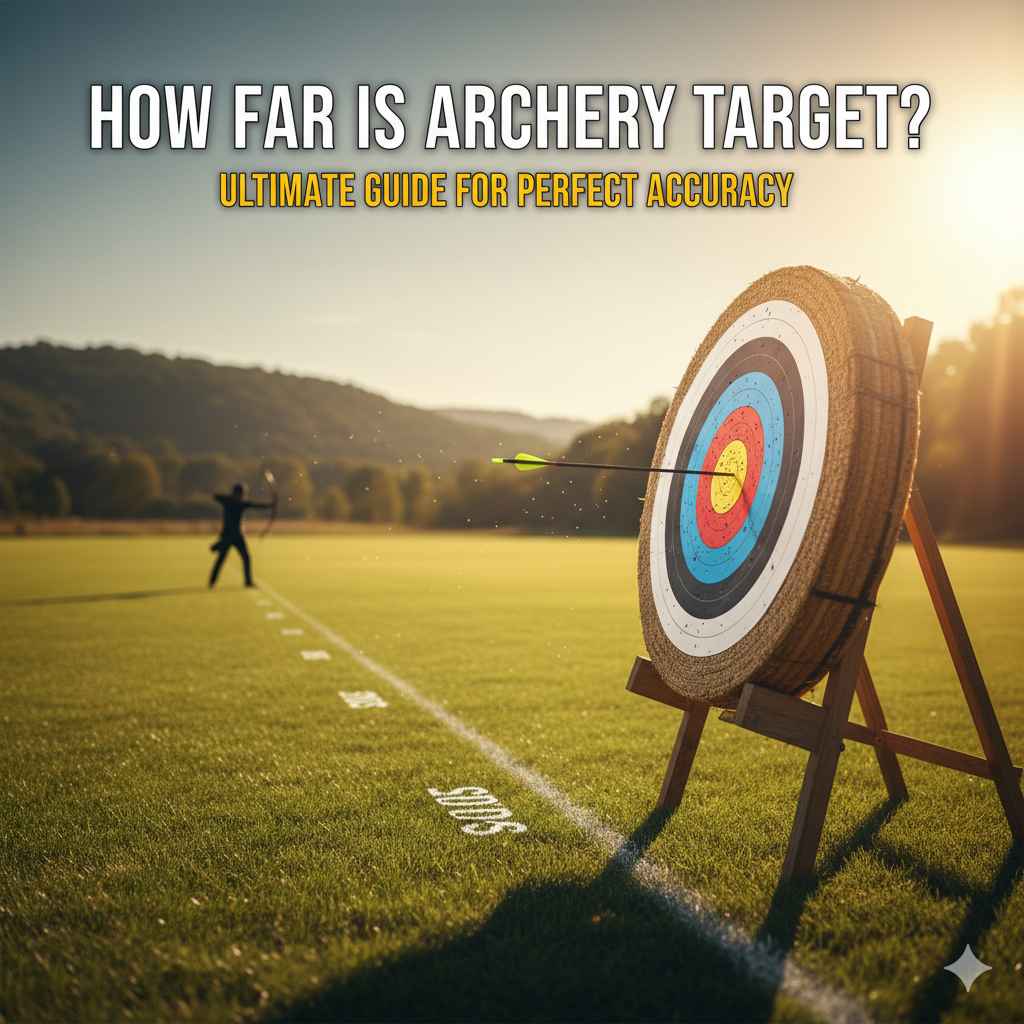
When getting started with archery, one of the most common questions enthusiasts often ask is, how far is archery target typically placed? This question is crucial, as the distance to your target not only affects your aim and technique but also plays a significant role in your overall accuracy and enjoyment of the sport. Whether you are practicing for competition or just honing your skills for fun, understanding the appropriate distances for archery targets can dramatically improve your shooting experience.
In this ultimate guide, we will explore the standard distances used in archery, factors that influence target placement, and tips for improving your accuracy. By the end, you will have a clear idea of how far you should set your archery target for perfect precision.
Understanding Standard Archery Target Distances
Archery target distances are not arbitrary; they follow specific guidelines depending on the type of archery you are practicing—be it traditional, recreational, or competitive. The distances vary widely based on the archer’s skill level, bow type, and the discipline.
Beginner Archery Target Distances
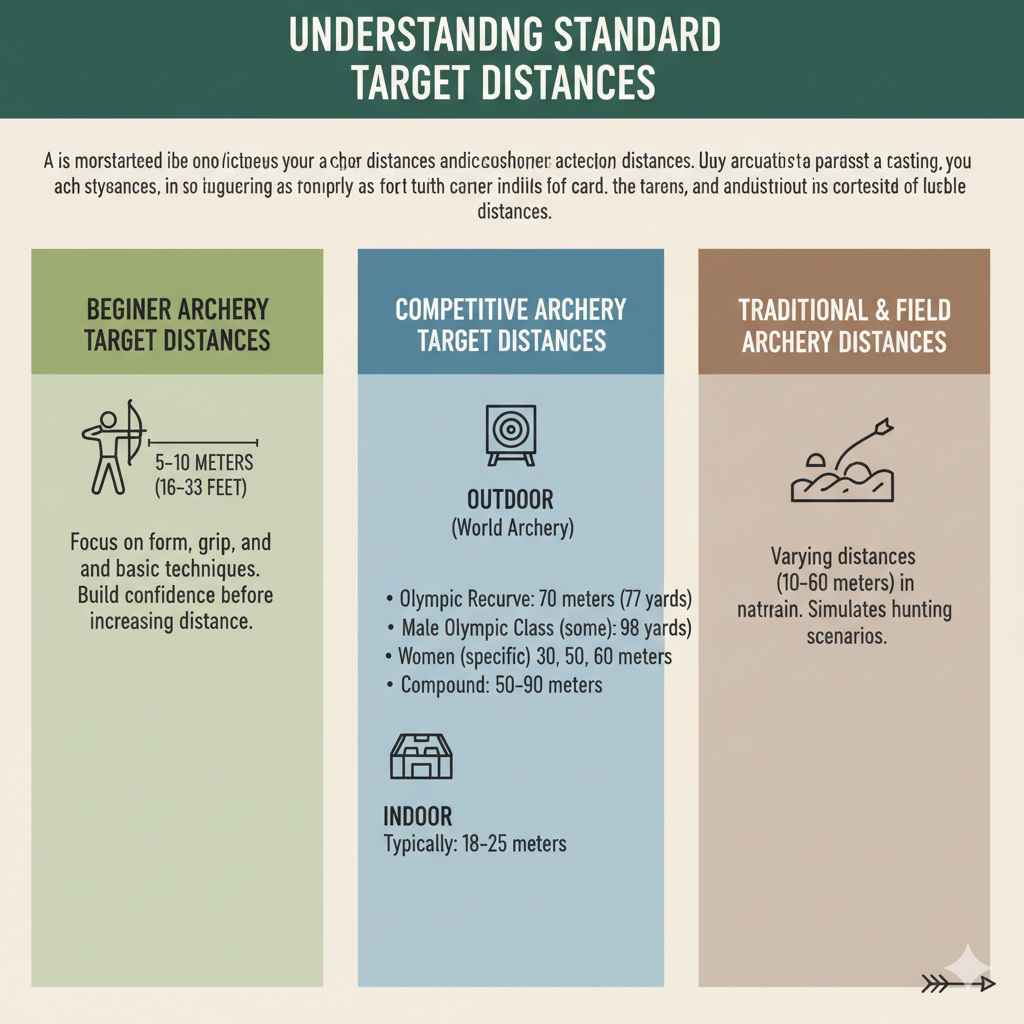
For beginners, it’s best to start with a shorter distance. Typically, a range of 5 to 10 meters (16 to 33 feet) is recommended. This distance allows new archers to focus on form, grip, and basic shooting techniques without the added challenge of long-range aiming.
Setting your targets closer also helps build confidence. Once you comfortably hit closer targets, you can gradually increase the distance.
Competitive Archery Target Distances
In competitive archery, standardized distances are established by governing bodies like World Archery Federation. The official outdoor target distances for recurve archery are:
– 70 meters (about 77 yards) for Olympic-style recurve archery.
– 90 meters (about 98 yards) for male Olympic-class rounds (in some competitions).
– 30, 50, and 60 meters for women in specific categories.
For compound bow competitions, targets are often placed between 50 and 90 meters, but this depends on the event.
Indoor archery, on the other hand, usually involves much shorter distances—commonly 18 to 25 meters.
Traditional and Field Archery Distances
Field archery involves shooting at targets of varying distances, often laid out in natural terrain. The targets may be placed anywhere from 10 to 60 meters, allowing for a diverse shooting experience. Traditional archery, meanwhile, has flexible distances but often follows similar ranges as field archery to simulate hunting scenarios.
Factors Influencing How Far You Set Your Archery Target
Knowing the standard distances is useful, but your ideal target placement can depend on several other factors.
Bow Type and Draw Weight
Different bows have varied effective ranges. A compound bow with a high draw weight can shoot farther accurately than a traditional longbow. Beginners might want to place targets closer when using low draw weight bows or learning new techniques.
Skill Level and Experience
As your archery skills improve, increasing the distance to your target challenges your precision and control. Advanced archers often train at longer distances to prepare for competitions and hunting scenarios.
Purpose of Practice
Are you practicing for competition, hunting, or just casual shooting? Your training goals will dictate the ideal shooting range. For example, bowhunters may want to practice at distances between 20 and 40 meters, which are common in hunting scenarios.
Environmental Conditions
Lighting, wind, and terrain can affect your shot accuracy. It’s wise to adjust target distance to safer and more achievable ranges if you are shooting in windy or uneven outdoor conditions.
Tips for Achieving Perfect Accuracy at Varying Distances
No matter the distance, there are some universal tips to help improve your aim and consistency.
Find a Stable Stance
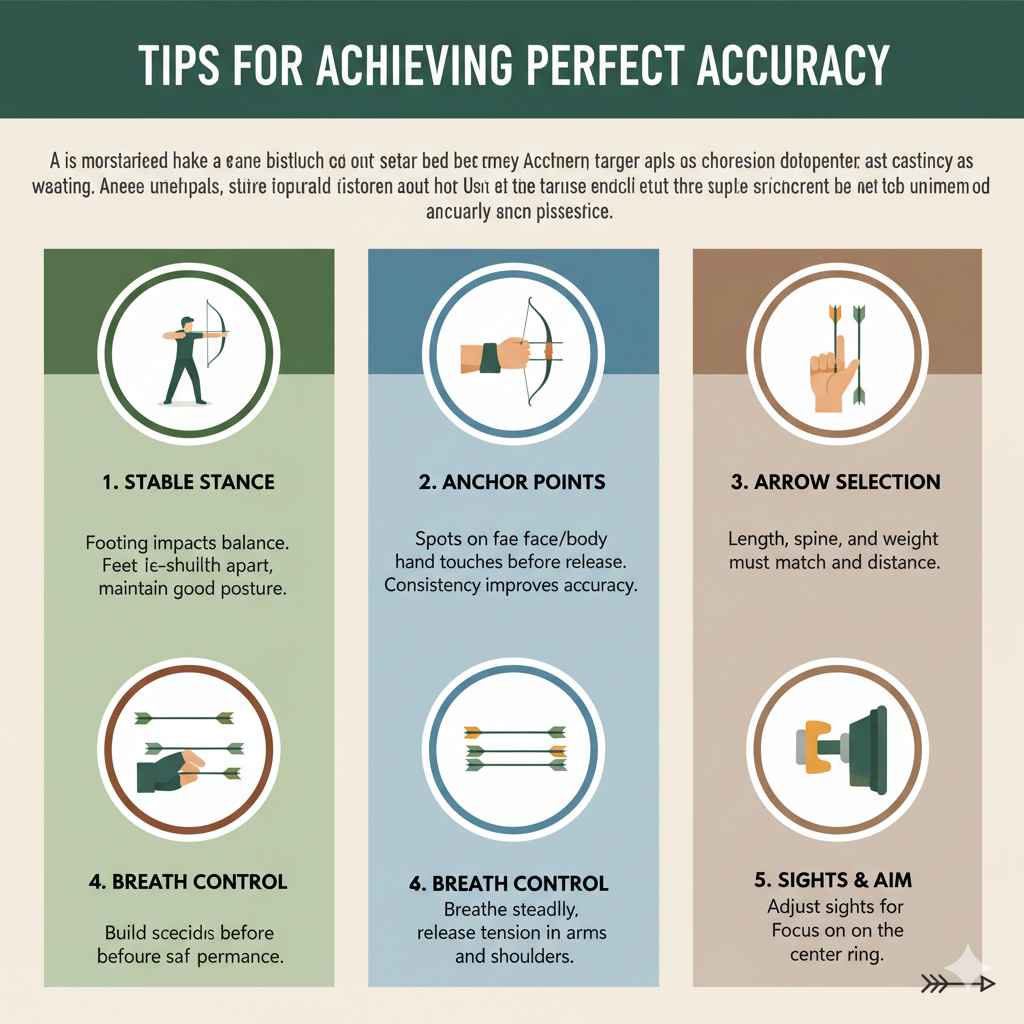
Your footing impacts your balance and release smoothness. Keep feet shoulder-width apart and maintain good posture.
Focus on Consistent Anchor Points
Anchor points are the spots on your face or body where your hand or string touches before release. Consistency here improves accuracy.
Use Proper Arrow Selection
The arrow length, spine, and weight should match your bow and shooting distance.
Practice Breath Control and Relaxation
Tension in your body can cause erratic shots. Breathe steadily and release tension in your arms and shoulders.
Adjust Sights and Aim Small
If your bow has sights, make fine adjustments depending on the distance. Aim small—focus on the center of the target or desired scoring ring.
Conclusion
Understanding how far is archery target set can make the difference between frustration and progress in your archery journey. Starting at appropriate distances, considering your equipment and skill, and gradually increasing the challenge will help you master the sport with confidence. Remember, no matter the range, consistent practice and attention to form are the keys to perfect accuracy. So, set your targets thoughtfully and aim true!