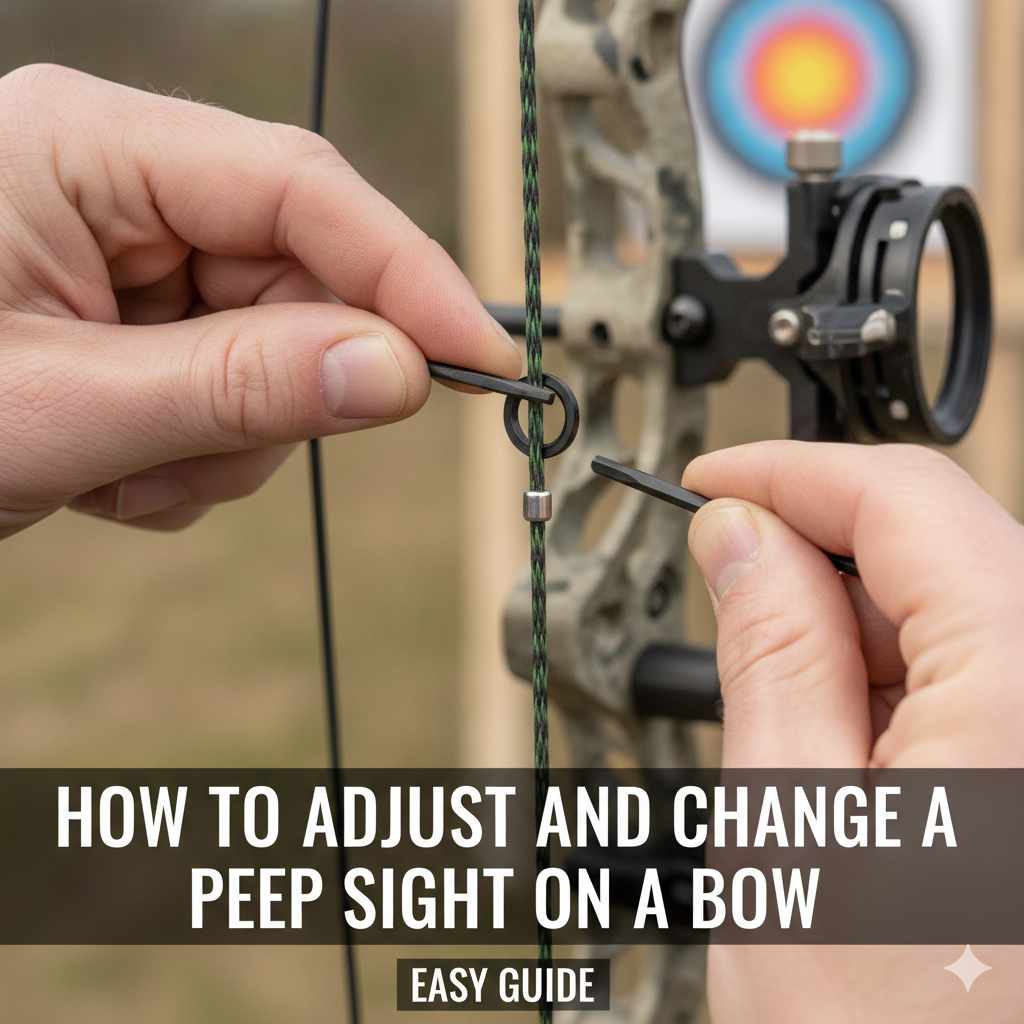
How To Adjust And Change A Peep Sight On A Bow: Easy Guide
It can feel a bit tricky when your bow sight isn’t quite right. You want to hit your target every time. Adjusting or changing a peep sight on a bow might sound hard.
But it’s simpler than you think. This guide will walk you through it step-by-step. You’ll be shooting straighter in no time.
Let’s get your bow ready for your next shot.
Adjusting and changing a bow’s peep sight involves careful steps to ensure proper alignment and accuracy. This guide provides clear instructions for making these adjustments, troubleshooting common issues, and understanding when a peep sight needs to be replaced, aiming for improved shooting performance and confidence.
Understanding Your Bow’s Peep Sight
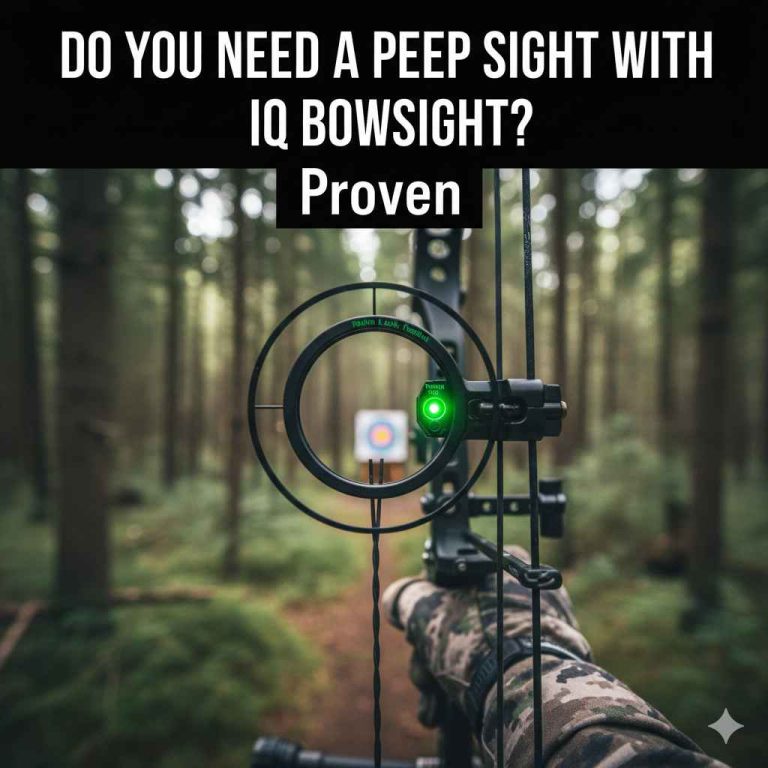
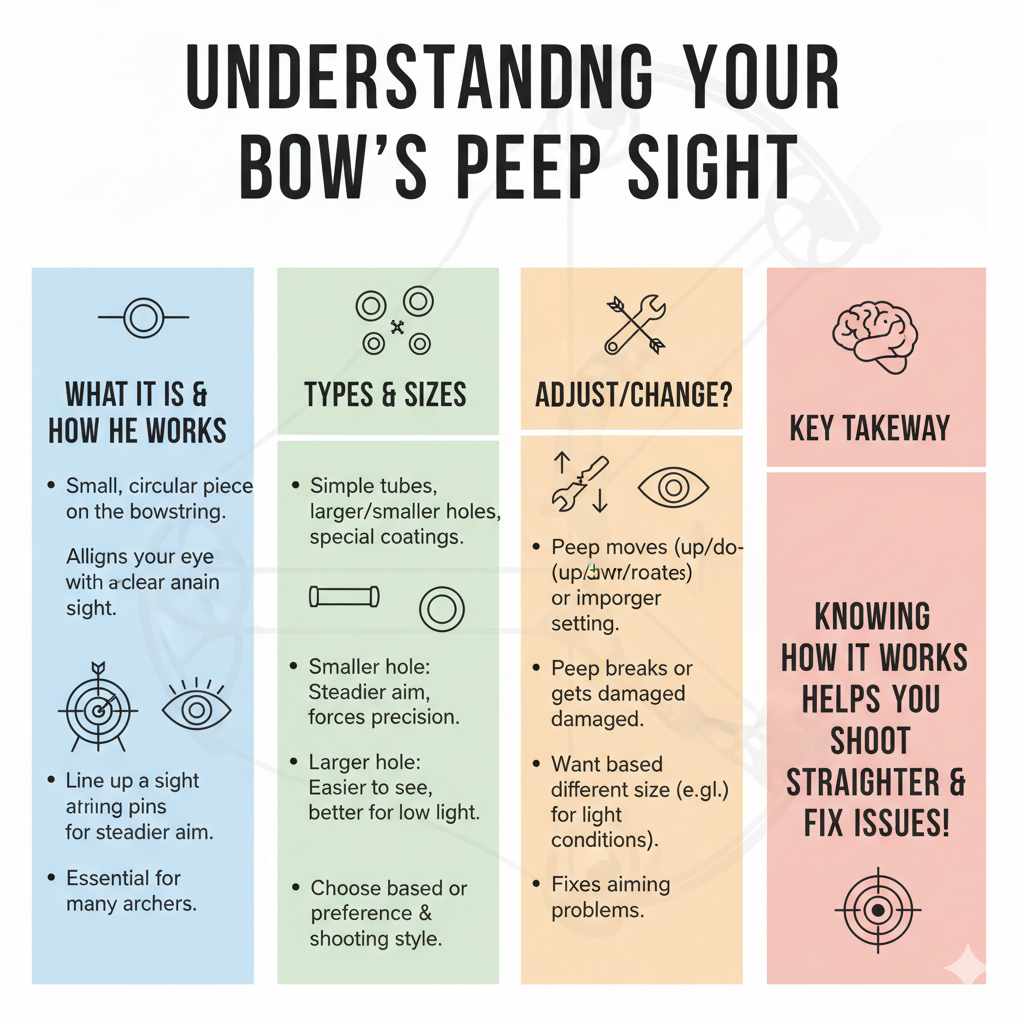
A peep sight is a small, circular piece. It’s usually placed on your bowstring. It helps you line up your shot.
It works with your bow’s main sight. The peep gives you a clear aiming point. It lets you see through it.
Then you line up your sight pins. This makes your aim much steadier. It helps you shoot more straight.
Many archers find it essential.
There are different types of peep sights. Some are simple tubes. Others have larger holes.
Some even have special coatings. The size of the hole matters. A smaller hole makes your aim steadier.
It forces you to be more precise. A larger hole is easier to see. It might be better for low light.
Choosing the right size helps your shooting. Your personal preference is key.
Why would you need to adjust or change it? Sometimes the peep moves. It might shift up or down.
This changes where you aim. It can be due to string wear. Or maybe it wasn’t set right at first.
Changing it might happen if it breaks. Or if you want a different size. You might need a new one if it gets damaged.
Knowing how it works helps you fix problems.
The Importance of Peep Sight Alignment
Getting your peep sight just right is vital. If it’s not in the right spot, your aim will be off. This is true for any bow.
This includes compound bows and recurve bows. When you draw your bow, the string pulls back. The peep sight travels with the string.
It needs to be at the same level each time. This is called your “anchor point”.
If the peep is too high on the string, your arrows will go low. If it’s too low, your arrows will fly high. It’s a direct relationship.
Small changes here make big differences at the target. This is why many archers spend time making sure it’s perfect. It’s a core part of sighting in.
You need consistency for good shots.
Your main sight also has pins. These pins are for different distances. The peep sight helps you line up those pins.
You look through the peep. Then you place the correct pin on your target. It creates a consistent aiming picture.
Without it, lining up accurately is much harder. It’s like trying to aim a rifle without sights.
When Do You Need to Adjust or Change Your Peep Sight?
There are a few common reasons. You might notice your shots aren’t grouping well. They could be consistently high or low.
This often means the peep needs moving. You might also change it if you get a new string. New strings can settle.
This can move the peep. It might need to be repositioned after a few shots.
Sometimes, the peep itself can get damaged. You might see a crack. Or the string loop might fray.
If it’s not round anymore, it’s time for a change. Wear and tear happen over time. Especially with heavy use.
Using the wrong size is another reason. If you struggle to see through it, try a different one. Better visibility means better aim.
Some archers simply want to experiment. They might try a smaller peep for more precision. Or a larger one for easier aiming in dim light.
Understanding your needs helps you decide. It’s about making your bow feel right for you. Every archer is different.
What works for one might not work for another.
Tools You’ll Need for Peep Sight Work
You don’t need a lot of fancy tools. But having the right ones makes the job easier. First, you’ll need a bow stringer.
This is very important. It helps you safely string and unstring your bow. Never try to do this without one.
You could damage your bow or hurt yourself. It allows you to apply tension safely.
A peep sight installation tool is also helpful. These tools help you thread the peep sight onto the bowstring. Some people use dental floss or strong thread.
But a dedicated tool is much smoother. It makes sure the peep goes on straight. It’s worth getting if you plan to do this often.
You might also need some pliers. Small, needle-nose pliers are good. They help hold tiny parts.
You might need a small Allen wrench. Some peeps have small screws. Always check your peep sight’s design.
Make sure you have the right size tool. A good pair of scissors is also handy. For trimming excess string or serving material.
A small vise or clamp can be useful. It helps hold the string steady. This makes threading the peep easier.
Some archers use a serving jig. But this is more advanced. For simple adjustments, pliers and a tool are usually enough.
Always work in a well-lit area. This helps you see tiny details.
Quick Peep Sight Tool Checklist
Bow Stringer: Essential for safety.
Peep Installation Tool: Makes threading easy.
Needle-Nose Pliers: For handling small parts.
Small Allen Wrench (if needed): For specific peep models.
Sharp Scissors: For trimming.
Dental Floss or Strong Thread: As an alternative tool.
Adjusting the Peep Sight Position (Up or Down)
This is the most common adjustment. It usually involves moving the peep up or down on the bowstring. First, you need to string your bow.
Use your bow stringer. Make sure it’s securely strung. Now, look at your peep sight.
It sits in a small loop on the string. This loop is called the D-loop.
To move the peep, you need to loosen it. Some peeps are just tied in. You might need to carefully untie a few knots.
Or slightly loosen the serving material. If your peep has a tube shape, you’ll usually see a small gap. You can slide the peep along the string.
You don’t need to take the string off the bow for this.
To move it up, you slide it higher on the string. This means you’ll be aiming higher. To move it down, you slide it lower on the string.
This will make you aim lower. You want to make small adjustments. Move it just a tiny bit each time.
Then unstring the bow. Go shoot a few arrows. See how your aim has changed.
It often takes trial and error. You’ll shoot, adjust, and shoot again. Keep track of your shots.
Are they still high? Move the peep up a bit more. Are they too low?
Move it down. This process is called “sighting in”. It ensures your peep is at the perfect height.
This matches your anchor point precisely.
Remember to re-tighten any knots. Or re-secure the serving material. Make sure the peep is snug.
It shouldn’t slide around. If it feels loose, it could move during a shot. This would mess up your aim.
Always check it after making adjustments. A secure peep is a reliable peep. Your bow string should remain intact.
Peep Sight Adjustment Tips
- Small Adjustments: Move the peep only a tiny bit each time.
- Test Shots: Shoot a few arrows after each adjustment.
- Consistent Anchor: Keep your draw length and anchor point the same.
- Observation: Note where your arrows hit relative to your aim.
- Secure It: Make sure the peep is firmly in place.
Changing the Peep Sight Itself
Sometimes, you need to
If it’s threaded, you’ll need to carefully remove the old one. You might need to spread the serving material slightly. Or carefully cut a few strands.
Be very gentle. You don’t want to damage your bowstring. Once the old peep is out, get your new peep ready.
Make sure it’s the right size for your string and D-loop.
Now, use your installation tool. Or dental floss. You’ll thread the new peep sight onto the string.
Some peeps have a small string or cable that goes through them. You’ll need to tie this securely. Use strong knots.
Make sure it’s centered. You want it to sit straight in the string.
If your peep is tied in, this step is crucial. You need to tie it so it’s level. When you draw the bow, the peep should be perfectly vertical.
If it’s crooked, your shots will be off. This is where practice helps. You might need to untie and retie it a few times.
Get it just right.
After installing the new peep, you’ll need to sight in your bow again. This is because the new peep might be slightly different. Or the original setup changed.
It’s a good opportunity to ensure everything is aligned. You’re essentially starting fresh with your sight picture. This ensures maximum accuracy.
Troubleshooting Common Peep Sight Issues
What if your peep sight spins? This is a common problem. It means the peep isn’t secured properly.
It might be loose in the string. Or the knots holding it are not tight. You need to fix this right away.
A spinning peep makes aiming impossible. It will cause wild shots.
If your peep sight is too small, it’s hard to see. This is especially true in low light. You might miss your target.
Or take longer to aim. In this case, you need a larger peep hole. You’ll have to replace the entire peep.
A larger hole lets in more light. It makes aiming quicker.
What if your arrows are hitting high? As we discussed, this means your peep is too low. You need to move it up on the string.
If your arrows are hitting low, your peep is too high. Move it down. Consistent grouping is your goal.
If groups are tight but in the wrong spot, it’s a peep height issue.
Another issue is peep float. This is when the peep moves a lot. It bounces around when you hold at full draw.
It can be caused by a few things. String stretch is a big one. Or inconsistent form.
A proper peep sight installation helps reduce float. But some natural float is normal for many bows. It shouldn’t be excessive though.
If your peep sight is blurry, it could be a few things. Your eyes might be tired. Or you might need reading glasses.
Some archers use clarifiers. These are small lenses that fit into the peep. They help focus your vision.
They can make a big difference for older shooters.
Peep Sight Troubleshooting Guide
- Spinning Peep: Re-tie or secure the peep more tightly.
- Blurry Vision: Consider a clarifier lens or check your eyesight.
- Arrows Hitting High: Move the peep up on the string.
- Arrows Hitting Low: Move the peep down on the string.
- Excessive Float: Check string condition and bow tune.
- Hard to See: Try a larger peep hole or better lighting.
The Role of the D-Loop in Peep Sight Function
The D-loop is a vital part of your archery setup. It’s a small loop of cord. It attaches to your bowstring.
Your release aid connects to this loop. It’s the bridge between you and the bowstring. The D-loop helps hold the peep sight in place.
It also ensures your peep is pulled back straight.
When you draw the bow, your release aid pulls on the D-loop. The D-loop then pulls the bowstring. This pulls the peep sight with it.
A correctly tied D-loop is crucial. If it’s too loose, it can twist. This can twist the string and the peep.
It affects your aim. It can cause shots to go left or right.
The length of the D-loop matters too. If it’s too long, it can affect your draw length. If it’s too short, it might feel uncomfortable.
Most archers find a standard length works well. It should allow the peep to sit at eye level when anchored.
When you adjust the peep’s position, you’re changing where it sits on the main bowstring. The D-loop remains fixed. This is why the peep moves up or down relative to the D-loop.
It’s a system that works together. The D-loop provides a consistent point of contact. This point is what you align your peep with.
Over time, the D-loop can wear out. The cord can fray. If it looks damaged, replace it.
A worn D-loop can break. This would be very dangerous. It could cause a sudden release of tension.
Always inspect your D-loop before shooting. It’s a small but mighty part of your bow.
Understanding Peep Sight Size and Clarity
The size of the hole in your peep sight is a big deal. It affects how you see your target. And how quickly you can aim.
A smaller hole, like a 1/8 inch peep, forces you to be very precise. It frames your sight pin tightly. This can lead to very tight groupings.
But it can be harder to see in low light.
A larger hole, like a 3/16 inch peep, lets in more light. It’s easier to see. Especially if your eyesight isn’t perfect.
Or if you’re hunting at dawn or dusk. The larger opening might make your sight pins look smaller. This could make precise aiming a little trickier for some.
Many archers find a middle ground works best. A 5/32 inch peep is often a good compromise. It offers decent clarity and allows for precise aiming.
But the best size is personal. It depends on your eyes, your shooting style, and your hunting conditions.
When you change a peep, you might also change the size. If you notice you’re struggling to see your pins clearly, a larger peep could help. If you want to push your accuracy further, a smaller peep might be the answer.
It’s worth trying different sizes if you can. This helps you find what feels right for you.
Clarity isn’t just about the hole size. Some peeps have special coatings. These can reduce glare.
They can improve vision in bright sunlight. Others have internal rings. These can help you center your pin faster.
Always consider these features when choosing a new peep.
Peep Sight Size Comparison
| Peep Size | Pros | Cons |
|---|---|---|
| Small (e.g., 1/8 inch) | High precision, steady aim | Harder in low light, less forgiving |
| Medium (e.g., 5/32 inch) | Good balance of clarity and precision | Might not be perfect for everyone |
| Large (e.g., 3/16 inch) | Good in low light, easier to see | Pins may appear smaller, less precise framing |
My Own Experience: The Day My Peep Sight Caused Chaos
I remember one crisp autumn morning. I was out in the woods, hopeful for a deer. I’d been practicing a lot.
My arrows were flying true. I drew my bow. I found my anchor.
I looked through my peep. Everything felt right. Then I drew back a little further.
The peep suddenly spun. My sight picture went wild.
Panic set in. I couldn’t get a clear view. My carefully planned shot was gone.
I had to let down my draw. My heart was pounding. I looked at my string.
The peep was just hanging there, crooked. It turned out the serving material had come loose. It wasn’t holding the peep firmly anymore.
That little bit of looseness was enough.
I felt so frustrated. All that practice, all that effort, ruined by a small piece of string. I had to pack up and head home.
It was a tough lesson. I learned how important it is to check your gear. Especially small things like the peep sight and the D-loop.
They might seem minor, but they are critical. I now do a quick check before every hunting trip.
That experience made me more hands-on with my bow. I learned to do my own peep adjustments. It gave me confidence.
Knowing I could fix minor issues myself. It’s a small thing, but it changed how I approach my archery. Always respect your gear.
It can surprise you when you least expect it.
Real-World Scenarios for Peep Sight Adjustments
Imagine you’re at an archery tournament. The sun is bright. You’re trying to get your sights dialed in.
Your arrows are a bit high. You know it’s time to move the peep. You carefully unstring your bow.
You slide the peep up a tiny bit. You restring it. You shoot again.
Now they are perfect. This is normal practice for competitive shooters.
Now think about a hunter. They’re in a treestand. The sun is just starting to rise.
It’s pretty dim. They notice their peep is a bit small. They’re squinting to see the pins.
They might decide to switch to a larger peep. Or use a peep with a special lens. This helps them make that crucial shot.
It’s about adapting to the conditions.
What about a beginner archer? They might be told to use a certain peep size. But when they try it, it’s hard to see.
Their coach might suggest a different size. Or they might be taught how to adjust it. They’re learning how to find what works best for them.
It’s a process of discovery.
In some cases, the bow itself might cause issues. A poorly timed cam system can cause more peep float. Or a string that stretches a lot.
The bow’s “tune” affects how the string moves. This can indirectly impact your peep. So, sometimes, the problem isn’t just the peep.
The environment also plays a role. Extreme temperatures can affect bowstrings. They might stretch or contract.
This can shift your peep. Or even your sight pins. Experienced archers know this.
They check their gear often. Especially if conditions change. It’s about being prepared.
What This Means for Your Shooting Accuracy
Having your peep sight adjusted correctly is foundational. It means you can trust your aim. When you draw back, you know where your arrow will go.
This builds confidence. Confidence is a huge part of shooting well. You’re not second-guessing your setup.
When it’s normal to adjust? Anytime you get a new string. After a few dozen shots.
Or if you notice your arrows are consistently off. You should also adjust if you change your shooting form. Or if you change your anchor point.
These things require recalibration.
When should you worry? If your peep is spinning freely. If it looks damaged or cracked.
If the string it’s on looks frayed. These are signs of serious problems. They need immediate attention.
Don’t shoot a bow with a compromised string or peep. It’s not worth the risk.
Simple checks you can do. Look at your peep sight regularly. Is it perfectly round?
Is it securely in the string? Is the string around it in good condition? Give your D-loop a tug.
Does it feel solid? These small checks can prevent big problems.
If you’re consistently missing your mark, and your groups are tight, it’s almost certainly a peep sight height issue. If your groups are wide and scattered, you might have a different problem. But for consistent misses in one direction, the peep is your first suspect.
Get it right, and your accuracy will follow.
Quick Fixes and Tips for Peep Sight Management
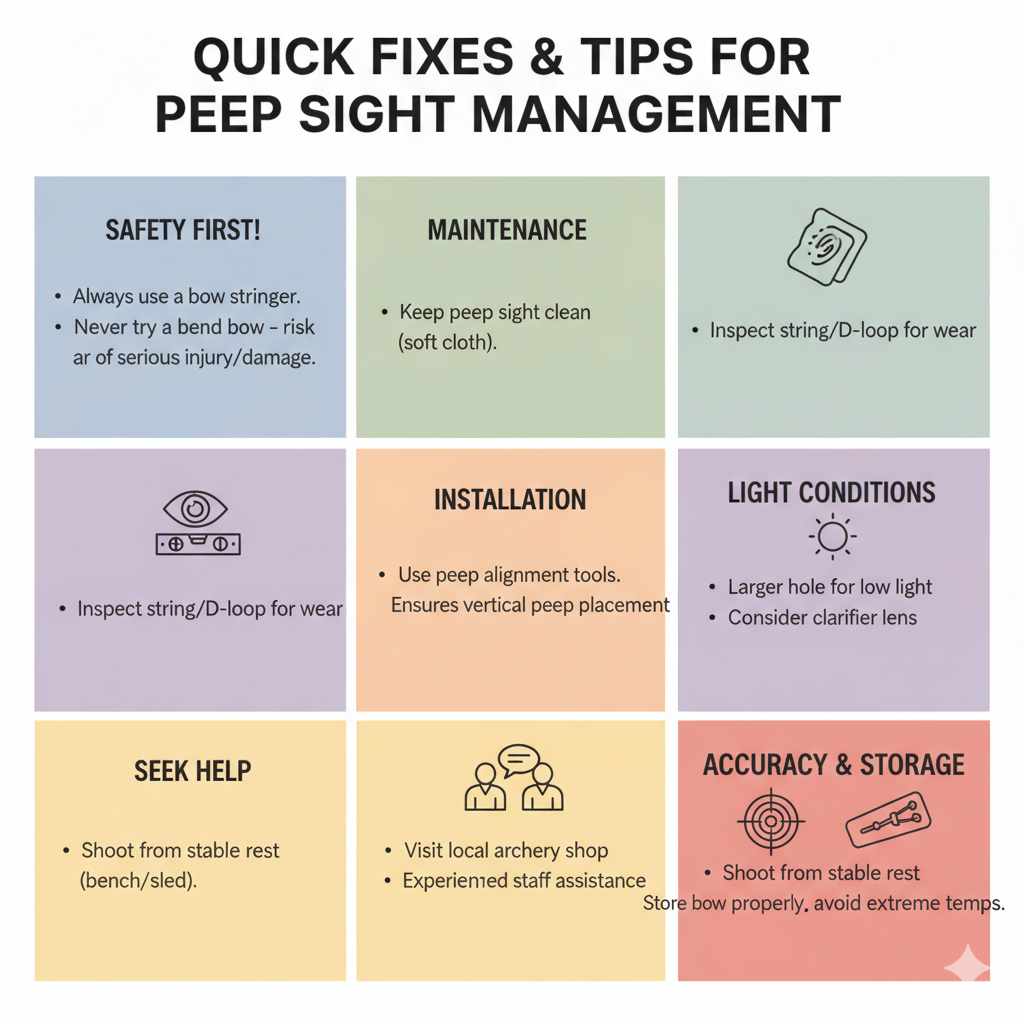
Always use a bow stringer. This is the most critical safety tip. Never try to bend your bow to string it.
It will break. Or hurt you badly.
Keep your peep sight clean. Dust and dirt can build up. This can make it harder to see.
A soft cloth is usually all you need. Just wipe it down gently.
Consider peep alignment tools. These can help you ensure the peep is perfectly vertical. When you’re installing a new peep.
It’s a small investment for better accuracy.
If you hunt in various light conditions, try a peep with a larger hole. Or consider adding a clarifier lens. This will help you see better when it matters most.
Don’t be afraid to ask for help. If you’re unsure about any step, visit a local archery shop. They have experienced staff.
They can guide you. Or do the work for you.
Store your bow properly. Keep it out of extreme heat or cold. This protects the strings and materials.
It helps keep your peep sight in place.
Regularly inspect your bowstring and D-loop. Look for any signs of fraying or wear. Replace them if they look worn out.
It’s a simple maintenance task.
When sighting in, shoot from a stable rest. Like a shooting bench. Or use a lead sled.
This removes human error. It helps you see how the peep adjustment truly affects your aim.
Frequently Asked Questions About Peep Sights
How do I know if my peep sight is in the right place?
Your peep sight is in the right place when you can draw your bow to your anchor point, and your eye naturally looks through the center of the peep without strain. Your sight pins should then align perfectly with the target. Consistent grouping of arrows is the best indicator.
Can I adjust my peep sight without a bow stringer?
No, it is extremely dangerous to try and adjust your peep sight or do any work on your bowstring without a proper bow stringer. You risk severe damage to your bow and serious injury to yourself. Always use a bow stringer for safety.
How many shots does it take to settle a new bowstring, and when should I check my peep?
A new bowstring can take anywhere from 20 to 100 shots to fully settle. It’s recommended to check your peep sight alignment after the first 10-15 shots and then again after every 20-30 shots until the string stops stretching. Inspect it whenever you notice your shots drifting.
What’s the difference between a peep sight and a nock?
A peep sight is a small hole on the bowstring that you look through to aim. A nock is the small plastic or metal piece at the back of an arrow. It attaches the arrow to the bowstring, allowing you to shoot it.
Should I use a clarifier or a verifier lens in my peep sight?
A clarifier lens makes the sight pins look clearer and larger. It’s good for archers with age-related vision changes or those who struggle to focus on the pins. A verifier lens does the opposite; it makes the target clearer, which can help when precise aiming is difficult.
The choice depends on your vision and needs.
How tight should my peep sight be tied into the bowstring?
Your peep sight should be snug and secure, but not so tight that it deforms the bowstring or the peep itself. The serving material or knots should hold it firmly in place so it doesn’t spin or slide during shooting. Over-tightening can damage your string.
Conclusion: Mastering Your Aim with Peep Sight Precision
Adjusting and changing your peep sight is a key skill. It helps you shoot better. It makes your aim more reliable.
Don’t be intimidated. With the right tools and patience, you can do it. Remember to always work safely.
Small adjustments make a big difference. Practice and consistency are your best friends. Happy shooting!